In brief
At a glance
Quick Facts
- Verdict
- Unproven
- Problem addressed
- Global warming / climate change
- Evidence strength
- Emerging
- Potential scale
- Global
- Relative cost
- Moderate
- Time to impact
- Years
Quick verdict
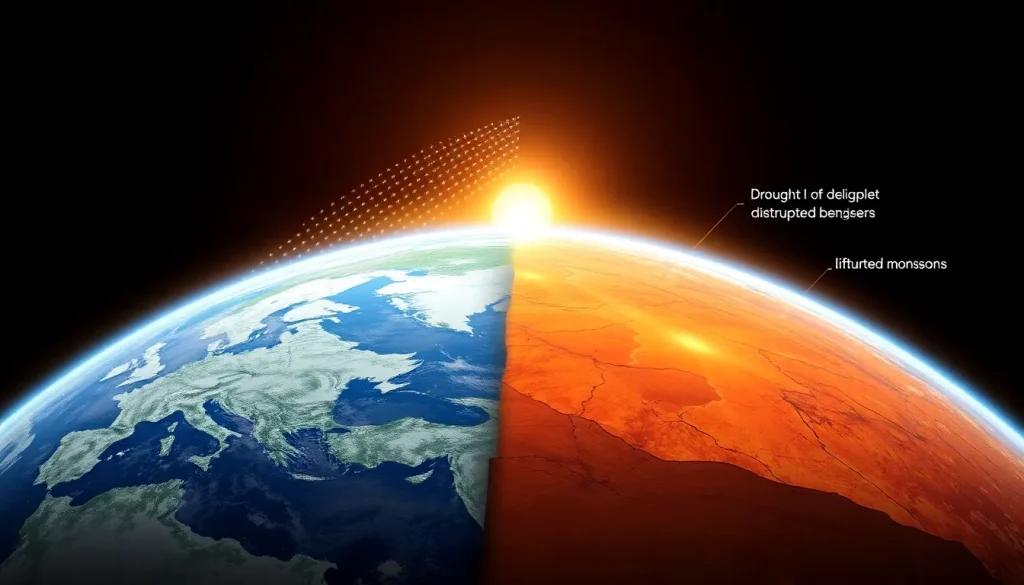
Solar radiation modification (SRM) is a controversial, unproven set of proposed technologies that could temporarily cool the Earth by reflecting a small percentage of incoming sunlight. While climate models indicate it could rapidly reduce global temperatures, no field tests at scale have been conducted. The evidence base is limited to computer simulations and natural analogs like volcanic eruptions. SRM carries substantial risks, including regional climate disruption, altered precipitation patterns, and the danger of abrupt warming if deployment were stopped. It is not a substitute for cutting greenhouse gas emissions and is widely considered a potential supplement of last resort, requiring robust international governance that does not yet exist.
Problem addressed
Solar radiation modification aims to directly counteract the warming caused by rising greenhouse gas concentrations. Despite decades of mitigation efforts, global CO₂ emissions continue to increase, and the world is on track to exceed the 1.5°C and 2°C temperature limits set by the Paris Agreement. Even aggressive emissions reductions cannot halt warming immediately due to the inertia of the climate system and the long lifetime of CO₂ in the atmosphere. SRM is proposed as a temporary measure to lower peak temperatures, reduce the severity of heatwaves, slow ice melt, and buy time for mitigation and adaptation. It does not address the root cause of climate change—greenhouse gas emissions—nor does it mitigate ocean acidification.
How the solution works
SRM techniques aim to increase the Earth’s albedo, or reflectivity, thereby reducing the amount of solar energy absorbed by the climate system. The most studied approach is stratospheric aerosol injection (SAI), which would mimic the cooling effect of large volcanic eruptions by dispersing reflective particles (such as sulfate aerosols or calcium carbonate) into the stratosphere. Other proposed methods include marine cloud brightening (MCB), which would spray fine sea salt droplets into low-lying marine clouds to make them more reflective, and cirrus cloud thinning, which would reduce the heat-trapping effect of high-altitude cirrus clouds. All techniques are theoretical; no large-scale experiments have been conducted, and the engineering requirements for global deployment remain speculative.
Evidence strength
The evidence for SRM’s potential effectiveness and risks comes almost entirely from climate models, small-scale laboratory studies, and observations of natural analogs such as volcanic eruptions. The 1991 eruption of Mount Pinatubo injected about 20 million tons of sulfur dioxide into the stratosphere, cooling the planet by roughly 0.5°C for about a year. This event provides a natural proof-of-concept for stratospheric aerosol cooling but also revealed side effects, including changes in precipitation patterns and stratospheric ozone depletion. Modeling studies consistently show that SRM could reduce global mean temperatures, but they also highlight uneven regional effects, such as weakened monsoon systems in Asia and Africa. The evidence base is considered emerging; there are no controlled field experiments at a scale relevant to climate intervention. The National Academies of Sciences, Engineering, and Medicine (2021) concluded that SRM has the potential to reduce climate change impacts but also carries significant risks and uncertainties that demand research.
Potential scale
SRM is inherently global in scale. Even a localized deployment, such as marine cloud brightening over a specific ocean region, would have far-reaching atmospheric and climatic teleconnections. Stratospheric aerosol injection, the most discussed technique, would affect the entire planet. Models suggest that a well-designed deployment could offset a substantial fraction of the warming from a doubling of CO₂, potentially reducing global average temperatures by 1–2°C within a few years of initiation. However, the cooling would be uneven: the tropics might be undercooled while the poles are overcooled, and precipitation patterns would shift. The scalability of SRM is limited not by technical feasibility but by the risk of severe side effects at higher intensities. It cannot simply be “turned up” to cancel all warming without causing unacceptable climate disruption.
Cost considerations
Preliminary engineering estimates suggest that the direct costs of deploying stratospheric aerosol injection could be remarkably low—on the order of a few billion dollars per year to offset the warming from a doubling of CO₂. This is orders of magnitude cheaper than deep emissions cuts or large-scale carbon dioxide removal. However, these estimates cover only the delivery mechanism (e.g., modified aircraft) and do not include the costs of monitoring, liability, compensation for damages, or the economic consequences of potential side effects. The low direct cost is often cited as a risk factor: it could make SRM attractive to a single nation or even a wealthy non-state actor, raising profound governance challenges. The true societal cost, including the risk of catastrophic outcomes, is unknown and likely far higher.
Implementation time
If a decision were made to deploy stratospheric aerosol injection, the cooling effect could begin within months and reach full intensity within a few years, assuming the necessary aircraft and delivery systems were already developed. However, no such systems currently exist. Research, development, and testing of a reliable delivery platform would likely take a decade or more. Marine cloud brightening could potentially be implemented faster using existing ship-based sprayers, but its effectiveness is highly uncertain. The rapid onset of cooling is one of SRM’s most attractive features compared to emissions reductions, which take decades to influence global temperatures. Yet, the speed of deployment also raises the risk of “termination shock”: if SRM were suddenly stopped, the masked warming from greenhouse gases would manifest abruptly, causing catastrophic temperature spikes.
Environmental benefits
If successful, SRM could reduce global average temperatures, potentially slowing or reversing ice sheet melt, reducing the frequency and intensity of extreme heat events, and limiting coral bleaching. It might also stabilize some regional climates and reduce the risk of crossing climate tipping points, such as the collapse of the West Antarctic Ice Sheet. However, these benefits are inferred from models and have not been empirically demonstrated. SRM would not reduce ocean acidification, which is driven directly by CO₂ absorption, nor would it address other negative effects of elevated CO₂ on plant physiology. Any environmental benefits would be contingent on continuous deployment and would cease if SRM were halted.
Social and economic co-benefits
Potential co-benefits include reduced mortality from extreme heat, lower energy demand for cooling, and protection of climate-sensitive livelihoods such as agriculture and fisheries in some regions. By slowing the rate of warming, SRM could buy time for vulnerable communities to adapt and for low-carbon economies to develop. It might also reduce the risk of climate-related conflicts and displacement. However, these benefits are speculative and would be unevenly distributed; some regions could experience net harm, such as altered monsoon patterns affecting food production. The perception of a “quick fix” could also undermine public support for emissions reductions, a risk known as moral hazard.
Risks and unintended consequences
SRM carries profound risks. Stratospheric aerosol injection could deplete stratospheric ozone, alter regional precipitation patterns (potentially causing droughts in parts of Asia and Africa), and produce uneven cooling that disrupts ecosystems. Once started, SRM would need to be maintained indefinitely; a sudden halt—due to war, technical failure, or political collapse—would cause rapid warming (termination shock) far more damaging than gradual climate change. SRM does not address ocean acidification or other direct effects of elevated CO₂. It could also create a “moral hazard” by reducing the incentive to cut emissions. Geopolitically, SRM could spark conflicts over deployment decisions, as the effects cross borders. The governance challenges are immense: there is no international framework to regulate SRM research, testing, or potential deployment.
Where it works best
SRM is not a regional solution; its effects are global. However, some regions might benefit more than others. Modeling suggests that a moderate SRM deployment could reduce extreme temperatures in the tropics and slow ice loss in the Arctic, potentially benefiting low-latitude and coastal communities. It might also stabilize monsoon systems if carefully calibrated, though this is highly uncertain. SRM is most often discussed as a global emergency measure to avoid catastrophic climate tipping points, rather than a tool to optimize regional climates. No region is universally agreed to be a “best fit” for SRM, given the uneven distribution of risks and benefits.
Where it may not work
SRM is a poor fit for addressing ocean acidification, which requires direct CO₂ removal. It is also ill-suited for regions that depend on predictable monsoon patterns, as models consistently show disruptions to the Asian and African monsoons under SRM scenarios. SRM cannot reverse all climate impacts; for example, it would not restore Arctic sea ice to pre-industrial conditions without overcooling the tropics. It is also a poor fit for any context that requires a permanent solution, because SRM only masks warming and must be maintained indefinitely. Finally, SRM is not a viable option in the absence of strong global governance, as unilateral deployment could trigger international conflict.
Comparison with alternatives
SRM is fundamentally different from the primary climate solutions: emissions reduction and carbon dioxide removal (CDR). Emissions reduction addresses the root cause of climate change by cutting greenhouse gas output, while CDR removes CO₂ from the atmosphere. Both are essential for long-term climate stability. SRM, by contrast, only masks the symptom (warming) without reducing CO₂ concentrations. It is faster-acting and cheaper in direct costs than CDR or mitigation, but it introduces new risks and does not solve ocean acidification. SRM is often compared to a “painkiller” rather than a cure. It could complement aggressive mitigation and CDR by shaving off peak temperatures, but it cannot replace them. The governance requirements for SRM are far more complex than for emissions reductions, which can be implemented nationally.
Case studies
No deliberate SRM deployment has occurred, so case studies are limited to natural analogs and small-scale research. The 1991 Mount Pinatubo eruption is the most cited natural analog: it injected ~20 Mt of SO₂ into the stratosphere, causing a global cooling of ~0.5°C for about 15 months. This event validated the cooling mechanism but also revealed side effects, including a temporary drop in global precipitation and enhanced ozone depletion. In research, the Stratospheric Controlled Perturbation Experiment (SCoPEx), a proposed small-scale field test by Harvard University, aimed to release a tiny amount of calcium carbonate in the stratosphere to study aerosol behavior. It faced significant public opposition and regulatory hurdles and has not yet been conducted. The UK’s SPICE project (2012) planned a small-scale water spray test to study delivery mechanisms but was canceled due to governance concerns and conflict of interest issues. These examples highlight the difficulty of moving from theory to even small-scale experimentation.
Final assessment
Solar radiation modification is a high-risk, high-stakes concept that is not ready for deployment and may never be. The scientific community broadly agrees that it could lower global temperatures, but the side effects, uncertainties, and governance challenges are immense. It is not a substitute for emissions reductions or carbon dioxide removal. Research into SRM is warranted to understand its potential and risks, but any move toward deployment would require an unprecedented level of international cooperation and consent. For now, SRM remains a deeply uncertain and contentious proposal, best approached with extreme caution and a primary focus on cutting greenhouse gas emissions.
FAQ
Is solar radiation modification the same as carbon dioxide removal?
No. Solar radiation modification (SRM) aims to reflect sunlight to cool the planet without reducing greenhouse gas concentrations. Carbon dioxide removal (CDR) extracts CO₂ from the atmosphere, addressing the root cause of warming. SRM is faster-acting but does not solve ocean acidification or other CO₂ effects, and it must be maintained indefinitely to avoid termination shock.
Could a single country deploy SRM on its own?
Technically, a country or even a wealthy private actor could potentially deploy stratospheric aerosol injection, given the relatively low direct costs. However, the effects would be global and could trigger severe international disputes. There is currently no international treaty explicitly banning SRM, but the Convention on Biological Diversity has a de facto moratorium on geoengineering activities that may affect biodiversity, and the London Protocol restricts ocean fertilization. Unilateral deployment would likely be seen as a hostile act.
What is the biggest risk of SRM?
Many experts consider termination shock the greatest risk: if SRM were deployed and then suddenly stopped—due to war, technical failure, or political collapse—the planet would experience rapid warming over a decade or less, far faster than current climate change, causing catastrophic ecosystem and societal disruption. Other major risks include altered precipitation patterns, ozone depletion, and the moral hazard of reducing emissions-cutting efforts.
References
- IPCC, 2018: Global Warming of 1.5°C. An IPCC Special Report.
- National Academies of Sciences, Engineering, and Medicine. 2021. Reflecting Sunlight: Recommendations for Solar Geoengineering Research and Research Governance. Washington, DC: The National Academies Press.
- Keith, D. W., et al. (2016). Stratospheric solar geoengineering without ozone loss. Proceedings of the National Academy of Sciences, 113(52), 14910–14915.
- Tilmes, S., et al. (2018). The hydrological impact of geoengineering in the Geoengineering Model Intercomparison Project (GeoMIP). Journal of Geophysical Research: Atmospheres, 123(11), 6119–6138.
- Robock, A. (2014). Stratospheric aerosol geoengineering. Issues in Environmental Science and Technology, 38, 162–185.