In brief
Climate has never been perfectly constant.
Throughout Earth’s 4.5-billion-year history, the planet has experienced ice ages, warmer greenhouse climates, volcanic winters, shifts in ocean circulation, and gradual changes driven by variations in Earth’s orbit around the Sun. These natural changes occurred over thousands to millions of years and profoundly shaped landscapes, ecosystems, and the evolution of life.
Today’s climate change is different.
The current warming is occurring much faster than most natural climate changes observed in the geological record, and extensive scientific evidence shows that the primary cause is human activity, especially the emission of greenhouse gases from burning fossil fuels, land-use change, and industrial processes. The scientific evidence supporting this conclusion comes from observations, physical theory, climate models, and paleoclimate records. The Intergovernmental Panel on Climate Change (IPCC) concludes that human influence has unequivocally warmed the atmosphere, ocean, and land. (IPCC)
Climate change is no longer viewed simply as an environmental issue. It affects food systems, freshwater availability, biodiversity, public health, infrastructure, economies, migration, national security, and global development.
Understanding climate change therefore requires more than knowing that temperatures are rising. It requires understanding how Earth’s climate system works, why it is changing, what the evidence shows, what the consequences may be, and what solutions are available.
Quick Answer
Climate change refers to long-term changes in Earth’s climate, including temperature, precipitation, atmospheric circulation, oceans, ice, and ecosystems.
Modern climate change is driven primarily by human-caused greenhouse gas emissions, especially carbon dioxide (CO₂), methane (CH₄), and nitrous oxide (N₂O). These gases strengthen Earth’s natural greenhouse effect by trapping additional heat in the atmosphere.
The consequences include:
- Rising global temperatures
- More frequent and intense heat extremes
- Melting glaciers and ice sheets
- Rising sea levels
- Ocean warming and acidification
- Changes in rainfall patterns
- Increased drought and flood risks
- Biodiversity loss
- Greater risks to food, water, health, and infrastructure
Climate change can be addressed through a combination of mitigation (reducing greenhouse-gas emissions and increasing carbon removal) and adaptation (preparing societies and ecosystems for unavoidable changes). The IPCC concludes that rapid, deep, and sustained emission reductions can substantially reduce future risks. (IPCC)
What Is Climate?
Climate is the long-term statistical pattern of weather.
Weather describes short-term atmospheric conditions such as today’s temperature, rainfall, wind, or humidity.
Climate describes averages and variability over decades.
Scientists typically use periods of 30 years or longer to characterize climate because individual years naturally vary.
Climate includes:
- Average temperature
- Rainfall patterns
- Seasonal cycles
- Wind systems
- Ocean temperatures
- Snow and ice
- Frequency of extreme events
Climate change therefore involves more than warming. It affects the entire Earth system.
How Earth’s Climate System Works
Earth’s climate is governed by a balance between incoming solar energy and outgoing infrared radiation.
Incoming solar energy
The Sun provides nearly all the energy driving Earth’s surface systems.
Some sunlight is reflected by:
- Clouds
- Ice
- Snow
- Deserts
- Aerosols
The remainder is absorbed by land, oceans, and vegetation.
Outgoing heat
Earth continually emits infrared radiation back toward space.
Without an atmosphere, Earth’s average surface temperature would be roughly −18°C.
Instead, the natural greenhouse effect keeps the global average near +15°C, making life as we know it possible.
The greenhouse effect
Certain gases absorb and re-emit infrared radiation.
The major greenhouse gases include:
- Water vapor
- Carbon dioxide
- Methane
- Nitrous oxide
- Ozone
Human activities increase the concentrations of several long-lived greenhouse gases, strengthening the greenhouse effect and producing additional warming. (IPCC)
The Main Causes of Modern Climate Change
Burning Fossil Fuels
Coal, oil, and natural gas contain carbon that accumulated over millions of years.
Burning these fuels releases carbon dioxide into the atmosphere.
Major sources include:
- Electricity generation
- Industry
- Transportation
- Buildings
- Heating
Carbon dioxide is the largest contributor to long-term human-caused warming.
Deforestation and Land-Use Change
Forests remove carbon dioxide through photosynthesis.
When forests are cleared or burned:
- Stored carbon is released.
- Future carbon uptake declines.
- Regional rainfall patterns may change.
- Biodiversity is reduced.
Land-use change therefore affects both climate and ecosystems.
Agriculture
Agriculture contributes several greenhouse gases.
Methane
Produced by:
- Cattle and other ruminants
- Rice cultivation
- Waste management
Nitrous oxide
Produced primarily through:
- Nitrogen fertilizers
- Agricultural soils
- Livestock manure
Although methane remains in the atmosphere for a much shorter time than carbon dioxide, it has a much stronger warming effect per molecule over the short term.
Industrial Processes
Industrial activities emit greenhouse gases through:
- Cement production
- Chemical manufacturing
- Refrigerants
- Steel production
- Fluorinated gases
Some industrial gases have extremely high global warming potential despite relatively low concentrations.
Natural Climate Drivers
Earth’s climate has always changed naturally.
Important natural drivers include:
Volcanic eruptions
Large eruptions inject sulfate aerosols into the stratosphere.
These aerosols temporarily cool Earth by reflecting sunlight.
Their effects usually last only a few years.
Solar variability
The Sun’s energy output changes slightly over time.
These variations influence climate but are too small to explain modern warming.
Orbital cycles
Over tens of thousands of years, changes in Earth’s orbit influence the distribution of solar energy and help drive ice ages.
These cycles operate much more slowly than current warming.
Internal climate variability
Natural oscillations such as:
- El Niño–Southern Oscillation
- Pacific Decadal Oscillation
- Atlantic variability
affect regional and short-term climate but do not explain the long-term global warming trend observed since the Industrial Revolution. The IPCC concludes that recent warming is overwhelmingly attributable to human influence rather than natural drivers. (IPCC)
The Scientific Evidence
Climate science does not rely on a single observation.
Instead, multiple independent lines of evidence point to the same conclusion.
Rising temperatures
Global surface temperature has increased by about 1.1°C above the 1850–1900 average during 2011–2020.
The warming is larger over land than over oceans. (IPCC)
Rising greenhouse gases
Atmospheric carbon dioxide concentrations have increased dramatically since the Industrial Revolution.
Direct atmospheric measurements and ice-core records clearly show this increase.
Carbon isotopes identify fossil fuels as the dominant source.
Warming oceans
More than 90% of the excess heat trapped by greenhouse gases is stored in the oceans.
Ocean heat content has increased continuously over recent decades.
Melting ice
Scientists observe:
- Glacier retreat
- Arctic sea-ice decline
- Greenland ice loss
- Antarctic ice loss
- Reduced snow cover
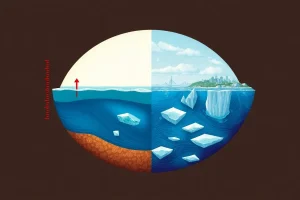
Rising sea level
Sea level rises because:
- Oceans expand as they warm.
- Land ice melts.
Both processes are directly linked to global warming.
Ocean acidification
The oceans absorb approximately one-quarter of human carbon dioxide emissions.
This changes seawater chemistry and reduces carbonate availability for many marine organisms.
Shifting ecosystems
Observed changes include:
- Earlier spring flowering
- Poleward species movement
- Higher elevation migration
- Coral bleaching
- Longer growing seasons in some regions
Taken together, these observations are consistent with a warming world driven by increased greenhouse gases. (IPCC)
Climate Feedbacks
Climate change is influenced by feedback loops.
Positive feedbacks
These amplify warming.
Examples include:
- Ice-albedo feedback
- Permafrost thaw
- Forest dieback
- Water-vapor increase
Negative feedbacks
These partly counteract warming.
Examples include:
- Carbon uptake by plants
- Ocean carbon absorption
- Increased infrared radiation from a warmer Earth
Earth contains both types simultaneously.
Understanding their balance is one of the central goals of climate science.
Current and Future Impacts
Heat Extremes
Heatwaves have become more frequent and intense in many regions.
They increase risks to:
- Human health
- Agriculture
- Energy systems
- Labor productivity
Water
Climate change affects:
- River flow
- Groundwater recharge
- Snowpack
- Flood frequency
- Drought severity
Some regions become wetter while others become drier.
Food
Agriculture faces challenges from:
- Heat stress
- Water shortages
- Pests
- Changing growing seasons
- Extreme weather
Impacts vary across crops and regions.
Oceans
Marine impacts include:
- Warming
- Acidification
- Coral bleaching
- Oxygen loss
- Fisheries changes
Biodiversity
Climate change interacts with:
- Habitat loss
- Pollution
- Invasive species
- Overexploitation
Many species shift their ranges, while others face increasing extinction risk.
Human Health
Climate change affects health through:
- Heat stress
- Air quality
- Infectious diseases
- Food insecurity
- Mental health
- Extreme weather
Vulnerable populations often experience the greatest risks despite contributing least to historical emissions. (IPCC)
Climate Change and Extreme Weather
No single weather event is caused solely by climate change.
Instead, climate change alters the probability and intensity of many extremes.
Scientific attribution studies evaluate how greenhouse-gas emissions change the likelihood of events such as:
- Heatwaves
- Heavy rainfall
- Drought
- Wildfire weather
- Coastal flooding
The strength of evidence differs by event type and region, but confidence is highest for increasing heat extremes. (IPCC)
Climate Mitigation
Mitigation addresses the causes of climate change.
Major strategies include:
Clean Electricity
Replacing fossil fuels with:
- Solar
- Wind
- Hydropower
- Geothermal
- Nuclear (where appropriate)
Energy Efficiency
Using less energy through:
- Better buildings
- Efficient appliances
- Industrial improvements
- Smart grids
Electrification
Replacing fossil-fuel combustion with electricity in:
- Transportation
- Heating
- Industry (where feasible)
Protecting Ecosystems
Healthy forests, wetlands, mangroves, peatlands, and grasslands store carbon while supporting biodiversity.
Sustainable Agriculture
Measures include:
- Improved fertilizer management
- Methane reduction
- Soil conservation
- Agroforestry
- Reduced food waste
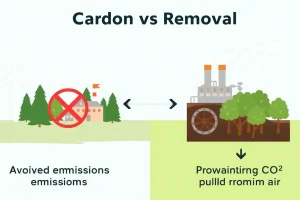
Carbon Dioxide Removal
Approaches include:
- Reforestation
- Afforestation
- Soil carbon
- Biochar
- Direct air capture
- Bioenergy with carbon capture and storage (BECCS)
These methods complement—but do not replace—rapid emission reductions.
Climate Adaptation
Some climate change is already unavoidable.
Adaptation reduces harm from unavoidable impacts.
Examples include:
- Flood defenses
- Heat-resilient cities
- Drought-resistant crops
- Water conservation
- Early warning systems
- Climate-resilient infrastructure
- Ecosystem restoration
- Public health preparedness
Successful adaptation often combines engineering, ecological restoration, governance, and community planning. (IPCC)
Individual, Community and System-Level Action
Climate solutions operate at multiple levels.
Individuals
- Reduce unnecessary energy use
- Choose lower-emission transport when practical
- Reduce food waste
- Support sustainable consumption
- Vote and engage civically
Businesses
- Improve efficiency
- Decarbonize operations
- Reduce supply-chain emissions
- Invest in innovation
Governments
- Climate policy
- Infrastructure investment
- Clean-energy deployment
- Conservation
- Research and development
- Adaptation planning
Most scientific assessments emphasize that system-level changes in energy, transportation, food, finance, and land management are essential because individual actions alone cannot achieve the required scale of emissions reductions. (IPCC)
Common Misunderstandings
“Climate has always changed.”
True.
However, current warming is occurring unusually rapidly and is primarily driven by human greenhouse-gas emissions rather than natural drivers. (IPCC)
“Cold weather disproves global warming.”
Weather varies daily.
Climate concerns long-term averages and trends.
A cold day does not contradict long-term warming.
“Scientists disagree.”
Scientific debate continues regarding details such as regional impacts, cloud feedbacks, and specific climate sensitivities.
However, there is overwhelming agreement that human activities are the primary cause of recent global warming. (IPCC)
“Adaptation means mitigation is unnecessary.”
No.
Adaptation reduces unavoidable impacts.
Mitigation reduces future warming.
Both are necessary.
“Technology alone will solve climate change.”
Technology is essential, but long-term solutions also depend on policy, finance, governance, ecosystem protection, behavioral change, and international cooperation.
Frequently Asked Questions
What causes climate change today?
The primary cause is human emissions of greenhouse gases from fossil fuels, land-use change, agriculture, and industrial activities. (IPCC)
Is climate change the same as global warming?
No. Global warming refers specifically to rising average temperatures. Climate change includes broader changes in rainfall, oceans, ice, ecosystems, and weather extremes.
Can climate change still be limited?
Yes. The IPCC concludes that rapid and sustained reductions in greenhouse-gas emissions can substantially reduce future warming and climate risks, although some impacts are already unavoidable. (IPCC)
Which sectors emit the most greenhouse gases?
Major contributors include energy production, transportation, industry, agriculture, buildings, and land-use change.
Why are oceans important?
Oceans absorb heat and carbon dioxide, slowing atmospheric warming but contributing to ocean warming, deoxygenation, and acidification.
Does every fraction of warming matter?
Yes. Scientific assessments consistently show that risks increase with additional warming, while limiting temperature rise reduces the likelihood of severe impacts and irreversible changes. (IPCC)
Conclusion
Climate change is one of the defining scientific, environmental, and societal challenges of the twenty-first century.
Its causes are now well understood. Human activities—primarily the burning of fossil fuels, land-use change, and industrial emissions—have strengthened Earth’s natural greenhouse effect and warmed the planet. The evidence comes from independent observations of rising temperatures, greenhouse-gas concentrations, warming oceans, melting ice, sea-level rise, changing ecosystems, and many other indicators.
Its impacts extend far beyond temperature. Climate change influences water resources, food production, biodiversity, public health, infrastructure, economies, and the stability of Earth-system processes. Because these systems are interconnected, climate change interacts with other global challenges such as biodiversity loss, freshwater stress, pollution, and land degradation.
The future is not predetermined.
Scientific assessments show that the magnitude of future climate change depends largely on decisions made today. Rapid emission reductions, protection and restoration of ecosystems, technological innovation, climate-resilient infrastructure, and effective adaptation can substantially reduce long-term risks.
Ultimately, climate change is not simply a problem of atmospheric physics. It is a challenge of managing humanity’s relationship with the Earth system in a way that supports both environmental stability and human well-being. (IPCC)