In brief
At a glance
Quick Facts
- Journal / venue
- The Lancet
- Authors
- Gasparrini A et al.
- Publication date
- July 2015
- Study type
- Multicountry observational time-series study
- Peer-reviewed
- Yes
- DOI / link
- 10.1016/S0140-6736(14)62114-0
Study in one sentence
This multicountry observational study found that the risk of heat-related mortality is highest among the elderly, people with cardiovascular or respiratory diseases, and those living in urban areas, with substantial variation across different climates and regions.
Publication and date
The study, titled “Mortality risk attributable to high and low ambient temperature: a multicountry observational study,” was published in The Lancet (Volume 386, Issue 9991) in July 2015. The lead author is Antonio Gasparrini, with a large international collaboration. It is a peer-reviewed study.
Research question
The researchers aimed to quantify the mortality burden attributable to non-optimal ambient temperature (both heat and cold) across multiple countries and to identify which subgroups of the population are most vulnerable to temperature extremes, particularly heat.
Method
The study used daily mortality and temperature data from 384 locations in 13 countries: Australia, Brazil, Canada, China, Italy, Japan, South Korea, Spain, Sweden, Taiwan, Thailand, the UK, and the USA. The analysis included 74,225,200 deaths from any cause between 1985 and 2012. The researchers applied a standard time-series regression model (distributed lag non-linear models) to estimate the temperature–mortality association in each location, then pooled the results using a multivariate meta-analysis. They calculated the fraction of deaths attributable to heat (temperatures above the location-specific optimum) and cold, and examined effect modification by individual characteristics (age, sex) and community-level factors (climate, urbanisation).
Main findings
The study found that 7.71% of total mortality was attributable to non-optimal temperatures, with cold causing a greater proportion (7.29%) than heat (0.42%). However, the risk of heat-related death was highly concentrated among vulnerable groups. Key findings for extreme heat vulnerability included:
- Age: The elderly (especially those over 75) had a much higher relative risk of heat-related mortality compared to younger age groups.
- Pre-existing conditions: People with cardiovascular diseases, respiratory diseases, and cerebrovascular diseases were at significantly increased risk during heat events.
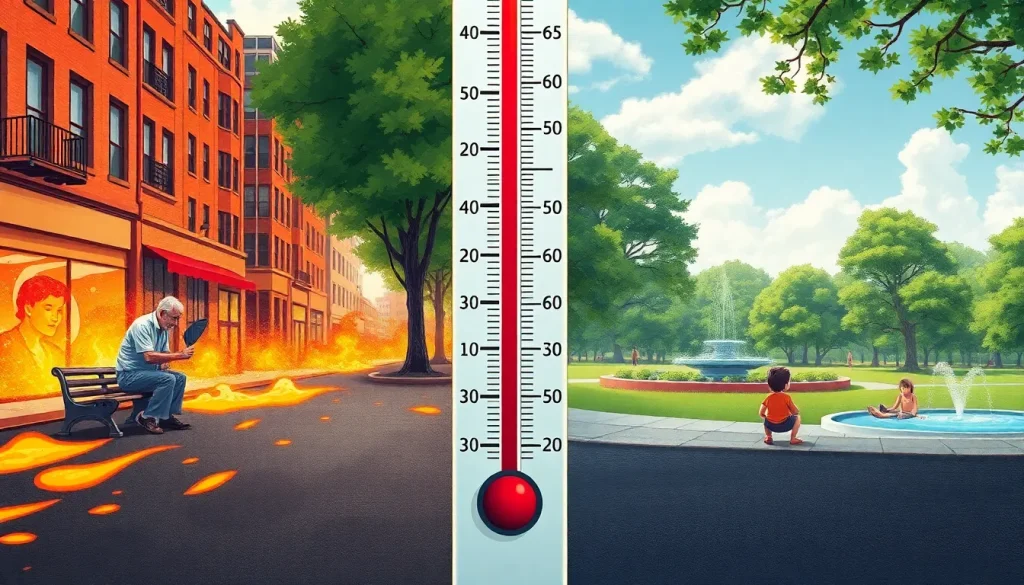
- Urbanisation: Urban populations showed a higher heat-related mortality risk than rural populations, likely due to the urban heat island effect.
- Climate adaptation: Regions with milder climates (e.g., northern Europe) had higher heat-related risks than hotter regions, suggesting a lack of acclimatisation and infrastructure (such as air conditioning).
- Sex: In some regions, women appeared slightly more vulnerable to heat than men, but the difference was not consistent across all locations.
The study also reported that the temperature–mortality relationship varied by location, with heat effects typically immediate and lasting a few days, while cold effects were more prolonged.
What the findings do not prove
This study identifies associations between high temperatures and increased mortality risk in certain subgroups, but it does not prove causation. The observed vulnerability patterns are based on population-level data and cannot be directly applied to predict individual risk. Additionally, the study does not establish the specific mechanisms (e.g., physiological, behavioural, or socioeconomic) that make these groups more susceptible. The findings also do not imply that heat is a more significant public health threat than cold overall; in fact, the attributable fraction was much larger for cold.
Limitations
The study has several limitations. First, it is observational, so confounding by other environmental or socioeconomic factors cannot be ruled out. Second, the data come from selected countries and cities, which may not represent all climates or low-income regions (notably, Africa and South Asia are absent). Third, the analysis used outdoor temperature as a proxy for personal exposure, which may misclassify actual exposure, especially in air-conditioned environments. Fourth, the study focused on all-cause mortality and did not differentiate by specific causes of death beyond broad disease categories. Finally, the modelling approach assumes a smooth, non-linear temperature–mortality curve, which may not capture extreme heat wave effects perfectly.
How it compares with previous research
The findings align with earlier studies that identified the elderly, those with chronic diseases, and urban residents as particularly vulnerable to heat. For example, the 2003 European heat wave (Robine et al., 2008) and the 1995 Chicago heat wave (Semenza et al., 1996) both highlighted similar risk factors. This study extends that work by providing a quantitative, multi-country estimate of attributable mortality and by showing that vulnerability varies with local climate, reinforcing the concept of acclimatisation. It also confirms that while heat-related deaths are fewer in absolute terms, they are highly preventable and concentrated in specific groups.
Why it matters
Understanding who is most vulnerable to extreme heat is critical for designing effective public health interventions. The study’s findings support targeted heat warning systems, community outreach to the elderly, and urban planning measures to reduce heat island effects (e.g., green spaces, cool roofs). As climate change increases the frequency and intensity of heat waves, this knowledge becomes even more urgent for protecting at-risk populations and reducing preventable deaths.
Link to the primary paper
Gasparrini A, Guo Y, Hashizume M, et al. Mortality risk attributable to high and low ambient temperature: a multicountry observational study. The Lancet. 2015;386(9991):369-375. DOI: 10.1016/S0140-6736(14)62114-0.
FAQ
What makes someone vulnerable to extreme heat?
Vulnerability arises from a combination of physiological, social, and environmental factors. The elderly and those with chronic illnesses (especially cardiovascular or respiratory diseases) have reduced ability to regulate body temperature. Living in urban areas with little green space, lacking air conditioning, and social isolation also increase risk.
How does extreme heat affect the body?
Extreme heat can overwhelm the body's thermoregulation, leading to heat exhaustion or heat stroke. It increases strain on the heart and lungs, can cause dehydration, and worsen pre-existing conditions. In severe cases, it can lead to organ failure and death, often within a few days of exposure.
Are certain cities more dangerous during heat waves?
Yes. Cities with a normally mild climate (e.g., in northern Europe) often have less air conditioning and infrastructure designed for heat, making residents more susceptible. Additionally, the urban heat island effect—where concrete and asphalt absorb and re-radiate heat—can make cities several degrees warmer than surrounding rural areas.
What can be done to protect vulnerable populations?
Public health measures include early warning systems, opening cooling centers, checking on elderly neighbors, and ensuring access to air-conditioned spaces. Long-term strategies involve urban planning (e.g., planting trees, installing cool roofs) and improving building design to reduce indoor heat.
Is climate change making heat waves worse?
Yes. Climate change is increasing the frequency, duration, and intensity of heat waves globally. This trend is expected to continue, making the identification and protection of vulnerable groups even more critical for public health.
References
- Gasparrini A, Guo Y, Hashizume M, et al. Mortality risk attributable to high and low ambient temperature: a multicountry observational study. The Lancet. 2015;386(9991):369-375.
- Robine JM, Cheung SL, Le Roy S, et al. Death toll exceeded 70,000 in Europe during the summer of 2003. Comptes Rendus Biologies. 2008;331(2):171-178.
- Semenza JC, Rubin CH, Falter KH, et al. Heat-related deaths during the July 1995 heat wave in Chicago. New England Journal of Medicine. 1996;335(2):84-90.
- Basu R. High ambient temperature and mortality: a review of epidemiologic studies from 2001 to 2008. Environmental Health. 2009;8:40.
- D'Ippoliti D, Michelozzi P, Marino C, et al. The impact of heat waves on mortality in 9 European cities: results from the EuroHEAT project. Environmental Health. 2010;9:37.