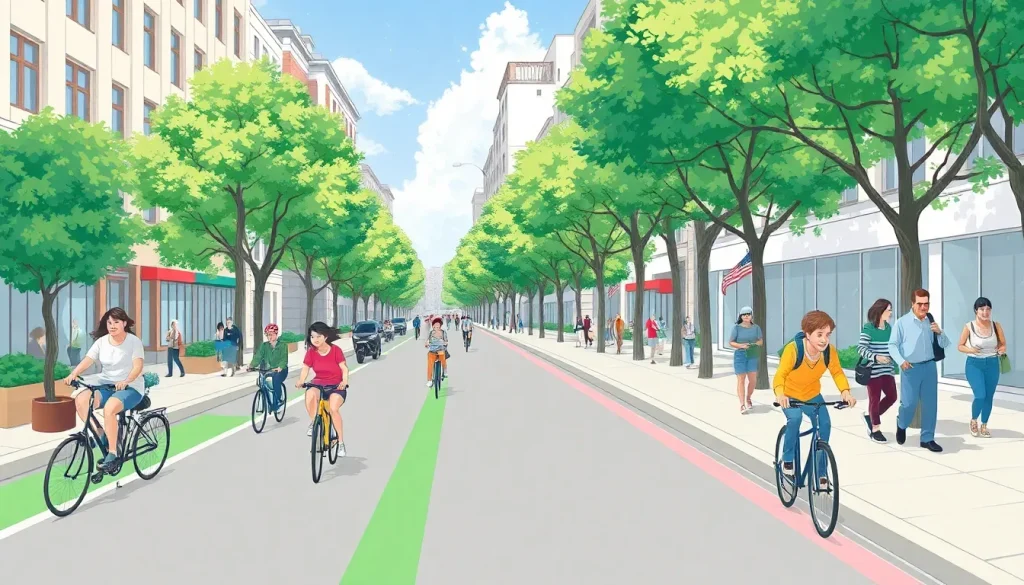
In brief
At a glance
Quick Facts
- Verdict
- Promising
- Problem addressed
- Physical inactivity and car-dependent lifestyles
- Evidence strength
- Strong
- Potential scale
- Global
- Relative cost
- Moderate
- Time to impact
- Years
Quick verdict
Walking and cycling for transport (active travel) are among the most promising, cost-effective, and evidence-backed interventions for improving public health. They address the global pandemic of physical inactivity, reduce the burden of non-communicable diseases, and yield substantial co-benefits for the environment and society. However, their population-level impact is contingent on safe, accessible infrastructure and supportive policies, and they are not a panacea for all settings.
Problem addressed
Physical inactivity is a leading risk factor for global mortality, contributing to an estimated 3.2 million deaths annually. Sedentary lifestyles, driven by car-dependent urban design and modern work patterns, are linked to obesity, cardiovascular disease, type 2 diabetes, certain cancers, and mental health disorders. Motorized transport also generates air pollution, noise, and greenhouse gas emissions, further harming public health. Walking and cycling as modes of transport offer a direct way to integrate physical activity into daily routines, reducing the health burden of inactivity while simultaneously mitigating transport-related environmental harms.
How the solution works
The primary mechanism is increased energy expenditure through regular, moderate-intensity physical activity. Walking and cycling for commuting, errands, or leisure elevate heart rate, improve cardiovascular fitness, and help maintain a healthy weight. Regular active travel is associated with lower blood pressure, improved lipid profiles, and enhanced insulin sensitivity. Beyond physiological effects, active commuting reduces exposure to the stressors of driving, such as traffic congestion, and can improve mental well-being through outdoor exposure and social interaction. At the population level, a shift from private motor vehicles to walking and cycling reduces air pollutant emissions, traffic noise, and road danger, creating a virtuous cycle where safer, cleaner streets encourage more active travel.
Evidence strength
The evidence linking walking and cycling to health benefits is robust and comes from a large body of observational studies, systematic reviews, and meta-analyses. Prospective cohort studies consistently show that individuals who walk or cycle for transport have lower all-cause mortality, with risk reductions ranging from 10% to 30% after adjusting for confounders. A 2017 meta-analysis in The BMJ found that cycle commuting was associated with a 41% lower risk of premature death and a 46% lower risk of cardiovascular disease. For walking, the evidence is similarly positive, though effect sizes are often smaller due to lower intensity. Natural experiments, such as the introduction of bike-sharing schemes or new cycling infrastructure, have demonstrated increases in physical activity and improvements in population health outcomes, though these studies face challenges in isolating causality. The evidence on mental health benefits is growing but less quantified. Overall, the evidence is strong for individual health benefits, but the evidence for population-level impact from scaled-up interventions is moderate, as it depends on complex behavioral and environmental factors.
Potential scale
The potential scale of health benefits from walking and cycling is substantial. Globally, a large share of urban trips are short: in many cities, over 40% of car trips are under 5 km, a distance easily cycled, and over 20% are under 2 km, walkable. If a significant portion of these short car trips were replaced by active travel, the health gains could be enormous. Modeling studies suggest that achieving a mode share of 20–30% for cycling in cities could prevent tens of thousands of premature deaths annually in large countries. However, the actual scale is limited by urban form, climate, topography, and safety. In low-density, car-dependent suburbs, walking and cycling may not be practical for many trips without complementary land-use changes. The solution is most scalable in urban areas with supportive infrastructure and policies.
Cost considerations
Walking and cycling are among the most cost-effective transport interventions. For individuals, the direct costs are minimal compared to car ownership. For governments, building sidewalks, bike lanes, and secure parking is relatively inexpensive compared to road expansions or public transit systems. Cost-benefit analyses consistently show high returns: for example, the benefit-cost ratio of cycling infrastructure has been estimated at between 5:1 and 20:1 when health gains, reduced congestion, and environmental benefits are included. However, retrofitting existing car-centric cities can be costly and politically challenging. Operational costs are low, mainly involving maintenance and promotion. Overall, the cost per disability-adjusted life year (DALY) averted is among the lowest of any public health intervention.
Implementation time
Individual behavior change can occur quickly once safe infrastructure is in place. Pop-up bike lanes and pedestrian zones can be implemented in weeks, as seen during the COVID-19 pandemic. However, building comprehensive, connected networks of safe walking and cycling routes typically takes years. Health benefits at the individual level can be observed within months of adopting regular active travel. Population-level health impacts, such as reduced chronic disease prevalence, may take 5–10 years to materialize. The time to impact is thus moderate: quick wins are possible, but sustained investment is needed for long-term transformation.
Environmental benefits
Shifting trips from motor vehicles to walking and cycling reduces emissions of greenhouse gases (CO₂, black carbon) and air pollutants (NOₓ, PM₂.₅). A person cycling 10 km per day instead of driving can avoid roughly 1.5 tonnes of CO₂ emissions per year, though this varies by vehicle type and trip length. Reduced traffic also lowers noise pollution and the urban heat island effect. Additionally, less space is needed for parking and roads, freeing up land for green spaces that further improve air quality and biodiversity. These environmental gains amplify the health benefits by reducing population exposure to pollution.
Social and economic co-benefits
Beyond health, active travel yields significant social and economic co-benefits. Reduced healthcare costs from lower rates of chronic disease can save billions annually in national health budgets. Increased physical activity improves workplace productivity and reduces absenteeism. Walkable and bikeable neighborhoods tend to have higher property values and more vibrant local economies, as people on foot or bike are more likely to stop and shop. Socially, active travel fosters community interaction and reduces social isolation. It also improves transport equity by providing affordable mobility options to those who cannot afford a car. Traffic safety improves when more people walk and cycle, due to the ‘safety in numbers’ effect, though this requires adequate infrastructure.
Risks and unintended consequences
The primary risk is traffic injury: pedestrians and cyclists are vulnerable road users, and in the absence of safe infrastructure, increased walking and cycling can lead to more collisions. Air pollution exposure may also be higher for cyclists and pedestrians traveling along busy roads, though the net health impact of active travel remains positive. There is a risk of ‘green gentrification,’ where new bike lanes and pedestrian improvements increase property values and displace low-income residents. Additionally, promoting cycling without adequate training and helmet use could increase head injuries. Rebound effects, such as people eating more after exercise, are minimal. Finally, if active travel policies are not inclusive, they may benefit primarily fit, young, male populations, exacerbating health inequalities.
Where it works best
Walking and cycling for public health work best in compact, mixed-use urban areas with high population density, where destinations are close and trips are short. Cities with flat topography, mild climates, and a culture of active travel see higher uptake. Strong political commitment, integrated planning, and continuous investment in safe, connected infrastructure are critical success factors. Examples include the Netherlands, Denmark, and increasingly cities like Paris and Bogotá. In these contexts, mode shares for cycling can exceed 25% of all trips, and health benefits are well-documented.
Where it may not work
The solution is less effective in low-density, sprawling suburbs where distances are long and land uses are separated, making walking and cycling impractical for most utilitarian trips. Extreme climates—very hot, cold, or rainy—can deter active travel unless infrastructure provides shade, shelter, or snow clearance. Hilly terrain can be a barrier to cycling, though e-bikes are mitigating this. In regions with high traffic danger and weak rule of law, walking and cycling may be too risky. Cultural norms that stigmatize walking or cycling as low-status can also limit adoption. In such contexts, complementary solutions like public transit or electric vehicles may be more appropriate.
Comparison with alternatives
Compared to other transport and health interventions, walking and cycling offer unique advantages. Unlike public transit, they provide door-to-door mobility and physical activity. Unlike electric vehicles, they produce zero emissions and reduce congestion. However, they are limited in range and carrying capacity. For longer trips, combining active travel with public transit (e.g., bike-to-transit) can be effective. Compared to gym-based exercise programs, active travel is more sustainable because it is integrated into daily routines. In terms of health impact per dollar, walking and cycling infrastructure often outperforms clinical interventions for chronic disease prevention.
Case studies
The Netherlands and Denmark are the most cited success stories. In the Netherlands, 27% of all trips are by bicycle, and the country has one of the lowest rates of obesity and cycling fatalities in the world, thanks to decades of investment in separated bike lanes and traffic calming. Copenhagen’s cycling infrastructure has led to 41% of commutes being by bike, with estimated annual health savings of €230 million. Bogotá, Colombia, has pioneered the Ciclovía program, closing over 120 km of streets to cars every Sunday, attracting 1.5 million participants and demonstrating the latent demand for active recreation. During the COVID-19 pandemic, many cities rapidly installed pop-up bike lanes; Paris saw a 70% increase in cycling, and many of these changes are being made permanent. These cases show that with political will and investment, rapid and large-scale shifts are possible.
Final assessment
Walking and cycling are proven, cost-effective, and scalable solutions for improving public health, with strong evidence for individual health benefits and growing evidence for population-level impact. They address the root causes of physical inactivity and offer substantial co-benefits for the environment, economy, and society. However, their success is not automatic: it requires deliberate policy, sustained investment in safe infrastructure, and integration with land-use planning. In dense urban areas, the case is compelling; in car-dependent suburbs, complementary strategies are needed. Overall, promoting walking and cycling should be a cornerstone of public health and urban policy, but it must be implemented equitably and context-sensitively to maximize benefits and minimize harms.
FAQ
Does walking and cycling really improve health?
Yes, extensive research shows that regular walking and cycling reduce the risk of premature death, cardiovascular disease, type 2 diabetes, and some cancers. Even small amounts of daily activity provide benefits, and the more you do, the greater the gains. The health benefits outweigh the risks from air pollution and traffic injury in most settings.
What are the main barriers to more walking and cycling?
The main barriers include lack of safe infrastructure (e.g., bike lanes, sidewalks), high traffic speeds and volumes, long distances between destinations, unfavorable weather, hilly terrain, and cultural attitudes that favor car use. Fear of injury is a major deterrent, especially for women, children, and the elderly.
How can cities encourage more walking and cycling?
Cities can build protected bike lanes, widen sidewalks, reduce speed limits, implement traffic calming, create car-free zones, provide secure bike parking, and integrate cycling with public transit. Public awareness campaigns, bike-share programs, and financial incentives (e.g., bike-to-work schemes) also help. The most effective approach combines infrastructure, policy, and promotion.
References
- World Health Organization. Global Action Plan on Physical Activity 2018-2030.
- Lancet series on physical activity 2012, 2016.
- Mueller et al. (2015) Health impact assessment of active transportation: A systematic review. Preventive Medicine.
- Celis-Morales et al. (2017) Association between active commuting and incident cardiovascular disease, cancer, and mortality: prospective cohort study. BMJ.
- Pucher et al. (2010) Walking and cycling to health: a comparative analysis of city, state, and international data. American Journal of Public Health.