In brief
At a glance
Quick Facts
- Verdict
- Proven
- Problem addressed
- Urban congestion, emissions, and inefficient transit
- Evidence strength
- Strong
- Potential scale
- Regional
- Relative cost
- Moderate to High
- Time to impact
- Years
Quick verdict
Both Bus Rapid Transit (BRT) and Light Rail Transit (LRT) are proven, high-capacity surface transit solutions that can significantly improve urban mobility and reduce car dependence. Neither is universally superior; the choice depends heavily on local conditions, including demand density, available right-of-way, capital budget, and long-term development goals. BRT generally offers lower upfront costs and faster implementation, while LRT typically provides higher ultimate capacity, greater ride quality, and stronger land-use development effects. The evidence base for both is strong, with numerous successful systems worldwide, but each has notable failures when poorly implemented.
Problem addressed
Rapid urbanization and increasing private car ownership have led to chronic traffic congestion, air pollution, greenhouse gas emissions, and inefficient land use in cities globally. Traditional bus services often suffer from slow speeds, unreliability, and poor image, while heavy rail metro systems are prohibitively expensive and disruptive to build in many contexts. BRT and LRT both aim to provide a middle ground: high-quality, high-capacity transit that can attract choice riders, reduce travel times, and support sustainable urban growth at a fraction of the cost of a metro.
How the solution works
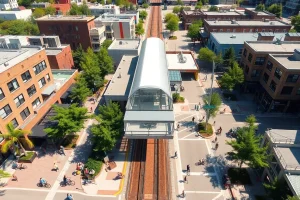
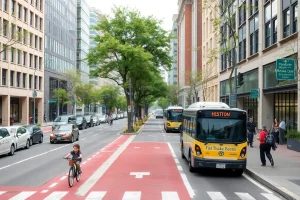
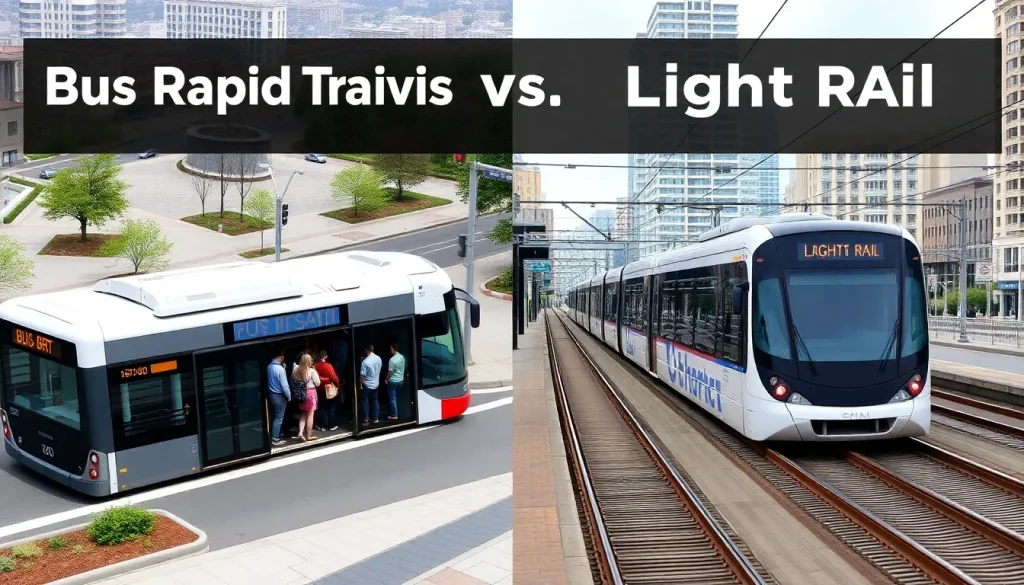
BRT achieves rail-like performance through dedicated bus lanes, off-board fare collection, level boarding, and signal priority. Buses operate on exclusive rights-of-way, often with passing lanes at stations to allow express services. LRT uses electrically powered trains running on steel rails, typically in dedicated corridors but sometimes sharing street space. Both systems rely on separating transit vehicles from general traffic to ensure speed and reliability, and both can be implemented with varying degrees of segregation, from fully grade-separated to mixed-traffic operations.
Evidence strength
The evidence base for both modes is extensive, comprising hundreds of peer-reviewed studies, agency reports, and before-and-after evaluations. BRT has been particularly well-documented in Latin American cities (e.g., Bogotá, Curitiba) and more recently in Asia and Africa. LRT has a longer history in Europe and North America, with robust data on ridership, land value uplift, and operational costs. However, direct comparative studies are often confounded by local factors, and claims of inherent superiority of one mode over the other are not strongly supported by the literature. The quality of implementation—dedicated lanes, station design, frequency—is a far stronger predictor of success than the technology itself.
Potential scale
Both modes can scale from a single corridor to a city-wide network. BRT systems have been deployed in over 190 cities worldwide, carrying more than 34 million passengers daily. LRT operates in over 400 cities. BRT can be scaled incrementally, starting with lower-cost infrastructure and upgrading over time. LRT typically requires a larger initial investment but can achieve higher ultimate capacities—up to 30,000 passengers per hour per direction, compared to BRT’s practical maximum of around 15,000–25,000. The scalability of either mode is limited by the availability of dedicated right-of-way; without it, both degrade to standard bus or streetcar performance.
Cost considerations
Capital costs for BRT are generally lower than for LRT, often by a factor of 3 to 10. A typical BRT corridor costs $5–15 million per mile, while LRT ranges from $30–100+ million per mile, depending on grade separation and land acquisition. However, operating costs per passenger can be higher for BRT due to lower vehicle capacity and higher labor costs per passenger. BRT buses also have shorter lifespans (12–15 years) compared to LRT vehicles (30+ years), affecting lifecycle costs. When demand is high enough to fill larger LRT vehicles, the total cost per passenger-mile can be comparable or even favor LRT over the long term.
Implementation time
BRT can be implemented relatively quickly—often within 2–4 years from planning to operation—because it uses existing roadways and off-the-shelf vehicles. LRT projects typically require 5–10 years due to longer planning, environmental reviews, track construction, utility relocation, and vehicle procurement. However, BRT corridors that require extensive dedicated infrastructure (e.g., elevated sections) can approach LRT timelines. Once operational, both modes can deliver immediate travel time savings and ridership gains, but LRT may take longer to reach full capacity due to phased extensions.
Environmental benefits
Both modes reduce greenhouse gas emissions and local air pollutants by shifting trips from private cars. LRT has zero tailpipe emissions and can be powered by renewable electricity, offering a clearer path to decarbonization. BRT’s environmental performance depends on bus technology: diesel BRT produces local pollutants, while electric or hybrid buses can mitigate this. Lifecycle analyses show that LRT generally has lower per-passenger emissions than BRT, especially when ridership is high, due to steel-wheel efficiency and regenerative braking. However, the construction phase of LRT is more carbon-intensive. Both modes support compact, transit-oriented development, which yields long-term emission reductions from reduced car dependence.
Social and economic co-benefits
Both BRT and LRT can improve access to jobs, education, and services, particularly for low-income populations. They reduce traffic fatalities by providing safer alternatives to private cars and motorcycles. LRT is often associated with stronger land value uplift and private investment around stations, though high-quality BRT can also stimulate development if accompanied by supportive land-use policies. BRT’s lower cost can allow more extensive networks, potentially serving more neighborhoods. Both modes can enhance public space when implemented with pedestrian and cycling improvements.
Risks and unintended consequences
Poorly designed BRT can become “BRT creep,” where dedicated lanes are shared with other vehicles, eroding speed and reliability. BRT can also be stigmatized as a “second-class” option compared to rail, affecting ridership and political support. LRT risks include cost overruns, construction disruption, and “rail bias” leading to overinvestment in corridors where BRT would suffice. Both modes can displace low-income residents if transit improvements trigger gentrification without affordable housing protections. Additionally, BRT’s reliance on diesel buses can worsen local air quality if not electrified.
Where it works best
BRT is most effective in wide, straight corridors with high passenger demand (5,000–15,000 passengers per hour per direction) and where capital funding is limited. It excels in cities that can dedicate entire lanes and implement signal priority. LRT is best suited for corridors with very high demand (10,000–30,000 pphpd), where long-term operating costs and ride quality justify the higher upfront investment. It also works well where urban regeneration is a primary goal, as the permanence of rail infrastructure tends to attract more private investment.
Where it may not work
BRT may fail in corridors where dedicated lanes cannot be enforced, where political will is weak, or where demand exceeds 20,000 pphpd, leading to bus bunching and overcrowding. LRT is often a poor fit for low-density corridors, where the high capital cost cannot be justified by ridership, or in cities with limited financial capacity to absorb cost overruns. Both modes struggle in extremely congested urban cores without grade separation, and in cities where land-use planning does not support transit-oriented development.
Comparison with alternatives
Compared to conventional bus services, both BRT and LRT offer significantly higher capacity, speed, and reliability. BRT is more flexible than LRT, as routes can be modified and buses can operate beyond the dedicated corridor. LRT provides a smoother, quieter ride and is generally perceived as more permanent and comfortable, which can attract more “choice” riders. Heavy rail metro offers even higher capacity but at much greater cost and disruption. Emerging alternatives like trackless trams (autonomous rail transit) blur the line between BRT and LRT, but their real-world performance remains unproven at scale.
Case studies
Bogotá, Colombia (BRT): TransMilenio, launched in 2000, carries over 2.4 million passengers daily on 113 km of dedicated busways. It reduced travel times by 32% and traffic fatalities by 92% on corridors, but has faced overcrowding and maintenance challenges. Curitiba, Brazil (BRT): The pioneering BRT system, started in 1974, inspired systems worldwide. It demonstrated that incremental BRT can shape urban growth, though later expansions struggled with capacity. Portland, USA (LRT): MAX Light Rail, opened in 1986, now spans 97 km and carries 120,000 daily riders. It spurred billions in transit-oriented development, but capital costs were high. Seattle, USA (LRT): Link light rail, opened in 2009, has seen strong ridership growth and development, but at a cost of over $200 million per mile for recent extensions. Guangzhou, China (BRT): Opened in 2010, it carries 850,000 passengers daily, one of the highest BRT riderships globally, using direct-service operations that allow buses to enter and leave the corridor.
Final assessment
Neither BRT nor LRT is inherently superior; the decision must be based on a rigorous, corridor-specific analysis of demand, costs, and strategic goals. BRT offers a lower-risk, faster-to-implement solution that can deliver substantial benefits when designed with true rail-like features. LRT provides higher long-term capacity and stronger urban development effects but requires greater financial commitment and political will. The most successful implementations of either mode share common elements: dedicated right-of-way, off-board fare collection, high-frequency service, and integration with land-use planning. Cities should avoid “technology-first” thinking and instead focus on delivering the highest-quality transit service possible within their constraints.
FAQ
Which is cheaper to build: BRT or LRT?
BRT is generally much cheaper to build, with typical capital costs of $5–15 million per mile, compared to $30–100+ million per mile for LRT. However, lifecycle costs can be closer if ridership is high, because LRT vehicles last longer and have lower operating costs per passenger.
Can BRT carry as many people as light rail?
In practice, the highest-capacity BRT systems can carry up to about 25,000 passengers per hour per direction, while LRT can reach 30,000 or more. Most BRT systems operate well below that maximum, and LRT generally has a higher practical capacity due to larger vehicles and the ability to couple trains.
Does light rail always attract more riders than BRT?
Not necessarily. While some studies suggest a 'rail bias' where riders prefer trains, the quality of service (speed, frequency, reliability) is a much stronger predictor of ridership than the vehicle type. Well-designed BRT systems have achieved ridership levels comparable to or exceeding many LRT lines.
References
- Institute for Transportation and Development Policy (ITDP). The BRT Standard. 2016.
- Transportation Research Board. TCRP Report 90: Bus Rapid Transit – Implementation Guidelines. 2003.
- Cervero, R. The Transit Metropolis: A Global Inquiry. Island Press, 1998.
- Litman, T. Evaluating Rail Transit Criticism. Victoria Transport Policy Institute, 2023.
- Zhang, M. et al. 'Bus Rapid Transit vs. Light Rail Transit: A Comparative Cost Analysis.' Journal of Public Transportation, 2019.