In brief
At a glance
Quick Facts
- Definition
- Scope 3 emissions are all indirect GHG emissions in a company’s value chain, excluding purchased energy.
- Categories
- The GHG Protocol defines 15 Scope 3 categories, including purchased goods, transportation, use of sold products, and investments.
- Share of footprint
- For many companies, Scope 3 accounts for over 80% of total emissions.
- Primary data challenge
- Most companies rely on secondary data and industry averages because primary data from suppliers is scarce.
- Double counting
- One company’s Scope 3 emissions are often another’s Scope 1 or 2, making aggregation complex.
- Regulatory trend
- Mandatory Scope 3 disclosure is increasing in jurisdictions such as the EU under the Corporate Sustainability Reporting Directive (CSRD).
- Methodological guidance
- The GHG Protocol’s Corporate Value Chain (Scope 3) Standard is the leading framework for measurement.
- Key barrier
- Lack of direct control over value chain activities is the fundamental reason measurement is difficult.
Key Takeaways
- Scope 3 emissions encompass all indirect greenhouse gas emissions in a company’s value chain, both upstream and downstream, and often represent the largest share of its total carbon footprint.
- Measuring Scope 3 is difficult because companies lack direct control over the activities that generate these emissions and must rely on data from suppliers, customers, and other external entities.
- Data availability and quality are major obstacles, as many value chain partners do not measure or disclose their emissions, forcing companies to use estimates and industry averages that reduce accuracy.
- Methodological challenges, such as setting appropriate boundaries, avoiding double counting, and allocating emissions across multiple products, add further complexity to Scope 3 accounting.
What Is Why Scope 3 Emissions Are Difficult to Measure?
Scope 3 emissions are a category of greenhouse gas (GHG) emissions defined by the Greenhouse Gas Protocol as all indirect emissions that occur in a company’s value chain, excluding those from purchased energy (which are Scope 2). They include both upstream emissions—such as those from purchased goods and services, capital goods, fuel- and energy-related activities, transportation and distribution, and waste generated in operations—and downstream emissions, such as those from the use of sold products, end-of-life treatment, and investments. The difficulty in measuring Scope 3 emissions arises from the fact that these emissions are not under the reporting company’s operational control; instead, they are generated by suppliers, customers, and other value chain partners, each with their own measurement practices, data systems, and levels of transparency.
This measurement challenge is not merely a technical inconvenience but a fundamental barrier to comprehensive corporate climate accountability. Because Scope 3 emissions often represent the majority of a company’s total carbon footprint—sometimes exceeding 80%—incomplete or inaccurate measurement can lead to significant underestimation of climate risks and missed opportunities for emission reductions. The complexity is compounded by the need to navigate 15 distinct categories of Scope 3 emissions, each with unique data requirements, allocation methods, and stakeholder relationships. As a result, companies face a persistent tension between the desire for accurate, decision-useful data and the practical limitations of gathering and verifying information from a diffuse network of value chain partners.
Overview
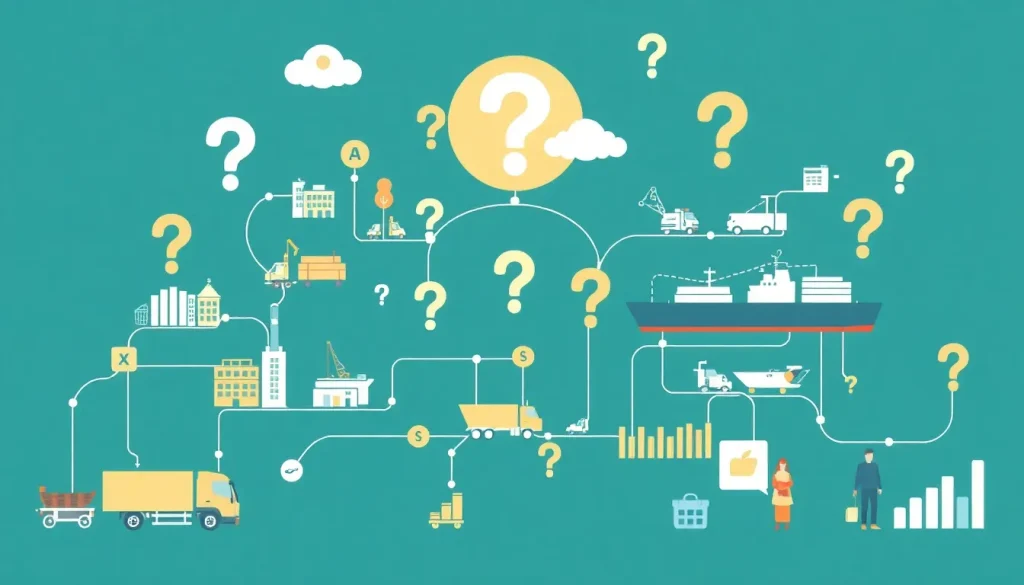
The Greenhouse Gas Protocol’s Corporate Value Chain (Scope 3) Standard divides Scope 3 emissions into 15 categories, spanning everything from purchased goods and services to the use of sold products and franchises. This broad scope is intentional: it captures the full lifecycle impact of a company’s activities, providing a holistic view of its carbon footprint. However, this comprehensiveness is also the source of the measurement difficulty. Unlike Scope 1 (direct emissions from owned or controlled sources) and Scope 2 (indirect emissions from purchased energy), Scope 3 emissions are generated by assets and activities that the reporting company does not own or control. This means that data collection depends on the cooperation of suppliers, distributors, customers, and other third parties, many of whom may lack the resources or incentives to provide accurate emissions data.
Furthermore, the sheer number of emission sources within Scope 3 can be overwhelming. A large multinational corporation may have thousands of suppliers, each contributing to multiple Scope 3 categories. The emissions from the use of sold products, for example, can vary dramatically based on how consumers operate and maintain those products, introducing significant uncertainty. The challenge is not only technical but also organizational: it requires cross-functional collaboration, supplier engagement, and often a cultural shift toward transparency and data sharing that many value chains are not yet equipped to support.
How It Works
Measuring Scope 3 emissions typically follows a four-step process: identification of relevant categories, collection of activity data, application of emission factors, and allocation of emissions to the reporting company. First, a company must determine which of the 15 Scope 3 categories are relevant to its business, based on materiality and data availability. This scoping exercise itself can be challenging, as it requires a deep understanding of the value chain and the relative significance of different emission sources. Once categories are identified, the company gathers activity data—such as quantities of materials purchased, miles traveled by logistics providers, or product usage patterns—from internal records, suppliers, or industry databases.
Next, the company applies emission factors to convert activity data into GHG emissions. Emission factors are coefficients that estimate the emissions per unit of activity (e.g., kg CO₂ per ton-kilometer of freight). These factors can come from government agencies, industry associations, or lifecycle databases, but they often represent averages that may not reflect the specific conditions of a company’s value chain. Finally, emissions must be allocated to the reporting company, which can be complex when multiple companies share the same value chain activities (e.g., a supplier serving many customers). The entire process is iterative and requires continuous refinement as better data and methodologies become available.
Main Causes or Drivers
The difficulty in measuring Scope 3 emissions is driven by several interrelated factors. First, data availability and quality are persistent problems. Many suppliers, especially small and medium-sized enterprises, do not track their own emissions, and even when they do, they may use inconsistent methodologies or refuse to share data due to confidentiality concerns. For downstream categories like “use of sold products,” companies must make assumptions about consumer behavior that are inherently uncertain. Second, methodological complexity creates barriers. The GHG Protocol provides guidance, but companies must still make judgment calls on system boundaries, allocation methods, and emission factor selection, which can lead to incomparability between organizations. Third, lack of direct control means that companies cannot simply mandate data collection; they must rely on influence, incentives, and long-term relationship building to obtain the necessary information.
Additionally, double counting is a structural issue. Because one company’s Scope 3 emissions are another company’s Scope 1 or 2 emissions, aggregating emissions across a value chain without double counting is extremely difficult. This is not necessarily a problem for individual company reporting, but it complicates sector-wide or global assessments. Finally, resource constraints—both financial and human—limit the ability of many organizations to invest in robust Scope 3 measurement systems. The cost and effort required to collect primary data from hundreds or thousands of value chain partners can be prohibitive, especially for smaller companies.
Data Limitations and Uncertainties
Data limitations are the most frequently cited barrier to accurate Scope 3 measurement. Primary data—actual emissions data from suppliers or other value chain partners—is often unavailable, forcing companies to rely on secondary data sources such as industry-average emission factors or economic input-output models. While these proxies enable a rough estimate, they introduce significant uncertainty and can mask variations between suppliers or products. For example, two suppliers of the same material may have vastly different carbon footprints due to differences in energy sources or manufacturing efficiency, but if a company uses an industry-average factor, it cannot distinguish between them or incentivize improvements.
Uncertainty also arises from the temporal and spatial variability of emission factors. Grid electricity emission factors, for instance, change over time and differ by region, but companies may lack the granular data to apply the most accurate factor. Additionally, many Scope 3 categories require assumptions about product lifespans, end-of-life treatment, and consumer behavior that are difficult to validate. These uncertainties compound when companies attempt to set science-based targets or report progress, as small changes in methodology can lead to large swings in reported emissions, undermining credibility and comparability.
Importance and Impact
Despite the measurement challenges, Scope 3 emissions are critical to address because they often constitute the majority of a company’s total carbon footprint. For many sectors—such as retail, consumer goods, and financial services—Scope 3 can account for over 90% of total emissions. Ignoring or inaccurately measuring these emissions would mean overlooking the most significant climate impacts of a business, leading to incomplete risk assessments and missed opportunities for reduction. Investors, regulators, and other stakeholders increasingly demand comprehensive Scope 3 disclosure as part of climate-related financial risk reporting, making accurate measurement a matter of both environmental responsibility and business necessity.
Moreover, measuring Scope 3 emissions drives strategic value. It helps companies identify hotspots in their value chains, engage suppliers on sustainability, and innovate in product design and logistics. Companies that successfully measure and manage Scope 3 emissions can reduce costs, enhance brand reputation, and build resilience against future carbon regulations. Conversely, failure to measure and disclose Scope 3 emissions can expose companies to reputational damage, regulatory penalties, and loss of market access as global supply chains decarbonize.
Solutions
Addressing the challenges of Scope 3 measurement requires a combination of methodological rigor, technological tools, and collaborative approaches. Companies can start by using a hybrid approach: applying primary data where available and feasible, and supplementing with secondary data and industry averages for the rest. Over time, they can work to improve data quality by engaging suppliers through capacity-building programs, data-sharing platforms, and contractual requirements for emissions reporting. Digital solutions such as blockchain for supply chain traceability, AI-driven data aggregation, and cloud-based carbon accounting software are increasingly used to streamline data collection and improve accuracy.
Standardization efforts also play a key role. Initiatives like the Partnership for Carbon Transparency (PACT) and the GHG Protocol’s ongoing updates aim to harmonize calculation methods and data exchange formats, reducing the burden on both reporting companies and their value chain partners. Sector-specific guidance, such as that developed by the Science Based Targets initiative (SBTi), helps companies focus on the most material categories and provides clear pathways for target setting. Ultimately, improving Scope 3 measurement is an iterative process that requires long-term commitment, cross-industry collaboration, and a willingness to embrace uncertainty while continuously refining data and methods.
FAQ
What are Scope 3 emissions?
Scope 3 emissions are all indirect greenhouse gas emissions that occur in a company’s value chain, both upstream and downstream, excluding those from purchased energy (Scope 2). They include emissions from sources like purchased goods, business travel, waste disposal, and the use of sold products.
Why are Scope 3 emissions so hard to measure?
They are hard to measure because the reporting company does not control the activities that produce them. Data must be collected from many external partners, who may not track emissions or use different methods. Additionally, methodological choices about boundaries, allocation, and emission factors introduce complexity and uncertainty.
Why do Scope 3 emissions matter if they are hard to measure?
They matter because they often represent the largest part of a company’s carbon footprint. Ignoring them can lead to incomplete climate risk assessments and missed reduction opportunities. Investors and regulators increasingly require Scope 3 disclosure, making it essential for transparency and long-term business resilience.
References
- Greenhouse Gas Protocol. Corporate Value Chain (Scope 3) Accounting and Reporting Standard. World Resources Institute and World Business Council for Sustainable Development.
- CDP (formerly Carbon Disclosure Project). Technical Note: Relevance of Scope 3 Categories by Sector.
- Science Based Targets initiative (SBTi). SBTi Corporate Net-Zero Standard.