In brief
At a glance
Quick Facts
- Definition
- Corporate water stewardship is the use of water that is socially equitable, environmentally sustainable, and economically beneficial, achieved through a stakeholder-inclusive process.
- Key Framework
- The Alliance for Water Stewardship (AWS) Standard provides a globally recognized framework for implementing water stewardship.
- Water Risk
- Global water demand is projected to exceed sustainable supply by 40% by 2030, according to the 2030 Water Resources Group.
- Business Exposure
- More than two-thirds of the world’s largest companies report exposure to water risks, with potential financial impacts in the billions of dollars.
- Collective Action
- Water stewardship often involves multi-stakeholder partnerships, such as the CEO Water Mandate, to address shared water challenges.
- SDG 6
- Corporate water stewardship directly contributes to achieving UN Sustainable Development Goal 6, which aims to ensure availability and sustainable management of water and sanitation for all.
- Water Footprint
- A company’s water footprint includes direct (operational) and indirect (supply chain) water use, as well as water pollution.
- Circular Economy
- Stewardship promotes circular water use, such as recycling and reuse, to minimize freshwater withdrawal and wastewater discharge.
Key Takeaways
- Corporate water stewardship extends beyond water efficiency within a company’s own facilities to address water risks and impacts across the entire value chain and the local watershed.
- It is driven by the recognition that water is a shared resource, and business continuity depends on the health of the water systems in which companies operate.
- Effective stewardship involves a progression from internal water management to collective action with other stakeholders, including governments, communities, and other businesses.
- The approach helps mitigate physical, regulatory, and reputational risks while contributing to the Sustainable Development Goals, particularly SDG 6 on clean water and sanitation.
What Is Corporate Water Stewardship Explained?
Corporate water stewardship is a strategic framework through which businesses take responsibility for their water use and impacts, moving beyond site-level efficiency to engage in sustainable water management at the catchment or watershed level. It encompasses actions that address shared water challenges—such as scarcity, pollution, and inadequate access to water and sanitation—in collaboration with other water users. Unlike traditional water management, which focuses narrowly on reducing a company’s own water footprint, stewardship emphasizes the interconnectedness of water resources and the need for collective action to ensure long-term water security for all. This concept has evolved from corporate social responsibility and environmental management, integrating water risk assessment, stakeholder engagement, and public policy advocacy.
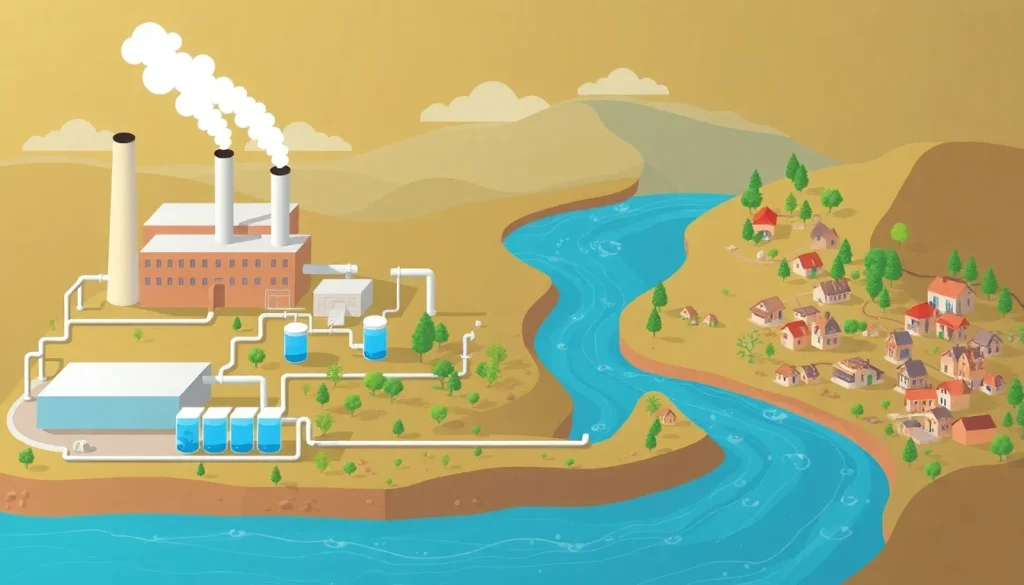
At its core, corporate water stewardship recognizes that a business cannot secure its own water supply in isolation. Water is a shared resource that flows across boundaries, and the actions of one user affect others. A factory that treats and recycles its wastewater may still face operational disruptions if the local aquifer is overexploited by other users or if climate change reduces water availability. Stewardship therefore requires companies to look beyond their fence lines and work with governments, communities, and other businesses to address systemic water challenges. This approach is codified in international standards such as the Alliance for Water Stewardship (AWS) Standard, which provides a globally recognized framework for responsible water use.
Main Causes or Drivers
Several factors drive the adoption of corporate water stewardship. The most immediate is the growing recognition of water-related risks to business operations. These risks are typically categorized as physical (scarcity, flooding, pollution), regulatory (tightening water quality and withdrawal limits), and reputational (stakeholder concerns over water use). Companies in water-intensive sectors such as agriculture, food and beverage, textiles, and semiconductors are particularly exposed, but water risks cascade through supply chains, affecting even those with minimal direct water use. For example, a beverage company may face production stoppages if its agricultural suppliers experience drought.
Another driver is the increasing pressure from investors, customers, and civil society for greater transparency and accountability. Initiatives like CDP (formerly the Carbon Disclosure Project) now include water security questionnaires, and institutional investors are incorporating water risk into their decision-making. Furthermore, the business case for water stewardship is strengthened by the potential for cost savings through efficiency, improved community relations, and enhanced brand value. Finally, the global policy landscape, including the UN Sustainable Development Goals, has elevated water as a critical issue, encouraging companies to align their strategies with societal goals.
How It Works
Corporate water stewardship typically follows a continuous improvement cycle that begins with understanding water use and context. Companies first map their water footprint across direct operations and the supply chain, using tools such as the Water Footprint Network’s methodology or the WRI Aqueduct tool to assess water stress in their locations. They then identify and prioritize water-related risks and opportunities, considering both the quantity and quality of water, as well as the social and ecological conditions of the watershed.
Based on this assessment, companies set targets and implement actions. These actions often progress along a maturity ladder:
- Operational efficiency: Reducing water withdrawal, improving treatment, and recycling within facilities.
- Supply chain engagement: Working with suppliers to improve their water management practices.
- Watershed engagement: Participating in or leading multi-stakeholder initiatives to address shared water challenges, such as restoring wetlands or improving water governance.
- Advocacy and policy: Supporting public policies that promote sustainable water management and equitable access.
Monitoring, reporting, and verification are essential components. Companies disclose their water performance through platforms like CDP and the Global Reporting Initiative (GRI), and some seek third-party certification against the AWS Standard. The process is iterative, with regular reviews to adapt to changing conditions and new information.
Importance and Impact
Corporate water stewardship is important because water is a critical resource for nearly all economic activities, and its availability and quality are under increasing pressure. Global water demand is projected to exceed sustainable supply by a significant margin, and climate change is intensifying water-related risks. By adopting stewardship practices, companies can help safeguard the water resources upon which they, and the communities around them, depend. This not only reduces business risk but also contributes to broader societal goals, such as achieving universal access to clean water and sanitation.
The impact of effective stewardship can be substantial. At the local level, it can lead to improved water quality, restored ecosystems, and more reliable water supplies for communities. For businesses, it can mean reduced operational costs, enhanced license to operate, and stronger supply chain resilience. On a global scale, widespread corporate water stewardship can accelerate progress toward SDG 6 and help build a water-secure future. However, the full potential of stewardship is realized only when it moves from isolated projects to systemic, collective action that addresses the root causes of water stress.
Solutions
There is no single solution to water challenges, but corporate water stewardship offers a portfolio of approaches tailored to specific contexts. Key solutions include:
- Water efficiency and circularity: Implementing advanced treatment technologies, closed-loop systems, and rainwater harvesting to minimize freshwater withdrawal and wastewater discharge.
- Nature-based solutions: Investing in green infrastructure such as constructed wetlands, reforestation, and soil conservation to enhance natural water storage and filtration.
- Collective action platforms: Joining or forming water stewardship partnerships, such as catchment-based water funds or industry roundtables, to pool resources and coordinate efforts.
- Supply chain programs: Providing training, incentives, and technical support to suppliers to improve their water management, often focusing on agricultural producers where water use is highest.
- Policy engagement: Advocating for robust water governance, including water pricing that reflects true costs, and supporting the human right to water and sanitation.
- Transparency and disclosure: Using standardized frameworks to report water performance, which builds trust and enables benchmarking.
These solutions are most effective when integrated into a company’s overall business strategy and supported by senior leadership.
Benefits, Limitations and Trade-offs
The benefits of corporate water stewardship are multifaceted. For businesses, it can lead to cost savings from reduced water and energy use, improved risk management, and enhanced brand reputation. It can also strengthen relationships with regulators and communities, reducing the likelihood of conflicts or operational disruptions. For society, stewardship can improve water quality, protect ecosystems, and support local livelihoods.
However, stewardship also has limitations and trade-offs. Implementing comprehensive water stewardship programs requires significant investment of time, money, and expertise, which can be a barrier for small and medium-sized enterprises. There is also a risk of “water washing,” where companies make superficial commitments without meaningful action. Additionally, trade-offs can arise between different water uses; for example, a company’s water recycling project might reduce downstream flows for other users if not carefully managed. Effective stewardship requires transparent, inclusive decision-making to navigate these trade-offs and ensure equitable outcomes. Furthermore, the success of stewardship often depends on factors beyond a company’s control, such as weak local governance or lack of infrastructure.
Common Misconceptions
One common misconception is that corporate water stewardship is simply about reducing water use. While efficiency is a component, stewardship is a broader concept that includes water quality, ecosystem health, and equitable access. Another misconception is that stewardship is solely a corporate social responsibility activity, separate from core business strategy. In reality, it is increasingly recognized as a strategic imperative for risk management and long-term viability. Some also believe that water stewardship is only relevant for water-intensive industries, but all businesses rely on water, either directly or through their supply chains, and can be affected by water risks. Finally, there is a misconception that certification against a standard like AWS is the end goal; rather, it is a tool to drive continuous improvement and collective action.
FAQ
What is corporate water stewardship?
Corporate water stewardship is a business approach that goes beyond managing water use within a company’s own operations to address shared water risks and promote sustainable water management across the entire value chain and watershed, in collaboration with other stakeholders.
How does corporate water stewardship work?
It typically follows a cycle of assessing water risks and impacts, setting targets, implementing actions (from operational efficiency to collective watershed projects), and monitoring progress. Companies often use frameworks like the AWS Standard and disclose performance through CDP.
Why does corporate water stewardship matter?
It matters because water scarcity, pollution, and climate change pose material risks to businesses, communities, and ecosystems. Stewardship helps mitigate these risks, ensures long-term water security, and contributes to global goals like SDG 6.
References
- Alliance for Water Stewardship (AWS) International Water Stewardship Standard
- CEO Water Mandate: Guide to Corporate Water Stewardship
- CDP Global Water Report