In brief
At a glance
Quick Facts
- Share of GDP
- Public procurement accounts for an average of 12% of GDP in OECD countries, and up to 30% in some developing nations, giving it enormous market-shaping power.
- Lifecycle cost savings
- Circular procurement can reduce material costs by 10–30% over a product’s lifecycle by emphasizing durability, reuse, and recycling.
- EU Green Public Procurement
- The European Union has developed voluntary Green Public Procurement criteria for over 20 product and service groups, many of which incorporate circular principles.
- Product lifespan extension
- Product-as-a-service models, a key circular procurement strategy, can extend product lifespans by 50–100% compared to traditional ownership models.
- Construction waste
- Construction and demolition waste accounts for about 30% of all waste generated in the EU, making circular procurement in the built environment a high-impact area.
- SDG alignment
- Circular procurement directly supports UN Sustainable Development Goal 12 (Responsible Consumption and Production) and contributes to goals on climate action and decent work.
Key Takeaways
- Circular procurement is a strategic approach where organizations purchase goods and services designed to minimize waste, keep materials in use, and regenerate natural systems, aligning with circular economy principles.
- It goes beyond buying recycled products to include product-as-a-service models, design for durability and disassembly, and closed-loop supply chains that consider the entire lifecycle.
- By leveraging significant purchasing power, circular procurement can drive market transformation, reduce environmental impacts, and create long-term economic value through lower total cost of ownership.
- Successful implementation requires clear criteria, cross-functional collaboration, supplier engagement, and a shift from lowest-price thinking to lifecycle costing and performance-based contracts.
What Is Circular Procurement Explained?
Circular procurement is the process by which organizations acquire goods, services, or works that contribute to closing energy and material loops within supply chains, while minimizing—and ideally eliminating—negative environmental impacts and waste creation across their entire lifecycle. It is a practical application of circular economy principles to the purchasing function, moving beyond the traditional linear model of “take, make, dispose” toward a regenerative system where resources are kept in use for as long as possible, then recovered and reused at the end of their service life.
This approach extends far beyond simply buying recycled or recyclable products. Circular procurement involves rethinking the very need for a product, considering alternative business models such as leasing, sharing, or performance-based contracts, and evaluating suppliers based on their ability to deliver circular outcomes. It encompasses the entire lifecycle of a purchase—from raw material extraction and design, through manufacturing, distribution, use, and maintenance, to end-of-life management—and seeks to optimize each stage for resource efficiency, durability, and material recovery. By embedding circular criteria into procurement processes, organizations can drive demand for innovative, sustainable solutions and help transform linear supply chains into circular ones.
How It Works
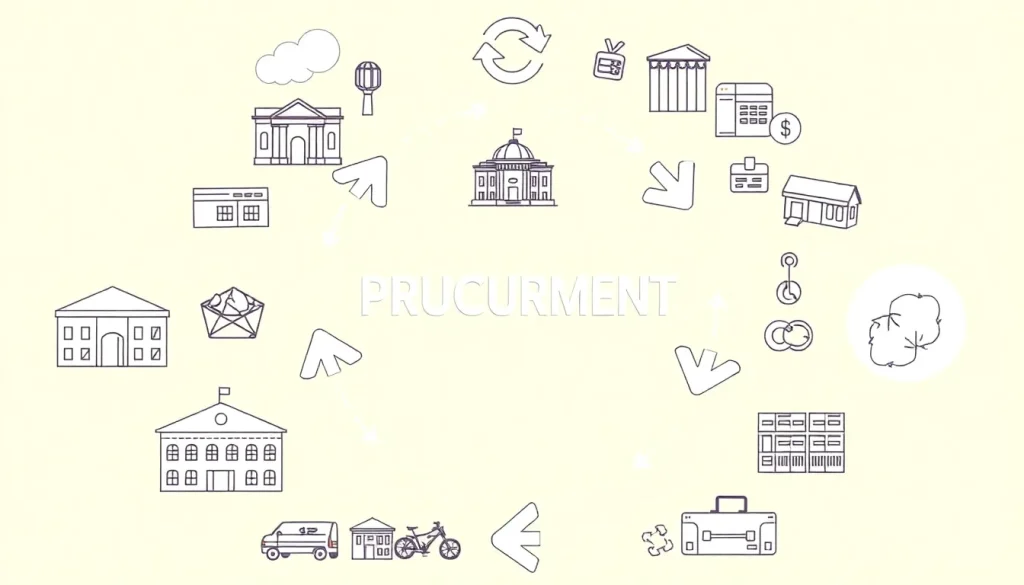
Circular procurement operates through a structured, lifecycle-oriented approach that integrates circular principles at every stage of the purchasing process. The process typically involves the following key steps:
- Needs assessment and redefinition: Before buying anything, the organization questions whether the need can be met without purchasing new products—for example, through sharing, leasing, repairing existing assets, or using a service model. This step often reveals opportunities to reduce material consumption altogether.
- Market engagement and supplier dialogue: Early communication with potential suppliers helps identify circular solutions already available or co-develop new ones. This can include requests for information (RFIs), supplier workshops, and pre-tender consultations to build capacity and align expectations.
- Specification and tendering: Circular criteria are embedded into tender documents. These may include requirements for recycled content, design for disassembly, take-back schemes, extended producer responsibility, or adherence to recognized ecolabels. Functional specifications (describing the required performance rather than a specific product) are often used to encourage innovative bids.
- Evaluation and award: Bids are assessed not only on purchase price but on total cost of ownership (TCO) or lifecycle cost, which includes maintenance, energy use, and end-of-life disposal. Weighted scoring can give preference to circular attributes such as durability, repairability, and material efficiency.
- Contract management and monitoring: After award, the buyer monitors supplier performance against circular commitments, using key performance indicators (KPIs) like waste reduction, recycled content, or product lifespan. Contracts may include incentives for exceeding targets or penalties for non-compliance.
Circular procurement also often involves new business models. For example, instead of buying lighting fixtures, an organization might purchase “light as a service,” where the supplier retains ownership of the equipment and is responsible for its maintenance, upgrades, and eventual take-back. This shifts the incentive from selling more products to providing durable, efficient, and easily recyclable solutions.
Importance and Impact
Circular procurement is a powerful lever for systemic change because of the sheer scale of purchasing by governments and large organizations. Public procurement alone accounts for a significant share of gross domestic product (GDP) in many countries—often between 12% and 20%—giving public authorities immense market influence. When such large buyers demand circular products and services, they create a reliable demand signal that encourages businesses to invest in circular innovation, scale up production, and lower costs for all buyers.
The environmental impact is substantial. By prioritizing durable, repairable, and recyclable goods, circular procurement reduces the extraction of virgin raw materials, lowers energy consumption, and cuts greenhouse gas emissions associated with manufacturing and disposal. It also helps divert waste from landfills and incineration, addressing the growing global waste crisis. Economically, it can lead to significant cost savings over the long term through reduced material inputs, lower waste management costs, and greater resilience to resource price volatility. Furthermore, it fosters job creation in sectors such as repair, remanufacturing, and reverse logistics, contributing to a more sustainable and inclusive economy.
Benefits, Limitations and Trade-offs
Benefits: Circular procurement can deliver lower total cost of ownership when lifecycle costs are considered, even if upfront prices are higher. It reduces environmental footprints, enhances supply chain security by decreasing dependence on virgin raw materials, and drives innovation by challenging suppliers to develop new solutions. Organizations that adopt circular procurement often see improved brand reputation and compliance with emerging regulations on waste and sustainability. It also supports local economies by creating demand for repair, refurbishment, and recycling services.
Limitations: Implementing circular procurement can be complex and resource-intensive, requiring new skills, data, and tools. Many procurement professionals are accustomed to linear models and may lack training in lifecycle assessment or circular business models. Supplier markets may be underdeveloped, with limited availability of circular products or services, especially in certain regions or sectors. Upfront costs can be a barrier, particularly for cash-constrained organizations, and measuring circular performance can be challenging due to a lack of standardized metrics and data.
Trade-offs: There can be tensions between circularity and other objectives. For example, a product with high recycled content might have slightly lower performance or durability than a virgin-material alternative, requiring careful evaluation. Local sourcing to reduce transport emissions may conflict with the most circular global supplier. Additionally, some circular models, such as product-as-a-service, may require significant changes in organizational culture and asset management practices. Balancing these trade-offs requires a holistic, case-by-case approach that considers environmental, social, and economic dimensions.
Examples
Circular procurement has been applied across a wide range of sectors and product categories. In the built environment, several municipalities have specified the use of recycled and recyclable materials in construction projects, such as concrete made with recycled aggregates or modular building components designed for disassembly and reuse. For instance, the City of Amsterdam has integrated circular criteria into its procurement of new office buildings, requiring that materials be documented in a “materials passport” to facilitate future recovery.
In the furniture sector, many public and private organizations have shifted to leasing models for office furniture. Instead of purchasing desks and chairs, they pay a monthly fee for their use, with the supplier responsible for maintenance, repair, and eventual refurbishment or recycling. This model has been adopted by companies and government agencies seeking to reduce waste and ensure furniture remains in use for longer. In IT, circular procurement often involves buying refurbished computers and servers, or contracting with suppliers who guarantee take-back and responsible recycling at end-of-life. The Dutch national government, for example, has set ambitious targets for circular procurement across multiple categories, including workwear, where uniforms are designed for easy disassembly and material recovery.
What Businesses and Governments Can Do
Businesses can start by integrating circular procurement into their corporate sustainability strategies and procurement policies. This includes training procurement teams on circular principles, adopting total cost of ownership and lifecycle costing tools, and engaging suppliers early to co-develop circular solutions. Pilot projects in high-impact categories—such as packaging, IT equipment, or fleet vehicles—can demonstrate feasibility and build internal support. Companies can also join industry initiatives and networks to share best practices and collectively increase demand for circular products.
Governments play a critical role as both regulators and major buyers. They can set mandatory circular procurement targets for public agencies, develop national guidelines and criteria (such as the EU’s Green Public Procurement criteria), and provide capacity-building programs for procurement officials. By leading through example, governments can create a stable market for circular goods and services, encouraging private-sector investment. They can also use policy instruments like extended producer responsibility schemes, tax incentives, and innovation funds to support the development of circular supply chains. Collaboration between different levels of government and with international bodies helps harmonize standards and scale up impact.
Common Misconceptions
Misconception 1: Circular procurement is just about buying recycled products. While recycled content is one aspect, circular procurement is far broader. It encompasses rethinking needs, adopting service-based models, designing for longevity and disassembly, and ensuring materials are recovered at end-of-life. It is a systemic approach, not a simple product swap.
Misconception 2: Circular procurement is always more expensive. Although some circular products may have higher upfront costs, a lifecycle perspective often reveals lower total costs due to reduced maintenance, longer lifespans, and avoided disposal fees. Additionally, as demand grows and markets mature, prices for circular solutions tend to decrease. The perception of higher cost often stems from comparing purchase prices rather than total cost of ownership.
Misconception 3: It is only relevant for large organizations. Small and medium-sized enterprises (SMEs) can also benefit from circular procurement by focusing on local loops, collaborating with other businesses to aggregate demand, and using simple criteria like durability and repairability. Many circular business models, such as repair and remanufacturing, are inherently suited to smaller, agile firms.
FAQ
What is circular procurement?
Circular procurement is the process of purchasing goods, services, or works that contribute to closed-loop material cycles, minimize waste, and maximize resource efficiency throughout their lifecycle, in line with circular economy principles.
How does circular procurement differ from green procurement?
Green procurement focuses on reducing environmental impact, often through criteria like energy efficiency or recycled content. Circular procurement goes further by emphasizing the entire material loop, including design for durability, repairability, reuse, and business models that keep products in use longer, such as leasing or take-back schemes.
Why does circular procurement matter?
It matters because public and private procurement represents a huge share of economic activity. By demanding circular solutions, buyers can drive market transformation, reduce waste and emissions, conserve resources, and create long-term economic value while supporting sustainability goals.
References
- Ellen MacArthur Foundation. (2015). Delivering the Circular Economy: A Toolkit for Policymakers.
- European Commission. (2016). Buying Green! A Handbook on Green Public Procurement. 3rd Edition.
- ISO 20400:2017. Sustainable procurement — Guidance. International Organization for Standardization.