In brief
At a glance
Quick Facts
- Pre-industrial CO2 level
- Approximately 280 parts per million (ppm)
- Current CO2 level
- Exceeds 420 ppm, the highest in at least 800,000 years
- Primary source
- Burning of fossil fuels (coal, oil, natural gas)
- Annual human emissions
- Roughly 40 billion metric tons of CO2 per year
- Atmospheric residence time
- CO2 can remain in the atmosphere for centuries to millennia
- Ocean absorption
- Oceans absorb about 25% of emitted CO2, causing acidification
- Land sink
- Terrestrial ecosystems absorb about 25% of emissions
- Accumulation rate
- The remaining ~50% of emissions stays in the atmosphere
- Greenhouse effect
- CO2 traps heat, warming the planet by about 1°C since pre-industrial times
- Ice core evidence
- Air bubbles in ice cores show CO2 levels over millennia, confirming the recent spike
Key Takeaways
- Carbon dioxide accumulates because human emissions from burning fossil fuels and land-use changes exceed the rate at which natural sinks can absorb it.
- The primary natural sinks—oceans and terrestrial ecosystems—are unable to keep pace with the rapid increase in emissions, leading to a steady rise in atmospheric CO2.
- This accumulation intensifies the natural greenhouse effect, causing global temperatures to rise and altering climate patterns worldwide.
- Even if emissions were to stop immediately, the accumulated CO2 would persist in the atmosphere for centuries, locking in long-term climate impacts.
What Is Why Carbon Dioxide Accumulates in the Atmosphere?
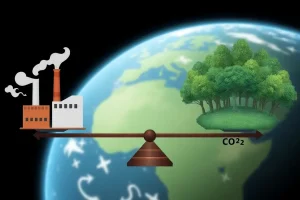
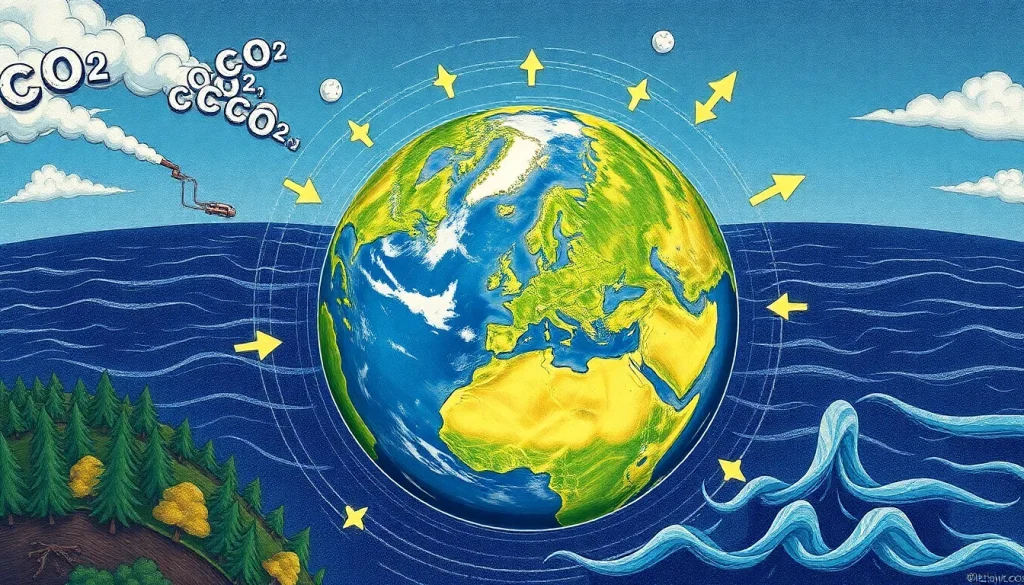
The accumulation of carbon dioxide in the atmosphere refers to the net increase in the concentration of CO2 due to an imbalance between emissions and removals. In a balanced carbon cycle, natural processes release and absorb CO2 at roughly equal rates, maintaining a stable atmospheric concentration. However, human activities have disrupted this equilibrium by injecting vast quantities of CO2 into the air, overwhelming the capacity of natural sinks to remove it. As a result, the atmospheric CO2 level has risen from about 280 parts per million (ppm) before the Industrial Revolution to over 420 ppm in the 21st century, a level not seen in at least 800,000 years.
This phenomenon is a central driver of contemporary climate change. CO2 is a greenhouse gas, meaning it traps heat radiating from Earth’s surface and prevents it from escaping into space. While the greenhouse effect is natural and essential for life, the additional CO2 from human activities enhances it, leading to global warming. The accumulation is not a temporary spike but a persistent trend because CO2 molecules can remain in the atmosphere for hundreds to thousands of years before being fully absorbed by oceans, rocks, or biological processes. Understanding why CO2 accumulates is fundamental to grasping the urgency of reducing emissions and developing strategies to remove carbon from the air.
Overview
The global carbon cycle is a complex system of reservoirs and fluxes that move carbon among the atmosphere, oceans, land, and living organisms. Carbon exists in various forms: as CO2 gas in the air, dissolved inorganic carbon in seawater, organic matter in soils and plants, and fossilized carbon in sedimentary rocks. Natural fluxes include photosynthesis, respiration, decomposition, ocean-atmosphere exchange, and volcanic eruptions. For most of human history, these fluxes were in dynamic equilibrium, with atmospheric CO2 levels fluctuating only gradually over millennia.
The Industrial Revolution marked a turning point. The large-scale burning of coal, oil, and natural gas released carbon that had been locked underground for millions of years. Simultaneously, deforestation and land-use changes reduced the planet’s capacity to absorb CO2 through photosynthesis. Today, human activities emit roughly 40 billion metric tons of CO2 per year. Of this, about half is absorbed by natural sinks—oceans take up around 25%, and land ecosystems take up another 25%—but the remainder stays in the atmosphere, driving the observed accumulation. This persistent surplus is why atmospheric CO2 concentrations continue to climb year after year, even as natural sinks work harder to absorb more carbon.
How It Works
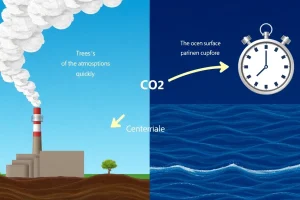
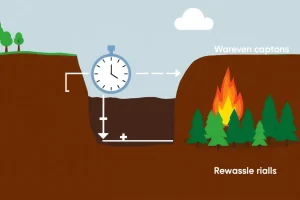
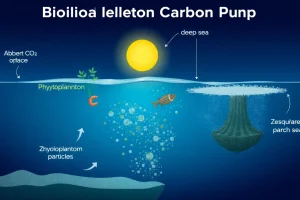
The carbon cycle operates through a series of interconnected processes. Plants, algae, and cyanobacteria absorb CO2 during photosynthesis, converting it into organic matter. When these organisms respire, decompose, or are consumed, some of that carbon is released back into the atmosphere as CO2. In the oceans, CO2 dissolves in surface waters and is transported to deeper layers through physical mixing and biological activity. Over geological timescales, carbon is sequestered in marine sediments and eventually forms limestone and other rocks.
Human activities have introduced two major disruptions. First, the combustion of fossil fuels releases CO2 that was previously isolated from the active carbon cycle. This adds new carbon to the atmosphere-ocean-land system. Second, deforestation and land clearing reduce the amount of carbon stored in vegetation and soils, while also diminishing the land’s ability to absorb future emissions. The result is a net flux of carbon into the atmosphere. Although natural sinks are absorbing more CO2 than they did in pre-industrial times—thanks to higher atmospheric concentrations that drive faster uptake—they cannot keep up with the sheer volume of emissions. The gap between emissions and uptake is the accumulation rate, which has been increasing over time.
Main Causes or Drivers
The dominant cause of CO2 accumulation is the burning of fossil fuels for energy. Coal, oil, and natural gas power electricity generation, transportation, industry, and heating. Together, they account for about 90% of global CO2 emissions. Coal is the most carbon-intensive fuel, releasing more CO2 per unit of energy than oil or natural gas. The expansion of industrial activity and rising energy demand have led to a steady increase in emissions since the mid-20th century.
Deforestation and land-use change are the second major driver. Forests act as carbon sinks, storing vast amounts of carbon in their biomass and soils. When forests are cleared for agriculture, urban development, or timber, much of that stored carbon is released into the atmosphere. Additionally, the loss of trees means fewer plants are available to absorb CO2 through photosynthesis. Other human activities, such as cement production, also contribute. The chemical process of making cement releases CO2 when limestone is heated. Collectively, these activities have pushed the carbon cycle far out of its natural balance, causing atmospheric CO2 to accumulate at an unprecedented rate.
Environmental and Human Impacts
The accumulation of CO2 has far-reaching consequences. The most direct impact is the enhanced greenhouse effect, which raises global average temperatures. This warming leads to more frequent and intense heatwaves, altered precipitation patterns, and the melting of glaciers and ice sheets. Sea levels rise both from thermal expansion of seawater and from the addition of meltwater, threatening coastal communities and ecosystems. Extreme weather events, such as hurricanes, droughts, and floods, become more severe in a warmer climate.
Beyond climate, elevated CO2 causes ocean acidification. When CO2 dissolves in seawater, it forms carbonic acid, lowering the ocean’s pH. This harms marine organisms that build shells and skeletons from calcium carbonate, including corals, mollusks, and some plankton. Disruptions to these foundational species ripple through marine food webs, affecting fisheries and the livelihoods of millions of people. On land, higher CO2 can initially stimulate plant growth—the so-called CO2 fertilization effect—but this benefit is often offset by nutrient limitations, heat stress, and water scarcity. Human health is also at risk from heat-related illnesses, the spread of vector-borne diseases, and reduced air quality. The economic costs of these impacts are substantial, affecting agriculture, infrastructure, and insurance systems.
Solutions
Addressing CO2 accumulation requires both reducing emissions and enhancing carbon removal. The most critical step is transitioning away from fossil fuels toward renewable energy sources such as solar, wind, hydro, and geothermal. Improving energy efficiency in buildings, transportation, and industry can significantly lower emissions. Electrifying sectors like transportation and heating, when paired with clean electricity, further reduces reliance on fossil fuels.
On the removal side, reforestation and afforestation increase the land’s capacity to absorb CO2. Protecting existing forests and restoring degraded ecosystems are cost-effective natural climate solutions. Soil carbon sequestration through improved agricultural practices can also store more carbon in the ground. Technological approaches, such as direct air capture and carbon capture and storage (CCS), aim to remove CO2 from the atmosphere or from emission sources and store it permanently underground. While these technologies are still being scaled up, they may play a necessary role in achieving net-zero emissions. Policy measures, including carbon pricing, emissions regulations, and international agreements, are essential to drive systemic change. Individual actions—reducing energy use, adopting plant-based diets, and supporting climate-friendly policies—also contribute to the collective effort.
Common Misconceptions
Misconception: CO2 is a pollutant. CO2 is a natural and essential component of the atmosphere, and plants need it for photosynthesis. The problem is not its existence but its excessive concentration due to human activities, which disrupts the climate system.
Misconception: Plants will absorb all the extra CO2. While plants do absorb more CO2 when concentrations are higher, this effect is limited by other factors such as nutrient availability, water, and temperature. Moreover, deforestation reduces the number of plants available to take up carbon, and the CO2 fertilization effect cannot keep pace with emissions.
Misconception: The atmosphere is too large for humans to affect. Although the atmosphere is vast, the amount of CO2 humans have added is enormous—trillions of metric tons. This has measurably altered the composition of the entire atmosphere, as confirmed by direct measurements and ice core records.
Misconception: CO2 accumulation is part of natural cycles. Natural factors like volcanic eruptions and changes in Earth’s orbit do influence climate over long timescales, but the current rapid rise in CO2 is unequivocally caused by human activities. The isotopic signature of the added CO2 matches that of fossil fuels, and the rate of increase is far faster than any natural cycle in the geological record.
FAQ
What is carbon dioxide accumulation?
Carbon dioxide accumulation is the net increase in atmospheric CO2 concentration caused by human activities releasing CO2 faster than natural sinks can remove it.
How does CO2 accumulate in the atmosphere?
CO2 accumulates when emissions from burning fossil fuels, deforestation, and industrial processes exceed the absorption capacity of oceans, forests, and other sinks. The excess CO2 remains in the air, raising concentrations over time.
Why does CO2 accumulation matter?
It matters because CO2 is a potent greenhouse gas. Its accumulation enhances the natural greenhouse effect, leading to global warming, climate change, ocean acidification, and a host of environmental and societal impacts.
References
- IPCC, 2021: Climate Change 2021: The Physical Science Basis. Contribution of Working Group I to the Sixth Assessment Report of the Intergovernmental Panel on Climate Change.
- NASA Global Climate Change: Vital Signs of the Planet – Carbon Dioxide. https://climate.nasa.gov/vital-signs/carbon-dioxide/
- NOAA Global Monitoring Laboratory: Trends in Atmospheric Carbon Dioxide. https://gml.noaa.gov/ccgg/trends/
- National Geographic Encyclopedia: Carbon Cycle. https://education.nationalgeographic.org/resource/carbon-cycle
- The Carbon Cycle, NASA Earth Observatory. https://earthobservatory.nasa.gov/features/CarbonCycle