In brief
At a glance
Quick Facts
- Definition
- A carbon budget is the cumulative amount of CO₂ emissions allowed to keep global warming below a specific temperature limit.
- Key metric
- Transient Climate Response to Cumulative Carbon Emissions (TCRE) is the warming per 1000 PgC emitted, typically 0.8–2.5°C.
- 1.5°C budget range (IPCC AR6)
- 300–900 GtCO₂ from 2020 for a 50% chance of staying below 1.5°C.
- 2°C budget range (IPCC AR6)
- 900–2,300 GtCO₂ from 2020 for a 50% chance.
- Main uncertainty sources
- Climate sensitivity, current warming estimate, non-CO₂ forcing, Earth system feedbacks, and probability choice.
- Impact of 0.1°C warming difference
- Can change the remaining budget by hundreds of GtCO₂.
- Non-CO₂ gases role
- Future methane and aerosol emissions can alter the CO₂ budget by ±200 GtCO₂ or more.
- Probability matters
- A 66% chance budget is about 30–50% smaller than a 50% chance budget for the same target.
Key Takeaways
- Carbon budget estimates differ because of varying assumptions about climate sensitivity, the definition of current warming, and the treatment of non-CO₂ greenhouse gases and aerosols.
- The choice of temperature target (e.g., 1.5°C vs. 2°C) and the probability of staying below that target significantly alter the size of the remaining budget.
- Methodological differences, such as how Earth system feedbacks and historical emissions are accounted for, lead to a wide range of budget estimates even for the same target.
- Understanding why estimates diverge is essential for interpreting scientific guidance and designing effective, equitable climate policies.
What Is Why Carbon Budget Estimates Differ?
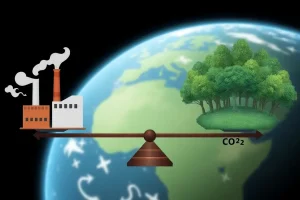
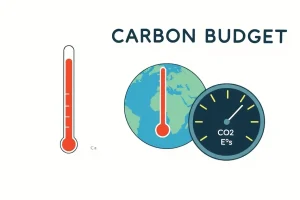
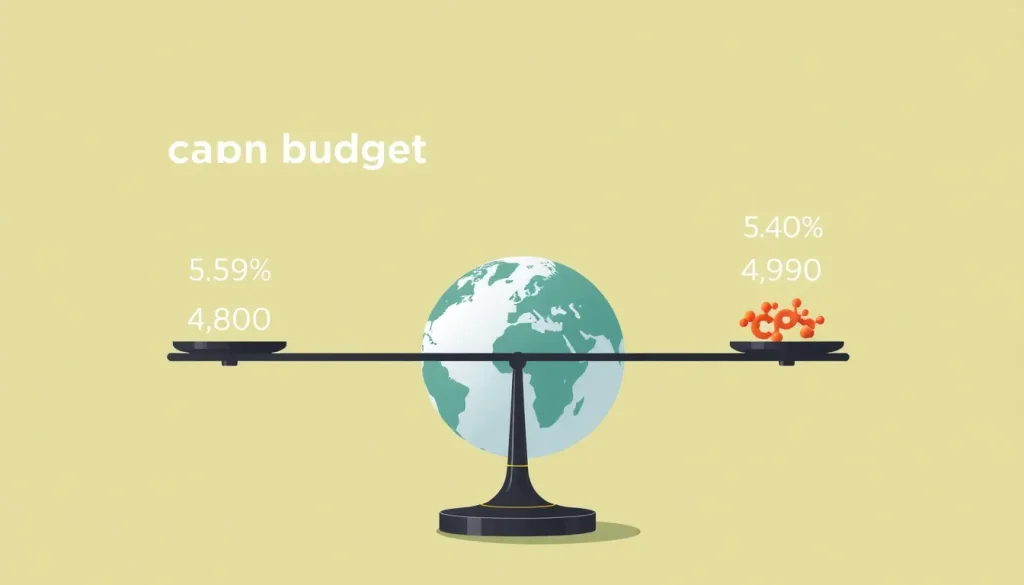
A carbon budget is the total amount of carbon dioxide (CO₂) that can be emitted over a period of time while still limiting global warming to a specified temperature target, such as 1.5°C or 2°C above pre-industrial levels. The concept translates long-term climate goals into a finite, cumulative emissions limit, providing a clear metric for policy-making. However, different scientific assessments often produce different budget numbers, even for the same temperature goal. This variation arises from uncertainties in the climate system, choices in how the budget is calculated, and assumptions about future emissions of other greenhouse gases and aerosols. Understanding why these estimates differ is critical for interpreting climate targets and for designing robust mitigation strategies.
The remaining carbon budget is not a single, fixed number but a range that reflects the current state of knowledge. As scientific understanding evolves and new data become available, estimates are updated, sometimes leading to significant revisions. This article examines the key factors that cause carbon budget estimates to diverge, the implications of those differences, and common misunderstandings about the concept.
How It Works
Carbon budgets are grounded in the near-linear relationship between cumulative CO₂ emissions and global mean surface temperature rise. This relationship is quantified by the Transient Climate Response to Cumulative Carbon Emissions (TCRE), which measures the warming per trillion tonnes of carbon emitted. The remaining carbon budget for a given temperature limit is calculated by taking the allowable warming (the target minus the warming that has already occurred) and dividing it by the TCRE, then adjusting for the warming contribution of non-CO₂ greenhouse gases, aerosols, and Earth system feedbacks that are not directly proportional to cumulative CO₂.
In practice, the calculation involves several steps: defining the pre-industrial reference period and estimating the warming to date; choosing a probability of staying below the target (e.g., 50%, 66%, or 90%); estimating future non-CO₂ forcing; and accounting for carbon cycle feedbacks such as permafrost thaw or changes in ocean CO₂ uptake. Different modeling approaches—from simple climate models to complex Earth system models—can yield different TCRE values and feedback strengths, directly affecting the budget estimate.
Main Causes or Drivers
Several factors drive the divergence in carbon budget estimates:
- Climate sensitivity and TCRE uncertainty: The TCRE is not a single value but a range (typically 0.8–2.5°C per 1000 PgC). Small differences in the chosen TCRE translate into large differences in the budget.
- Definition of current warming: Estimates of warming since pre-industrial times vary depending on the dataset used (e.g., HadCRUT, Berkeley Earth, NASA GISTEMP) and the reference period (1850–1900 vs. a later baseline). A difference of 0.1°C in current warming can alter the remaining budget by hundreds of gigatonnes of CO₂.
- Non-CO₂ greenhouse gases and aerosols: Future emissions of methane, nitrous oxide, and aerosols contribute additional warming or cooling. Assumptions about how these will evolve—often tied to socioeconomic scenarios—change the amount of CO₂ that can be emitted.
- Earth system feedbacks: Processes like permafrost carbon release, changes in cloud cover, and reduced ocean carbon uptake are not fully represented in all models. Including or excluding them can expand or shrink the budget.
- Probability of meeting the target: A budget that gives a 50% chance of staying below 1.5°C is much larger than one that gives a 66% or 90% chance. The choice of probability reflects risk tolerance and policy ambition.
- Historical emissions data: Uncertainty in past CO₂ emissions, especially from land-use change, affects the calculation of the remaining budget because it determines how much of the total budget has already been used.
Data Limitations and Uncertainties
Carbon budget estimates are inherently uncertain because they rely on incomplete observations and imperfect models. Key data limitations include:
- Temperature records: Global temperature datasets differ in their spatial coverage and homogenization methods, leading to a spread of about 0.1°C in estimated warming to date.
- Radiative forcing: The warming effect of aerosols, particularly the cooling from sulfate particles, is highly uncertain. This uncertainty propagates into the budget calculation because it affects how much warming is masked and will eventually emerge as aerosols are reduced.
- Carbon cycle feedbacks: The response of land and ocean carbon sinks to rising CO₂ and warming is not precisely known. Models disagree on the strength of the CO₂ fertilization effect and the rate of soil carbon loss under warming.
- Linearity assumption: While the TCRE relationship is robust, it is an approximation. Non-linearities in the climate system, such as tipping points, could cause the relationship to break down under high cumulative emissions, adding deep uncertainty.
Examples
The Intergovernmental Panel on Climate Change (IPCC) has provided several carbon budget estimates that illustrate the range of possible values. In its Special Report on Global Warming of 1.5°C (2018), the remaining carbon budget from the start of 2018 for a 50% chance of limiting warming to 1.5°C was about 580 GtCO₂. The IPCC’s Sixth Assessment Report (2021) gave a range of 300–900 GtCO₂ from the beginning of 2020 for the same target and probability, reflecting updated data and methods. For a 2°C target, budgets are larger but still vary: the same report estimated a remaining budget of 900–2,300 GtCO₂ for a 50% chance. Other studies, using different Earth system models or including additional feedbacks, have produced budgets outside these ranges, underscoring the sensitivity of estimates to methodological choices.
Importance and Impact
The differences between carbon budget estimates have direct consequences for climate policy. A smaller budget implies that global CO₂ emissions must reach net zero sooner and that the pace of emission reductions must be steeper. This affects the feasibility and cost of mitigation pathways, the timing of fossil fuel phase-outs, and the scale of negative emissions technologies required. Disagreements over budget size can also influence international negotiations, as countries debate fair shares of the remaining emissions space. Moreover, the concept of a carbon budget is used by financial institutions and corporations to align portfolios with climate targets, so variations in the budget can shift investment strategies and risk assessments. Understanding the sources of uncertainty helps policymakers avoid over-reliance on a single number and instead adopt flexible, precautionary approaches.
Common Misconceptions
FAQ
What is a carbon budget?
A carbon budget is the total amount of carbon dioxide that can be emitted over a given period while keeping global warming below a specified temperature limit, such as 1.5°C or 2°C above pre-industrial levels.
Why do carbon budget estimates differ?
Estimates differ because of uncertainties in climate sensitivity, the amount of warming that has already occurred, future emissions of non-CO₂ gases, Earth system feedbacks, and the chosen probability of staying below the target.
Why does the carbon budget matter for climate policy?
The carbon budget translates temperature goals into a concrete emissions limit, guiding the pace and scale of emission reductions needed. Smaller budgets require faster and deeper cuts, influencing national pledges, investment decisions, and the feasibility of meeting the Paris Agreement goals.
References
- IPCC, 2021: Climate Change 2021: The Physical Science Basis. Contribution of Working Group I to the Sixth Assessment Report of the Intergovernmental Panel on Climate Change.
- IPCC, 2018: Global Warming of 1.5°C. An IPCC Special Report on the impacts of global warming of 1.5°C above pre-industrial levels.
- Rogelj, J., et al. (2019). Estimating and tracking the remaining carbon budget for stringent climate targets. Nature, 571, 335–342.