In brief
At a glance
Quick Facts
- Definition
- The net amount of CO₂ that can be emitted while limiting global warming to a given temperature target.
- Key Temperature Targets
- 1.5°C and 2°C above pre-industrial levels, as outlined in the Paris Agreement.
- Primary Greenhouse Gas
- Carbon dioxide (CO₂) is the main focus, but other gases like methane also affect the budget.
- Cumulative Emissions
- Warming is largely determined by total cumulative CO₂ emissions, not annual rates.
- Budget Depletion Rate
- At current emission rates, the 1.5°C budget is expected to be exhausted within one to two decades.
- Uncertainty Range
- Estimates vary due to climate sensitivity, non-CO₂ forcings, and Earth system feedbacks.
- IPCC Assessments
- The Intergovernmental Panel on Climate Change provides regular, authoritative budget estimates.
- Net Zero Requirement
- To stay within any budget, global CO₂ emissions must eventually reach net zero.
- Historical Responsibility
- Industrialized nations have used most of the budget, raising equity concerns.
- Policy Relevance
- The budget concept underpins national emission pledges and long-term decarbonization strategies.
Key Takeaways
- The remaining carbon budget is the net amount of carbon dioxide (CO₂) that can still be released into the atmosphere while limiting global warming to a specified temperature target, such as 1.5°C or 2°C above pre-industrial levels.
- It is based on the well-established near-linear relationship between cumulative CO₂ emissions and the resulting increase in global mean surface temperature.
- The budget for limiting warming to 1.5°C is extremely small relative to historical emissions and is being depleted rapidly, underscoring the urgency of deep and immediate emission reductions.
- Understanding the remaining carbon budget is essential for setting science-based climate policies, defining net-zero timelines, and assessing the feasibility of meeting the goals of the Paris Agreement.
What Is the Remaining Carbon Budget?
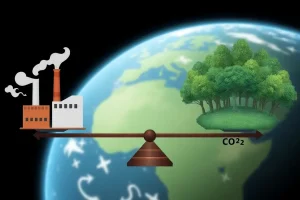
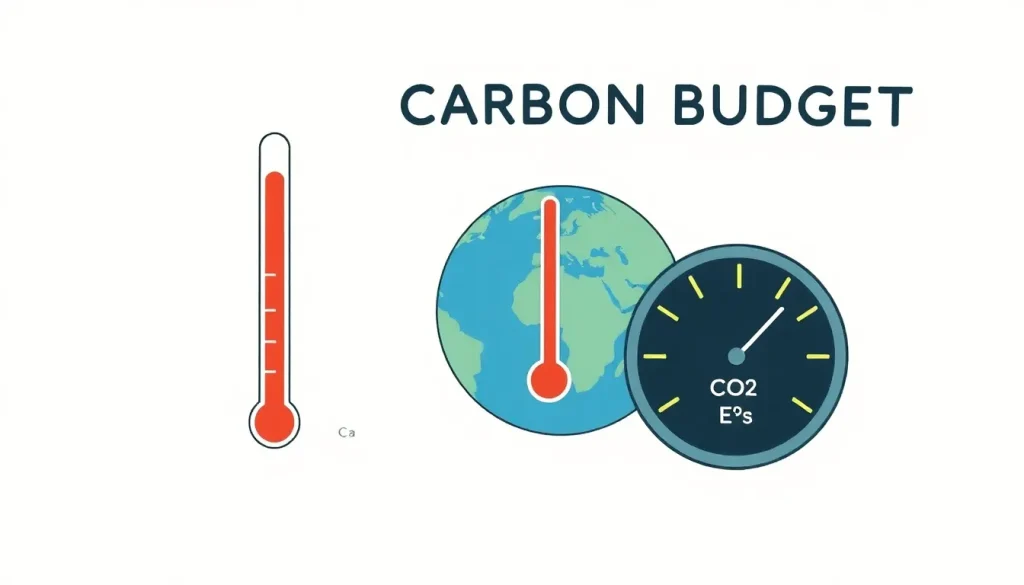
The remaining carbon budget is a scientific estimate of the total net amount of carbon dioxide (CO₂) that can still be emitted into the atmosphere from a given point in time onward while keeping global warming below a specified temperature limit, such as 1.5°C or 2°C above pre-industrial levels. It is a cumulative budget, meaning it accounts for all future CO₂ emissions, not just annual rates. The concept is rooted in the near-linear relationship between cumulative CO₂ emissions and the resulting increase in global mean surface temperature, a finding that has been robustly supported by climate models and historical observations.
This budget is not a fixed number but a range that depends on the chosen temperature target, the probability of staying below that target, and the treatment of non-CO₂ climate forcers such as methane and aerosols. The remaining carbon budget is a central tool in climate policy because it translates abstract temperature goals into a concrete, finite quantity of emissions that can still be released. Once the budget is exhausted, net CO₂ emissions must be zero to stabilize temperatures; any further emissions would cause additional warming. As such, the concept provides a clear scientific basis for the urgency of reducing emissions and the timeline for achieving net-zero CO₂ emissions.
Overview
The remaining carbon budget is a cornerstone of modern climate science and policy. It emerged from the recognition that the total amount of CO₂ emitted over time, rather than the rate of emissions in any given year, is the primary driver of long-term global warming. This cumulative nature means that every ton of CO₂ added to the atmosphere contributes to future warming, and there is a finite total that can be emitted before crossing critical temperature thresholds. The budget is typically expressed in gigatonnes of CO₂ (GtCO₂) and is calculated from the start of a reference period, often the pre-industrial era (1850–1900), up to the point when net emissions must reach zero.
The most widely referenced budgets are those assessed by the Intergovernmental Panel on Climate Change (IPCC) in its periodic assessment reports. These budgets are tied to specific warming limits—most notably 1.5°C and 2°C—and are presented with associated probabilities (e.g., a 50% or 66% chance of staying below the limit). The remaining budget is not a fixed allowance but a dynamic quantity that shrinks with every ton of CO₂ emitted and can be revised as scientific understanding improves. It also depends on future emissions of non-CO₂ greenhouse gases and aerosols, as well as the response of the Earth system, including feedbacks like permafrost thaw.
How It Works
The remaining carbon budget is derived from the fundamental relationship between cumulative CO₂ emissions and global warming. Climate models and historical data show that each additional 1,000 GtCO₂ (or 1,000 billion tonnes) of cumulative emissions causes a global mean temperature increase of approximately 0.45°C, with a likely range of 0.27°C to 0.63°C. This near-linear relationship, known as the transient climate response to cumulative carbon emissions (TCRE), allows scientists to estimate the total amount of CO₂ that can be emitted for a given temperature increase.
To calculate the remaining budget, scientists first determine the total carbon budget for a specific warming level (e.g., 1.5°C) from the pre-industrial era. They then subtract the CO₂ emissions that have already occurred. The result is the remaining budget. However, this calculation must account for several factors:
- Non-CO₂ climate forcers: Future emissions of methane, nitrous oxide, and aerosols can either add to or subtract from warming, affecting the remaining CO₂ budget.
- Earth system feedbacks: Processes like permafrost thaw or changes in carbon uptake by oceans and forests can release additional CO₂ or reduce the budget.
- Warming to date: The estimate of how much warming has already occurred influences the remaining budget. Different datasets and methods yield slightly different values.
- Probability of meeting the target: A higher probability (e.g., 66% vs. 50%) requires a smaller budget to account for uncertainties.
Because of these complexities, the remaining carbon budget is always presented as a range rather than a single number. For example, the IPCC’s Sixth Assessment Report estimated that to have a 50% chance of limiting warming to 1.5°C, the remaining carbon budget from the beginning of 2020 was about 500 GtCO₂, while for a 66% chance it was around 400 GtCO₂. These numbers are continually updated as new data and models become available.
Importance and Impact
The remaining carbon budget has profound implications for climate policy and the global economy. It provides a clear, quantitative benchmark against which national emission pledges and pathways can be measured. By comparing current emission rates to the remaining budget, it is possible to estimate the timeline for reaching net-zero emissions. For instance, if the remaining budget for 1.5°C is 400 GtCO₂ and annual global CO₂ emissions are about 40 GtCO₂, the budget would be exhausted in roughly a decade if emissions remain constant. This stark arithmetic underscores the need for rapid and sustained emission reductions.
The concept also highlights the inequity of historical emissions. Industrialized nations have consumed a disproportionate share of the total carbon budget since the pre-industrial era, leaving less space for developing countries to pursue economic growth. This has led to discussions about fairness, equity, and the principle of “common but differentiated responsibilities” in international climate negotiations. The remaining budget thus serves not only as a scientific tool but also as a moral compass, framing the urgency of climate action in terms of intergenerational and international justice.
Data Limitations and Uncertainties
Despite its utility, the remaining carbon budget is subject to significant uncertainties. These arise from several sources:
- Climate sensitivity: The exact amount of warming per unit of cumulative emissions (TCRE) has a range, and small differences can lead to large variations in the budget.
- Historical warming estimates: The baseline temperature change since pre-industrial times is not known with perfect precision, affecting the remaining allowable warming.
- Non-CO₂ forcing uncertainty: Future emissions of other greenhouse gases and aerosols are difficult to predict and can either tighten or loosen the CO₂ budget.
- Carbon cycle feedbacks: The response of natural carbon sinks to warming and CO₂ levels is not fully understood, with potential for amplifying feedbacks that reduce the budget.
- Definition of “pre-industrial”: The choice of reference period (e.g., 1850–1900 vs. 1720–1800) can shift the budget by tens of GtCO₂.
These uncertainties mean that the remaining carbon budget should be viewed as a best estimate with a confidence interval, not a precise threshold. Policymakers must therefore adopt a precautionary approach, aiming for the lower end of the budget range to minimize the risk of exceeding temperature targets. Ongoing research and improved Earth system models continue to refine these estimates, but some uncertainty will always remain due to the inherent complexity of the climate system.
Common Misconceptions
One common misconception is that the remaining carbon budget is a fixed, immutable number. In reality, it is a dynamic estimate that evolves with scientific understanding and actual emissions. Another misunderstanding is that the budget applies only to CO₂; while CO₂ is the dominant factor, other greenhouse gases and aerosols also influence the budget. Some also mistakenly believe that staying within the budget guarantees no climate impacts; in fact, even at 1.5°C of warming, significant impacts such as sea-level rise and extreme weather events are expected. Finally, the budget is sometimes misinterpreted as a license to emit up to the limit, ignoring the need for a just and equitable transition that considers historical responsibility and sustainable development.
Solutions
Staying within the remaining carbon budget requires a rapid and comprehensive transformation of the global energy system and land use. Key solutions include:
- Phasing out fossil fuels: Transitioning to renewable energy sources such as solar, wind, and hydropower to eliminate CO₂ emissions from electricity generation, transportation, and industry.
- Energy efficiency: Reducing energy demand through improved building design, industrial processes, and transportation systems.
- Carbon dioxide removal (CDR): Deploying technologies and natural solutions—such as afforestation, reforestation, direct air capture, and bioenergy with carbon capture and storage (BECCS)—to remove CO₂ from the atmosphere and compensate for residual emissions.
- Reducing non-CO₂ emissions: Cutting methane from agriculture, fossil fuel extraction, and waste, as well as reducing nitrous oxide and black carbon, to ease pressure on the CO₂ budget.
- Policy instruments: Implementing carbon pricing, emissions trading systems, and regulations that align economic incentives with the carbon budget.
These solutions must be implemented urgently and at scale. The remaining carbon budget makes clear that delay is not an option; every year of inaction consumes a significant fraction of the remaining allowance, necessitating even faster and more costly reductions later.
FAQ
What is the remaining carbon budget?
The remaining carbon budget is the maximum amount of carbon dioxide (CO₂) that can still be emitted into the atmosphere while keeping global warming below a specific temperature limit, such as 1.5°C or 2°C above pre-industrial levels, with a given probability.
How is the remaining carbon budget calculated?
It is calculated by estimating the total cumulative CO₂ emissions that would cause a certain amount of warming (based on the near-linear relationship between cumulative emissions and temperature), then subtracting the emissions that have already occurred since the pre-industrial period. Adjustments are made for non-CO₂ climate forcers and Earth system feedbacks.
Why does the remaining carbon budget matter?
It provides a clear, science-based limit on future emissions, helping policymakers set emission reduction targets, define net-zero timelines, and assess the adequacy of national climate pledges. It also highlights the urgency of climate action and the inequity of historical emissions.
References
- Intergovernmental Panel on Climate Change (IPCC) Assessment Reports, particularly the Working Group I contribution to the Sixth Assessment Report (AR6).
- Global Carbon Project, annual global carbon budget publications and analyses.
- Matthews, H.D., et al. (2009). The proportionality of global warming to cumulative carbon emissions. Nature, 459, 829–832.