In brief
At a glance
Quick Facts
- Definition
- A habitat that organisms prefer over better-quality alternatives but that results in lower fitness.
- First formalized
- The concept was introduced in the 1970s by ecologists studying bird populations.
- Key mechanism
- Decoupling of habitat selection cues from actual habitat quality, often due to rapid environmental change.
- Common causes
- Agriculture, urbanization, artificial lighting, invasive species, and climate change.
- Vulnerable species
- Species with strong site fidelity, limited dispersal, or specialized cue responses are most at risk.
- Population impact
- Can create population sinks and increase extinction risk, even in protected areas.
- Notable examples
- Sea turtles disoriented by beachfront lighting, birds nesting in roadside vegetation, and mayflies laying eggs on asphalt.
- Related concept
- Evolutionary trap, which includes ecological traps and other maladaptive behaviors.
Key Takeaways
- An ecological trap is a habitat that organisms prefer over better-quality alternatives, yet it results in lower fitness (survival or reproduction).
- Traps arise when environmental cues used for habitat selection become decoupled from actual habitat quality, often due to rapid human-induced changes.
- Common causes include agriculture, urbanization, artificial lighting, invasive species, and climate change.
- Ecological traps can drive population declines and increase extinction risk, making them a major concern for conservation and wildlife management.
- Identifying and mitigating traps requires understanding species’ habitat preferences and the cues they use, as well as restoring or managing habitats to realign cues with quality.
What Is an Ecological Trap?
An ecological trap is a habitat that an organism chooses based on misleading environmental cues, but which ultimately results in lower fitness compared to other available habitats. In essence, the organism is “tricked” into preferring a site that is detrimental to its survival or reproductive success. This concept is a specific type of evolutionary trap, where formerly reliable cues become decoupled from the true quality of the environment, often because of rapid anthropogenic changes.
The term was first introduced in the 1970s by ecologists studying bird populations, but it has since been applied to a wide range of taxa, including insects, fish, amphibians, and mammals. Ecological traps are particularly dangerous because they can attract individuals away from high-quality habitats, creating population sinks where death rates exceed birth rates. Unlike ordinary poor habitats that organisms avoid, traps actively lure animals, exacerbating their negative effects on population dynamics.
Overview
Ecological traps are a manifestation of the mismatch between evolved habitat selection behaviors and current environmental conditions. Animals rely on cues—such as vegetation structure, temperature, or the presence of conspecifics—to assess habitat quality. These cues evolved over long periods when they reliably indicated fitness outcomes. However, when humans rapidly alter landscapes, the cues may remain attractive while the underlying habitat quality degrades, creating a trap.
There are two main types of ecological traps: equal-preference traps, where organisms show no preference between a high-quality and a low-quality habitat, and severe traps, where organisms actually prefer the low-quality habitat. Severe traps are more dangerous because they actively draw individuals away from better habitats. The concept is closely related to source-sink dynamics, where populations in sink habitats are maintained only by immigration from source habitats; an ecological trap can turn a sink into a population drain if it attracts more individuals than it can sustain.
How It Works
Ecological traps operate through a two-step process: habitat selection and fitness consequences. First, an organism uses specific cues—such as vegetation height, light intensity, or the presence of other individuals—to evaluate and choose a habitat. These cues evolved over time to correlate with high-quality environments that maximize survival and reproduction. However, when the environment changes rapidly, the cues may remain attractive while the actual habitat quality declines, leading the organism to settle in a suboptimal or even lethal location.
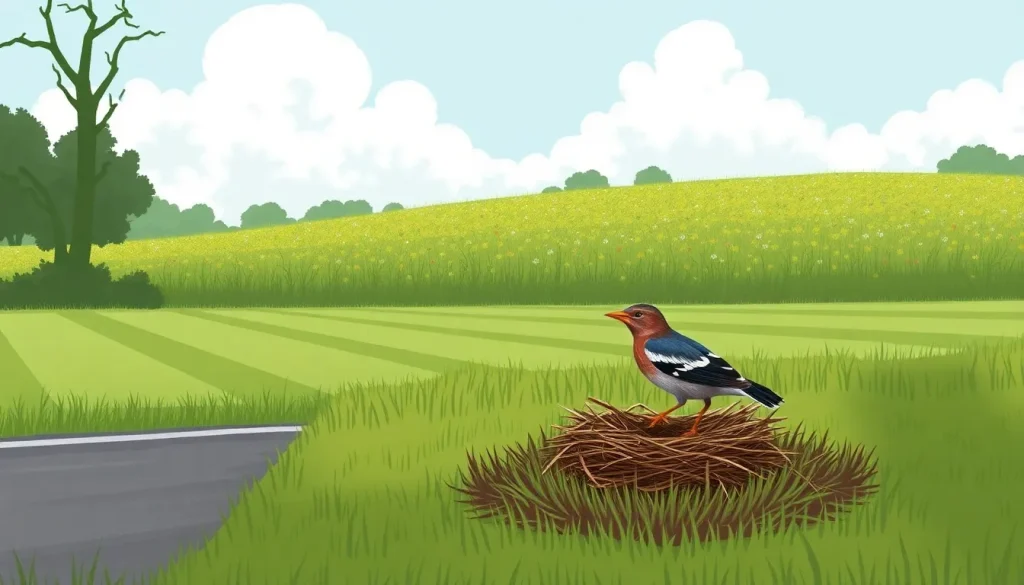
For example, a bird might select a nesting site based on the density of shrubs, which historically indicated protection from predators. If human activity creates a shrubby area with high predation risk (e.g., near a road or in an urban park with many cats), the bird may still choose that site, resulting in nest failure. The trap persists because the cue (shrub density) remains attractive, even though the habitat is now dangerous. Over time, if the trap is severe enough, it can cause population declines, as more individuals are drawn into the trap than can be supported by the few remaining high-quality habitats.
Examples
Numerous real-world examples illustrate the concept of ecological traps across different species and ecosystems:
- Birds nesting in agricultural fields: Grassland birds often prefer to nest in hayfields and pastures because the vegetation structure resembles their natural prairie habitat. However, mowing schedules frequently destroy nests before chicks fledge, turning these fields into severe traps.
- Sea turtles and artificial lighting: Hatchling sea turtles instinctively move toward the brightest horizon, which on natural beaches is the moonlit ocean. Coastal development with artificial lights disorients them, leading them away from the sea and increasing mortality from dehydration, predation, or vehicle strikes.
- Mayflies and polarized light pollution: Mayflies use polarized light reflected from water surfaces to locate breeding sites. Artificial surfaces like asphalt, glass buildings, and even solar panels reflect polarized light, attracting mayflies to lay eggs on dry, unsuitable surfaces where they perish.
- Dragonflies and oil spills: Some dragonfly species are attracted to the polarized light reflected by oil slicks, mistaking them for water bodies. They may attempt to oviposit on the oil, leading to egg loss and adult mortality.
- Beetles and beer bottles: Male jewel beetles are attracted to the dimpled, brown glass of discarded beer bottles, which resemble the size and color of female beetles. They may spend hours attempting to mate with the bottles, reducing their reproductive success.
Why It Matters
Ecological traps are a significant concern for conservation because they can accelerate population declines and increase extinction risk, even in protected areas. When a trap attracts a large proportion of a population, it can act as a demographic sink, draining individuals from source habitats and reducing overall population viability. This is especially problematic for species with small populations or limited dispersal abilities.
Moreover, traps can undermine conservation efforts. For instance, habitat restoration projects may inadvertently create traps if they provide attractive cues but lack essential resources. Understanding and mitigating ecological traps is therefore crucial for effective wildlife management, land-use planning, and the design of protected areas. The concept also highlights the broader challenge of rapid environmental change and the need to anticipate how species will respond to novel conditions.
Main Causes or Drivers
Human activities are the primary drivers of ecological traps, as they rapidly alter environments in ways that decouple cues from quality. Key causes include:
- Agriculture: Monoculture crops and mowed fields can mimic natural grasslands, attracting birds and insects but providing poor nesting or foraging conditions due to pesticide use, frequent disturbance, and lack of diversity.
- Urbanization: Buildings, roads, and artificial lighting create numerous traps. Glass windows reflect vegetation and sky, causing bird collisions; streetlights attract insects and the predators that feed on them; and urban parks may concentrate predators and invasive species.
- Artificial lighting: Beyond sea turtles and insects, artificial light at night disrupts the behavior of many nocturnal species, leading them to select habitats that are actually riskier or less productive.
- Invasive species: Non-native plants can provide attractive cues (e.g., dense foliage for nesting) but offer lower food resources or higher predation risk than native vegetation.
- Climate change: Shifts in temperature and precipitation can alter habitat quality faster than species can adapt their cue-response systems, creating phenological mismatches and new traps.
Solutions
Addressing ecological traps requires a combination of research, management, and policy interventions. Key strategies include:
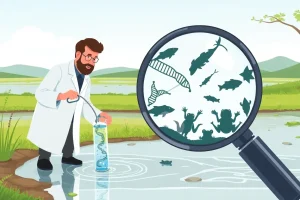
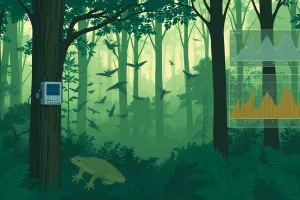
- Identifying traps: Scientists use field studies, experiments, and modeling to detect traps by comparing habitat preferences with actual fitness outcomes. This often involves monitoring survival and reproductive success across different habitat types.
- Habitat restoration: Restoring degraded habitats to improve their quality can realign cues with fitness benefits. For example, reducing mowing frequency in grasslands or planting native vegetation can turn traps into viable habitats.
- Managing cues: In some cases, it may be possible to alter the misleading cues themselves. For instance, using shielded lighting that reduces light pollution can help sea turtles and insects navigate correctly.
- Creating buffer zones: Protecting high-quality source habitats and ensuring connectivity between them can help populations withstand the effects of nearby traps.
- Public education and policy: Raising awareness about ecological traps can lead to changes in land-use practices, such as timing agricultural activities to avoid nesting seasons or designing wildlife-friendly infrastructure.
FAQ
What is an ecological trap?
An ecological trap is a low-quality habitat that an organism mistakenly prefers over a higher-quality habitat, leading to reduced survival or reproduction. It occurs when environmental cues used for habitat selection become unreliable due to rapid changes.
How do ecological traps form?
Traps form when human activities or natural events alter the environment so that the cues animals use to choose habitats (like vegetation structure or light) no longer correlate with actual habitat quality. The cues remain attractive, but the habitat becomes dangerous or resource-poor.
Why do ecological traps matter for conservation?
They can cause population declines and increase extinction risk by luring individuals into habitats where they cannot sustain themselves. This undermines conservation efforts and highlights the need to manage landscapes in ways that realign cues with habitat quality.
References
- Schlaepfer, M. A., Runge, M. C., & Sherman, P. W. (2002). Ecological and evolutionary traps. Trends in Ecology & Evolution, 17(10), 474-480.
- Robertson, B. A., & Hutto, R. L. (2006). A framework for understanding ecological traps and an evaluation of existing evidence. Ecology, 87(5), 1075-1085.
- Battin, J. (2004). When good animals love bad habitats: ecological traps and the conservation of animal populations. Conservation Biology, 18(6), 1482-1491.