In brief
At a glance
Quick Facts
- Definition
- Common species are those with high local abundance or broad geographic distribution, often forming the dominant biomass in an ecosystem.
- Ecosystem role
- They drive primary production, nutrient cycling, habitat formation, and energy flow, supporting entire food webs.
- Biomass contribution
- In many ecosystems, the top 10% of abundant species account for over 80% of total biomass.
- Decline risk
- Even widespread species can decline rapidly; for example, the passenger pigeon went from billions to extinct in a few decades.
- Economic value
- Common species underpin agriculture, fisheries, forestry, and tourism, contributing trillions of dollars to the global economy.
- Conservation focus
- Less than 10% of conservation funding is directed toward common species, despite their ecological importance.
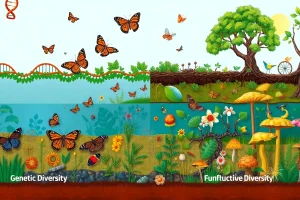
- Genetic diversity
- Large populations of common species harbor significant genetic variation, enhancing resilience to environmental change.
- Indicator function
- Trends in common species often serve as early warning signals for broader ecosystem degradation.
Key Takeaways
- Common species often dominate ecosystem biomass and energy flow, making them the primary drivers of ecological processes such as nutrient cycling, habitat formation, and food web stability.
- The decline or loss of a common species can have far greater immediate impacts on ecosystem function than the loss of a rare species, potentially triggering cascading effects throughout the food web.
- Conservation efforts that focus solely on rare species risk overlooking the foundational roles of common species, which are often more vulnerable to large-scale environmental changes.
- Public awareness and policy tend to favor charismatic rare species, but protecting common species is essential for maintaining the ecosystem services that human societies depend on.
What Is the Role of Common Species in Ecosystems?
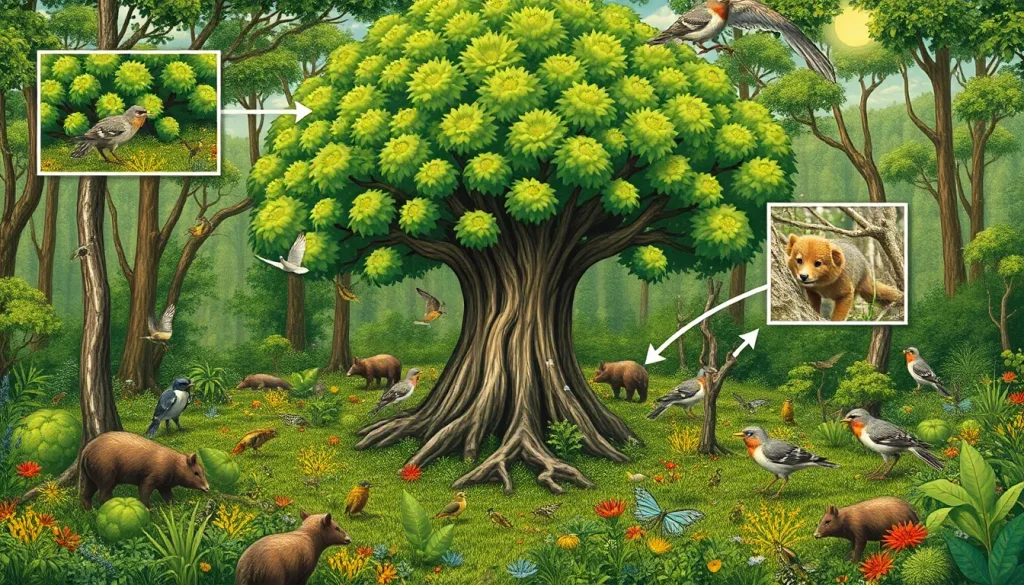
Common species are those that occur in high abundance or across wide geographic ranges within their habitats. While they may lack the novelty of rare or endemic species, they often form the structural and functional backbone of ecosystems. These species include dominant plants, widespread herbivores, abundant insects, and ubiquitous microorganisms. Their sheer numbers mean they are responsible for the majority of primary production, nutrient cycling, pollination, seed dispersal, and other critical processes. In many cases, common species create the physical environment that rare species depend on—for example, a dominant tree species in a forest provides the canopy structure, microclimate, and habitat for countless other organisms. Thus, the concept that common species matter as much as rare species challenges the traditional conservation focus on rarity, emphasizing that ecological significance is not determined solely by scarcity.
Overview
In ecology, species are often categorized by their abundance and distribution. Rare species—those with small populations or limited ranges—have historically received the bulk of conservation attention and funding, driven by the assumption that they are most at risk of extinction. However, a growing body of research demonstrates that common species, precisely because of their abundance, exert a disproportionately large influence on ecosystem structure and function. They are the primary producers, dominant herbivores, top predators, and widespread decomposers that shape the environment for all other organisms. The loss of a common species can lead to dramatic shifts in ecosystem state, reduced resilience, and the decline of many associated rare species. Recognizing the equal importance of common species is not about diminishing the value of rare ones, but about adopting a more holistic view of biodiversity that accounts for the roles species play in maintaining healthy, functioning ecosystems.
How It Works
Common species influence ecosystems through several key mechanisms. First, they often act as foundation species or ecosystem engineers, physically structuring the environment. For example, dominant tree species in a forest create the canopy that regulates light, temperature, and moisture for all understory plants and animals. Second, common species drive energy flow and nutrient cycling because of their high biomass and metabolic activity. In many ecosystems, a handful of abundant plant species account for the vast majority of primary production, which then supports entire food webs. Third, common species provide functional redundancy and response diversity; their large populations often harbor significant genetic variation, enabling ecosystems to withstand and recover from disturbances. When a common species declines, the loss of these functions can be catastrophic, even if the species is not yet at risk of extinction.
What the Evidence Shows
Empirical studies across diverse ecosystems confirm the outsized role of common species. In grasslands, experiments have shown that removing dominant plant species reduces productivity and alters nutrient cycling far more than removing rare species. In marine systems, the decline of once-abundant fish stocks has led to trophic cascades, collapsing food webs and altering habitat structure. For example, the historical overharvesting of common oysters in estuaries eliminated their water-filtering function, leading to degraded water quality and loss of seagrass beds. Similarly, the widespread decline of common pollinator species, such as certain bumblebees, has been linked to reduced crop yields and wild plant reproduction. Research on microbial communities reveals that the most abundant bacterial taxa are often the primary drivers of biogeochemical processes like nitrogen fixation and decomposition. These findings underscore that abundance is a key predictor of ecological impact, and that commonness does not confer immunity to decline.
Importance and Impact
The importance of common species extends beyond ecology to human well-being. Many common species are the foundation of ecosystem services: they provide food, timber, forage, and clean water. For instance, common forage grasses support livestock production, while widespread pollinators ensure crop yields. The decline of such species can have direct economic consequences. Moreover, common species often hold cultural significance, shaping landscapes and traditions. Their loss can lead to “shifting baseline syndrome,” where each generation accepts a progressively impoverished environment as normal. From a conservation perspective, focusing on common species can be more cost-effective: maintaining large populations is often easier and cheaper than rescuing species on the brink of extinction. Protecting common species also preserves genetic diversity and evolutionary potential, which is critical for adapting to climate change and other global pressures.
Common Misconceptions
One widespread misconception is that common species are not at risk and therefore do not require conservation attention. However, many species that were once abundant have experienced dramatic declines due to habitat loss, overexploitation, pollution, and climate change—sometimes with little public notice until they become rare. Another misconception is that rare species are inherently more valuable because they are unique or irreplaceable. While rare species certainly contribute to biodiversity, their ecological roles are often limited by their low abundance; common species, by contrast, perform the bulk of ecosystem work. A third misconception is that protecting common species is sufficient to safeguard rare ones. In reality, both groups are interdependent, and effective conservation requires a balanced approach that considers the entire community.
What Individuals Can Do
Individuals can support the conservation of common species through everyday actions. Planting native vegetation in gardens and community spaces helps sustain local populations of common plants, insects, and birds. Reducing pesticide and herbicide use protects abundant pollinators and soil organisms. Choosing sustainably sourced food, wood, and other products reduces pressure on common species exploited for commercial purposes. Participating in citizen science projects—such as bird counts, butterfly monitoring, or water quality testing—provides valuable data on population trends of common species, enabling early detection of declines. Finally, advocating for policies that protect entire ecosystems rather than just rare species can shift conservation priorities toward maintaining the abundance of all native species.
FAQ
What is a common species?
A common species is one that is abundant in its habitat or has a wide geographic range. These species are often the most frequently encountered organisms in an ecosystem and play a major role in its functioning.
How does the loss of a common species affect an ecosystem?
The loss of a common species can disrupt energy flow, nutrient cycling, and habitat structure. Because they often dominate biomass and interactions, their decline can trigger cascading effects, leading to reduced ecosystem productivity and the decline of other species.
Why do rare species get more conservation attention?
Rare species are often perceived as more vulnerable to extinction and may have unique genetic or cultural value. Conservation funding and laws frequently prioritize species at immediate risk, but this can overlook the foundational importance of common species.
References
- Gaston, K. J. (2010). Valuing common species. Science, 327(5962), 154-155.
- Winfree, R., Fox, J. W., Williams, N. M., Reilly, J. R., & Cariveau, D. P. (2015). Abundance of common species, not species richness, drives delivery of a real-world ecosystem service. Ecology Letters, 18(7), 626-635.
- Baker, D. J., Garnett, S. T., O'Connor, J., Ehmke, G., Clarke, R. H., Woinarski, J. C. Z., & McGeoch, M. A. (2019). Conserving the abundance of nonthreatened species. Conservation Biology, 33(2), 319-328.
- IUCN Red List of Threatened Species. International Union for Conservation of Nature.