In brief
At a glance
Quick Facts
- Framework Origin
- The planetary boundaries framework was first published in 2009 by a team led by Johan Rockström.
- Number of Boundaries
- There are nine planetary boundaries, including climate change, biosphere integrity, and novel entities.
- Novel Entities Definition
- The novel entities boundary encompasses synthetic chemicals, plastics, pesticides, industrial compounds, and other human-made substances.
- Production Growth
- Global chemical production has increased 50-fold since 1950 and is projected to triple by 2050.
- Registered Chemicals
- An estimated 350,000 chemicals and mixtures are registered for commercial use worldwide.
- Safety Assessment Gap
- Only a small fraction of these chemicals have been thoroughly assessed for their environmental and health impacts.
- Boundary Status
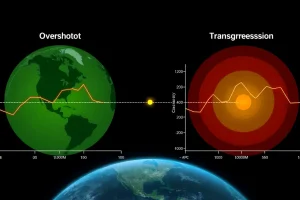
- The novel entities boundary was declared transgressed in a 2022 study, as the rate of chemical production exceeds the capacity for safety assessment.
Key Takeaways
- Chemical production is a major driver of the ‘novel entities’ planetary boundary, which addresses the release of synthetic chemicals and other human-made substances into the environment.
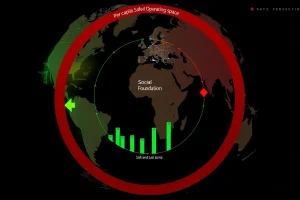
- The planetary boundaries framework defines a safe operating space for humanity; the novel entities boundary is considered transgressed due to the sheer volume, diversity, and persistence of chemicals produced.
- Over 350,000 chemicals and mixtures are registered for commercial use globally, yet only a small fraction have been thoroughly assessed for their environmental and health impacts.
- Addressing chemical production within the planetary boundaries framework requires a shift toward green chemistry, circular economy models, and strengthened international governance.
What Is Chemical Production and the Planetary Boundaries Framework?
Chemical production refers to the industrial synthesis of substances—ranging from plastics and pesticides to pharmaceuticals and industrial solvents—that are used in virtually every sector of the modern economy. The planetary boundaries framework, first proposed in 2009 by a team of Earth system scientists led by Johan Rockström, identifies nine critical Earth system processes that regulate the stability and resilience of the planet. These boundaries define a ‘safe operating space’ for humanity; transgressing them increases the risk of large-scale, irreversible environmental change. One of these boundaries is ‘novel entities,’ which encompasses the release of synthetic chemicals, engineered materials, and other human-made substances into the environment.
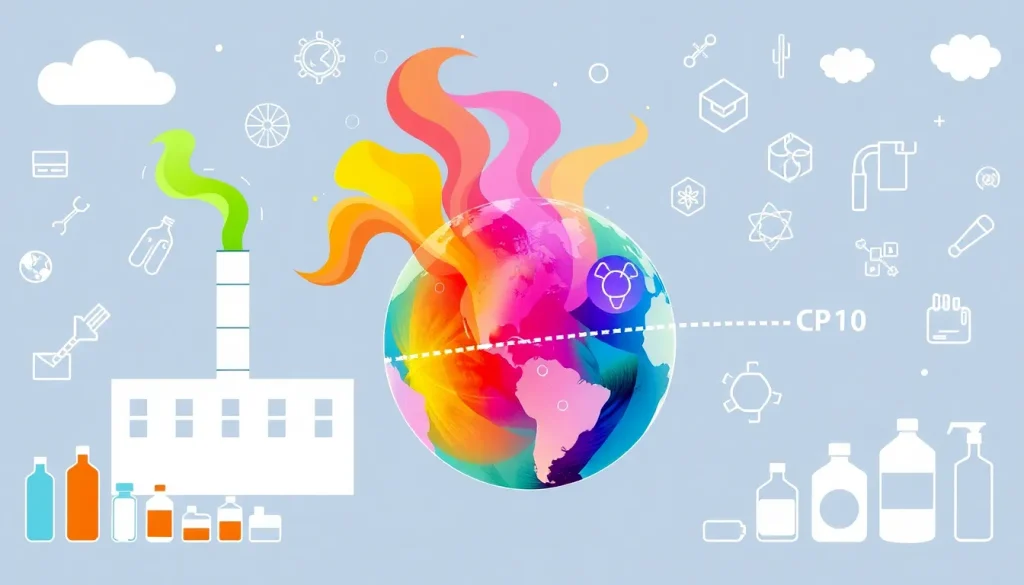
Chemical production is the primary source of novel entities. Since the mid-20th century, the global chemical industry has grown exponentially, with production volumes increasing roughly 50-fold. This growth has introduced tens of thousands of synthetic compounds into ecosystems and organisms, many of which are persistent, bioaccumulative, or toxic. The planetary boundaries framework highlights that the rate at which new chemicals are being created and released far exceeds the capacity of regulatory systems to evaluate their safety, let alone manage their long-term environmental fate. As a result, the novel entities boundary is considered to have been transgressed, signaling a critical and largely underappreciated dimension of global environmental change.
Overview
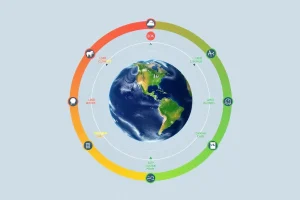
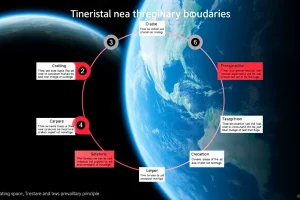
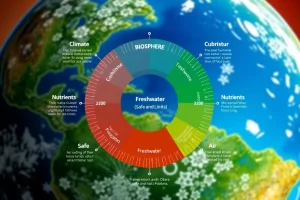
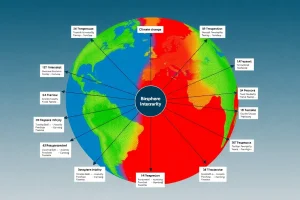
The planetary boundaries framework identifies nine Earth system processes that have maintained the stable conditions of the Holocene epoch, during which human civilization developed. These boundaries include climate change, biosphere integrity, land-system change, freshwater use, biogeochemical flows (nitrogen and phosphorus), ocean acidification, atmospheric aerosol loading, stratospheric ozone depletion, and novel entities. Each boundary has a proposed quantitative limit, except for novel entities and atmospheric aerosol loading, which are more difficult to quantify. Chemical production is directly linked to the novel entities boundary, but it also interacts with other boundaries, such as biosphere integrity (through pesticide impacts on biodiversity) and climate change (through greenhouse gas emissions from chemical manufacturing).
The novel entities boundary was originally defined to include synthetic chemicals, but it has since been broadened to encompass all human-made substances and materials that are new to the Earth system, including plastics, engineered nanomaterials, and radioactive materials. The boundary is not defined by a single concentration threshold but by the rate of introduction of new substances and the capacity of society to assess and manage their risks. The framework emphasizes that the sheer number and diversity of chemicals, combined with their potential for global-scale impacts, make this boundary particularly challenging to quantify and govern.
How It Works
Chemical production contributes to the novel entities boundary through the entire lifecycle of synthetic substances: extraction of raw materials, manufacturing, use, and disposal. During each stage, chemicals can be released into the air, water, and soil. Many synthetic compounds are designed to be stable and persistent, meaning they do not readily break down in the environment. Others are volatile and can travel long distances through the atmosphere, leading to global distribution. Once released, these substances can accumulate in ecosystems, enter food chains, and cause harm to organisms, including humans.
The planetary boundaries framework assesses novel entities not by a single measurable limit but by two control variables: the rate of introduction of new chemical entities and the capacity of society to assess and manage the risks. The boundary is considered transgressed when the rate of introduction exceeds the rate at which safety assessments can be conducted and when the cumulative impacts threaten Earth system functions. In practice, this means that the global production of chemicals has outpaced the development of toxicological data, monitoring systems, and regulatory frameworks, leading to a situation where the environment is being exposed to a vast and growing array of substances with unknown long-term consequences.
What the Evidence Shows
Multiple lines of evidence indicate that the novel entities boundary has been transgressed. A landmark 2022 study by Persson et al. concluded that the rate of chemical production and release has exceeded the planetary boundary, as the global capacity to assess and manage chemical risks is insufficient. The study highlighted that over 350,000 chemicals and mixtures are registered for commercial use, a number that has grown far faster than the ability to generate safety data. Only a small percentage of these substances have been thoroughly evaluated for their toxicity, environmental persistence, or potential to disrupt endocrine systems.
Environmental monitoring reveals widespread contamination. Persistent organic pollutants (POPs), such as PCBs and dioxins, are found in remote regions like the Arctic, far from their sources. Microplastics are ubiquitous in oceans, soils, and even the atmosphere. Pesticides and pharmaceuticals are detected in groundwater and surface water across the globe. Biomonitoring studies show that humans carry a complex mixture of synthetic chemicals in their bodies, with some linked to chronic diseases. This evidence underscores that chemical pollution is not a localized issue but a global phenomenon that affects all ecosystems and populations.
Importance and Impact
The transgression of the novel entities boundary has profound implications for both human health and the environment. Many synthetic chemicals are known or suspected to cause cancer, reproductive harm, neurodevelopmental disorders, and endocrine disruption. The combined effects of exposure to multiple chemicals—often referred to as the ‘cocktail effect’—are poorly understood but may amplify risks. Economically, the costs of chemical pollution include healthcare expenses, loss of ecosystem services, and cleanup efforts, which can run into billions of dollars annually.
On a planetary scale, novel entities can alter fundamental Earth system processes. For example, some chemicals contribute to stratospheric ozone depletion or act as greenhouse gases. Others affect biodiversity by harming pollinators, soil microorganisms, and aquatic life, thereby undermining biosphere integrity. The pervasive presence of plastics and synthetic fibers in marine environments disrupts food webs and carbon cycling. Because these impacts are interconnected with other planetary boundaries, the transgression of the novel entities boundary can exacerbate challenges like climate change and biodiversity loss, creating feedback loops that further destabilize the Earth system.
Solutions
Addressing chemical production within the planetary boundaries framework requires a multi-pronged approach. Green chemistry principles aim to design chemicals and processes that reduce or eliminate hazardous substances, emphasizing biodegradability, low toxicity, and renewable feedstocks. Circular economy models seek to minimize waste and keep materials in use, reducing the need for virgin chemical production and limiting environmental releases. Extended producer responsibility schemes can incentivize manufacturers to design safer, more recyclable products.
At the policy level, international agreements such as the Stockholm Convention on Persistent Organic Pollutants and the Rotterdam Convention provide frameworks for regulating hazardous chemicals. Regional regulations like the European Union’s REACH (Registration, Evaluation, Authorisation and Restriction of Chemicals) require companies to generate safety data and manage risks. However, global governance remains fragmented. Strengthening the science-policy interface, investing in high-throughput toxicity testing, and developing a global monitoring system for chemicals are essential steps. Ultimately, a systemic shift toward sustainable chemistry and consumption patterns is needed to bring chemical production back within the planetary boundary.
Data Limitations and Uncertainties
One of the greatest challenges in managing the novel entities boundary is the lack of comprehensive data. The vast majority of chemicals in commerce have not been adequately tested for their environmental fate or health effects. Toxicological data are often limited to individual substances, whereas real-world exposures involve complex mixtures. Monitoring programs are sparse and inconsistent across regions, making it difficult to assess global trends. Furthermore, the boundary itself is not defined by a single quantitative threshold, which complicates communication and policy target-setting.
Uncertainties also arise from the long time lags between chemical release and observable impacts. Some effects, such as endocrine disruption or ecosystem shifts, may take decades to manifest. The interactions between novel entities and other planetary boundaries are not fully understood, and the potential for irreversible tipping points remains a subject of research. These data gaps highlight the need for precautionary action, as waiting for complete certainty could result in widespread and irreversible harm.
FAQ
What is the planetary boundaries framework?
The planetary boundaries framework is a scientific concept that identifies nine critical Earth system processes and proposes limits within which humanity can safely operate to avoid destabilizing the planet. It was first introduced in 2009 and has been updated to guide sustainable development.
How does chemical production affect the novel entities boundary?
Chemical production introduces synthetic substances into the environment at a rate that exceeds society's ability to assess and manage their risks. This leads to widespread pollution, ecosystem disruption, and potential long-term harm, causing the novel entities boundary to be transgressed.
Why is the novel entities boundary considered transgressed?
The boundary is considered transgressed because the global production and release of novel entities—such as plastics, pesticides, and industrial chemicals—have outpaced the capacity for safety testing and regulation. Evidence of widespread contamination and insufficient data on most chemicals supports this assessment.
References
- Rockström, J., et al. (2009). 'A safe operating space for humanity.' Nature, 461, 472–475.
- Steffen, W., et al. (2015). 'Planetary boundaries: Guiding human development on a changing planet.' Science, 347(6223), 1259855.
- Persson, L., et al. (2022). 'Outside the Safe Operating Space of the Planetary Boundary for Novel Entities.' Environmental Science & Technology, 56(3), 1510–1521.