In brief
At a glance
Quick Facts
- Average yield gap
- Organic farming typically yields 20–25% less than conventional farming, though the gap varies widely by crop and region.
- Synthetic nitrogen use
- Conventional agriculture relies on synthetic nitrogen fertilizers, which are energy-intensive to produce and contribute to greenhouse gas emissions.
- Soil organic matter
- Organic soils often have higher organic matter content and microbial diversity, improving water retention and carbon sequestration.
- Pesticide residues
- Pesticide residues are generally lower on organic produce, but organic farming permits certain natural pesticides that can also have environmental impacts.
- Land requirements
- A global shift to 100% organic agriculture could require up to 33% more land to maintain current production levels, according to some modeling studies.
- Pollinator support
- Organic farms typically support more pollinators and beneficial insects due to reduced synthetic pesticide use and greater habitat diversity.
- Greenhouse gas emissions per unit
- Greenhouse gas emissions per unit of food are often lower in conventional systems for some crops, but organic systems can sequester more carbon in soil.
- Water pollution sources
- Both systems can contribute to water pollution: conventional through synthetic runoff, organic through manure and natural pesticide runoff.
Key Takeaways
- Organic agriculture generally uses fewer synthetic pesticides and fertilizers, reducing chemical runoff and promoting soil biodiversity, but often requires more land to produce the same amount of food due to lower yields.
- Conventional farming typically achieves higher yields per hectare, which can spare land for conservation, but relies on synthetic inputs that may contribute to water pollution, greenhouse gas emissions, and soil degradation.
- The environmental trade-offs between the two systems are highly context-dependent, varying by crop, region, and management practices; neither system is universally superior across all environmental metrics.
- Reducing food waste, shifting diets, and integrating beneficial practices from both systems may offer greater environmental gains than choosing one farming method exclusively.
What Is Conventional vs Organic Agriculture: Environmental Trade-Offs?
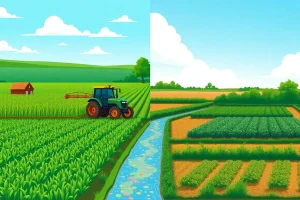
The environmental trade-offs between conventional and organic agriculture refer to the comparative advantages and disadvantages each farming system presents for ecosystems, natural resources, and human health. Conventional agriculture relies on synthetic fertilizers, pesticides, and high-yielding crop varieties to maximize production, while organic agriculture emphasizes ecological processes, biodiversity, and natural inputs, often at the cost of lower yields per unit area. The trade-offs involve balancing factors such as land use, greenhouse gas emissions, water quality, soil health, and biodiversity conservation.
This comparison is not a simple binary; both systems have strengths and weaknesses that depend on local conditions, crop types, and management practices. Understanding these trade-offs is essential for making informed decisions about food production, policy, and consumption in a world facing climate change, population growth, and resource constraints.
Overview
Agriculture is a major driver of environmental change, occupying about 38% of the Earth’s land surface. The choice between conventional and organic farming methods has significant implications for land use, biodiversity, water resources, and climate. Conventional agriculture, developed primarily in the 20th century, uses synthetic fertilizers, pesticides, and genetically modified organisms (GMOs) to boost crop yields and efficiency. Organic agriculture, by contrast, prohibits synthetic inputs and GMOs, relying instead on crop rotations, compost, biological pest control, and mechanical cultivation. While organic farming often supports greater on-farm biodiversity and healthier soils, its lower yields typically require more land to produce the same amount of food, potentially leading to habitat loss elsewhere. This land-use trade-off is central to the environmental debate between the two systems.
Both systems also differ in their energy use and greenhouse gas emissions. Conventional farming can be energy-intensive due to synthetic fertilizer production, but organic farming may use more fuel for mechanical weeding and produce higher emissions per unit of food due to lower productivity. The overall environmental impact depends on the specific metrics considered—such as per hectare versus per kilogram of output—and the local context, including climate, soil type, and available technology.
What the Evidence Shows
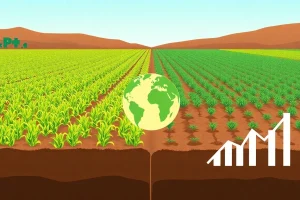
Numerous meta-analyses and life-cycle assessments have compared the environmental performance of organic and conventional agriculture. A comprehensive 2017 meta-analysis published in Nature Communications found that organic systems generally have lower environmental impacts per unit area but higher impacts per unit of product due to lower yields. Specifically, organic farming uses less energy, produces lower greenhouse gas emissions, and reduces nitrogen and phosphorus losses per hectare. However, per unit of food produced, organic systems often have higher land use, eutrophication potential, and acidification potential, while still showing lower energy use and similar or lower greenhouse gas emissions for some crops.
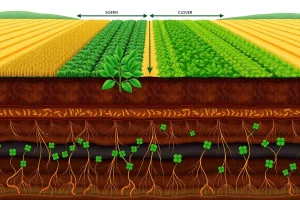
Studies also show that organic farming enhances soil organic matter, microbial diversity, and earthworm populations, which can improve soil structure and water retention. Biodiversity benefits are well-documented, with organic fields supporting more species of plants, insects, and birds. However, the yield gap—typically 20–25% lower for organic crops on average—means that more land is needed to produce equivalent amounts of food, potentially leading to deforestation and habitat loss if demand remains constant. The evidence underscores that the environmental outcomes are not absolute but depend on the specific indicators and system boundaries considered.
Environmental and Human Impacts
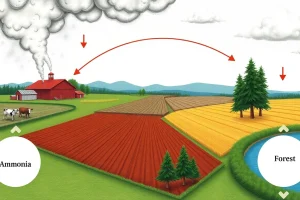
The environmental impacts of conventional agriculture include water pollution from synthetic fertilizers and pesticides, soil erosion, and greenhouse gas emissions from fertilizer production and fuel use. Pesticide residues can harm non-target organisms, including pollinators and aquatic life, and may pose risks to human health through exposure or dietary intake. However, conventional farming’s higher yields can reduce pressure to convert natural ecosystems into farmland, thereby preserving carbon stocks and biodiversity in uncultivated areas.
Organic agriculture reduces synthetic chemical inputs, which can lower pesticide residues in food and water, and often builds healthier soils with higher organic matter and microbial activity. This can enhance carbon sequestration and water infiltration. However, organic farming may still use approved natural pesticides, some of which have environmental drawbacks, and tillage for weed control can increase soil erosion and fuel use. The lower yields of organic systems may also lead to greater land requirements, potentially contributing to deforestation and habitat loss if not managed carefully. Human health impacts are debated: while organic food has lower pesticide residues, the nutritional differences are generally small, and the overall health effects depend on broader dietary patterns.
Benefits, Limitations and Trade-offs
The choice between conventional and organic agriculture involves several key trade-offs:
- Land use vs. biodiversity: Organic farming supports higher on-farm biodiversity but requires more land to produce the same amount of food, which could lead to habitat loss elsewhere. Conventional farming spares land but often reduces local biodiversity.
- Yield vs. environmental intensity: Conventional systems achieve higher yields, reducing the need for agricultural expansion, but may have higher per-hectare impacts from synthetic inputs. Organic systems have lower per-hectare impacts but higher per-unit impacts for some indicators.
- Soil health vs. productivity: Organic practices build soil organic matter and structure, enhancing long-term fertility, but may not sustain the high yields needed to feed a growing global population without additional land.
- Climate change mitigation: Organic soils can sequester more carbon, but the lower yields may lead to higher overall greenhouse gas emissions per unit of food if land-use change is considered. Conventional systems can reduce emissions per unit of food but rely on fossil-fuel-based inputs.
- Water quality: Organic farming reduces synthetic pesticide and fertilizer runoff, but nutrient leaching from organic sources (e.g., manure) can still occur, and lower yields may require more water per unit of food in some cases.
These trade-offs mean that neither system is universally better; the optimal approach may involve integrating practices from both, such as precision agriculture, integrated pest management, and agroecological methods, to minimize environmental harm while maintaining productivity.
Common Misconceptions
Misconception 1: Organic farming uses no pesticides. Organic agriculture does permit certain natural pesticides, such as copper sulfate and pyrethrins, which can be toxic to aquatic life and beneficial insects. The distinction is that these substances are derived from natural sources rather than synthesized, but they are not necessarily safer or more environmentally benign.
Misconception 2: Conventional farming always harms the environment more than organic farming. The environmental impact depends on the metric. For example, conventional systems often have lower land use and can produce food with less greenhouse gas emissions per kilogram, which is critical for climate mitigation. Organic systems may have higher per-unit impacts for some indicators.
Misconception 3: Organic food is always healthier and more nutritious. While organic produce may have lower pesticide residues, the nutritional differences are generally small and inconsistent. Health outcomes are more strongly influenced by overall diet quality and food safety practices than by the farming method alone.
Misconception 4: One farming system can feed the world sustainably on its own. Both systems have limitations. A global shift to organic would likely require more land and could increase food prices, while continuing conventional practices without improvement could exacerbate environmental degradation. A mixed approach, tailored to local conditions, is often more realistic.
Data Limitations and Uncertainties
Comparing the environmental impacts of conventional and organic agriculture is challenging due to several data limitations and uncertainties. Yield gaps vary widely by crop, region, and management intensity; some studies show organic yields approaching conventional levels under optimal conditions, while others report larger differences. Life-cycle assessments often rely on average data that may not capture the diversity of practices within each system. Additionally, many studies focus on temperate regions, with less data available for tropical and developing-country contexts, where trade-offs may differ significantly.
Another uncertainty is the treatment of land-use change. If organic farming requires more land, the resulting deforestation or grassland conversion could release large amounts of carbon, offsetting any on-farm sequestration benefits. However, the magnitude of this effect depends on future dietary patterns, food waste reduction, and yield improvements. Long-term studies on soil carbon sequestration and biodiversity are still limited, and the interactions between farming practices and climate change are complex. These uncertainties highlight the need for context-specific assessments and caution against blanket recommendations.
FAQ
What is the main environmental trade-off between conventional and organic agriculture?
The central trade-off is between land use and input intensity. Organic farming reduces synthetic chemical use and often enhances on-farm biodiversity and soil health, but its lower yields typically require more land to produce the same amount of food. Conventional farming achieves higher yields on less land, which can spare natural habitats, but relies on synthetic inputs that may cause pollution and degrade ecosystems.
How does organic farming affect biodiversity compared to conventional farming?
Organic farming generally supports greater on-farm biodiversity, including more species of plants, insects, birds, and soil organisms, due to the absence of synthetic pesticides and the use of diverse crop rotations and habitat features. However, because organic yields are lower, more land may be needed overall, which could lead to habitat loss and reduced biodiversity at a landscape scale if not managed carefully.
Can organic farming feed the world sustainably?
Whether organic farming alone can feed the global population sustainably is debated. Modeling studies suggest that a full conversion to organic agriculture would require significantly more land, potentially leading to deforestation and higher food prices. However, combining organic practices with reduced food waste, dietary shifts toward plant-based foods, and yield improvements in low-productivity regions could make a substantial contribution to global food security without relying solely on one system.
References
- Seufert, V., Ramankutty, N., & Foley, J. A. (2012). Comparing the yields of organic and conventional agriculture. Nature, 485(7397), 229-232.
- Clark, M., & Tilman, D. (2017). Comparative analysis of environmental impacts of agricultural production systems, agricultural input efficiency, and food choice. Environmental Research Letters, 12(6), 064016.
- Reganold, J. P., & Wachter, J. M. (2016). Organic agriculture in the twenty-first century. Nature Plants, 2(2), 15221.