In brief
At a glance
Quick Facts
- Global freshwater withdrawals for agriculture
- Approximately 70% of all freshwater withdrawn by humans is used for agriculture.
- Irrigated land share of global food production
- Irrigated cropland represents about 20% of total cultivated land but produces roughly 40% of the world's food.
- Water lost to evapotranspiration from crops
- Over 80% of water consumed by agriculture is returned to the atmosphere through evapotranspiration.
- Major aquifers at risk of depletion
- Aquifers such as the Ogallala (USA), North China Plain, and Indo-Gangetic Basin are being depleted faster than they recharge.
- Leading cause of coastal dead zones
- Nutrient runoff from agriculture is the primary driver of eutrophication and hypoxic zones in coastal waters worldwide.
- Rainfed agriculture's share of global cropland
- About 80% of the world's cropland is rainfed, relying solely on precipitation.
- Water footprint of common foods
- Producing 1 kg of beef requires about 15,000 liters of water, while 1 kg of wheat requires roughly 1,500 liters.
Key Takeaways
- Agriculture accounts for approximately 70% of global freshwater withdrawals, making it the largest human intervention in the water cycle.
- Irrigation, deforestation, and soil management alter evaporation, runoff, and groundwater recharge, shifting water availability across regions.
- Agricultural runoff carries nutrients and pesticides into water bodies, causing eutrophication and degrading aquatic ecosystems.
- Changes in land use for farming can intensify local and regional climate feedbacks, including altered rainfall patterns and increased drought risk.
What Is How Agriculture Changes the Global Water Cycle?
Agriculture changes the global water cycle by modifying the natural movement, distribution, and quality of water on Earth. The water cycle—the continuous movement of water between the atmosphere, land, and oceans—is driven by evaporation, transpiration, precipitation, infiltration, and runoff. Farming activities intervene in each of these processes, primarily through irrigation, land clearing, and the application of chemicals. These interventions are so extensive that they now influence water availability and climate at regional and even global scales.
At its core, agriculture’s impact on the water cycle stems from its need to secure water for crop and livestock production. This leads to the extraction of surface water and groundwater, the reshaping of landscapes to manage water flow, and the release of water vapor and pollutants back into the environment. The result is a complex web of changes that affect not only the quantity and timing of water flows but also the quality of water resources, with cascading effects on ecosystems and human societies.
Overview
The global water cycle is a closed system: the total amount of water on Earth remains roughly constant, but its distribution and state change continuously. Agriculture accelerates and redirects these natural fluxes. Rainfed agriculture covers about 80% of the world’s cropland and relies on precipitation, but it still alters the cycle by changing how water infiltrates the soil and returns to the atmosphere. Irrigated agriculture, which produces about 40% of the world’s food on just 20% of cropland, has an even more direct impact by extracting water from rivers, lakes, and aquifers and redistributing it across the landscape.
Globally, agriculture is responsible for the largest share of human water consumption. Most of the water taken up by crops is transpired, returning to the atmosphere as water vapor. This process, known as evapotranspiration, is a major pathway through which agriculture influences atmospheric moisture and, consequently, weather patterns. At the same time, land-use changes such as deforestation for pasture or cropland reduce the land’s capacity to store water and regulate flows, leading to increased runoff and soil erosion.
How It Works
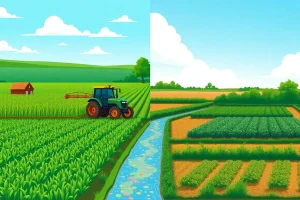
Agriculture alters the water cycle through several interconnected mechanisms. The most direct is irrigation, which withdraws water from rivers, lakes, and aquifers and applies it to fields. This water then either evaporates from soil and plant surfaces, is transpired by crops, or percolates into the ground. In many cases, irrigation increases evapotranspiration compared to natural vegetation, boosting local humidity and potentially influencing rainfall downwind. However, inefficient irrigation can also lead to waterlogging and salinization of soils, reducing agricultural productivity.
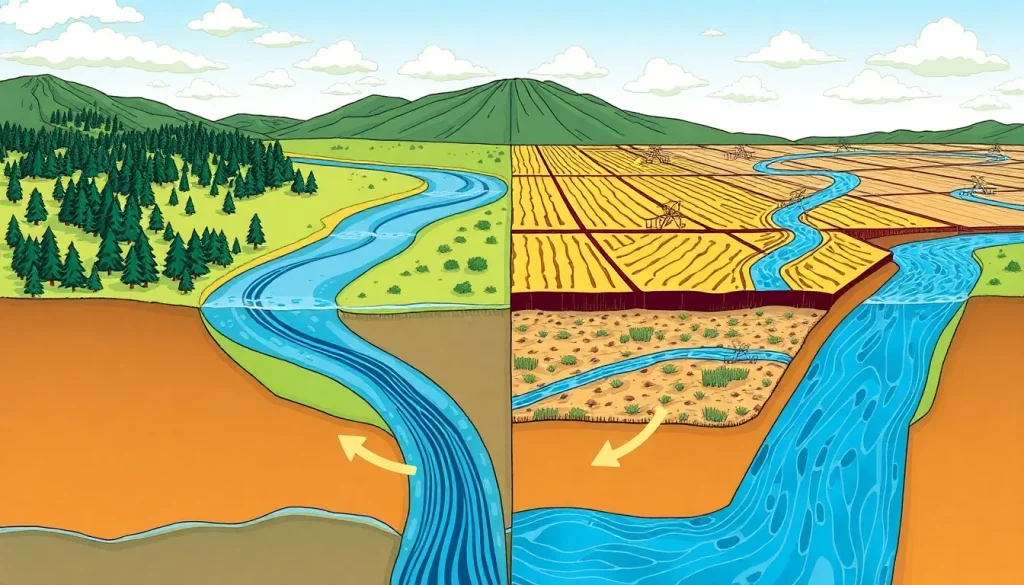
Land-use change is another powerful driver. Converting forests or grasslands to cropland reduces the depth and complexity of root systems, which in turn decreases the amount of water that infiltrates into the ground. This increases surface runoff, leading to higher peak flows in rivers and greater erosion. The loss of vegetation also reduces transpiration, which can alter local and regional precipitation patterns. Additionally, agricultural drainage systems—such as ditches and tile drains—artificially lower water tables and accelerate the movement of water from fields to streams, further modifying natural flow regimes.
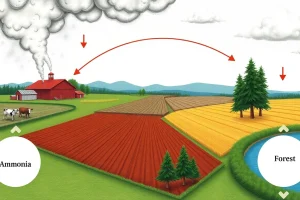
Agriculture also affects water quality through the release of nutrients, pesticides, and sediments. Excess nitrogen and phosphorus from fertilizers enter water bodies, causing eutrophication—an overgrowth of algae that depletes oxygen and creates dead zones. Sediment from eroded fields clouds water, harming aquatic life and reducing reservoir capacity. These pollution pathways are integral to the water cycle because they change the chemical composition of water as it moves through the environment.
Environmental and Human Impacts
The alteration of the water cycle by agriculture has profound environmental consequences. One of the most visible is the depletion of freshwater sources. Major aquifers, such as the Ogallala in the United States, the North China Plain aquifer, and those beneath the Indo-Gangetic Plain, are being drained faster than they can recharge. This groundwater depletion threatens long-term water security for millions of people and the sustainability of irrigated agriculture itself. Rivers like the Colorado and the Yellow River now regularly run dry before reaching the sea due to agricultural diversions.
Water quality degradation is another critical impact. Nutrient runoff from farms is the leading cause of eutrophication in lakes and coastal zones worldwide, creating hypoxic dead zones that devastate fisheries. Pesticide contamination affects drinking water supplies and aquatic ecosystems. Additionally, the drainage of wetlands for agriculture eliminates natural water filters and flood buffers, increasing the vulnerability of downstream communities to floods and reducing biodiversity.
On the human side, these changes affect water availability for drinking, sanitation, and industry. Competition for water between agricultural, urban, and environmental needs intensifies, especially in water-scarce regions. Smallholder farmers in developing countries are particularly vulnerable to changes in rainfall patterns and groundwater depletion, which can undermine food security and livelihoods.
Regional Differences
The way agriculture changes the water cycle varies significantly by region, depending on climate, farming practices, and water management infrastructure. In arid and semi-arid regions, such as the Middle East, North Africa, and parts of South Asia, irrigation is essential for crop production and accounts for a very high percentage of water withdrawals. Here, groundwater depletion and salinization are acute problems, and competition for limited water resources can fuel conflict.
In humid tropical regions, the expansion of agriculture through deforestation has dramatic effects on the water cycle. The Amazon rainforest, for example, generates a large portion of its own rainfall through transpiration. Large-scale clearing for soy cultivation and cattle ranching reduces this moisture recycling, potentially leading to decreased regional rainfall and a shift toward a drier climate. In temperate zones, intensive agriculture with high fertilizer inputs has led to widespread nutrient pollution in rivers and coastal areas, such as the Gulf of Mexico dead zone driven by the Mississippi River basin’s agricultural runoff.
In monsoon-dependent regions, changes in land use can alter the timing and intensity of runoff, increasing flood risks during wet seasons and reducing water availability during dry periods. Each region thus faces a unique set of water-cycle challenges shaped by its agricultural practices.
Connections to Other Systems
Agriculture’s influence on the water cycle is tightly linked to other Earth systems, particularly climate and energy. The increased evapotranspiration from irrigated fields can cool local temperatures but also add moisture to the atmosphere, potentially affecting cloud formation and precipitation hundreds of kilometers away. Conversely, deforestation for agriculture reduces evapotranspiration and can lead to local warming and decreased rainfall. These land-atmosphere feedbacks mean that agricultural water use can amplify or mitigate climate change effects at regional scales.
The water cycle is also connected to the carbon cycle through agriculture. Wetland drainage and peatland conversion for farming release large amounts of carbon dioxide, while irrigation can increase soil carbon storage in some cases. Furthermore, the energy used to pump, treat, and transport water for agriculture contributes to greenhouse gas emissions, creating a feedback loop where climate change alters water availability, which in turn affects agricultural practices and energy use.
Solutions
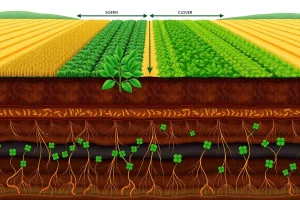
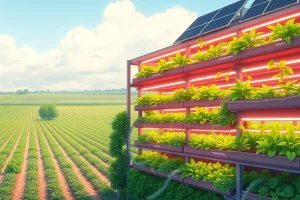
Addressing agriculture’s impact on the water cycle requires a combination of technological, management, and policy approaches. Improving irrigation efficiency—through drip irrigation, precision sprinklers, and soil moisture monitoring—can significantly reduce water withdrawals and evaporative losses. Rainwater harvesting and small-scale water storage can help farmers in rainfed systems cope with variability. Agroecological practices, such as conservation tillage, cover cropping, and agroforestry, enhance soil structure and water infiltration, reducing runoff and erosion while building organic matter.
At the landscape scale, protecting and restoring wetlands, riparian zones, and forests can help regulate water flows and filter pollutants. Integrated water resource management (IWRM) frameworks aim to balance agricultural, municipal, and environmental water needs through stakeholder collaboration and adaptive governance. Policy instruments like water pricing, tradable water rights, and regulations on fertilizer use can incentivize more sustainable practices. Finally, reducing food waste and shifting toward less water-intensive diets can lower the overall water footprint of agriculture.
Data Limitations and Uncertainties
Despite the clear evidence that agriculture profoundly alters the water cycle, significant uncertainties remain. Global estimates of agricultural water use rely on models and sparse ground-based measurements, leading to large discrepancies between different datasets. Groundwater depletion rates are particularly difficult to quantify because aquifer systems are complex and monitoring is limited. The impact of agricultural aerosols and land-cover change on regional precipitation is an active area of research, with models often disagreeing on the magnitude and even the direction of effects.
Water quality data are also unevenly collected, especially in developing countries, making it hard to assess the full extent of nutrient and pesticide pollution. Furthermore, the interactions between climate change and agricultural water use introduce additional uncertainty: changing precipitation patterns and increased evaporative demand will alter irrigation needs and runoff, but the net effect on water resources is location-dependent and difficult to predict. These gaps highlight the need for improved monitoring, data sharing, and integrated modeling to better understand and manage agriculture’s role in the global water cycle.
FAQ
What is the main way agriculture changes the water cycle?
Agriculture primarily changes the water cycle by withdrawing large amounts of freshwater for irrigation, which increases evapotranspiration and reduces river flows and groundwater levels. Land-use changes like deforestation for farming also alter runoff and infiltration patterns.
How does irrigation affect local climate?
Irrigation can cool local temperatures by increasing evaporation, but it also adds moisture to the air, which may enhance rainfall downwind. In some regions, extensive irrigation has been shown to influence monsoon patterns and cloud formation.
Why does agricultural runoff cause dead zones in oceans?
Fertilizer runoff carries nitrogen and phosphorus into rivers and coastal waters, fueling excessive algae growth. When the algae die and decompose, the process consumes oxygen, creating hypoxic conditions that cannot support most marine life, resulting in dead zones.
References
- Food and Agriculture Organization of the United Nations (FAO). "AQUASTAT - FAO's Global Information System on Water and Agriculture."
- Intergovernmental Panel on Climate Change (IPCC). "Climate Change and Land: Special Report on Climate Change, Desertification, Land Degradation, Sustainable Land Management, Food Security, and Greenhouse Gas Fluxes in Terrestrial Ecosystems."
- United States Geological Survey (USGS). "The Water Cycle and Water Science."