What Is Space Debris and Is It an Environmental Problem?
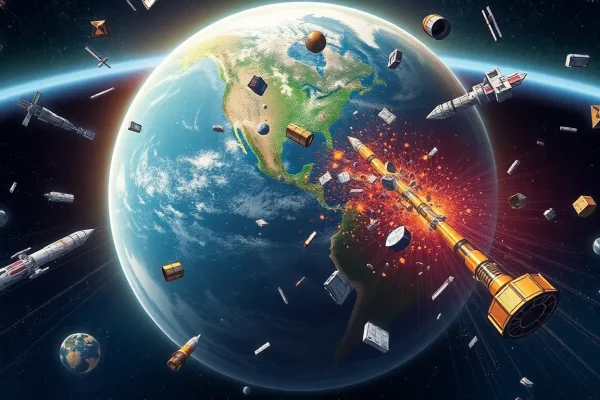
Space debris refers to defunct human-made objects in Earth orbit, including spent rocket stages, dead satellites, and fragments from collisions. It poses an environmental…
Topic archive
Emergence of synthetic chemicals and new materials affecting ecosystems.
Space debris refers to defunct human-made objects in Earth orbit, including spent rocket stages, dead satellites, and fragments from collisions. It poses an environmental…
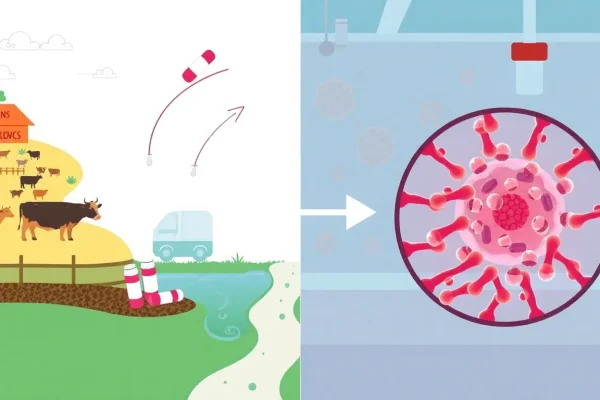
Antibiotic residues are traces of antibiotics that remain in food or the environment after use, while antimicrobial resistance (AMR) is the ability of microbes…
Satellite pollution refers to the unintended light and radio interference caused by artificial satellites, particularly large constellations in low Earth orbit, which brighten the…
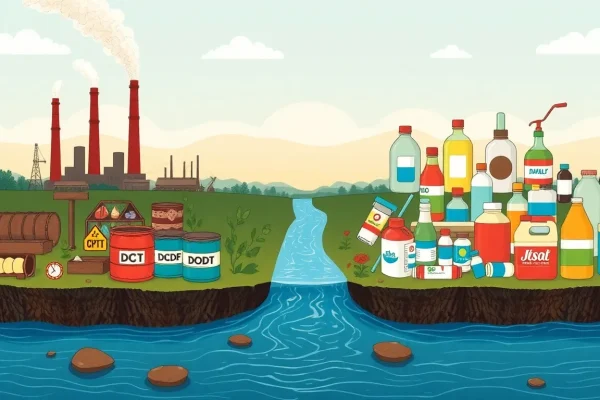
Legacy pollutants are well-known, persistent toxic substances like lead and DDT that have been regulated for decades but still linger in the environment. Emerging…
Pharmaceutical pollution in rivers refers to the presence of active pharmaceutical ingredients and their metabolites in freshwater systems, primarily from human and veterinary use.…
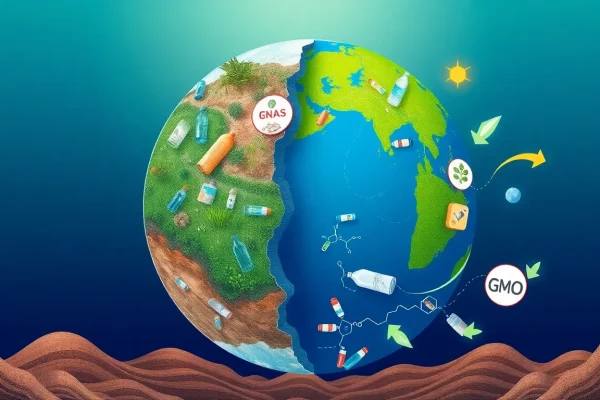
A novel entity is a new substance, a new form of an existing substance, or a modified life form introduced by human activities that…
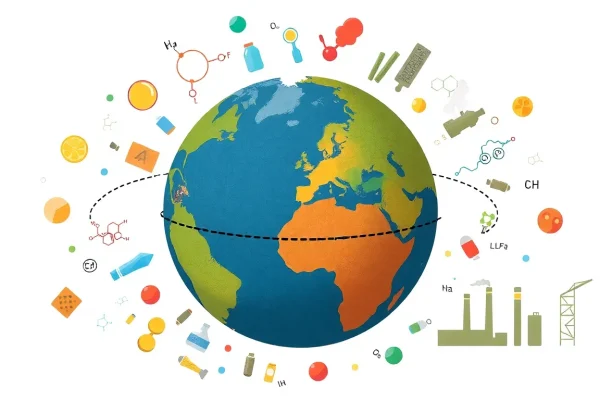
Chemical pollution cannot be captured by a single global boundary because it encompasses hundreds of thousands of diverse substances with different toxicities, environmental fates,…
Learn what novel entities are, why chemicals, plastics, PFAS, pesticides, and other synthetic substances are a planetary boundary, and how they threaten Earth's life-support…
Chemical pollution is difficult to measure because of the vast number of chemicals in use, their complex environmental behavior, and limitations in analytical technology.…
Novel entities are human-introduced substances or organisms that can disrupt Earth's systems. They are one of the nine planetary boundaries, and their control is…