In brief
At a glance
Quick Facts
- Definition of antibiotic residues
- Traces of antibiotics or their metabolites remaining in animal tissues, milk, eggs, or the environment after drug administration.
- Definition of antimicrobial resistance
- The ability of microorganisms to survive and multiply in the presence of drugs that were once effective against them.
- Global mortality estimate
- AMR is estimated to cause at least 700,000 deaths annually worldwide, with projections of up to 10 million by 2050 if unaddressed.
- WHO classification
- The World Health Organization lists AMR as one of the top 10 global public health threats.
- Growth promotion ban
- The European Union banned the use of antibiotics for growth promotion in livestock in 2006.
- Regulatory limits
- Maximum residue limits (MRLs) for veterinary drugs in food are set by the Codex Alimentarius to ensure food safety.
- One Health approach
- AMR is a quintessential One Health issue, requiring integrated action across human, animal, and environmental sectors.
- Horizontal gene transfer
- Resistance genes can spread rapidly among bacteria through mobile genetic elements like plasmids, even between different species.
Key Takeaways
- Antibiotic residues are traces of antibiotics that remain in animal products or the environment after use, while antimicrobial resistance (AMR) is the ability of microbes to survive drugs designed to kill them.
- Residues can promote the development and spread of resistant bacteria, creating a cycle that undermines the effectiveness of life-saving medicines.
- AMR is a natural evolutionary process accelerated by human activities, including overuse of antibiotics in medicine and agriculture, and inadequate waste management.
- Addressing the problem requires a coordinated One Health approach that integrates human, animal, and environmental health strategies.
What Is Antibiotic Residues and Antimicrobial Resistance?
Antibiotic residues are small amounts of antibiotics or their breakdown products that remain in animal tissues, milk, eggs, or the environment after the drugs have been administered. These residues can occur when animals are treated for infections, when antibiotics are used for growth promotion, or when pharmaceutical manufacturing waste is improperly disposed of. Antimicrobial resistance (AMR), on the other hand, is the ability of microorganisms—such as bacteria, viruses, fungi, and parasites—to survive and grow in the presence of drugs that were once effective against them. While resistance is a natural evolutionary phenomenon, the presence of antibiotic residues in various environments can accelerate the selection and spread of resistant strains.
The link between residues and resistance is a critical public health concern. When antibiotics are present at low concentrations in the environment or in food, they can create a selective pressure that favors the survival of resistant bacteria. These resistant bacteria can then transfer their resistance genes to other bacteria, including pathogens that cause disease in humans. As a result, common infections become harder to treat, medical procedures become riskier, and the global burden of disease increases. Understanding this connection is essential for developing effective strategies to preserve the efficacy of antibiotics.
Overview
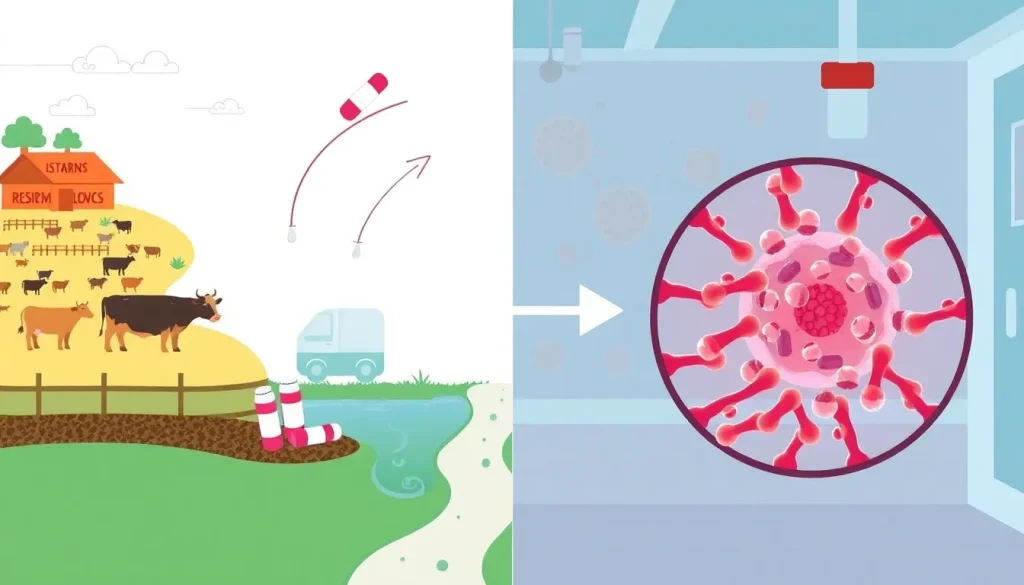
Antibiotics are essential tools in modern medicine and agriculture. They are used to treat bacterial infections in humans and animals, and in some regions, they have been administered to livestock at subtherapeutic doses to promote growth and improve feed efficiency. The global consumption of antibiotics is substantial, with a significant proportion used in food animal production. After administration, a portion of the antibiotic is excreted unchanged or as active metabolites, entering the environment through manure, wastewater, and agricultural runoff. These residues can persist in soil, water, and sediments, and may be taken up by plants or accumulate in animal tissues, eventually reaching humans through the food chain.
Antimicrobial resistance is not a new phenomenon; bacteria have evolved resistance mechanisms over millions of years. However, the widespread use and misuse of antibiotics have dramatically accelerated this process. Resistant bacteria and resistance genes can spread between humans, animals, and the environment, making AMR a quintessential One Health issue. The World Health Organization has identified AMR as one of the top ten global public health threats, emphasizing that without urgent action, we risk entering a post-antibiotic era where common infections and minor injuries can once again kill.
How It Works
The development and spread of antimicrobial resistance driven by antibiotic residues involve several interconnected mechanisms. When antibiotics are present in low concentrations—below the level required to kill all susceptible bacteria—they create a selective pressure. Bacteria that possess or acquire genes conferring resistance can survive and multiply, while susceptible bacteria are inhibited or killed. Over time, the resistant population becomes dominant. Resistance genes can arise through spontaneous mutations or be acquired from other bacteria via horizontal gene transfer, a process by which genetic material is exchanged between organisms. This transfer often occurs through mobile genetic elements such as plasmids, transposons, and integrons, which can carry multiple resistance genes, leading to multidrug resistance.
Antibiotic residues in the environment, such as in soil or water, can maintain this selective pressure even far from the original site of use. Resistant bacteria from animal feces can contaminate crops, water sources, and surfaces, providing multiple pathways for human exposure. When humans consume food containing resistant bacteria or residues, or come into direct contact with contaminated environments, they can acquire resistant infections. Additionally, resistance genes can be transferred from environmental bacteria to human pathogens, further complicating treatment. The cycle is self-perpetuating: increased resistance leads to greater antibiotic use, which in turn generates more residues and selects for more resistance.
Main Causes or Drivers
Several human activities drive the accumulation of antibiotic residues and the rise of antimicrobial resistance:
- Overuse and misuse in human medicine: Antibiotics are often prescribed for viral infections, against which they are ineffective, or used without proper diagnosis. In many parts of the world, they are available over the counter without a prescription, encouraging self-medication and inappropriate use.
- Extensive use in livestock and aquaculture: In some countries, antibiotics are routinely added to animal feed or water to promote growth and prevent disease in crowded conditions. This practice exposes large populations of bacteria to low doses of antibiotics, creating ideal conditions for resistance to emerge.
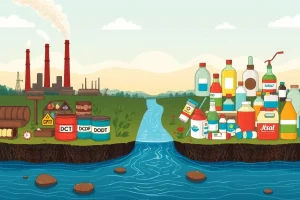
- Inadequate waste management: Pharmaceutical manufacturing effluents, hospital waste, and agricultural runoff can contain high levels of antibiotics and resistant bacteria. When not properly treated, these contaminants enter waterways and soil, spreading residues and resistance genes.
- Poor infection prevention and control: In healthcare settings and communities, inadequate hygiene, sanitation, and vaccination coverage increase the incidence of infections, leading to greater antibiotic use and opportunities for resistance to spread.
- Global travel and trade: Resistant bacteria and residues can cross borders through the movement of people, animals, and food products, making AMR a global challenge that no single country can address alone.
Environmental and Human Impacts
Antibiotic residues in the environment disrupt microbial ecosystems. In soil and water, they can reduce microbial diversity and alter nutrient cycling, while enriching populations of resistant bacteria. These environmental reservoirs of resistance genes can be transferred to human pathogens, diminishing the effectiveness of antibiotics critical for human health. Residues can also be taken up by crops irrigated with contaminated water, entering the food chain directly. In aquatic environments, residues affect fish and other organisms, with potential consequences for food webs and biodiversity.
For humans, the impacts are profound. Resistant infections are harder to treat, often requiring more expensive or toxic last-resort drugs, longer hospital stays, and increased mortality. Common procedures such as surgery, chemotherapy, and organ transplants become riskier without effective antibiotics to prevent or treat infections. The economic burden includes higher healthcare costs and lost productivity. Food safety is also compromised when residues exceed regulatory limits, though such occurrences are generally rare in well-regulated systems. Nevertheless, the cumulative effect of low-level exposure through food and water remains a concern for the development of resistance and potential allergic reactions in sensitive individuals.
Solutions
Addressing antibiotic residues and antimicrobial resistance requires a multifaceted, coordinated approach:
- Antimicrobial stewardship: Promoting the prudent use of antibiotics in human and veterinary medicine—using the right drug, at the right dose, for the right duration—reduces unnecessary exposure and slows resistance development.
- Regulatory measures: Banning the use of antibiotics for growth promotion in livestock, as the European Union did in 2006, and setting and enforcing maximum residue limits (MRLs) for food products help minimize residues in the food supply.
- Infection prevention and control: Improving hygiene, sanitation, and vaccination reduces the need for antibiotics. In healthcare, strict infection control protocols limit the spread of resistant bacteria.
- Surveillance and monitoring: Robust systems to track antibiotic use, residues, and resistance patterns in humans, animals, and the environment are essential for informed policy and early warning.
- Research and innovation: Developing new antibiotics, alternative therapies (such as bacteriophages, vaccines, and probiotics), and rapid diagnostics can help stay ahead of resistance. Research into better waste treatment technologies can reduce environmental contamination.
- Public education: Raising awareness about the proper use of antibiotics, the risks of resistance, and the importance of completing prescribed courses can change behavior at the individual level.
- International collaboration: AMR is a global problem that requires coordinated action through frameworks like the Global Action Plan on AMR, involving governments, international organizations, and the private sector.
Common Misconceptions
Several misunderstandings cloud the public discourse on antibiotic residues and antimicrobial resistance:
- “Antibiotic residues and antibiotic resistance are the same thing.” Residues are chemical traces of the drug, while resistance is a biological trait of microbes. However, residues can contribute to the development of resistance.
- “Cooking food destroys all antibiotic residues and resistant bacteria.” While cooking can reduce some residues and kill many bacteria, certain antibiotics are heat-stable, and resistant genes can survive even if the bacteria are killed. Proper food handling and cooking are important but not foolproof.
- “Antimicrobial resistance only affects people who take antibiotics frequently.” Resistant bacteria can spread through communities via person-to-person contact, contaminated food or water, and environmental exposure, affecting anyone.
- “Stopping antibiotics when you feel better is safe.” Stopping treatment early can leave the most resilient bacteria alive, potentially leading to a relapse with a resistant infection. Always complete the prescribed course unless a healthcare professional advises otherwise.
- “AMR is only a hospital problem.” While healthcare settings are hotspots, resistant bacteria are widespread in the community, on farms, and in natural environments. Community-acquired resistant infections are increasingly common.
FAQ
What are antibiotic residues?
Antibiotic residues are small amounts of antibiotics or their breakdown products that remain in animal tissues, milk, eggs, or the environment after the drugs have been used. They can enter the food chain or contaminate soil and water.
How does antimicrobial resistance develop?
Resistance develops when bacteria are exposed to antibiotics, and those with genetic mutations or acquired genes that allow them to survive multiply. Low concentrations of antibiotics, such as from residues, can create selective pressure that favors resistant strains. Resistance genes can also spread between bacteria through horizontal gene transfer.
Why are antibiotic residues a concern for human health?
Residues can contribute to the development of antimicrobial resistance, making infections harder to treat. They may also cause allergic reactions in sensitive individuals. While regulatory limits keep residues in food low, environmental contamination can lead to long-term exposure and the spread of resistance genes to human pathogens.
References
- World Health Organization. Antimicrobial resistance. Fact sheet.
- Food and Agriculture Organization of the United Nations. Antibiotic residues in food.
- World Organisation for Animal Health. Terrestrial Animal Health Code.
- Codex Alimentarius. Maximum Residue Limits for Veterinary Drugs in Foods.
- Centers for Disease Control and Prevention. Antibiotic Resistance Threats in the United States.