In brief
At a glance
Quick Facts
- Definition of Legacy Pollutants
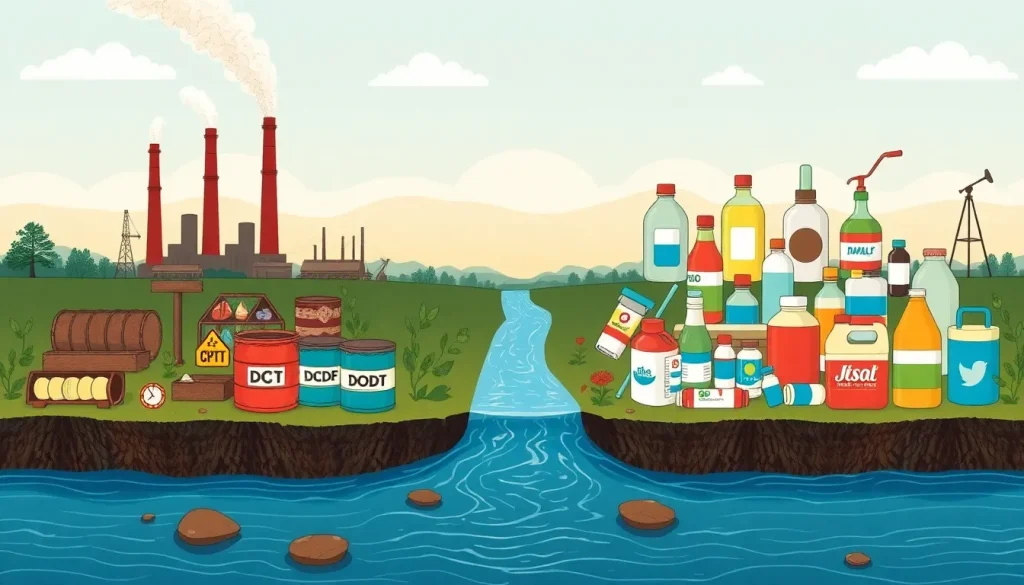
- Toxic substances such as heavy metals, PCBs, and DDT that have been regulated for decades but persist in the environment due to their chemical stability.
- Definition of Emerging Contaminants
- Chemicals or materials like pharmaceuticals, microplastics, and PFAS that are newly detected or whose risks are not yet fully understood, often lacking regulatory standards.
- Persistence
- Legacy pollutants can remain in soil and sediment for decades to centuries; many emerging contaminants, such as PFAS, are also extremely persistent and have been dubbed 'forever chemicals'.
- Regulation
- Legacy pollutants are often banned or restricted under international treaties like the Stockholm Convention; most emerging contaminants lack comprehensive global regulations.
- Health Effects
- Legacy pollutants are linked to cancer, neurological damage, and reproductive harm; emerging contaminants are associated with endocrine disruption, antibiotic resistance, and potential chronic diseases.
- Detection
- Advances in analytical chemistry have enabled detection of emerging contaminants at trace levels (parts per trillion), revealing their widespread presence in water supplies.
- Sources
- Legacy pollutants originate from historical industrial and agricultural activities; emerging contaminants often enter the environment through wastewater, agricultural runoff, and consumer product use.
- Remediation
- Legacy pollutant cleanup involves dredging, capping, and bioremediation; emerging contaminant removal requires advanced treatment like activated carbon and ozonation.
Key Takeaways
- Legacy pollutants are well-known, persistent toxic substances that have been regulated for decades but remain in the environment, while emerging contaminants are newly recognized chemicals with uncertain risks and limited regulation.
- Legacy pollutants include heavy metals, PCBs, and DDT; emerging contaminants encompass pharmaceuticals, personal care products, microplastics, and PFAS.
- Both categories can bioaccumulate and cause adverse health effects, but emerging contaminants often lack comprehensive monitoring and toxicological data.
- Effective management requires remediation and containment for legacy pollutants, and proactive risk assessment, advanced treatment, and source control for emerging contaminants.
What Is Legacy Pollutants vs Emerging Contaminants?
Legacy pollutants and emerging contaminants are two broad categories of environmental pollutants distinguished primarily by the timeline of their recognition, regulation, and scientific understanding. Legacy pollutants are substances whose harmful effects on human health and the environment have been known for decades, leading to bans or strict controls on their production and use. Despite these measures, they persist in soil, water, and biota due to their chemical stability and widespread historical use. Common examples include heavy metals like lead and mercury, organochlorine pesticides such as DDT, and industrial chemicals like polychlorinated biphenyls (PCBs).
Emerging contaminants, on the other hand, are chemicals or materials that have only recently been detected in the environment or whose risks are not yet fully understood. They are often unregulated or under-regulated, and their presence is a growing concern as analytical methods improve. This category includes pharmaceuticals, personal care products, microplastics, per- and polyfluoroalkyl substances (PFAS), and endocrine-disrupting compounds. The distinction is not always static; some substances transition from emerging to legacy as scientific evidence accumulates and regulatory frameworks are established. Understanding the differences between these two groups is essential for developing effective environmental policies and protecting public health.
History
The recognition of legacy pollutants emerged in the mid-20th century as industrialization accelerated and the environmental consequences of chemical use became apparent. Widespread application of synthetic pesticides like DDT, the use of lead in gasoline and paint, and the release of industrial chemicals such as PCBs led to visible ecological damage and human health crises. Seminal works like Rachel Carson’s Silent Spring (1962) galvanized public awareness, prompting regulatory actions. By the 1970s and 1980s, many countries had banned or severely restricted these substances. The Stockholm Convention on Persistent Organic Pollutants, adopted in 2001, formalized global efforts to eliminate or restrict the most hazardous legacy pollutants.
The concept of emerging contaminants gained traction in the late 20th and early 21st centuries, driven by advances in analytical chemistry that allowed detection of trace levels of chemicals in water and biota. Researchers began finding pharmaceuticals, hormones, and personal care product ingredients in rivers and groundwater, often at concentrations too low to cause acute toxicity but with unknown long-term effects. The term “emerging” reflects not necessarily newness of the chemical itself, but the novelty of its recognition as an environmental concern. For example, PFAS have been manufactured since the 1940s but only in recent decades have their widespread environmental presence and health risks been widely acknowledged.
How It Works
The behavior and impact of legacy pollutants and emerging contaminants are governed by their chemical properties, environmental fate, and toxicological mechanisms. Legacy pollutants are typically persistent, hydrophobic, and prone to bioaccumulation. They resist degradation and can travel long distances through atmospheric and oceanic currents, leading to global distribution. Once released, they bind to organic matter in soils and sediments, and accumulate in the fatty tissues of organisms, magnifying up the food chain—a process known as biomagnification. For example, PCBs can reach dangerous concentrations in top predators like fish, birds, and marine mammals, causing reproductive and neurological harm.
Emerging contaminants exhibit a wider range of properties. Many pharmaceuticals and personal care products are designed to be biologically active at low doses and are often water-soluble, allowing them to pass through conventional wastewater treatment plants and enter surface and groundwater. Microplastics, another emerging concern, are persistent physical particles that can adsorb other pollutants and be ingested by organisms, causing physical and chemical stress. Some emerging contaminants, like PFAS, combine extreme persistence with bioaccumulative potential, blurring the line between legacy and emerging. The mechanisms of toxicity vary widely: endocrine disruption, antibiotic resistance promotion, oxidative stress, and carcinogenicity are among the documented effects, though for many emerging contaminants, the full toxicological profile remains incomplete.
Environmental and Human Impacts
Legacy pollutants have well-documented impacts on ecosystems and human health. DDT caused eggshell thinning in birds of prey, leading to population declines. PCBs are linked to immune system suppression, reproductive disorders, and cancer in wildlife and humans. Lead exposure, even at low levels, impairs neurological development in children. Mercury, particularly in the form of methylmercury, bioaccumulates in fish and can cause severe neurological damage in humans who consume contaminated seafood. These effects persist because legacy pollutants remain in the environment for decades or centuries, continuing to expose new generations.
Emerging contaminants present a more uncertain but potentially widespread risk. Pharmaceuticals in water can disrupt aquatic life; for instance, synthetic estrogens from birth control pills have been shown to feminize male fish, affecting reproduction. Antibiotics in the environment contribute to the rise of antibiotic-resistant bacteria, a major global health threat. Microplastics have been found in human blood, lungs, and placentas, though their long-term health effects are still under investigation. PFAS exposure is associated with immune system effects, thyroid disease, and certain cancers. The full scope of harm from emerging contaminants is difficult to assess because many are present in complex mixtures, and chronic low-dose effects may take decades to manifest.
Common Misconceptions
Solutions
Addressing legacy pollutants focuses on remediation and containment. Techniques include dredging contaminated sediments, capping polluted areas, and using bioremediation—employing microorganisms or plants to break down or immobilize pollutants. For example, certain bacteria can degrade PCBs under specific conditions, and phytoremediation uses plants to extract heavy metals from soil. Monitoring programs track legacy pollutant levels in fish and wildlife to inform consumption advisories and assess cleanup progress. International agreements like the Stockholm Convention continue to drive the phase-out of remaining legacy POPs and the cleanup of contaminated sites.
Managing emerging contaminants requires a proactive, multi-pronged approach. Advanced water treatment technologies, such as ozonation, activated carbon filtration, and reverse osmosis, can effectively remove many pharmaceuticals and PFAS from wastewater and drinking water. Green chemistry principles encourage the design of chemicals that are less persistent and less toxic. Source control measures, including take-back programs for unused medications and restrictions on microplastics in cosmetics, reduce the entry of contaminants into the environment. Strengthening regulatory frameworks to require environmental risk assessments for new chemicals and to prioritize monitoring of suspected emerging contaminants is essential. International collaboration and data sharing help identify and address contaminants before they become global problems.
Data Limitations and Uncertainties
Significant data gaps hinder the management of both legacy and emerging contaminants. For many legacy pollutants, historical monitoring data are sparse, making it difficult to establish baseline conditions or track long-term trends. The full extent of contaminated sites worldwide is unknown, and remediation costs can be prohibitive. For emerging contaminants, the challenges are even greater. Toxicity data are lacking for the vast majority of chemicals in commerce; only a fraction have been thoroughly tested for chronic health effects, endocrine disruption, or ecological impacts. Detection methods for some emerging contaminants are still being developed, and standardized monitoring protocols are often absent.
Uncertainties also arise from the complex interactions of chemical mixtures. Organisms are rarely exposed to a single contaminant, yet most risk assessments evaluate chemicals in isolation. The combined effects of legacy and emerging pollutants—such as the potential for microplastics to transport legacy POPs into organisms—are poorly understood. Additionally, the long latency period for many health outcomes means that effects may not become apparent for decades, complicating the establishment of causal links. Addressing these uncertainties requires sustained investment in environmental monitoring, toxicological research, and the development of predictive models that can assess risks from chemical mixtures.
FAQ
What are legacy pollutants?
Legacy pollutants are toxic substances that have been known for decades to harm human health and the environment. They include heavy metals like lead and mercury, organochlorine pesticides such as DDT, and industrial chemicals like PCBs. Although many are banned or restricted, they persist in soil, water, and living organisms for long periods.
How do emerging contaminants differ from legacy pollutants?
Emerging contaminants are chemicals or materials that have only recently been detected in the environment or whose risks are not yet fully understood. Unlike legacy pollutants, they often lack regulatory standards and comprehensive monitoring. Examples include pharmaceuticals, microplastics, and PFAS. The key difference lies in the timeline of recognition and the level of scientific and regulatory certainty.
Why are emerging contaminants a concern?
Emerging contaminants are a concern because they are widespread, often biologically active at low concentrations, and their long-term health and ecological effects are largely unknown. They can enter water supplies, accumulate in organisms, and contribute to problems like antibiotic resistance and endocrine disruption. Without adequate regulation and treatment, they pose a growing risk to public health and the environment.
References
- United States Environmental Protection Agency (EPA) – Contaminants of Emerging Concern including Pharmaceuticals and Personal Care Products
- Stockholm Convention on Persistent Organic Pollutants (POPs) – Overview of the Convention and listed substances
- World Health Organization (WHO) – Emerging contaminants in water and wastewater: occurrence, fate, and removal