In brief
At a glance
Quick Facts
- Primary focus of habitat restoration
- Physical environment for specific species
- Primary focus of ecosystem restoration
- Entire ecological community and its functions
- Scale of habitat restoration
- Often local or site-specific
- Scale of ecosystem restoration
- Typically landscape or regional
- Key methods in habitat restoration
- Invasive species removal, native replanting, hydrology repair
- Key methods in ecosystem restoration
- Keystone species reintroduction, disturbance regime restoration, connectivity
- Global initiative for ecosystem restoration
- UN Decade on Ecosystem Restoration (2021–2030)
- Common misconception
- Tree planting alone equals ecosystem restoration
Key Takeaways
- Habitat restoration focuses on the physical environment required by particular species, such as food, water, and shelter.
- Ecosystem restoration is a broader process that aims to recover the structure, function, and biodiversity of an entire ecological community.
- While habitat restoration is often species-specific, ecosystem restoration addresses complex interactions among species and their environment.
- Both approaches are essential for combating biodiversity loss, climate change, and environmental degradation, and they often complement each other.
What Is Habitat Restoration vs Ecosystem Restoration?
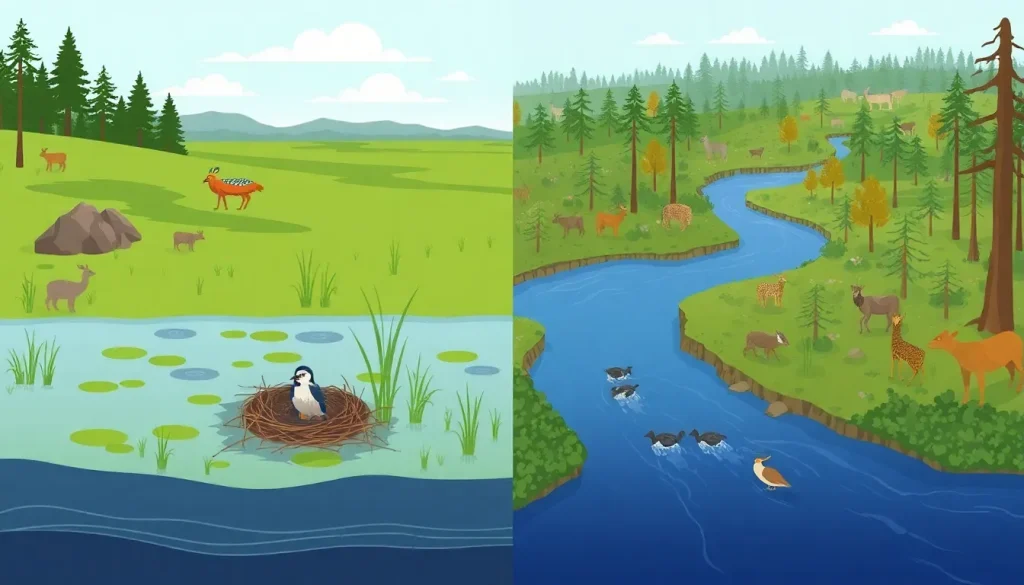
Habitat restoration is the practice of renewing and repairing degraded, damaged, or destroyed habitats to a condition that supports the species originally present. It typically targets the physical and biological features of a specific environment—such as a wetland, forest, or grassland—that are necessary for the survival and reproduction of particular plants or animals. For example, restoring a stream’s water quality and bank vegetation to support salmon spawning is a habitat restoration project. The primary goal is to recreate the conditions that allow target species to thrive, often by removing invasive species, replanting native vegetation, or reestablishing natural hydrology.
Ecosystem restoration, in contrast, is a more holistic process that aims to recover the entire ecological community, including its biodiversity, ecological processes, and resilience. It goes beyond the physical habitat to address the interactions among organisms and their environment, such as nutrient cycling, pollination, and natural disturbance regimes. Ecosystem restoration may encompass multiple habitats and often requires a landscape-scale approach. For instance, restoring a degraded forest ecosystem involves not only replanting trees but also reestablishing soil health, reintroducing native animal species, and ensuring that ecological functions like seed dispersal and water regulation are operational. The United Nations Decade on Ecosystem Restoration (2021–2030) highlights the global importance of this comprehensive approach to healing the planet.
How It Works
Habitat restoration typically follows a targeted, species-centric methodology. Practitioners first assess the specific requirements of the focal species—such as nesting sites, food sources, or water quality—and then manipulate the environment to meet those needs. Common techniques include removing invasive plants or animals, replanting native vegetation, restoring natural water flows, and stabilizing soils. For example, restoring a prairie habitat for grassland birds may involve controlled burns to eliminate woody encroachment and seeding with native grasses and forbs. Monitoring often focuses on the presence and abundance of the target species to gauge success.

Ecosystem restoration employs a broader, systems-based approach. It begins with a comprehensive assessment of the ecosystem’s historical condition, current degradation drivers, and missing components. Restoration actions may include habitat restoration for multiple species, but also the reintroduction of keystone species, reestablishment of natural disturbance regimes (such as fire or flooding), and remediation of pollution. Landscape connectivity is often a priority to allow species movement and genetic exchange. Because ecosystems are dynamic, restoration plans must be adaptive, with long-term monitoring of ecological indicators like species diversity, nutrient cycling, and resilience to disturbances. This process often involves collaboration among ecologists, local communities, and policymakers.
Importance and Impact
Both habitat and ecosystem restoration are critical for halting and reversing environmental degradation. Habitat restoration directly supports endangered species by providing the essential conditions for their survival, which can prevent extinctions and maintain genetic diversity. It also delivers localized benefits, such as improved water quality in a restored wetland or increased pollination services from a replanted hedgerow.
Ecosystem restoration has far-reaching impacts because it addresses the root causes of ecological decline. By recovering ecosystem functions, it enhances services that humans depend on, including carbon sequestration, flood control, soil fertility, and clean air and water. Restored ecosystems are more resilient to climate change and extreme weather events. On a global scale, ecosystem restoration is a key strategy for achieving the Sustainable Development Goals and the targets of the Paris Agreement. The economic benefits often outweigh the costs; for example, restoring coastal mangroves protects shorelines and supports fisheries, providing a high return on investment.
Examples
Habitat restoration projects are often smaller in scale and species-focused. In the United States, the restoration of prairie pothole wetlands has been crucial for waterfowl breeding. In the United Kingdom, chalk grassland restoration involves removing scrub and reintroducing grazing to support rare butterflies and wildflowers. These projects typically measure success by the return of target species.
Ecosystem restoration examples are larger and more complex. The restoration of the Florida Everglades is a massive undertaking to reestablish natural water flows, remove invasive species, and recover the entire wetland ecosystem, benefiting hundreds of species and improving water supply for humans. In China, the Loess Plateau restoration transformed a severely eroded landscape into productive land by terracing, reforesting, and changing land management practices, which restored ecosystem functions and lifted communities out of poverty. In Mozambique, the restoration of mangrove ecosystems involves replanting and hydrological restoration to support fisheries, protect coastlines, and sequester carbon.
Benefits, Limitations and Trade-offs
The benefits of habitat restoration include rapid, measurable improvements for target species and relatively lower costs compared to full ecosystem restoration. It can be a practical first step in heavily degraded areas. However, its limitations are that it may not address broader ecological problems, such as pollution sources or climate change, and the restored habitat may fail if the surrounding ecosystem remains degraded. There is also a risk of creating ecological traps if the habitat attracts species but cannot sustain them long-term.
Ecosystem restoration offers comprehensive, long-lasting benefits by rebuilding ecological integrity and resilience. It can provide a wide range of ecosystem services and support biodiversity at all levels. The limitations include high costs, technical complexity, and the need for long timeframes and sustained management. Trade-offs may arise when restoration goals conflict with human land uses or when prioritizing one ecosystem function over another. For example, restoring a forest for carbon sequestration might reduce water yield downstream. Balancing these trade-offs requires careful planning and stakeholder engagement.
Common Misconceptions
A common misconception is that planting trees is always ecosystem restoration. While tree planting can be a component, true ecosystem restoration requires a diverse mix of native species and the recovery of ecological processes, not just a monoculture plantation. Another misconception is that restoration can perfectly recreate a past ecosystem. In reality, environmental conditions have changed, and the goal is often to restore function and resilience rather than a static historical state. Finally, some believe that habitat restoration and ecosystem restoration are mutually exclusive. In practice, they are complementary: habitat restoration can be a stepping stone toward broader ecosystem recovery, and ecosystem restoration often includes multiple habitat restoration actions.
FAQ
What is the main difference between habitat restoration and ecosystem restoration?
Habitat restoration focuses on the physical environment needed by specific species, while ecosystem restoration aims to recover the entire ecological community, including its functions, processes, and biodiversity.
Can habitat restoration be part of ecosystem restoration?
Yes, habitat restoration is often a component of ecosystem restoration. Restoring habitats for key species can help rebuild the broader ecosystem, but ecosystem restoration also addresses interactions and processes beyond individual habitats.
Why is ecosystem restoration important?
Ecosystem restoration is vital for reversing biodiversity loss, mitigating climate change, and securing ecosystem services like clean water, food, and flood protection. It also supports human well-being and sustainable development.
References
- Society for Ecological Restoration (SER) International Standards for the Practice of Ecological Restoration
- United Nations Decade on Ecosystem Restoration 2021-2030
- Intergovernmental Science-Policy Platform on Biodiversity and Ecosystem Services (IPBES) Global Assessment Report on Biodiversity and Ecosystem Services