In brief
At a glance
Quick Facts
- Global agricultural water consumption share
- Agriculture accounts for about 70% of global water withdrawals and an even higher share of consumptive use due to evapotranspiration.
- Typical consumptive use in thermoelectric cooling
- Once-through cooling systems can have consumption rates as low as 1-2% of withdrawal, while cooling towers may consume 2-5%.
- Irrigation efficiency paradox
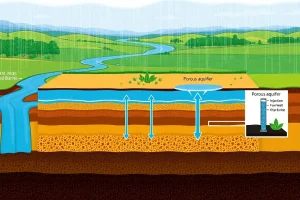
- Improving irrigation efficiency can reduce withdrawal but may increase consumption if more water is taken up by crops and less returns to the aquifer.
- Water consumption in municipal supply
- In urban systems, consumptive use is often 10-20% of withdrawal, mainly from landscape irrigation and evaporation.
- Global water consumption trend
- Global water consumption has been increasing faster than withdrawal due to expanding irrigated agriculture and rising evaporative demand.
- Key metric for water stress
- The ratio of total water consumption to renewable water resources is a primary indicator of basin-level water scarcity.
- Data challenge
- Consumption data is often estimated using models and coefficients, making it less reliable than withdrawal data in many regions.
Key Takeaways
- Water withdrawal is the total volume removed from a water source; water consumption is the portion that is not returned to the immediate environment.
- Withdrawal and consumption are distinct metrics: a high-withdrawal, low-consumption use (like once-through cooling) has different impacts than a low-withdrawal, high-consumption use (like irrigation).
- Globally, agriculture accounts for the largest share of both water withdrawal and water consumption, primarily through evapotranspiration.
- Understanding the difference is essential for sustainable water management, as consumptive use permanently removes water from a local system, while non-consumptive withdrawal can be reused downstream.
- Data on water consumption is often less reliable than withdrawal data, leading to uncertainties in water accounting and policy.
What Is Water Withdrawal vs Water Consumption?
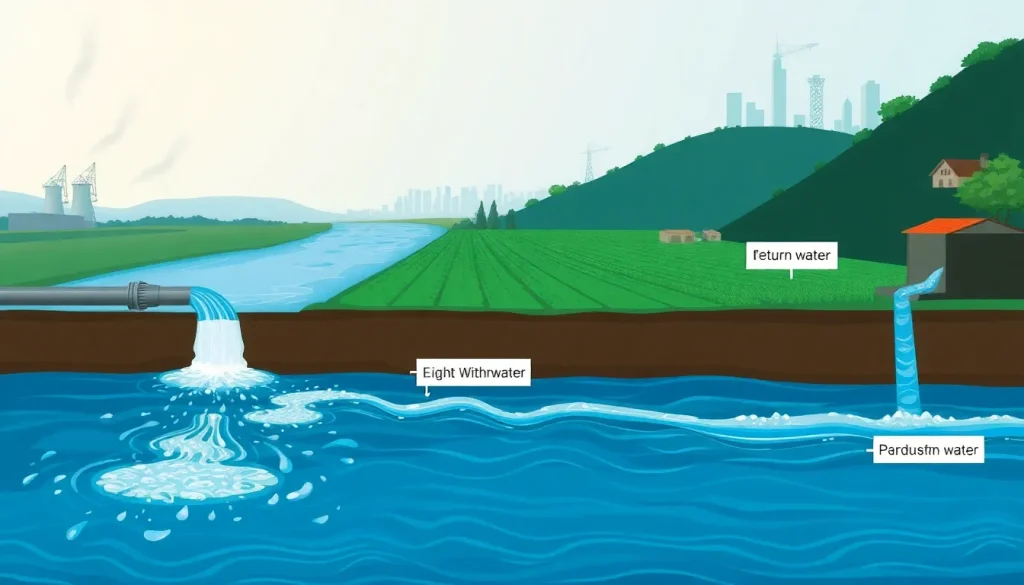
Water withdrawal is the total volume of water removed from a surface water or groundwater source for human use. This includes water taken from rivers, lakes, reservoirs, and aquifers for agriculture, industry, energy production, and municipal supply. Withdrawal is measured at the point of diversion and does not account for how much of that water is later returned to the environment. In contrast, water consumption refers to the portion of withdrawn water that is not returned to the immediate water system because it evaporates, is transpired by plants, is incorporated into products, or is otherwise lost. Consumption represents a net reduction in the available water resource within the basin of origin.
These two concepts are fundamental to hydrology and water resource management. They help distinguish between uses that primarily affect water infrastructure and those that directly deplete water supplies. For example, a thermal power plant may withdraw large volumes of water for cooling but return most of it to the source, resulting in high withdrawal but low consumption. Conversely, irrigated agriculture often has lower withdrawal volumes but much higher consumption because a large fraction of the water is evapotranspired and does not return to the local watershed. Recognizing this difference allows planners to assess the true impact of water use on water availability and ecosystem health.
Overview
Water withdrawal and water consumption are two core metrics in water resource accounting. Withdrawal, sometimes called water abstraction or water intake, is the gross amount of water taken from a natural or man-made source. Consumption, also known as consumptive use, is the net amount of water that is removed from a watershed and lost to evaporation, transpiration, incorporation into products, or transfer to another basin. The difference between withdrawal and consumption is often referred to as return flow—the water that is discharged back to a surface water body or aquifer after use, though it may be altered in quality.

These terms are used by organizations such as the Food and Agriculture Organization (FAO), the United States Geological Survey (USGS), and the European Environment Agency to compile water accounts and assess water stress. Water stress indicators, for example, typically compare total water withdrawal or consumption to renewable water resources. A region may have high withdrawal but low stress if most water is returned, while another region with lower withdrawal but high consumption may face severe scarcity. Thus, distinguishing between withdrawal and consumption is essential for accurate water footprinting, policy-making, and sustainable development planning.
How It Works
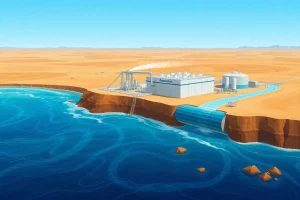
The processes of withdrawal and consumption are best understood by examining how water moves through different sectors. When water is withdrawn, it enters a use cycle. In a thermoelectric power plant, for instance, water is pumped from a river, passed through a condenser for cooling, and then discharged back into the river. The withdrawal volume is large, but consumption is limited to evaporation from cooling towers and minor losses, often less than 5% of the withdrawal. In contrast, for irrigated agriculture, water is diverted from a source and applied to crops. A significant portion is consumed through evapotranspiration—the combined loss from soil evaporation and plant transpiration—and only a small fraction may return to the groundwater or surface water as runoff. This makes agriculture the dominant consumer of water globally, even though its withdrawal share is lower than that of some industrial uses.
Municipal water supply follows a different pattern. Water is withdrawn, treated, and distributed to households and businesses. After use, a portion is collected as wastewater, treated, and discharged back to a water body. The consumptive fraction includes water that evaporates (e.g., from lawns, washing machines), is incorporated into products, or is lost through leaks before reaching the treatment plant. The ratio of consumption to withdrawal varies widely by sector and region, influenced by technology, climate, and infrastructure. Understanding these flows allows water managers to identify opportunities for reducing both withdrawal (easing pressure on intake structures and aquatic life) and consumption (preserving water for downstream users and ecosystems).
Importance and Impact
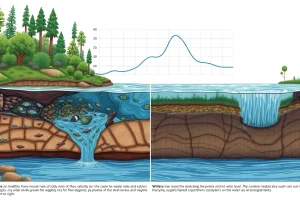
The distinction between withdrawal and consumption is critical for assessing water scarcity and environmental impact. High withdrawal rates can lead to infrastructure strain, increased energy costs for pumping, and direct harm to aquatic organisms through impingement and entrainment at intake structures. However, if most of the water is returned, the downstream flow may be largely maintained. High consumption, on the other hand, reduces the total water available in a basin, potentially leading to lower river flows, shrinking lakes, and depleted aquifers. This can exacerbate conflicts between upstream and downstream users and threaten freshwater ecosystems.
From a policy perspective, focusing solely on withdrawal can mask unsustainable practices. For example, a region may report stable water withdrawals while groundwater levels decline because consumption exceeds recharge. Similarly, in water footprint assessments, the blue water footprint (consumptive use of surface and groundwater) is a more direct measure of impact on water resources than total withdrawal. Understanding consumption patterns is also vital for climate change adaptation, as rising temperatures increase evapotranspiration and irrigation demands, potentially intensifying water scarcity even if withdrawal rates remain constant.
Common Misconceptions
A widespread misconception is that all withdrawn water is consumed or lost. In reality, many uses return a large fraction of the water to the environment, though sometimes with degraded quality. For instance, people often assume that taking a shower or flushing a toilet “uses up” that water, but in a typical urban system, most of it is treated and returned to a river. The actual consumptive portion is the small amount that evaporates or is incorporated into waste sludge. Another misconception is that reducing withdrawal always saves water. In agriculture, switching from flood irrigation to drip irrigation can reduce withdrawal but may increase consumption because less water is lost to deep percolation and more is taken up by plants, potentially reducing return flows that other users depend on. This highlights the need to consider both metrics in water-saving interventions.
Another common error is equating water consumption with drinking. In water management, “consumption” does not mean water that is drunk by humans or animals; that is a negligible fraction. Instead, it refers to water that is no longer available for immediate reuse in the same basin. Similarly, water that is polluted but still physically present is not considered consumed, though it may be rendered unusable without treatment. This distinction between quantity and quality is important: a use can be non-consumptive in terms of volume but still degrade water quality, creating a different kind of scarcity.
Regional Differences
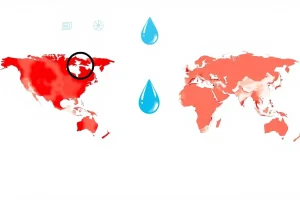
The balance between withdrawal and consumption varies significantly by region, driven by climate, economic structure, and water management practices. In arid and semi-arid regions, such as the Middle East and North Africa, agriculture accounts for a very high share of both withdrawal and consumption, often exceeding 80% of total water use. Because of high evaporation rates and inefficient irrigation, consumptive use is particularly high, leaving little water for return flows. In contrast, humid temperate regions like much of Europe and North America have substantial industrial and thermoelectric withdrawals, but consumption is lower relative to total water availability. However, even in water-rich areas, local consumption can create stress during dry periods or in densely populated basins.
Differences also arise from water management infrastructure. In basins with extensive reservoir storage and inter-basin transfers, withdrawal and consumption patterns are heavily modified. For example, water withdrawn in one basin may be consumed in another through long-distance conveyance, complicating accounting. In many developing regions, data on consumption is sparse, and water use is often estimated from withdrawal figures using assumed consumption coefficients, which may not reflect local realities. These regional variations underscore the need for localized assessments rather than relying on global averages.
Data Limitations and Uncertainties
Accurate data on water withdrawal and consumption is challenging to obtain, particularly for consumption. Withdrawal data is often collected from permit systems, metering, or estimates based on economic activity, but in many countries, especially in agriculture, self-reporting is unreliable and illegal withdrawals are common. Consumption is even harder to measure because it requires detailed information on evapotranspiration, return flows, and water incorporated into products. As a result, global water use databases frequently rely on models that combine withdrawal data with assumed consumption coefficients, which can vary widely by crop, climate, and technology.
Uncertainties are compounded by the lack of standardized definitions and methodologies across countries. Some national accounts report “water use” without clarifying whether it refers to withdrawal or consumption. The temporal and spatial scale also matters: consumption in a monthly time step may differ from annual averages, and basin-level consumption may not capture local impacts. These data gaps hinder effective water management and can lead to misinformed policies. Improving monitoring, remote sensing, and modeling is an ongoing priority for the scientific community to better quantify consumptive use and its trends.
FAQ
What is the difference between water withdrawal and water consumption?
Water withdrawal is the total amount of water taken from a source, while water consumption is the portion that is not returned to the immediate environment because it evaporates, is transpired, or is incorporated into products.
Why is it important to distinguish between withdrawal and consumption?
Distinguishing them helps assess the true impact on water resources. High withdrawal can stress infrastructure and aquatic life, but high consumption directly reduces water availability, affecting downstream users and ecosystems.
Which sector has the highest water consumption?
Agriculture has the highest water consumption globally because a large fraction of irrigation water is lost to evapotranspiration and does not return to the local watershed.
References
- United States Geological Survey (USGS) Water Science School: Water Use Terminology
- Food and Agriculture Organization of the United Nations (FAO) AQUASTAT Glossary
- Gleick, P. H. (ed.). The World's Water: The Biennial Report on Freshwater Resources. Island Press.