In brief
At a glance
Quick Facts
- Sea ice definition
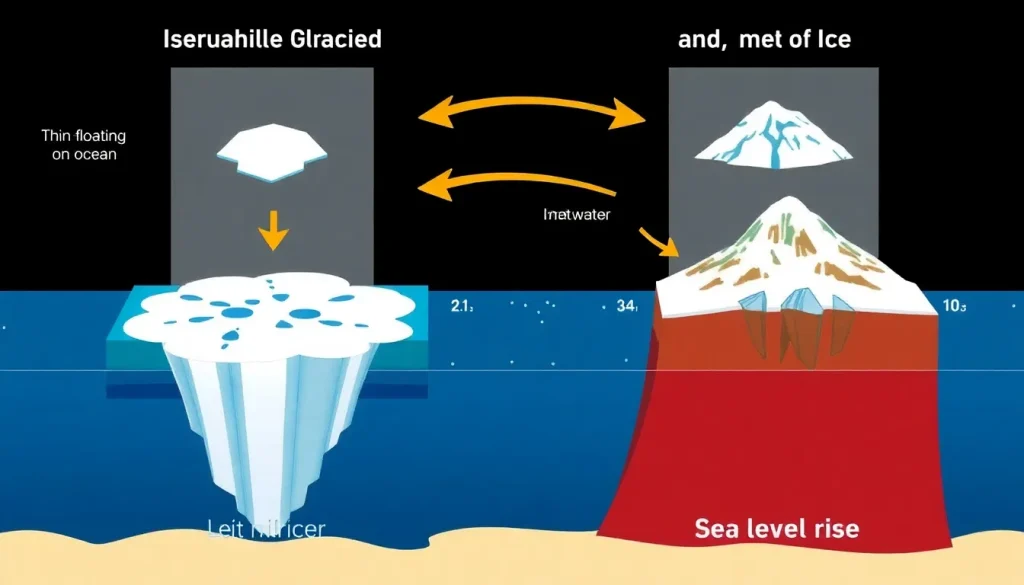
- Frozen ocean water that forms, grows, and melts in the sea, typically less than a few meters thick.
- Land ice definition
- Ice that forms on land from compressed snow, including glaciers, ice caps, and ice sheets, often hundreds to thousands of meters thick.
- Sea level impact of sea ice
- Melting sea ice does not directly raise sea levels because it is already floating and displacing water.
- Sea level impact of land ice
- Melting land ice adds new water to the ocean, directly contributing to global sea level rise.
- Global ice distribution
- About 99% of Earth's freshwater ice is stored in the Greenland and Antarctic ice sheets.
- Albedo effect
- Sea ice reflects up to 80% of sunlight, while open ocean reflects only about 6%, so ice loss amplifies warming.
- Arctic sea ice trend
- Arctic sea ice extent has declined by approximately 13% per decade since satellite records began in 1979.
- Potential sea level rise
- If the entire Greenland Ice Sheet melted, sea levels would rise by about 7.4 meters; Antarctica would add about 58 meters.
Key Takeaways
- Seasonal sea ice forms and melts in the ocean each year, while land ice (glaciers, ice sheets, and ice caps) accumulates on land over centuries and can be thousands of meters thick.
- Melting sea ice does not directly raise sea levels because it is already floating in water, but melting land ice adds new water to the ocean, contributing to global sea level rise.
- The loss of sea ice amplifies warming through the albedo effect, as darker ocean water absorbs more solar radiation than reflective ice.
- Land ice melt is the primary driver of long-term sea level rise, threatening coastal communities, ecosystems, and infrastructure worldwide.
What Is Seasonal Sea Ice vs Land Ice?
Seasonal sea ice and land ice are two distinct components of the Earth’s cryosphere, each with unique formation processes, physical properties, and roles in the climate system. Seasonal sea ice is frozen ocean water that forms, grows, and melts in the polar oceans each year. It is typically thin, ranging from a few centimeters to several meters, and its extent fluctuates dramatically with the seasons. In contrast, land ice refers to ice that forms on land from the accumulation and compaction of snow over many years. This category includes glaciers, ice caps, and the massive ice sheets covering Greenland and Antarctica. Land ice can be thousands of meters thick and persists for centuries to millennia, flowing slowly under its own weight.
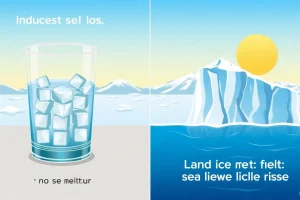
The fundamental difference lies in their relationship with sea level. Because sea ice is already floating in the ocean, its melting does not change the volume of water—similar to how a melting ice cube in a glass of water does not cause the glass to overflow. Land ice, however, is stored on continents; when it melts and flows into the ocean, it adds new water, directly raising global sea levels. This distinction is critical for understanding the impacts of climate change on coastal regions and for interpreting scientific data on polar ice loss.
Overview
The Earth’s cryosphere—the frozen water part of the planet—includes both sea ice and land ice, but they behave very differently. Sea ice is found primarily in the Arctic Ocean and the Southern Ocean surrounding Antarctica. It forms when ocean water freezes at about −1.8°C (28.8°F), and its extent reaches a maximum in late winter and a minimum in late summer. Most Arctic sea ice is seasonal, lasting less than a year, though some thicker multi-year ice persists. In the Southern Ocean, nearly all sea ice melts completely each summer, making it almost entirely seasonal.
Land ice, on the other hand, is found on every continent except Australia. It includes the vast ice sheets of Greenland and Antarctica, which together hold about 99% of the world’s freshwater ice, as well as mountain glaciers and ice caps. These ice masses form over thousands of years as snowfall accumulates, compresses, and transforms into dense glacial ice. Unlike sea ice, land ice is a major reservoir of freshwater, and its melting contributes to sea level rise. The Greenland and Antarctic ice sheets alone contain enough water to raise global sea levels by about 65 meters if fully melted, though such a process would take millennia.
How It Works
Sea ice formation begins when the surface ocean temperature drops to the freezing point, which for seawater is lower than for freshwater due to its salt content. As ice crystals form, they expel most of the salt, creating a relatively fresh layer of ice on top of a more saline ocean. This process, called brine rejection, increases the density of the underlying water, contributing to deep ocean circulation. Sea ice grows downward as heat is lost to the cold atmosphere, and it melts from both the top and bottom when temperatures rise or when warm water undercuts it. The seasonal cycle of sea ice is driven by solar radiation, with maximum extent typically in late winter and minimum in late summer.
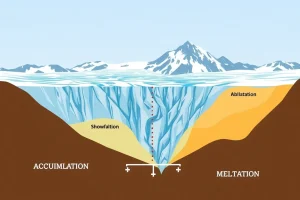
Land ice forms through a completely different mechanism. Snow that falls in cold regions accumulates over time, and the weight of new snow compresses older layers into firn and eventually into solid ice. This process can take decades to centuries. Once a mass of ice becomes thick enough, it begins to flow under its own weight, forming a glacier or ice sheet. Land ice loses mass through surface melting and runoff, as well as through calving, where chunks of ice break off into the ocean to form icebergs. The balance between accumulation (snowfall) and ablation (melting and calving) determines whether a land ice mass grows or shrinks.
Importance and Impact
The distinction between sea ice and land ice is crucial for understanding sea level rise. When sea ice melts, it does not change the ocean’s volume because the ice was already displacing water. However, melting land ice adds freshwater to the ocean, directly raising sea levels. Since 1993, melting glaciers and ice sheets have been the dominant contributors to global sea level rise, which currently averages about 3.3 millimeters per year. If the Greenland Ice Sheet were to melt completely, it would raise sea levels by about 7.4 meters; the Antarctic Ice Sheet holds enough water to raise levels by about 58 meters.
Beyond sea level, both types of ice play critical roles in regulating the Earth’s climate. Sea ice has a high albedo, meaning it reflects a large portion of incoming solar radiation back into space, helping to keep the polar regions—and the planet—cool. As sea ice melts, darker ocean water is exposed, which absorbs more heat and accelerates warming in a feedback loop known as Arctic amplification. Land ice also influences climate through its albedo effect and by releasing cold freshwater into the ocean, which can affect ocean circulation patterns. The melting of land ice, particularly from Greenland, adds freshwater that may disrupt the Atlantic Meridional Overturning Circulation, a key component of global heat transport.
Why It Matters
Understanding the difference between seasonal sea ice and land ice is essential for interpreting climate data and projections. Public confusion often leads to the mistaken belief that melting sea ice is the main cause of sea level rise, when in fact it is land ice melt and thermal expansion of seawater that are the primary drivers. This misunderstanding can undermine support for climate adaptation measures. For example, the dramatic decline in Arctic sea ice extent is a powerful indicator of global warming, but its direct contribution to sea level rise is negligible. In contrast, the slower but steadier loss of land ice from Greenland and Antarctica has long-term consequences for coastal communities worldwide.
Moreover, the two types of ice interact in complex ways. The retreat of sea ice can accelerate the loss of land ice by exposing ice shelves to warmer ocean water, which thins them from below and makes them more susceptible to collapse. This, in turn, can speed up the flow of glaciers into the sea, increasing the rate of sea level rise. Thus, while sea ice melt does not directly raise sea levels, it can indirectly contribute to land ice loss and amplify climate change through feedback mechanisms.
Common Misconceptions
One of the most widespread misconceptions is that melting sea ice causes sea levels to rise. This is false because floating ice already displaces its weight in water; when it melts, the water level remains the same. A simple experiment with a glass of water and ice cubes demonstrates this principle. However, the melting of sea ice can indirectly affect sea levels by warming the surrounding water and air, which accelerates the melting of nearby land ice.
Another misconception is that the Antarctic sea ice extent is a reliable indicator of climate change. While Arctic sea ice has shown a clear long-term decline, Antarctic sea ice trends are more variable and influenced by complex factors such as wind patterns and ocean currents. Some regions have even seen increases in sea ice extent, leading to confusion. It is important to distinguish between sea ice and land ice when discussing Antarctic ice loss; the Antarctic Ice Sheet is losing mass overall, primarily from the West Antarctic Ice Sheet, and this land ice loss contributes to sea level rise.
Regional Differences
The behavior of sea ice and land ice varies significantly between the Arctic and Antarctic. In the Arctic, sea ice covers the central ocean and is surrounded by land, which limits its movement and allows multi-year ice to accumulate. The Arctic has experienced a dramatic decline in sea ice extent and thickness over the past several decades, with summer minimum extents decreasing by about 13% per decade. This loss is driven by rising air and ocean temperatures, and it has profound effects on Arctic ecosystems and indigenous communities.
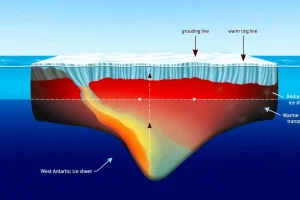
In the Antarctic, sea ice forms around a continent and is free to expand outward, leading to a much larger seasonal cycle. Antarctic sea ice extent has shown no significant long-term trend, with regional increases and decreases balancing out. However, the Antarctic Ice Sheet—a land ice mass—is losing mass, particularly in West Antarctica, where warm ocean water is melting ice shelves from below. The East Antarctic Ice Sheet, which is larger and more stable, has remained relatively unchanged. These regional differences highlight the complexity of the cryosphere and the need for nuanced understanding when discussing ice loss and climate change.
FAQ
What is the difference between sea ice and land ice?
Sea ice forms from frozen ocean water and floats on the sea, while land ice forms on land from accumulated snow and includes glaciers, ice caps, and ice sheets. The key difference is that melting sea ice does not raise sea levels, but melting land ice does.
Does melting sea ice cause sea level rise?
No, melting sea ice does not directly cause sea level rise because the ice is already floating in the water and displacing its own weight. However, it can indirectly contribute by warming the region and accelerating land ice melt.
Why is land ice loss more concerning for sea level rise?
Land ice stores vast amounts of freshwater on continents. When it melts and flows into the ocean, it adds new water, directly increasing global sea levels. The Greenland and Antarctic ice sheets alone hold enough water to raise sea levels by over 60 meters if fully melted.
References
- National Snow and Ice Data Center (NSIDC). 'All About Sea Ice.' nsidc.org.
- Intergovernmental Panel on Climate Change (IPCC). 'Special Report on the Ocean and Cryosphere in a Changing Climate.' 2019.
- NASA Earth Observatory. 'Sea Ice.' earthobservatory.nasa.gov.