In brief
At a glance
Quick Facts
- Definition
- The Earth System encompasses all interacting physical, chemical, and biological processes linking the planet's spheres.
- Main Spheres
- Atmosphere, hydrosphere, geosphere, biosphere, and cryosphere.
- Key Cycles
- Carbon cycle, water cycle, nitrogen cycle, and rock cycle.
- Primary Energy Sources
- Solar radiation and Earth's internal heat.
- Human Influence
- Human activities are now a major force, leading to the proposed Anthropocene epoch.
- Feedback Example
- Ice-albedo feedback: melting ice reduces reflectivity, causing more warming.
Key Takeaways
- The Earth System is the interconnected set of spheres and processes that make Earth a habitable planet, including the atmosphere, hydrosphere, geosphere, biosphere, and cryosphere.
- It operates through the exchange of energy and matter among its components, driven by solar radiation and Earth’s internal heat, and regulated by feedback loops.
- Human activities have become a dominant force within the Earth System, altering natural cycles and leading to global changes such as climate warming and biodiversity loss.
- Understanding the Earth System is essential for predicting future environmental conditions and developing sustainable management strategies.
What Is the Earth System?
The Earth System is the totality of interacting physical, chemical, and biological processes that link the planet’s major spheres—the atmosphere, hydrosphere, geosphere, cryosphere, and biosphere—into a single, complex, and dynamic whole. Rather than viewing Earth as a collection of separate parts, the Earth System concept emphasizes the continuous exchange of energy and matter among these components, and how these interactions shape the planet’s environment and climate over time. This holistic perspective emerged in the late 20th century with the rise of Earth System science, which integrates disciplines such as geology, meteorology, oceanography, ecology, and even social sciences to understand how the planet functions as a unified system.
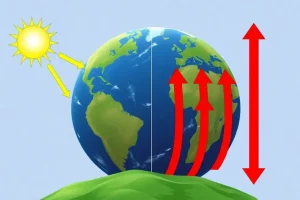
At its core, the Earth System is characterized by cycles—the water cycle, carbon cycle, nitrogen cycle, and rock cycle—that move essential elements and compounds through the different spheres. These cycles are powered by two main energy sources: solar radiation, which drives atmospheric and oceanic circulation, and Earth’s internal heat, which fuels plate tectonics and volcanic activity. The system also includes feedback mechanisms that can amplify or dampen changes, such as the ice-albedo feedback, where melting ice reduces reflectivity and leads to further warming. The Earth System is not static; it has evolved over billions of years, and today human activities are a significant force within it, giving rise to the term “Anthropocene” to describe the current epoch of human dominance.
Overview of the Earth System’s Spheres
The Earth System is traditionally divided into five major spheres, each representing a distinct reservoir of matter and energy, yet all are deeply interconnected. The atmosphere is the gaseous envelope surrounding the planet, composed mainly of nitrogen and oxygen, with trace gases like carbon dioxide and water vapor that play critical roles in regulating temperature and supporting life. The hydrosphere includes all liquid water—oceans, lakes, rivers, and groundwater—covering about 71% of Earth’s surface and acting as a massive heat reservoir and carbon sink. The cryosphere encompasses frozen water in glaciers, ice sheets, sea ice, and permafrost, which influences sea level, albedo, and ocean circulation.
The geosphere (or lithosphere) refers to the solid Earth, including the crust, mantle, and core. It is the source of minerals and nutrients, and its tectonic movements shape landscapes and drive long-term climate cycles. The biosphere is the sum of all living organisms and their interactions with the other spheres, from microbes in the soil to forests and ocean plankton. Life has profoundly altered the Earth System, particularly through photosynthesis, which oxygenated the atmosphere and enabled the evolution of complex organisms. These spheres are not isolated; for example, the carbon cycle involves the exchange of carbon between the atmosphere, oceans, biosphere, and geosphere, demonstrating the system’s interconnected nature.
How It Works
The Earth System operates through a series of interconnected cycles and feedback loops that regulate the flow of energy and matter. Energy from the sun drives most surface processes, including weather, ocean currents, and photosynthesis. Earth’s internal heat, from radioactive decay and primordial sources, powers plate tectonics, volcanism, and the magnetic field. These energy sources fuel the major biogeochemical cycles—such as the carbon, nitrogen, and water cycles—that move essential elements through the system. For instance, in the carbon cycle, carbon dioxide is absorbed by plants during photosynthesis, transferred through food webs, released back into the atmosphere by respiration and decomposition, and exchanged with the oceans and geosphere over long timescales.
Feedback loops are crucial to the system’s behavior. A positive feedback amplifies a change: as Arctic sea ice melts due to warming, the darker ocean surface absorbs more solar radiation, causing further warming and more ice melt. A negative feedback dampens change: increased atmospheric CO₂ stimulates plant growth, which removes some CO₂ from the atmosphere, partially offsetting the increase. The balance of these feedbacks determines the system’s stability and response to perturbations. The Earth System also exhibits thresholds or tipping points, beyond which a small change can trigger a large, often irreversible shift, such as the collapse of an ice sheet or a major ecosystem.
Importance and Impact
The Earth System is fundamental to life and human civilization. It provides essential services: the atmosphere supplies oxygen and protects from harmful radiation; the hydrosphere delivers fresh water; the geosphere offers mineral resources and fertile soils; the biosphere produces food, fiber, and medicines. The system’s natural regulation of climate has allowed human societies to develop and thrive during the relatively stable Holocene epoch. Disruptions to the Earth System, whether from natural events like volcanic eruptions or human activities like deforestation and fossil fuel burning, can have far-reaching consequences for ecosystems, economies, and human well-being.
Human activities are now a dominant force within the Earth System, leading to what many scientists call the Anthropocene. The burning of fossil fuels has increased atmospheric CO₂ to levels not seen in millions of years, intensifying the greenhouse effect and causing global warming. Land-use change, pollution, and overexploitation of resources are degrading ecosystems and reducing biodiversity. These changes are not isolated; they cascade through the system, affecting water availability, food security, and the frequency of extreme weather events. Recognizing the Earth System’s importance underscores the need for sustainable management and international cooperation to mitigate and adapt to these changes.
What the Evidence Shows
Scientific evidence for the Earth System’s interconnectedness and human impact comes from multiple sources. Ice cores from Antarctica and Greenland provide a record of past atmospheric composition and temperature going back hundreds of thousands of years, showing a clear correlation between CO₂ levels and global temperature. Satellite observations document changes in sea ice extent, vegetation cover, and ocean color, revealing large-scale shifts in the biosphere and cryosphere. Measurements of carbon isotopes in the atmosphere confirm that the recent CO₂ increase is due to fossil fuel combustion. Global temperature records, compiled from thousands of weather stations and ocean buoys, show an unequivocal warming trend over the past century.
Paleoclimate data also reveal that the Earth System has undergone dramatic shifts in the past, such as ice ages and mass extinctions, often triggered by changes in Earth’s orbit, volcanic activity, or asteroid impacts. These events demonstrate the system’s sensitivity to perturbations and the potential for rapid, non-linear changes. Current trends in greenhouse gas emissions, deforestation, and species extinctions are unprecedented in rate and scale, leading scientists to warn that the Earth System may be approaching critical thresholds. The evidence strongly supports the view that human activities are the primary driver of recent global changes, and that understanding the Earth System is vital for projecting future conditions.
Common Misconceptions
One common misconception is that the Earth System is too large and robust for human activities to significantly alter it. In reality, while the system has immense inertia, human actions have already pushed key parameters—such as atmospheric CO₂ and species extinction rates—far outside their natural range of variability. Another misunderstanding is that the Earth System is perfectly self-regulating and will always return to a stable state. While negative feedbacks can promote stability, positive feedbacks and tipping points can lead to irreversible changes, such as the loss of major ice sheets or rainforests.
Some people also confuse the Earth System with the climate system. The climate system is a subset of the Earth System, focusing on the atmosphere, oceans, land surface, and cryosphere and their interactions that determine climate. The Earth System is broader, including the deep geosphere and all biogeochemical cycles. Finally, there is a misconception that Earth System science is purely about natural processes; in fact, it increasingly incorporates human dimensions, recognizing that social and economic systems are now integral parts of the Earth System.
FAQ
What is the Earth System?
The Earth System is the sum of all physical, chemical, and biological processes that connect the planet's major spheres—atmosphere, hydrosphere, geosphere, biosphere, and cryosphere—into a single, dynamic system.
How does the Earth System work?
It works through the exchange of energy and matter among its components, driven by solar radiation and internal heat, and regulated by feedback loops such as the greenhouse effect and ice-albedo feedback.
Why does the Earth System matter?
It matters because it maintains the conditions necessary for life, regulates climate, and provides resources. Understanding it is crucial for addressing global challenges like climate change and biodiversity loss.
References
- NASA Earth System Science: https://www.nasa.gov/earth-science/
- IPCC, 2021: Climate Change 2021: The Physical Science Basis. Contribution of Working Group I to the Sixth Assessment Report.
- Steffen, W., et al. (2020). The emergence and evolution of Earth System Science. Nature Reviews Earth & Environment.
- National Geographic Encyclopedia: Earth System. https://education.nationalgeographic.org/resource/earth-system/