In brief
At a glance
Quick Facts
- Definition of Recycling
- Recycling is the process of converting waste materials into new materials and objects, typically involving collection, sorting, and reprocessing.
- Definition of Circular Economy
- A circular economy is an economic system aimed at eliminating waste and the continual use of resources through principles of designing out waste, keeping products and materials in use, and regenerating natural systems.
- Hierarchy of Strategies
- In a circular economy, the preferred order of strategies is: refuse, reduce, reuse, repair, refurbish, remanufacture, and finally recycle.
- Material Degradation
- Many materials, especially plastics, degrade in quality when recycled (downcycling), limiting the number of times they can be recycled.
- Global Recycling Rates
- Globally, only a fraction of plastic waste is recycled; the majority ends up in landfills, incinerators, or the environment.
- Economic Potential
- Transitioning to a circular economy could generate significant economic benefits by reducing material costs, creating new jobs, and fostering innovation.
- Energy Savings
- Recycling aluminum saves up to 95% of the energy required to produce new aluminum from bauxite ore, illustrating the energy benefits of material recovery.
- Systemic Change
- A circular economy requires changes across the entire value chain, including product design, business models, consumer behavior, and policy frameworks.
Key Takeaways
- Recycling is a waste management process that converts discarded materials into new products, while a circular economy is a systemic framework that aims to eliminate waste and keep resources in use for as long as possible through design, reuse, repair, remanufacturing, and recycling.
- Recycling is just one component of a circular economy, often considered the last resort after other strategies like reducing consumption, reusing products, and repairing items have been exhausted.
- A circular economy addresses the root causes of waste by redesigning products and systems, whereas recycling deals with waste after it has already been created.
- Shifting from a linear “take-make-dispose” model to a circular economy is essential for reducing resource depletion, environmental pollution, and greenhouse gas emissions on a global scale.
What Is Circular Economy vs Recycling?
Circular economy and recycling are related but distinct concepts in the field of sustainability and resource management. Recycling is a process by which waste materials are collected, sorted, and transformed into new raw materials or products, thereby diverting them from landfills and incinerators. It is a downstream solution that deals with materials after they have been used and discarded. In contrast, a circular economy is a holistic economic model that aims to keep resources in use for as long as possible, extract the maximum value from them while in use, and then recover and regenerate products and materials at the end of each service life. The circular economy is inspired by natural systems, where there is no waste—everything becomes food for another process. It represents a fundamental shift from the traditional linear economy of “take, make, dispose” to a regenerative system where waste is designed out, products and materials are maintained, reused, repaired, and remanufactured, and only as a last resort are they recycled.
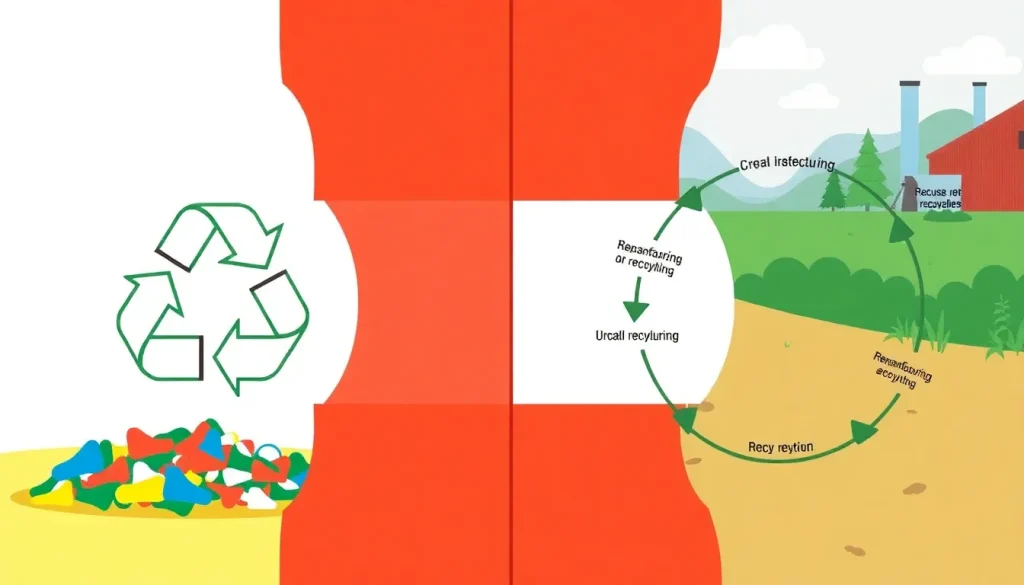
While recycling is a key component of the circular economy, the two terms are not synonymous. Recycling is a tactic—a specific set of processes for material recovery. The circular economy is a strategic framework that encompasses a wide range of activities, including product design for durability and disassembly, business models based on sharing and service provision, reverse logistics, and industrial symbiosis. In a circular economy, recycling is often seen as the least preferred option because it typically requires energy and can degrade material quality. The goal is to keep products and materials at their highest utility and value at all times, which means prioritizing strategies like maintenance, reuse, and remanufacturing over recycling. Understanding this distinction is critical for policymakers, businesses, and individuals seeking to reduce environmental impact and build a more sustainable economy.
Overview
The concept of a circular economy has gained prominence as a response to the limitations of the traditional linear economic model and the shortcomings of recycling alone. In a linear economy, raw materials are extracted, turned into products, used, and then discarded as waste. This model assumes an infinite supply of resources and unlimited capacity for waste absorption, which is increasingly at odds with planetary boundaries. Recycling emerged as a way to mitigate the waste problem by recovering some materials, but it does not address the underlying issues of resource extraction, product design, or overconsumption. Moreover, recycling processes can be energy-intensive and often result in downcycling, where materials lose quality and can only be used in lower-grade applications.
The circular economy, by contrast, is a systemic approach that seeks to redefine growth by decoupling economic activity from the consumption of finite resources. It is based on three principles: designing out waste and pollution, keeping products and materials in use, and regenerating natural systems. This model requires changes across the entire value chain, from product design and material selection to business models and consumer behavior. While recycling is a familiar and tangible action, the circular economy demands a more fundamental rethinking of how we produce and consume. It is not simply about doing recycling better; it is about creating a system where the concept of waste is eliminated altogether.
How It Works
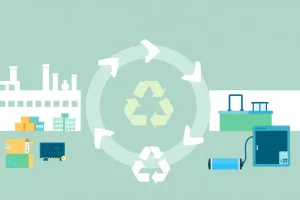
Recycling operates through a series of steps: collection, sorting, cleaning, and processing. Materials such as paper, glass, metals, and certain plastics are collected from households or businesses, sorted by type, cleaned to remove contaminants, and then processed into raw materials that can be used to manufacture new products. For example, aluminum cans are melted down and rolled into new sheets, while paper is pulped and reformed. The effectiveness of recycling depends on the material, the technology available, and the market demand for recycled content. However, many materials cannot be recycled indefinitely; plastics, in particular, degrade in quality with each cycle, and some types are not recyclable at all with current infrastructure.
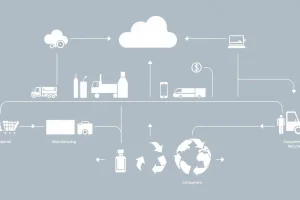
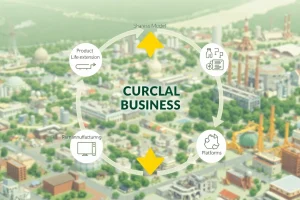
A circular economy works by applying a hierarchy of strategies that prioritize keeping products and materials in use at their highest value. The most preferred approaches are:
- Refuse and Rethink: Avoiding unnecessary consumption and redesigning products and services to eliminate waste from the outset.
- Reduce: Minimizing the amount of material and energy used in production and consumption.
- Reuse: Using products multiple times for the same or different purposes without significant processing.
- Repair and Refurbish: Fixing broken products or restoring them to good working condition to extend their lifespan.
- Remanufacture: Disassembling products, replacing worn components, and reassembling them to like-new condition.
- Recycle: Recovering materials from end-of-life products to be used as raw materials for new products, ideally in a way that maintains quality (upcycling) rather than degrading it (downcycling).
These strategies are supported by enabling conditions such as product design for circularity, reverse logistics systems, digital technologies for tracking materials, and policy frameworks that incentivize circular practices. In a fully circular economy, biological materials (such as food and natural fibers) are returned to the biosphere to regenerate natural capital, while technical materials (such as metals and plastics) are kept in closed loops.
Importance and Impact
The distinction between recycling and a circular economy matters because the scale of global waste and resource consumption demands more than incremental improvements. Recycling alone cannot keep pace with the growing volume and complexity of waste, especially in the face of rising global population and consumption. Many materials are not recycled due to technical, economic, or behavioral barriers, leading to significant leakage into the environment. Plastic pollution, for instance, is a visible symptom of a linear system where recycling captures only a fraction of the material. A circular economy addresses these challenges by reducing the need for virgin resource extraction, minimizing waste generation, and creating economic opportunities through new business models and jobs in repair, remanufacturing, and reverse logistics.
The impact of transitioning to a circular economy extends beyond waste management. It can contribute to climate change mitigation by reducing emissions associated with extraction, processing, and disposal. It can enhance resource security by decreasing dependence on imported raw materials. It can also foster innovation and competitiveness as companies develop new products and services designed for longevity and circularity. For society, a circular economy can create local employment and reduce environmental health risks from pollution and landfill. While recycling remains an essential tool, its role is amplified and optimized within a broader circular framework that prioritizes higher-value retention strategies.
Benefits, Limitations and Trade-offs
Recycling offers several benefits: it conserves natural resources, reduces energy consumption compared to virgin material production (for many materials), decreases landfill use, and can lower greenhouse gas emissions. It also provides a tangible way for individuals and organizations to participate in environmental stewardship. However, recycling has limitations. It is often costly, requiring significant infrastructure and energy for collection and processing. Contamination can render batches of recyclables unusable. Many materials are downcycled, losing quality and eventually becoming waste. Furthermore, recycling does not address the upstream design flaws that make products hard to recycle or the consumption patterns that generate waste in the first place.
The circular economy, by design, aims to overcome these limitations by keeping materials in use at their highest value. Its benefits include reduced environmental impact across the entire lifecycle, greater resource efficiency, and potential economic gains from new circular business models. However, implementing a circular economy also involves trade-offs and challenges. It requires substantial upfront investment in redesign, new infrastructure, and changes in consumer behavior. Some circular strategies, such as remanufacturing, may be energy-intensive. There can be rebound effects where increased efficiency leads to higher consumption. Additionally, not all products or materials can be easily circulated; some wear out or become obsolete. A balanced approach recognizes that recycling will continue to play a vital role, especially for materials that cannot be reused or remanufactured, but it should be part of a larger system that prioritizes waste prevention and value retention.
Common Misconceptions
One common misconception is that recycling and circular economy are interchangeable terms. In reality, recycling is a subset of the circular economy, and a circular economy encompasses much more than recycling. Another misconception is that a circular economy is simply about recycling more or better. While improved recycling is important, the circular economy fundamentally challenges the linear model and requires changes in design, business models, and consumption patterns. Some believe that if a product is recyclable, it is automatically sustainable. However, recyclability does not guarantee that the product will be recycled, nor does it address the energy and resources used in its production and transportation. A circular economy emphasizes durability, repairability, and reuse over single-use recyclability.
There is also a misconception that moving to a circular economy will solve all environmental problems. While it offers significant potential, it is not a panacea. It must be accompanied by reductions in overall consumption, shifts to renewable energy, and protection of ecosystems. Finally, some assume that recycling is always the best option for end-of-life products. In a circular economy, recycling is often the last resort because it typically requires more energy and can degrade material quality compared to reuse or remanufacturing. The goal is to keep products and materials functioning at their highest value for as long as possible, and recycling is only one tool among many to achieve that.
FAQ
What is the difference between circular economy and recycling?
Recycling is a process of converting waste into new materials, while a circular economy is a systemic approach that aims to eliminate waste and keep resources in use through strategies like reuse, repair, remanufacturing, and recycling. Recycling is just one part of a circular economy.
How does recycling fit into a circular economy?
In a circular economy, recycling is considered a last resort after other strategies such as reducing consumption, reusing products, and repairing items have been exhausted. It is used to recover materials that cannot be kept in use at a higher value, but the goal is to minimize the need for recycling by designing products for longevity and circularity.
Why does a circular economy matter?
A circular economy matters because it addresses the root causes of waste and resource depletion, not just the symptoms. It can reduce environmental impact, enhance resource security, create economic opportunities, and help mitigate climate change by keeping materials in use and regenerating natural systems.
References
- Ellen MacArthur Foundation. (2013). Towards the Circular Economy: Economic and Business Rationale for an Accelerated Transition.
- United Nations Environment Programme (UNEP). (2019). Global Resources Outlook 2019: Natural Resources for the Future We Want.
- European Commission. (2020). Circular Economy Action Plan: For a Cleaner and More Competitive Europe.
- Geissdoerfer, M., Savaget, P., Bocken, N. M., & Hultink, E. J. (2017). The Circular Economy – A new sustainability paradigm? Journal of Cleaner Production, 143, 757-768.