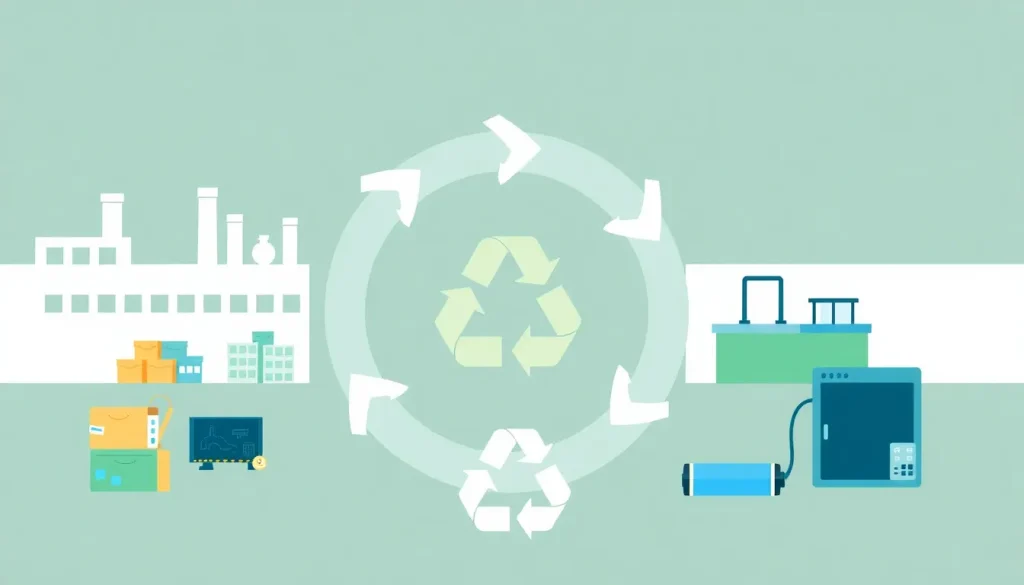
In brief
At a glance
Quick Facts
- Definition
- A policy approach where producers bear responsibility for the end-of-life management of their products.
- First implemented
- Sweden and Germany in the early 1990s for packaging waste.
- Key mechanism
- Producers pay fees to a Producer Responsibility Organization (PRO) that manages collection and recycling.
- Common product categories
- Packaging, electronics, batteries, tires, vehicles, and textiles.
- Global adoption
- Widely used in OECD countries and increasingly in developing nations.
- Environmental benefit
- Increases recycling rates and reduces landfill disposal.
- Economic impact
- Shifts waste management costs from taxpayers to producers and consumers.
- Design incentive
- Encourages eco-design by making producers responsible for end-of-life costs.
- Challenges
- Free-riding, high administrative costs, and varying regulations across jurisdictions.
- Related concept
- Part of the broader circular economy framework.
Key Takeaways
- Extended Producer Responsibility (EPR) is a policy approach that makes producers responsible for the end-of-life management of their products, including collection, recycling, and disposal.
- EPR shifts the financial and operational burden of waste management from municipalities and taxpayers to the producers who design and market the products.
- By internalizing end-of-life costs, EPR incentivizes producers to design products that are easier to reuse, repair, and recycle, thereby reducing overall environmental impact.
- EPR programs are widely used for packaging, electronics, batteries, and vehicles, and are a cornerstone of circular economy strategies globally.
What Is Extended Producer Responsibility?
Extended Producer Responsibility (EPR) is a policy principle that holds producers accountable for the environmental impacts of their products throughout the entire product lifecycle, particularly at the post-consumer stage. Under EPR, producers—typically manufacturers, brand owners, or first importers—are given significant responsibility, financial and/or physical, for the collection, treatment, recycling, and disposal of products once consumers no longer need them. This approach internalizes the end-of-life costs into the product price, rather than leaving those costs to be borne by governments, taxpayers, or the environment.
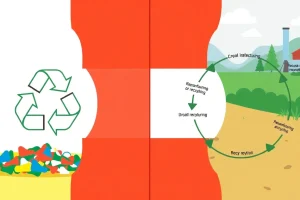
EPR is not a single, uniform regulation but a framework that can be implemented through various policy instruments, including mandatory take-back requirements, deposit-refund systems, advance disposal fees, and collective producer responsibility organizations. The concept was first formally articulated in the early 1990s and has since been adopted in numerous jurisdictions worldwide, particularly for product categories that pose significant waste management challenges, such as packaging, electronics, batteries, tires, and vehicles. By extending the producer’s responsibility beyond the point of sale, EPR aims to create a closed-loop system where materials are continuously cycled back into production, reducing the need for virgin resources and minimizing waste.
History
The concept of Extended Producer Responsibility was first introduced by Thomas Lindhqvist in a 1990 report to the Swedish Ministry of the Environment. Lindhqvist, a Swedish academic, proposed that producers should be responsible for the environmental impacts of their products throughout the entire lifecycle, including the take-back, recycling, and final disposal stages. The idea quickly gained traction in Europe, with Germany implementing one of the first EPR systems in 1991 through its Packaging Ordinance, which required producers to take back and recycle packaging waste. This was followed by similar initiatives in other European countries and the formal recognition of EPR as a policy principle by the Organisation for Economic Co-operation and Development (OECD) in the early 2000s.
Since then, EPR has evolved from a niche concept to a mainstream policy tool. The European Union incorporated EPR into its Waste Framework Directive, making it a key element of waste management policy across member states. Outside Europe, countries such as Japan, South Korea, and Canada have implemented EPR programs for various product categories. In recent decades, EPR has expanded to cover a wider range of products, including electronics, batteries, and even textiles, reflecting growing concerns over resource scarcity and environmental pollution. The principle has also been embraced as a fundamental component of the circular economy, where the goal is to keep materials in use for as long as possible and eliminate waste.
How It Works
EPR systems operate by assigning producers the responsibility for the end-of-life management of their products. The specific mechanisms vary by jurisdiction and product category, but they generally involve one or more of the following elements:
- Financial responsibility: Producers pay fees to cover the costs of collection, sorting, recycling, and disposal. These fees are often modulated based on environmental criteria, such as recyclability or recycled content, to incentivize eco-design.
- Operational responsibility: Producers may be required to physically manage the take-back and recycling of products, either individually or by joining a collective scheme.
- Producer Responsibility Organizations (PROs): In many systems, producers fulfill their obligations collectively by forming or joining a PRO. The PRO manages the collection and recycling infrastructure, financed by producer fees. This approach reduces costs and administrative burdens for individual producers.
- Targets and reporting: EPR regulations typically set specific collection and recycling targets that producers must meet, along with requirements for monitoring and reporting to ensure compliance.
For example, in a typical EPR system for packaging, producers pay fees to a PRO based on the amount and type of packaging they place on the market. The PRO uses these funds to organize curbside collection, sorting, and recycling of packaging waste. Producers that use easily recyclable materials or reduce packaging weight may pay lower fees, creating a direct financial incentive for sustainable design. Consumers participate by separating their waste according to local guidelines, but the ultimate responsibility for meeting targets rests with the producers.
Importance and Impact
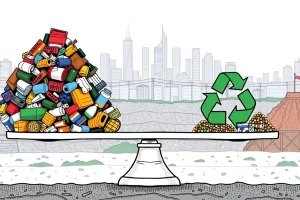
EPR is important because it addresses a fundamental market failure: the environmental costs of product disposal are not reflected in the product’s price. Without EPR, these costs are externalized to society, leading to overconsumption of resources, increased pollution, and strained municipal waste management systems. By making producers financially responsible, EPR corrects this imbalance and promotes a more efficient use of resources. It also reduces the burden on local governments, which often struggle to manage growing waste streams with limited budgets.
The impact of well-designed EPR programs can be substantial. They have been shown to increase recycling rates significantly, reduce the amount of waste sent to landfills and incinerators, and stimulate markets for recycled materials. Moreover, EPR encourages innovation in product design, as producers seek to minimize their end-of-life costs by creating products that are easier to disassemble, repair, and recycle. This can lead to reduced material use, lower toxicity, and longer product lifespans. On a broader scale, EPR contributes to the transition toward a circular economy, where waste is designed out of the system and materials are kept in use for as long as possible.
Benefits, Limitations and Trade-offs
EPR offers several benefits. It provides a dedicated funding stream for waste management, reducing reliance on taxpayer money. It creates economic incentives for eco-design, leading to more sustainable products. It can improve recycling rates and the quality of recycled materials by ensuring proper sorting and processing. Additionally, EPR can foster job creation in the recycling and remanufacturing sectors and reduce the environmental footprint of products.
However, EPR also has limitations and trade-offs. The costs of EPR are typically passed on to consumers through higher product prices, which can be regressive. There is a risk of free-riding, where some producers avoid their obligations, undermining the system’s fairness and effectiveness. Administrative complexity and the need for robust monitoring and enforcement can be challenging, especially in regions with limited institutional capacity. Furthermore, if EPR fees are not well-designed, they may not sufficiently incentivize design changes, or they may lead to unintended consequences such as shifting to materials that are not actually more environmentally friendly. Balancing these factors is crucial for successful EPR implementation.
Examples
EPR programs exist in many countries and cover a variety of product categories. Some notable examples include:
- Germany’s Green Dot (Der Grüne Punkt): One of the earliest and most recognized EPR systems, introduced in 1991 for packaging waste. Producers pay a license fee for the use of the Green Dot symbol, which funds collection and recycling. The system has achieved high recycling rates and inspired similar programs across Europe.
- European Union Waste Electrical and Electronic Equipment (WEEE) Directive: This directive requires producers of electronics to finance the collection, treatment, and recycling of e-waste. It has led to the establishment of take-back systems and recycling targets across EU member states.
- Canadian provincial EPR programs: Many Canadian provinces have EPR regulations for packaging, printed paper, electronics, and hazardous household waste. For example, British Columbia’s EPR program for packaging and printed paper is fully funded by producers and has achieved high diversion rates.
- Japanese Home Appliance Recycling Law: Enacted in 2001, this law requires consumers to pay a recycling fee when disposing of certain appliances (e.g., air conditioners, televisions, refrigerators, washing machines) and obligates producers to take back and recycle them.
- South Korea’s EPR system: Introduced in 2003, it covers packaging, electronics, batteries, and tires. Producers must meet recycling targets or pay a penalty. The system has significantly increased recycling rates and reduced landfilling.
FAQ
What is Extended Producer Responsibility?
Extended Producer Responsibility (EPR) is a policy approach that makes producers responsible for the end-of-life management of their products, including collection, recycling, and disposal.
How does Extended Producer Responsibility work?
Producers typically pay fees to a collective organization (PRO) that manages the collection and recycling of products on their behalf, or they may set up their own take-back systems. These fees are often modulated to reward eco-design.
Why does Extended Producer Responsibility matter?
EPR reduces the burden on municipalities, increases recycling rates, and encourages producers to design more sustainable products, contributing to a circular economy.
References
- OECD (2001). Extended Producer Responsibility: A Guidance Manual for Governments.
- European Commission. Directive 2008/98/EC on waste (Waste Framework Directive).
- Lindhqvist, T. (2000). Extended Producer Responsibility in Cleaner Production. IIIEE, Lund University.