In brief
At a glance
Quick Facts
- Verdict
- Promising (emerging evidence)
- Problem addressed
- Resource depletion and waste from linear models
- Evidence strength
- Moderate
- Potential scale
- Global (with sector limits)
- Relative cost
- Moderate to high upfront, long-term savings possible
- Time to impact
- Years to decades
Quick verdict
A circular business model is an economic framework that seeks to decouple revenue from virgin resource consumption by designing products and services for longevity, reuse, remanufacturing, and recycling, while regenerating natural systems. It is a promising concept with growing adoption in niche markets and some large corporations, but the evidence of its overall effectiveness at scale remains moderate. While case studies demonstrate environmental and cost benefits in specific contexts, systemic barriers—including high upfront investment, regulatory hurdles, and consumer behavior—limit widespread implementation. The model is best viewed as an evolving set of strategies rather than a fully proven solution.
Problem addressed
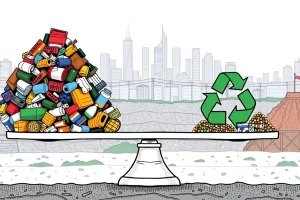
The dominant linear economic model—take, make, use, dispose—has driven unprecedented resource extraction, waste generation, and environmental degradation. Global material consumption has more than tripled since 1970 and continues to grow, with projections indicating that resource use could double by 2060 if current trends persist (based on UN International Resource Panel data). This linear approach depletes finite resources, contributes to climate change, pollutes ecosystems, and creates vast amounts of waste, much of which ends up in landfills or incinerators. A circular business model directly addresses this by rethinking product life cycles to minimize resource input, waste, and emissions, aiming to keep materials in use at their highest value for as long as possible.
How the solution works
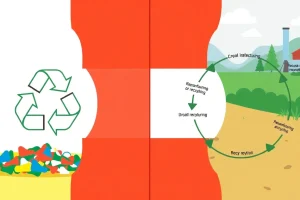
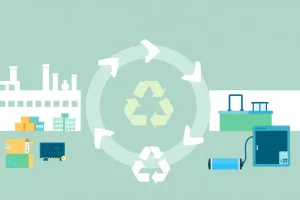
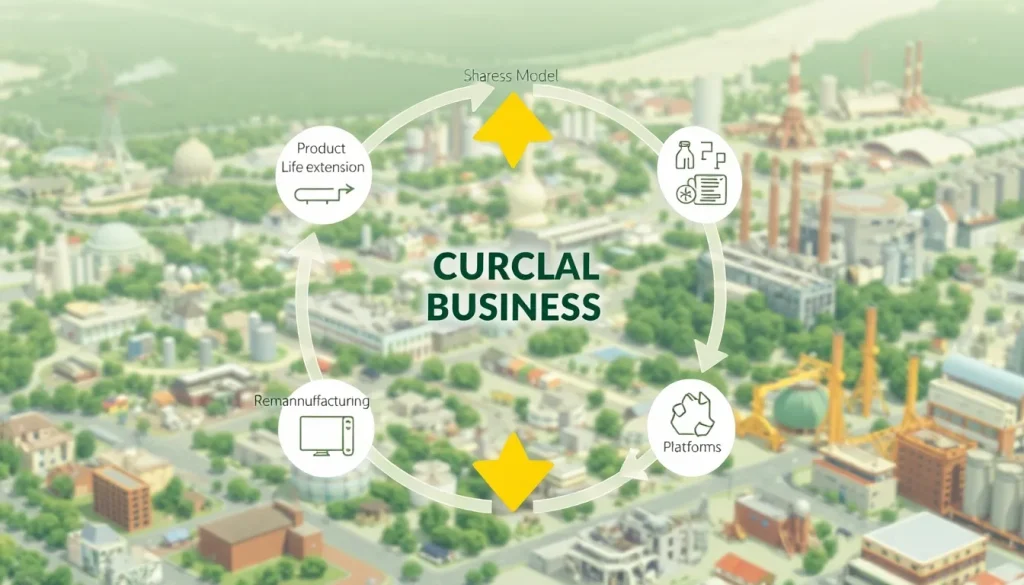
Circular business models operate through several core strategies, often combined. These include:
- Product life extension: Designing durable, repairable, and upgradable products, supported by maintenance and repair services. This keeps products functional longer, reducing the need for new production.
- Product-as-a-service (PaaS): Shifting from selling products to leasing or renting them, retaining ownership and responsibility for maintenance, take-back, and end-of-life processing. Examples include lighting-as-a-service or tire-by-the-mile contracts.
- Sharing platforms: Enabling shared use of underutilized assets (e.g., car sharing, tool libraries) to increase utilization rates and reduce the total number of products needed.
- Remanufacturing and refurbishment: Restoring used products to like-new condition, often with warranties, capturing the value of embedded materials and labor.
- Recycling and material recovery: Designing products for easy disassembly and high-quality recycling, turning waste into secondary raw materials. This is often the least value-retaining loop but still critical for materials that cannot be reused directly.
- Circular supplies: Using renewable, bio-based, or fully recyclable inputs to replace finite resources.
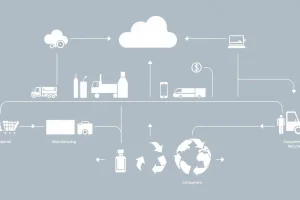
These strategies are underpinned by design thinking that considers the entire lifecycle, reverse logistics for product take-back, and digital technologies like IoT for tracking and optimizing asset use.
Evidence strength
The evidence base for circular business models is growing but remains uneven. Numerous case studies and pilot projects demonstrate feasibility and benefits in specific industries, such as electronics remanufacturing, fashion rental, and industrial symbiosis parks. For example, remanufacturing in the automotive and heavy machinery sectors has been shown to reduce material use by 70-90% and energy consumption by 55-85% compared to new production, according to multiple academic reviews. However, large-scale, longitudinal studies are scarce. Most data come from company self-reports or industry-funded research, which may overstate benefits. The macroeconomic modeling of a full circular economy transition suggests significant potential—such as a net increase of 700,000 jobs in the EU by 2030 and a reduction of carbon emissions by 48% by 2030 (Ellen MacArthur Foundation and McKinsey, 2015)—but these are projections based on assumptions that may not hold. The evidence is therefore moderate: strong for individual business cases, but limited for system-wide impacts and long-term viability.
Potential scale
In theory, circular business models could be applied globally across all sectors, from consumer goods to heavy industry. The Ellen MacArthur Foundation estimates that 45% of global greenhouse gas emissions come from the production of goods, and circular strategies could address a significant portion of that. However, scaling is constrained by several factors. Some materials and products are inherently difficult to circulate due to chemical complexity, safety concerns, or low residual value. Global supply chains are optimized for linear throughput, and reverse logistics infrastructure is underdeveloped in many regions. Moreover, circular models often require dense networks of users or facilities to be economically viable, limiting their applicability in rural or low-density areas. The potential scale is therefore global in ambition but currently regional or sector-specific in practice.
Cost considerations
Costs vary widely by model and industry. Upfront investment can be high: redesigning products for durability and disassembly, setting up reverse logistics, and developing service-based contracts require capital and organizational change. However, operational costs may decrease over time due to reduced material purchases and waste disposal fees. For example, a remanufacturing operation might have higher labor costs but lower material costs, leading to overall savings of 30-50% compared to new manufacturing, as reported in some industry studies. Product-as-a-service models can generate recurring revenue streams but also shift financial risk to the provider, who must manage maintenance and residual value. The relative cost is moderate to high initially, with potential for long-term savings, but the business case depends heavily on commodity prices, regulatory incentives, and consumer acceptance.
Implementation time
Implementing a circular business model is not a quick fix. For an individual company, transitioning a product line to a circular design can take 2-5 years, involving R&D, supply chain reconfiguration, and customer education. Scaling across an entire industry or economy is a multi-decade endeavor, requiring changes in infrastructure, regulation, and cultural norms. Early results—such as reduced material costs or new service revenues—may appear within a few years, but the full environmental and economic benefits materialize over the long term as products remain in use longer and material loops close. The time to impact is therefore years to decades for systemic change.
Environmental benefits
Circular business models can significantly reduce environmental pressures. By extending product lifetimes and recovering materials, they lower demand for virgin resource extraction, energy use, and waste generation. Quantified benefits from case studies include: remanufacturing a smartphone can reduce CO2 emissions by 50-80% compared to producing a new one; clothing rental services can reduce the carbon footprint per wear by 20-30% if they displace new purchases; and industrial symbiosis in Kalundborg, Denmark, saves an estimated 635,000 tons of CO2 annually through waste exchange. However, these benefits are not automatic; they depend on factors like the energy mix used in recycling, transportation distances, and whether circular activities truly displace linear production or simply add to consumption (rebound effects). Overall, the environmental benefits are substantial in principle but require careful lifecycle assessment to confirm in each case.
Social and economic co-benefits
Beyond environmental gains, circular business models can create local jobs in repair, remanufacturing, and reverse logistics—sectors that are often more labor-intensive than automated manufacturing. The EU estimates that a circular economy could create 700,000 new jobs by 2030, though these projections are uncertain. They can also enhance resource security for businesses and nations by reducing dependence on imported raw materials. For consumers, access-over-ownership models can lower upfront costs and provide access to higher-quality goods. Additionally, circular models can foster innovation and new business opportunities, particularly for small and medium enterprises in niche markets. However, job quality and the distribution of benefits are not guaranteed; some jobs may be low-wage or precarious, and the transition could displace workers in traditional manufacturing.
Risks and unintended consequences
Circular business models carry several risks. Rebound effects are a major concern: if circular products are cheaper or more convenient, overall consumption may increase, offsetting efficiency gains. For example, a more fuel-efficient car might be driven more miles. Product-as-a-service models could lead to overuse or neglect of assets if contracts are poorly designed. Recycling processes can themselves be energy-intensive and polluting if not properly managed. There is also a risk of “circularity washing,” where companies make superficial changes without fundamentally altering their linear practices. Furthermore, the transition may exacerbate inequalities if circular services are only accessible to affluent consumers or if informal waste pickers in developing countries lose livelihoods. These risks require careful policy design and monitoring.
Where it works best
Circular business models are most effective in contexts with high material value, complex products, and dense user networks. Sectors such as electronics, automotive, heavy machinery, and commercial appliances have seen successful remanufacturing and leasing models because the embedded value justifies reverse logistics. Urban areas with high population density support sharing platforms and efficient collection systems. Industries with homogeneous waste streams (e.g., glass, metals, certain plastics) are well-suited for high-quality recycling. Regions with strong environmental regulations and extended producer responsibility (EPR) schemes, such as the EU, provide a favorable policy environment. Business-to-business (B2B) models often face fewer behavioral barriers than consumer-facing ones, as professional buyers prioritize total cost of ownership.
Where it may not work
Circular models are less suitable for products with low residual value, high contamination risk, or rapid technological obsolescence. Single-use medical supplies, certain packaging, and fast fashion items with short trend cycles are challenging to circulate effectively. In low-income or rural areas, the lack of infrastructure and low purchasing power can make reverse logistics and service models uneconomical. Products with complex, mixed materials that are difficult to separate (e.g., multi-layer packaging) often yield low-quality recyclate. Additionally, in markets where virgin materials are extremely cheap due to subsidies or lax environmental enforcement, circular alternatives struggle to compete on price. Consumer resistance to used or rented goods in some cultures can also limit adoption.
Comparison with alternatives
The primary alternative to a circular business model is the linear “take-make-dispose” model, which remains dominant due to its simplicity and established infrastructure. Other alternatives include the “bioeconomy” approach, which emphasizes renewable biological resources and biodegradation, and the “performance economy” focused on selling services rather than products (a subset of circular models). Compared to end-of-pipe solutions like waste-to-energy incineration or landfill gas capture, circular models aim to prevent waste at the source, which is generally more resource-efficient. However, circular models are not always superior; in some cases, incineration with energy recovery may be more practical for highly contaminated or low-value waste streams. The choice depends on lifecycle analysis and local context. Circular business models are best seen as part of a broader sustainability strategy that includes reducing overall consumption, not just closing loops.
Case studies
Philips Lighting (now Signify) – Lighting-as-a-Service: Philips offers “pay-per-lux” contracts to commercial clients, retaining ownership of lighting systems and handling maintenance and upgrades. This incentivizes Philips to design durable, energy-efficient products. Reported outcomes include energy savings of up to 70% for clients and a reduction in material use, though independent verification is limited.
Renault’s Remanufacturing Plant in Choisy-le-Roi, France: Renault remanufactures engines, transmissions, and other parts, selling them with the same warranty as new parts. The plant uses 80% less energy and 88% less water than new production, and parts are 30-50% cheaper for customers. This is a well-documented example of circularity in the automotive sector.
Mud Jeans – Lease a Jeans: A Dutch company offering jeans via a leasing model, where customers return jeans for recycling after use. The company claims to have saved 1.5 million liters of water and avoided 15,000 kg of CO2 since 2013, though these figures are self-reported and not independently audited.
Kalundborg Symbiosis, Denmark: An industrial park where companies exchange waste streams—e.g., excess heat, steam, fly ash—reducing costs and environmental impact. It has operated for decades and is often cited as a successful model of industrial symbiosis, though replicating such a dense network elsewhere has proven difficult.
Final assessment
Circular business models represent a necessary evolution away from linear consumption, with compelling logic and a growing body of evidence supporting their environmental and economic potential. They are most promising in sectors with high-value, durable goods and in policy environments that internalize the costs of waste and resource extraction. However, they are not a panacea. The evidence of large-scale, system-wide benefits remains largely based on projections and case studies, and significant barriers—economic, behavioral, and infrastructural—must be overcome. For businesses and policymakers, the prudent approach is to pilot circular strategies in suitable contexts, rigorously measure outcomes, and avoid assuming that circularity automatically equates to sustainability. The model is worth pursuing, but with realistic expectations and a commitment to continuous improvement.
FAQ
What is the difference between a circular business model and a linear one?
A linear model follows a 'take-make-dispose' pattern, extracting resources, manufacturing products, and discarding them after use. A circular model designs out waste, keeps products and materials in use, and regenerates natural systems, often through reuse, repair, remanufacturing, and recycling.
Can circular business models be profitable?
Yes, many companies have demonstrated profitability through cost savings on materials, new revenue streams from services, and enhanced customer loyalty. However, profitability depends on factors like product design, market conditions, and the ability to scale reverse logistics. Some models require high upfront investment and may take years to break even.
What are the main barriers to adopting circular business models?
Key barriers include high initial costs for redesign and infrastructure, lack of supportive regulations, low consumer acceptance of used or rented products, complex global supply chains, and the low price of virgin materials due to subsidies or externalized environmental costs.
References
- Ellen MacArthur Foundation, various reports on circular economy (2013-2023).
- Geissdoerfer, M., et al. (2017). 'The Circular Economy – A new sustainability paradigm?' Journal of Cleaner Production.
- Bocken, N.M.P., et al. (2016). 'Product design and business model strategies for a circular economy.' Journal of Industrial and Production Engineering.
- European Commission, 'Circular Economy Action Plan' (2020).
- World Economic Forum, 'Circular Economy in Cities' reports.