In brief
At a glance
Quick Facts
- Definition
- Changes in electric usage by end-use customers from their normal consumption patterns in response to changes in the price of electricity or incentive payments.
- Primary Goal
- Balance electricity supply and demand, especially during peak periods, to maintain grid reliability and reduce costs.
- Key Participants
- Residential, commercial, and industrial consumers; utilities; grid operators; and third-party aggregators.
- Main Types
- Price-based (time-of-use rates, real-time pricing) and incentive-based (direct load control, demand bidding).
- Enabling Technology
- Smart meters, automated control systems, and communication networks that allow real-time signals and remote load management.
- Environmental Benefit
- Reduces reliance on fossil fuel peaking plants and supports integration of variable renewable energy sources.
- Economic Impact
- Can lower wholesale electricity prices and defer or avoid investments in new generation and transmission infrastructure.
- Common Misconception
- Demand response is not the same as energy efficiency; it focuses on temporary, dispatchable load adjustments rather than permanent reductions.
Key Takeaways
- Demand response is a strategy that encourages electricity consumers to reduce or shift their usage during peak demand periods, rather than solely relying on increasing supply.
- It helps maintain grid stability, prevents blackouts, and reduces the need for expensive peaking power plants.
- Participants receive financial incentives, such as bill credits or reduced rates, for adjusting their consumption patterns.
- Demand response plays a critical role in integrating variable renewable energy sources like wind and solar into the grid.
What Is Demand Response?
Demand response (DR) is a set of strategies used by electric grid operators to manage electricity consumption by encouraging end-users to modify their usage patterns in response to supply conditions. Rather than solely increasing generation to meet rising demand, DR reduces or shifts demand to better match available supply. This approach is a cornerstone of modern grid management, enabling a more flexible, reliable, and cost-effective electricity system.
Demand response is distinct from energy efficiency, which aims to reduce overall energy consumption through more efficient appliances or behaviors. Instead, DR focuses on temporal adjustments—shifting electricity use from peak hours to off-peak times, or temporarily reducing consumption when the grid is under stress. It is a demand-side resource that can be dispatched much like a power plant, but without the need for fuel or emissions. DR programs are implemented by utilities, grid operators, and third-party aggregators, and they involve a wide range of participants, from large industrial facilities to individual households.
How It Works
Demand response operates through a variety of mechanisms that can be broadly categorized as price-based or incentive-based. In price-based programs, consumers are exposed to time-varying electricity rates that reflect the actual cost of generation and delivery. These rates are higher during peak demand periods and lower during off-peak times, encouraging consumers to shift usage to cheaper hours. Common pricing structures include time-of-use (TOU) rates, critical peak pricing (CPP), and real-time pricing (RTP).
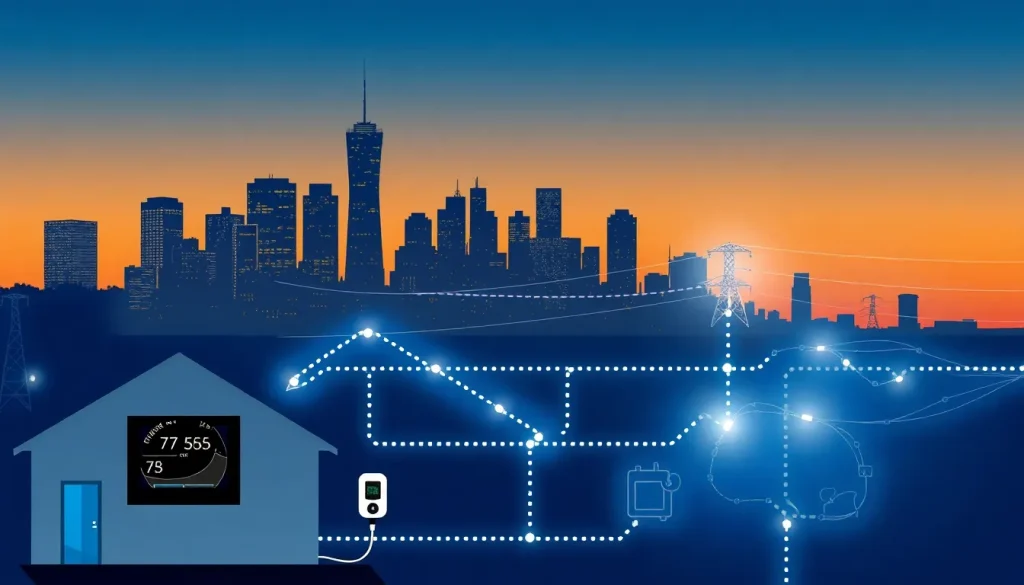
Incentive-based programs offer direct payments or bill credits to consumers who agree to reduce their load when requested by the grid operator. These programs include direct load control, where the utility can remotely cycle specific appliances (such as air conditioners or water heaters) during peak events, and demand bidding, where large consumers commit to reducing a certain amount of load in exchange for a payment. Aggregators play a key role by combining the load reductions of many small consumers into a resource large enough to participate in wholesale markets. Advanced metering infrastructure (AMI) and smart devices enable automated demand response, where signals are sent to equipment that adjusts consumption without manual intervention.
Importance and Impact
Demand response is vital for maintaining grid reliability, especially as electricity systems face increasing stress from aging infrastructure, extreme weather, and the growing electrification of heating and transportation. By reducing peak demand, DR helps avoid the need for rolling blackouts and lessens the reliance on peaking power plants, which are often the most expensive and polluting generators. This not only enhances grid resilience but also lowers wholesale electricity prices, benefiting all consumers.
Moreover, DR is a key enabler of the clean energy transition. Variable renewable energy sources like solar and wind create supply fluctuations that can be challenging for grid operators. Demand response provides a flexible resource that can absorb excess generation during high-output periods and reduce load when renewable output drops. This flexibility reduces the need for fossil fuel backup plants and helps integrate higher shares of renewables, thereby lowering carbon emissions. Studies by grid operators and energy agencies consistently show that DR can defer or eliminate the need for costly infrastructure investments, such as new transmission lines or peaking plants.
Benefits, Limitations and Trade-offs
Demand response offers multiple benefits. For grid operators, it enhances reliability and operational flexibility. For consumers, it provides financial savings through lower bills or incentive payments. For society, it reduces environmental impacts by displacing fossil fuel generation and supporting renewable integration. DR can also improve energy equity by allowing low-income households to benefit from bill credits without requiring upfront investments in new appliances.
However, DR has limitations. It requires a certain level of consumer engagement and technological infrastructure, such as smart meters and controllable devices. Some consumers may be reluctant to participate due to concerns about comfort or loss of control. There is also the risk of a “rebound effect,” where energy use spikes after a DR event as equipment returns to normal operation, potentially offsetting some of the peak reduction. Additionally, the effectiveness of DR depends on accurate forecasting and communication systems; failures in these areas can undermine reliability. Despite these challenges, the overall value of DR is widely recognized, and ongoing advancements in automation and data analytics are addressing many of these issues.
Examples
Demand response takes many forms across different sectors. In the residential sector, a common example is a utility program that cycles air conditioners or electric water heaters off for short periods during peak hours, often with no noticeable impact on comfort. Smart thermostats can automatically adjust temperature setpoints in response to price signals or grid requests. In the commercial and industrial sectors, facilities may agree to reduce non-essential lighting, adjust HVAC settings, or shift production schedules. Large industrial plants might temporarily shut down energy-intensive processes or switch to on-site backup generation. At the wholesale level, aggregators combine the load reductions of many small consumers to bid into capacity markets, effectively acting as a virtual power plant. Emergency demand response programs are activated during critical grid conditions to prevent widespread outages.
Common Misconceptions
One common misconception is that demand response is the same as energy efficiency. While both reduce electricity usage, energy efficiency focuses on permanent reductions through better technology or practices, whereas demand response is a temporary, dispatchable adjustment. Another myth is that demand response requires consumers to sacrifice comfort or productivity. In reality, many programs are designed to be minimally intrusive, and automated systems can adjust loads without noticeable impact. Some also believe that demand response is only for large industrial users, but residential and small commercial programs are increasingly common. Finally, there is a misconception that demand response is only for emergencies; in fact, it is used routinely in many markets to balance supply and demand and optimize grid operations.
Connections to Other Systems
Demand response is closely linked to the development of smart grids, which use digital communication and automation to enhance grid efficiency and reliability. Smart meters and advanced metering infrastructure (AMI) provide the real-time data necessary for dynamic pricing and automated DR. DR also complements energy storage systems: batteries can be charged during off-peak times and discharged during peak demand, effectively shifting load. Furthermore, DR is integral to the concept of virtual power plants (VPPs), where distributed energy resources—including rooftop solar, batteries, and controllable loads—are aggregated and dispatched as a single resource. The growth of electric vehicles presents both a challenge and an opportunity for DR, as smart charging can turn EV batteries into flexible loads that support grid stability.
FAQ
What is demand response?
Demand response is a strategy used by electric grid operators to manage electricity consumption by encouraging consumers to reduce or shift their usage during peak demand periods, typically in exchange for financial incentives.
How does demand response work?
It works through price signals (such as time-of-use rates) or direct incentives (such as payments for reducing load). Utilities or aggregators send signals to participants, who then adjust their electricity use manually or via automated systems like smart thermostats.
Why does demand response matter?
It matters because it helps maintain grid stability, prevents blackouts, lowers electricity costs, reduces environmental impact by displacing fossil fuel generation, and enables greater integration of renewable energy sources.
References
- U.S. Department of Energy, Office of Electricity, "Demand Response"
- Federal Energy Regulatory Commission (FERC), "Assessment of Demand Response and Advanced Metering"
- International Energy Agency (IEA), "Demand Response" technology report