In brief
At a glance
Quick Facts
- Verdict
- Emerging
- Problem addressed
- Excess atmospheric CO₂ and ocean acidification
- Evidence strength
- Limited
- Potential scale
- Global
- Relative cost
- High
- Time to impact
- Decades
Quick verdict
Direct ocean carbon capture (DOCC) is an emerging climate technology that aims to remove carbon dioxide (CO₂) directly from seawater, thereby enhancing the ocean’s natural ability to absorb atmospheric CO₂. While the concept is scientifically sound and could theoretically be deployed at a global scale, it remains in the early stages of research and development. Current evidence is limited to laboratory experiments and small-scale pilots, with significant uncertainties regarding cost, energy requirements, and environmental side effects. DOCC is not yet a proven or practical solution, but it warrants further investigation as a potential component of a diversified carbon dioxide removal (CDR) portfolio.
Problem addressed
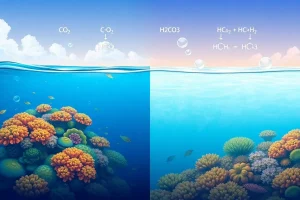
DOCC targets two interconnected problems: the rising concentration of atmospheric CO₂ and the resulting ocean acidification. The ocean absorbs roughly 25–30% of anthropogenic CO₂ emissions, which has led to a 30% increase in surface ocean acidity since the Industrial Revolution. This acidification threatens marine ecosystems, particularly calcifying organisms like corals, mollusks, and some plankton species. By removing CO₂ from seawater, DOCC could help restore the ocean’s chemistry while also enabling the ocean to absorb additional CO₂ from the atmosphere, thus contributing to climate change mitigation. The approach is distinct from direct air capture (DAC) in that it leverages the ocean’s natural role as a massive carbon sink, potentially offering energy efficiency advantages because the concentration of CO₂ in seawater is about 150 times higher than in air.
How the solution works
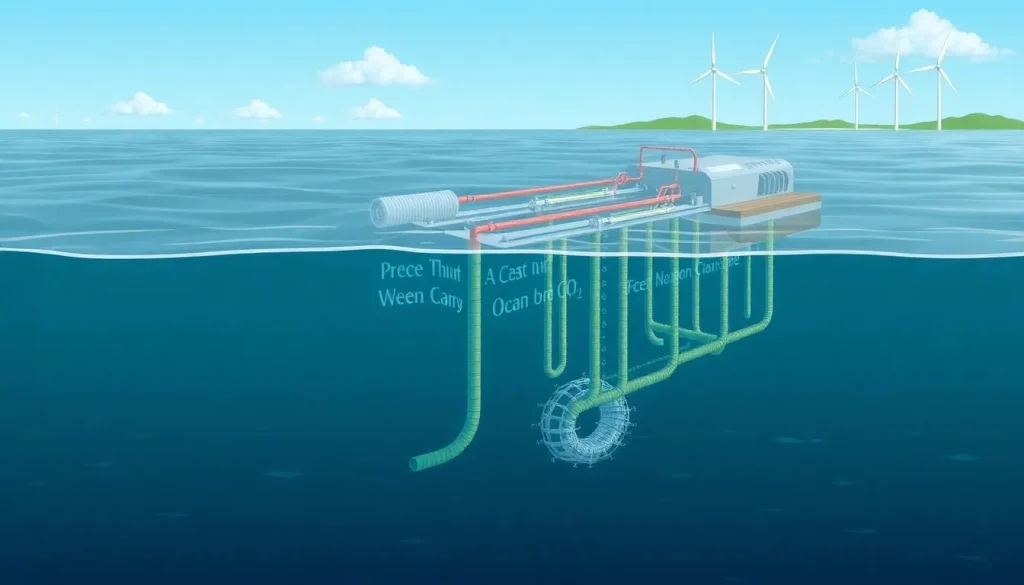
Direct ocean carbon capture encompasses several technological pathways, all of which share the goal of extracting dissolved inorganic carbon from seawater. The most commonly discussed methods include:
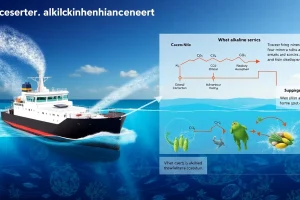
- Electrochemical acidification: Seawater is passed through an electrochemical cell where it is acidified, converting bicarbonate ions (HCO₃⁻) into dissolved CO₂ gas. The CO₂ is then removed via a gas-liquid contactor or vacuum system. The remaining alkaline seawater is returned to the ocean, where it can absorb more atmospheric CO₂.
- Electrochemical alkalinity enhancement: This approach uses electrolysis to split seawater into acidic and alkaline streams. The acidic stream is used to release CO₂ from a separate seawater flow, while the alkaline stream is returned to the ocean to enhance its natural carbon uptake. This method effectively mimics and accelerates the natural weathering process.
- Thermal or membrane-based degassing: Some concepts use low-grade heat or specialized membranes to strip CO₂ from seawater without chemical additives, though these are less developed.
In all cases, the captured CO₂ must be permanently stored, typically through geological sequestration or conversion into stable products, to achieve net-negative emissions.
Evidence strength
The evidence base for DOCC is limited and largely confined to theoretical studies, laboratory experiments, and a few small-scale prototypes. Key knowledge gaps include long-term system performance, energy efficiency under real-world conditions, and environmental impacts. The National Academies’ 2021 report on ocean-based carbon dioxide removal assessed DOCC as having “high” potential scale but “low” to “medium” technology readiness, with significant uncertainties in cost and efficacy. Several startups and research groups have demonstrated proof-of-concept systems, but published data from field trials are scarce. For example, Captura Corporation has operated a pilot plant in California, but detailed performance results are not yet publicly available. Overall, the evidence base is insufficient to confirm the viability, safety, or cost-effectiveness of DOCC at scale.
Potential scale
The theoretical potential for DOCC is very large, as the ocean is a vast reservoir of dissolved carbon. The National Academies report estimates that ocean-based CDR approaches, including electrochemical methods, could eventually remove billions of tons of CO₂ per year. However, practical scaling faces major hurdles: the energy required to process enormous volumes of seawater, the need for massive infrastructure (pumps, reactors, pipelines), and the challenge of managing the returned water without harming marine life. Additionally, the permanence of the carbon removal depends on the fate of the captured CO₂ and the stability of the ocean’s carbonate system. If the captured CO₂ is used for enhanced oil recovery or leaks from storage, the net climate benefit could be reduced or negated. Realistically, DOCC is unlikely to contribute significantly to climate mitigation before 2050, and its ultimate scale will depend on breakthroughs in energy efficiency and cost reduction.
Cost considerations
Cost estimates for DOCC are highly uncertain and vary widely depending on the technology, energy source, and scale. Early projections range from $100 to over $1,000 per ton of CO₂ removed. For comparison, direct air capture costs are currently estimated at $250–$600 per ton, with a long-term target of $100–$200. DOCC proponents argue that it could eventually be cheaper than DAC because of the higher CO₂ concentration in seawater, but this advantage may be offset by the energy needed to pump and process large volumes of water. A 2021 analysis in Energy & Environmental Science suggested that electrochemical DOCC could achieve costs of $100–$200 per ton with technological improvements, but this remains speculative. Capital costs for infrastructure, energy inputs (preferably from low-carbon sources), and monitoring will be substantial. Without a strong carbon price or policy support, DOCC is unlikely to be economically viable in the near term.
Implementation time
DOCC is at a very early stage of development. Even with accelerated research and investment, it would likely take at least a decade to move from current pilots to first-of-a-kind commercial plants, and several more decades to achieve meaningful scale. The timeline depends on resolving technical challenges, securing funding, establishing regulatory frameworks, and gaining public acceptance. The National Academies report suggests that ocean-based CDR methods could be ready for deployment by 2040–2050 if research is prioritized. However, given the slow pace of scaling up other CDR technologies, a more realistic timeline for DOCC to contribute at the gigaton level is mid-century or later. Immediate impacts on atmospheric CO₂ concentrations are not expected.
Environmental benefits
The primary environmental benefit of DOCC is the potential to mitigate climate change by removing CO₂ from the ocean-atmosphere system. Additionally, by reducing the partial pressure of CO₂ in surface seawater, DOCC could locally reverse ocean acidification, benefiting marine ecosystems in the vicinity of the discharge. This could help protect coral reefs, shellfish, and other vulnerable organisms. However, these benefits are localized and depend on the scale of deployment. If powered by renewable energy, DOCC could have a lower carbon footprint than some other CDR methods. Quantified benefits remain hypothetical until large-scale trials are conducted.
Social and economic co-benefits
DOCC could create new industries and jobs in engineering, manufacturing, and marine operations, particularly in coastal regions. It might also support fisheries and tourism by improving ocean health. If coupled with desalination or mineral extraction, it could provide additional revenue streams. However, these co-benefits are speculative and would require careful planning to ensure equitable distribution. The technology could also contribute to energy transitions if integrated with offshore renewable energy projects.
Risks and unintended consequences
DOCC poses several environmental and social risks. Altering seawater chemistry on a large scale could have unforeseen effects on marine ecosystems, including changes in nutrient availability, plankton communities, and food webs. The discharge of alkaline or acidified water could harm local biota if not carefully managed. Energy-intensive operations could increase greenhouse gas emissions if not powered by clean sources. There is also a risk of “moral hazard”: the promise of future DOCC might reduce the urgency to cut emissions. Additionally, the infrastructure could interfere with shipping, fishing, and marine protected areas. Public opposition and regulatory hurdles could delay or block deployment. Long-term monitoring and adaptive management would be essential but costly.
Where it works best
DOCC is best suited for locations with access to deep seawater, abundant low-carbon energy, and proximity to CO₂ storage or utilization infrastructure. Coastal areas with strong ocean currents could help disperse treated water and minimize local impacts. Regions with existing offshore energy infrastructure (e.g., wind farms) or geological storage (e.g., depleted oil and gas fields) are prime candidates. Politically stable jurisdictions with supportive policies and public acceptance would also be advantageous. The technology could be integrated with desalination plants or industrial facilities that use seawater cooling.
Where it may not work
DOCC is likely to be ineffective or inappropriate in areas with sensitive marine ecosystems, such as coral reefs or upwelling zones, where altered water chemistry could cause harm. Regions with limited renewable energy resources or high energy costs would face economic barriers. Enclosed or semi-enclosed seas with limited water exchange (e.g., the Baltic Sea) could accumulate chemical changes and suffer more severe ecological impacts. Developing countries with weak governance and monitoring capacity may struggle to manage the risks. In deep ocean waters, the energy required to pump water to the surface could be prohibitive.
Comparison with alternatives
DOCC is one of several ocean-based CDR methods, alongside ocean alkalinity enhancement, artificial upwelling/downwelling, and marine biomass cultivation. Compared to direct air capture (DAC), DOCC may offer energy efficiency advantages due to higher CO₂ concentrations, but DAC is more technologically mature and can be sited anywhere. The table below summarizes key differences:
| Aspect | Direct Ocean Capture | Direct Air Capture |
|---|---|---|
| CO₂ source | Seawater (dissolved CO₂) | Ambient air (gaseous CO₂) |
| CO₂ concentration | ~100–150 times higher than air | ~420 ppm (0.04%) |
| Technology readiness | Early pilot stage | Commercial pilots, small plants |
| Energy source | Electricity (renewable preferred) | Heat and electricity |
| Co-benefits | Local ocean acidification reversal | None direct |
| Risks | Marine ecosystem impacts | Land use, chemical sorbent disposal |
| Cost (current est.) | $100–$1,000+/tCO₂ | $250–$600/tCO₂ |
DOCC could complement other CDR approaches, but it is not a substitute for rapid emissions reductions.
Case studies
As of 2024, there are no commercial-scale DOCC plants. Notable pilot projects include:
- Captura (USA): A startup spun out of Caltech, Captura has tested an electrochemical process at a pilot plant in Newport Beach, California, with a capacity of a few tons of CO₂ per year. The company aims to scale up to 1,000 tons per year by 2025, but results have not been independently verified.
- SeaChange (USA): A project by the University of California, Los Angeles, and partners, SeaChange uses an electrochemical process on a barge. A pilot in the Port of Los Angeles demonstrated removal of CO₂ from seawater, but the scale was very small (kilograms per day).
- Equatic (USA/Singapore): A joint venture between UCLA and Singapore’s PUB, Equatic is building a pilot plant in Singapore that aims to remove 10 tons of CO₂ per year while producing hydrogen. The project is ongoing, with plans for a larger 1,000-ton-per-year plant.
These case studies highlight the early-stage nature of the technology and the lack of long-term performance data.
Final assessment
Direct ocean carbon capture is a scientifically intriguing but unproven climate solution. While it offers potential advantages over direct air capture in terms of energy efficiency and co-benefits for ocean health, the technology is far from ready for deployment. The evidence base is thin, costs are highly uncertain, and environmental risks are poorly understood. DOCC should be pursued as part of a broad research and development portfolio, but it cannot be relied upon as a near-term climate mitigation strategy. Priority should be given to rigorous, transparent pilot projects with robust environmental monitoring, alongside efforts to reduce costs and energy requirements. Even under optimistic scenarios, DOCC is unlikely to contribute significantly to global carbon removal before 2050. For now, the most effective climate actions remain rapid emissions reductions and scaling proven CDR methods like afforestation and direct air capture with secure storage.
FAQ
How does direct ocean carbon capture differ from direct air capture?
Direct ocean capture (DOC) removes CO2 from seawater, where it is concentrated at a level about 150 times higher than in the atmosphere, potentially making it more energy-efficient. In contrast, direct air capture (DAC) extracts CO2 directly from ambient air. Both aim to achieve negative emissions, but DOC also addresses ocean acidification locally.
What are the main challenges facing direct ocean carbon capture?
Key challenges include high energy requirements, high costs (estimated at hundreds of dollars per ton of CO2), potential ecological impacts from altering seawater chemistry, and the need for safe long-term CO2 storage or utilization. The technology is also at a very early stage, with only small-scale pilots.
Is direct ocean carbon capture currently deployed at scale?
No, direct ocean carbon capture is not yet deployed at commercial scale. As of 2024, only a few small pilot projects and laboratory prototypes exist, such as those by Captura and other startups. Significant research, development, and demonstration are needed before large-scale deployment could be considered.
References
- National Academies of Sciences, Engineering, and Medicine. (2021). A Research Strategy for Ocean-based Carbon Dioxide Removal and Sequestration. Washington, DC: The National Academies Press.
- IPCC. (2022). Climate Change 2022: Mitigation of Climate Change. Contribution of Working Group III to the Sixth Assessment Report.
- Eisaman, M. D., et al. (2018). "Indirect ocean capture of atmospheric CO2: Part I. Prototype of a negative emissions technology." Energy & Environmental Science.
- House, K. Z., et al. (2007). "Electrochemical acceleration of chemical weathering as an energetically feasible approach to mitigating anthropogenic climate change." Environmental Science & Technology.
- Captura. (2023). "Direct Ocean Capture: Technology Overview." Company website.