In brief
At a glance
Quick Facts
- pH change since pre-industrial
- Ocean surface pH has dropped by about 0.1 units, representing a ~30% increase in acidity.
- Primary chemical driver
- Increased atmospheric CO2 dissolving in seawater, forming carbonic acid and reducing carbonate ion availability.
- Key ion affected
- Carbonate ions (CO3^2-), essential for forming calcium carbonate shells and skeletons.
- Saturation state threshold
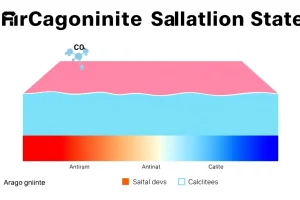
- When aragonite or calcite saturation state (Ω) falls below 1, shells begin to dissolve.
- Affected organisms
- Corals, mollusks (oysters, clams, pteropods), echinoderms (sea urchins), and calcareous plankton (coccolithophores).
- Economic value at risk
- Global fisheries and aquaculture worth billions of dollars, plus coral reef tourism and coastal protection.
- Rate of acidification
- Current rate is at least 10 times faster than any time in the last 300 million years.
- Regional vulnerability
- Polar regions and upwelling zones acidify fastest; tropical coral reefs face combined warming and acidification stress.
Key Takeaways
- Ocean acidification reduces the concentration of carbonate ions in seawater, making it more difficult for shell-building organisms to produce and maintain their calcium carbonate structures.
- The primary cause is the absorption of anthropogenic CO2 by the ocean, which has already lowered surface pH by about 0.1 units since pre-industrial times.
- Affected organisms include corals, mollusks (such as oysters, clams, and pteropods), echinoderms, and calcareous plankton, with cascading effects on marine food webs.
- Economic consequences are significant, threatening fisheries, aquaculture, and coastal protection provided by coral reefs.
What Is How Ocean Acidification Affects Shell-Building Organisms?
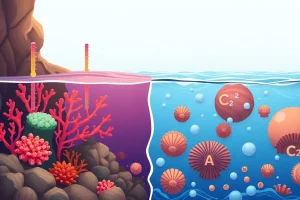
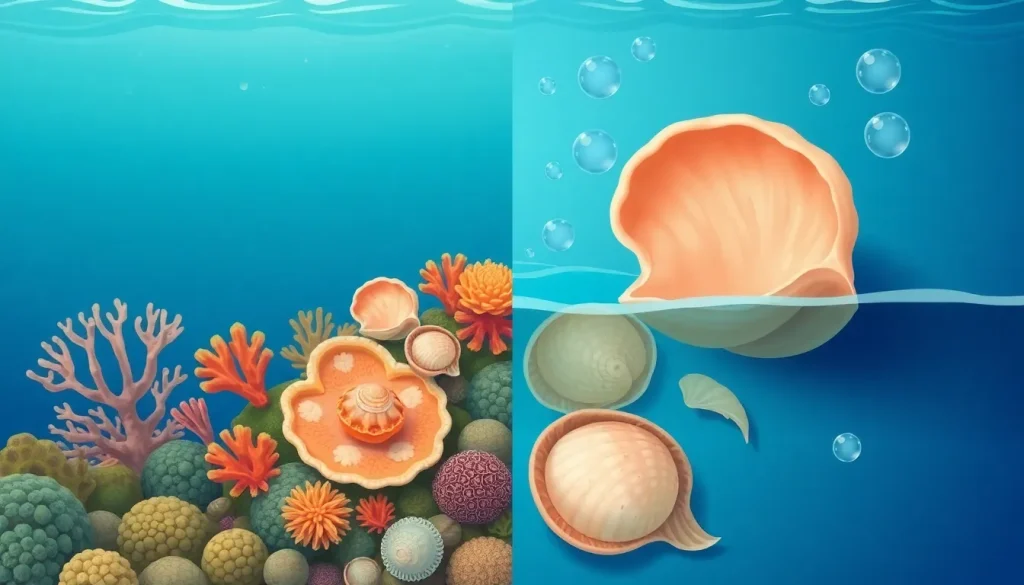
Ocean acidification is the ongoing decrease in the pH of the Earth’s oceans, caused by the absorption of excess carbon dioxide (CO2) from the atmosphere. When CO2 dissolves in seawater, it forms carbonic acid, which lowers the water’s pH and reduces the availability of carbonate ions. Shell-building organisms—such as corals, mollusks, and some types of plankton—rely on carbonate ions to construct their calcium carbonate shells and skeletons. As ocean acidification intensifies, these organisms face increasing difficulty in building and maintaining their protective structures, leading to weaker shells, slower growth, and higher mortality rates.
This phenomenon is a direct consequence of rising atmospheric CO2 levels, primarily from human activities like fossil fuel burning and deforestation. The ocean absorbs about a quarter of the CO2 released into the atmosphere, which helps mitigate climate change but at a steep cost to marine chemistry. The resulting acidification disrupts the delicate balance of the carbonate system, threatening the survival of calcifying organisms and the ecosystems they support. Understanding this process is crucial because shell-building organisms form the foundation of many marine food webs and provide essential services, from coastal protection to supporting global fisheries.
How It Works
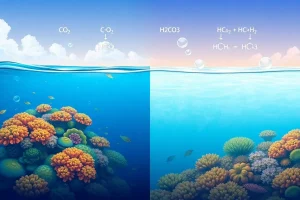
When CO2 dissolves in seawater, it undergoes a series of chemical reactions. First, CO2 reacts with water (H2O) to form carbonic acid (H2CO3). This weak acid quickly dissociates into bicarbonate ions (HCO3-) and hydrogen ions (H+). The increase in hydrogen ions lowers the pH, making the water more acidic. Some of these hydrogen ions then combine with carbonate ions (CO3^2-) to form additional bicarbonate. The net effect is a decrease in the concentration of carbonate ions, which are the building blocks for calcium carbonate (CaCO3) shells and skeletons.
Shell-building organisms require a sufficient saturation state (Ω) of calcium carbonate minerals—either aragonite or calcite—to precipitate their shells. The saturation state depends on the concentrations of calcium and carbonate ions. As carbonate ions decline, the saturation state drops. When Ω falls below 1, seawater becomes undersaturated, and calcium carbonate structures begin to dissolve. Even before undersaturation is reached, lower saturation states force organisms to expend more energy to pump ions and maintain calcification, leaving less energy for growth, reproduction, and survival. Some organisms can use bicarbonate directly, but this process is energetically costly and often less efficient.
What the Evidence Shows
Field observations and laboratory experiments provide robust evidence of acidification’s effects. In the Southern Ocean, pteropods—tiny swimming snails—have been found with severely eroded shells in waters that are now undersaturated with aragonite. Laboratory studies on corals, oysters, and sea urchins consistently show reduced calcification rates, thinner shells, and higher mortality when reared under elevated CO2 conditions. Natural CO2 vent sites, such as those near volcanic seeps in the Mediterranean, reveal ecosystem shifts away from calcifying species toward non-calcifying algae and seagrasses.
Geological records indicate that the current rate of acidification is unprecedented in at least 300 million years. Sediment cores show that past acidification events, often linked to mass extinctions, occurred over thousands of years—not the mere centuries we are experiencing. While some species exhibit limited adaptive capacity, the rapid pace of change outstrips the ability of most shell-building organisms to evolve or acclimate. Evidence from oyster hatcheries in the Pacific Northwest, where corrosive upwelled water caused massive larval die-offs, demonstrates real-world economic impacts already underway.
Importance and Impact
Shell-building organisms are foundational to marine ecosystems. Corals create reef habitats that support roughly a quarter of all marine species. Pteropods and other calcifying plankton are key links in food webs, consumed by fish, seabirds, and whales. Mollusks such as clams, oysters, and mussels provide food for humans and wildlife, and their beds stabilize sediments and filter water. The decline of these organisms can trigger trophic cascades, reducing biodiversity and fisheries productivity.
The economic stakes are high. Global fisheries and aquaculture depend on healthy populations of shellfish and the ecosystems they sustain. Coral reefs alone generate billions of dollars annually through tourism, fisheries, and coastal protection. Oyster hatcheries on the U.S. West Coast have already suffered significant losses due to acidified water, forcing adaptation measures. In many coastal communities, particularly in developing nations, the loss of shell-building species threatens food security and livelihoods. Additionally, coral reefs buffer shorelines from storm surges and erosion; their degradation increases risks to coastal infrastructure and human settlements.
Regional Differences
Ocean acidification does not proceed uniformly across the globe. Polar regions, such as the Arctic and Southern Ocean, are acidifying faster because cold water absorbs more CO2 and naturally has lower carbonate ion concentrations. These areas are projected to experience widespread aragonite undersaturation first. Upwelling zones, like the California Current and the Humboldt Current, bring deep, CO2-rich water to the surface, creating seasonal pulses of corrosive conditions that already affect coastal shellfish industries.
Tropical coral reefs face a different challenge: warm waters accelerate calcification but also increase metabolic stress. Combined with ocean warming, acidification can push reefs toward net erosion, where the rate of dissolution exceeds the rate of coral growth. Coastal areas influenced by nutrient runoff and eutrophication can experience exacerbated acidification because decaying algal blooms release additional CO2. Conversely, some regions with extensive seagrass meadows or kelp forests may experience local pH buffering during daylight hours, offering temporary refuges for calcifying organisms.
Solutions
The most effective long-term solution is to reduce global CO2 emissions through a transition to renewable energy, energy efficiency, and reforestation. International agreements aimed at limiting warming also address the root cause of acidification. Even with aggressive mitigation, however, the ocean will continue to acidify for decades due to the CO2 already in the atmosphere, making adaptation essential.
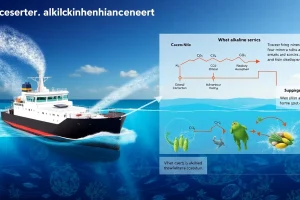
Local and regional measures can provide some relief. Reducing nutrient and organic carbon runoff from agriculture and wastewater limits coastal acidification hotspots. Protecting and restoring seagrass beds, mangroves, and kelp forests can locally elevate pH through photosynthesis. Shellfish hatcheries can monitor water chemistry and buffer incoming seawater or time production to avoid corrosive periods. Selective breeding of more resilient strains of oysters and corals is under investigation. Geoengineering approaches, such as ocean alkalinization (adding crushed silicate minerals to seawater), are being researched but carry ecological risks and governance challenges. Early warning systems and improved monitoring networks help industries and managers adapt proactively.
Common Misconceptions
One common misconception is that ocean acidification means the ocean will become acidic (pH below 7). In reality, the ocean remains slightly basic, with a current surface pH around 8.1. The term refers to a shift toward the acidic end of the pH scale, not a crossing into acidity. Another misunderstanding is that acidification and ocean warming are the same problem. While both stem from CO2 emissions, they are distinct processes with different effects; warming primarily stresses organisms through heat, while acidification alters seawater chemistry.
It is also incorrect to assume that all shell-building organisms are equally vulnerable. Some species, like certain crustaceans, can maintain calcification under moderately elevated CO2, and a few phytoplankton may benefit from higher CO2 levels for photosynthesis. However, the overall ecosystem impact is negative, as key structural species like corals and pteropods are highly sensitive. Finally, acidification is not a distant future threat—it is already measurable and affecting marine life, with observable consequences for human communities.
FAQ
What is ocean acidification?
Ocean acidification is the decrease in seawater pH caused by the ocean absorbing excess carbon dioxide (CO2) from the atmosphere. This chemical change reduces the availability of carbonate ions, which many marine organisms need to build shells and skeletons.
How does ocean acidification affect shell-building organisms?
It lowers the concentration of carbonate ions, making it harder for organisms like corals, mollusks, and some plankton to form and maintain their calcium carbonate structures. This can lead to slower growth, weaker shells, and increased mortality.
Why does ocean acidification matter for humans?
It threatens marine food webs that support fisheries and aquaculture, endangers coral reefs that provide coastal protection and tourism revenue, and disrupts ecosystems that millions of people rely on for food and income.
References
- IPCC Special Report on the Ocean and Cryosphere in a Changing Climate (2019)
- NOAA Ocean Acidification Program
- Doney, S. C., et al. (2009). Ocean acidification: the other CO2 problem. Annual Review of Marine Science.
- Orr, J. C., et al. (2005). Anthropogenic ocean acidification over the twenty-first century and its impact on calcifying organisms. Nature.