In brief
At a glance
Quick Facts
- Definition of Ocean Acidification
- The ongoing decrease in seawater pH caused by absorption of atmospheric CO₂, leading to reduced carbonate ion availability.
- Definition of Ocean Warming
- The increase in ocean heat content due to the enhanced greenhouse effect, with the ocean absorbing over 90% of excess heat.
- pH Change Since Industrial Revolution
- Ocean surface pH has dropped by about 0.1 units, representing a ~30% increase in acidity.
- Rate of Acidification
- The current rate is faster than any known change in ocean chemistry for at least 50 million years.
- Heat Absorption
- The ocean has absorbed more than 90% of the excess heat from global warming since the 1970s.
- Polar Vulnerability
- Cold polar waters absorb CO₂ more readily, making them acidify faster than tropical waters.
- Combined Stressors
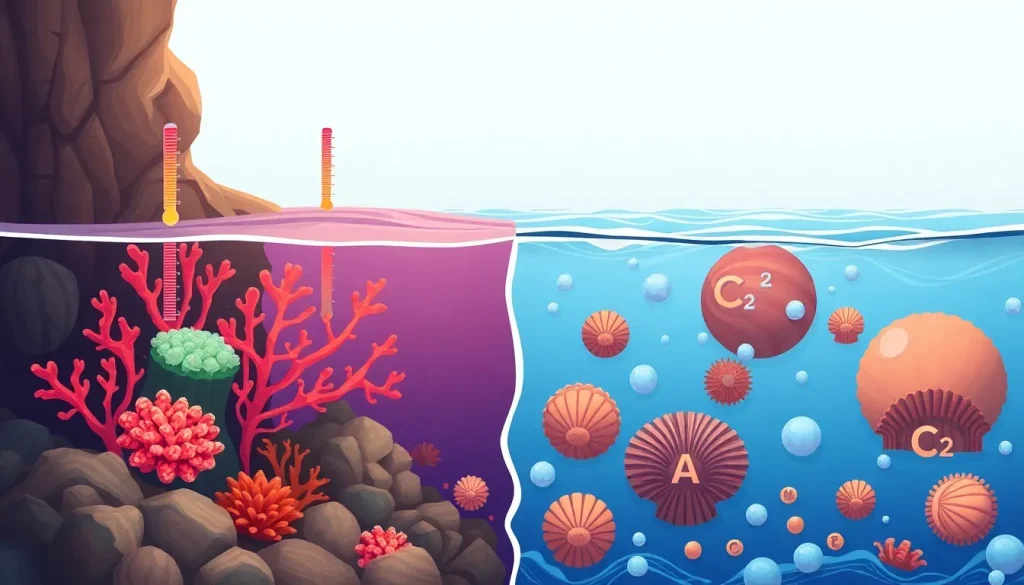
- Acidification and warming together reduce the ability of marine calcifiers to build shells and skeletons.
Key Takeaways
- Ocean acidification and ocean warming are both driven by rising atmospheric CO₂ but operate through distinct mechanisms: chemical change versus heat absorption.
- Acidification reduces seawater pH and carbonate ion availability, threatening shell-building organisms; warming raises ocean temperatures, causing coral bleaching, sea level rise, and altered ecosystems.
- Both phenomena interact and amplify each other’s effects, leading to more severe stress on marine life than either alone.
- Mitigating these threats requires reducing CO₂ emissions, as the ocean’s capacity to absorb excess heat and carbon is finite and already causing measurable harm.
What Is Ocean Acidification vs Ocean Warming?
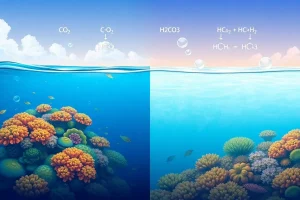
Ocean acidification and ocean warming are two major consequences of anthropogenic carbon dioxide (CO₂) emissions, but they affect the ocean in fundamentally different ways. Ocean acidification is the ongoing decrease in the pH of seawater caused by the absorption of CO₂ from the atmosphere. When CO₂ dissolves in seawater, it forms carbonic acid, which releases hydrogen ions and lowers the pH, making the ocean more acidic. This process also reduces the concentration of carbonate ions, a critical building block for marine organisms that produce shells and skeletons from calcium carbonate.
Ocean warming, on the other hand, refers to the increase in the average temperature of the ocean’s surface and deeper layers due to the enhanced greenhouse effect. The ocean absorbs more than 90% of the excess heat trapped by greenhouse gases in the atmosphere. This thermal energy raises water temperatures, leading to thermal expansion of the water volume, melting of ice sheets and glaciers, and shifts in ocean circulation patterns. While both phenomena originate from the same root cause—human activities that increase atmospheric CO₂—they represent distinct physical and chemical changes with different timescales, spatial patterns, and biological impacts.
How It Works
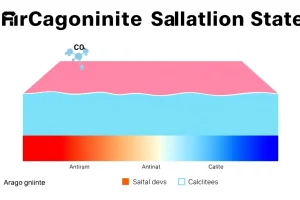
The chemistry of ocean acidification begins when atmospheric CO₂ dissolves in seawater. The dissolved CO₂ reacts with water (H₂O) to form carbonic acid (H₂CO₃), which quickly dissociates into bicarbonate (HCO₃⁻) and hydrogen ions (H⁺). The increase in hydrogen ions lowers the pH, a measure of acidity. Importantly, some of these hydrogen ions react with existing carbonate ions (CO₃²⁻) to form more bicarbonate, reducing the availability of carbonate. This shift in the carbonate chemistry equilibrium makes it harder for calcifying organisms—such as corals, mollusks, and some plankton—to build and maintain their calcium carbonate structures, as the saturation state of aragonite and calcite (mineral forms of CaCO₃) decreases.
Ocean warming operates through the physics of heat transfer. Greenhouse gases like CO₂, methane, and water vapor trap outgoing longwave radiation, causing the Earth’s surface and atmosphere to warm. The ocean, with its high heat capacity, absorbs the majority of this excess energy. Warming is not uniform: surface waters warm faster, and heat penetrates into the deep ocean over decades to centuries. This process causes thermal expansion of seawater, contributing significantly to global sea level rise. Additionally, warmer surface waters can stratify the ocean, reducing vertical mixing and affecting nutrient supply to marine ecosystems.
Main Causes or Drivers
The primary driver of both ocean acidification and ocean warming is the increase in atmospheric CO₂ concentrations resulting from human activities, principally the burning of fossil fuels (coal, oil, and natural gas), cement production, and deforestation. Since the Industrial Revolution, atmospheric CO₂ has risen from about 280 parts per million (ppm) to over 420 ppm. The ocean absorbs roughly one-quarter of these emissions annually, directly causing acidification. The remaining CO₂ and other greenhouse gases (such as methane and nitrous oxide) enhance the greenhouse effect, trapping heat in the atmosphere and leading to global warming, of which ocean warming is a major component.
While CO₂ is the common link, the two processes are driven by different aspects of the same emissions. Acidification is a direct chemical response to CO₂ dissolving in water, and it is tightly coupled to atmospheric CO₂ concentrations. Ocean warming, however, is a physical response to the overall increase in radiative forcing from all greenhouse gases, with the ocean absorbing excess heat over time. Thus, even if CO₂ emissions were to cease immediately, the ocean would continue to warm for centuries as the climate system equilibrates, whereas acidification would stabilize more quickly—though the chemical changes are effectively irreversible on human timescales.
Environmental and Human Impacts
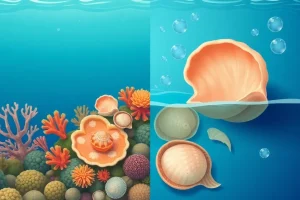
Ocean acidification primarily threatens marine calcifiers—organisms that build shells or skeletons from calcium carbonate. These include corals, mollusks (such as oysters, clams, and pteropods), crustaceans, and some plankton species. Reduced carbonate ion availability can slow shell formation, weaken existing structures, and in severe cases cause dissolution. Pteropods, for example, are tiny sea snails that form the base of many marine food webs; their decline can ripple through ecosystems, affecting fish stocks and marine mammals. Coral reefs, already stressed by warming, face additional erosion and reduced calcification rates, jeopardizing the biodiversity and coastal protection they provide.
Ocean warming has a broader set of impacts. Elevated temperatures cause coral bleaching, where corals expel their symbiotic algae, often leading to mortality. Warming also shifts species distributions toward the poles, disrupts breeding cycles, and increases the frequency of marine heatwaves. Thermal expansion of seawater contributes significantly to sea level rise, threatening coastal communities and infrastructure. Warmer waters hold less dissolved oxygen, leading to deoxygenation and the expansion of oxygen minimum zones. Combined with acidification, these stressors can reduce the resilience of marine ecosystems, making them more vulnerable to disease and invasive species. For humans, these changes affect fisheries, aquaculture, tourism, and coastal protection, with economic and food security consequences.
Regional Differences
Ocean acidification is not uniform across the globe. Polar regions, particularly the Arctic and Southern Oceans, are acidifying faster because cold water absorbs CO₂ more readily. Upwelling zones, such as along the west coasts of continents, bring deep, naturally CO₂-rich water to the surface, making these areas more susceptible to acidification. Coastal areas also experience additional acidification from nutrient runoff and local pollution, which can exacerbate the global trend. In contrast, some tropical regions may see slower acidification rates, but they are often home to highly sensitive coral reef ecosystems.
Ocean warming also exhibits strong regional patterns. The Arctic is warming at more than twice the global average rate, a phenomenon known as Arctic amplification, leading to rapid sea ice loss and ecosystem shifts. Western boundary currents, such as the Gulf Stream and Kuroshio, are warming faster than the global ocean average. Some regions, like the eastern Pacific, experience periodic warming from El Niño events, which can cause widespread bleaching. The deep ocean is warming more slowly, but the signal is detectable even in abyssal waters. These regional differences mean that the combined stress of acidification and warming varies greatly, with some areas facing a double jeopardy that severely tests the adaptive capacity of local species and human communities.
Connections to Other Systems
Ocean acidification and warming are tightly linked to the global climate system and the carbon cycle. The ocean’s ability to absorb CO₂ and heat helps moderate climate change, but this buffering capacity comes at a cost. As the ocean warms, its solubility for CO₂ decreases, potentially reducing its uptake of anthropogenic carbon and leaving more CO₂ in the atmosphere, which accelerates warming—a positive feedback loop. Warming also reduces the efficiency of the biological carbon pump, where marine organisms transport carbon to the deep sea, because stratification limits nutrient supply to phytoplankton.
Both phenomena interact with other environmental stressors. For example, ocean warming can intensify tropical cyclones, which in turn can damage coastal ecosystems already weakened by acidification. Sea level rise, driven by thermal expansion and ice melt, compounds the loss of protective reefs and mangroves. Changes in ocean chemistry and temperature can alter the distribution of fish stocks, affecting international fisheries management and food security. On a broader scale, the combined effects of acidification and warming contribute to the degradation of marine ecosystem services, including carbon sequestration, nutrient cycling, and the provision of habitat, with cascading consequences for planetary health.
FAQ
What is the difference between ocean acidification and ocean warming?
Ocean acidification is a chemical change where seawater pH decreases due to CO₂ absorption, while ocean warming is a physical change where ocean temperatures rise due to the absorption of excess heat from the greenhouse effect. Both are caused by human CO₂ emissions but operate through different mechanisms.
How does ocean acidification affect marine life?
It reduces the availability of carbonate ions, making it harder for organisms like corals, shellfish, and some plankton to build and maintain their calcium carbonate shells and skeletons. This can weaken structures, slow growth, and disrupt food webs.
Why do ocean acidification and warming matter to humans?
They threaten fisheries, aquaculture, and coral reef tourism, which millions of people depend on for food and livelihoods. They also reduce coastal protection from storms and contribute to sea level rise, increasing risks to coastal communities.
References
- IPCC, 2013: Climate Change 2013: The Physical Science Basis. Contribution of Working Group I to the Fifth Assessment Report.
- NOAA Pacific Marine Environmental Laboratory: What is Ocean Acidification?
- Doney, S. C., et al. (2009). Ocean Acidification: The Other CO₂ Problem. Annual Review of Marine Science.