In brief
At a glance
Quick Facts
- Journal / venue
- World Health Organization (WHO) Global Air Quality Guidelines
- Authors
- WHO (based on multiple studies)
- Publication date
- September 2021
- Study type
- Systematic review and meta-analysis
- Peer-reviewed
- Yes
- DOI / link
- www.who.int
Study in one sentence
Extensive epidemiological and toxicological research demonstrates that long-term and short-term exposure to fine particulate matter (PM2.5) significantly increases the risk of cardiovascular and respiratory diseases, leading to millions of premature deaths globally each year.
Publication and date
The scientific consensus on PM2.5 is summarized in numerous peer-reviewed reports, most notably the World Health Organization’s WHO global air quality guidelines published in September 2021, which synthesized evidence from thousands of studies worldwide. Key contributions also come from the Global Burden of Disease Study and major cohort studies such as the Harvard Six Cities Study (1993) and the American Cancer Society’s Cancer Prevention Study II (2002). These foundational studies have been published in leading medical journals and have undergone rigorous peer review.
Research question
What are the health effects of exposure to fine particulate matter (PM2.5), and what levels of exposure are considered safe for human populations? Researchers have sought to determine the exposure-response relationship, identify vulnerable groups, and understand the biological mechanisms through which PM2.5 causes harm.
Method
Researchers have employed a variety of methods to study PM2.5. Large prospective cohort studies, such as the Harvard Six Cities Study (initiated in 1974) and the American Cancer Society’s Cancer Prevention Study II (1982), followed hundreds of thousands of participants over decades, linking air pollution data with health outcomes. The Harvard Six Cities Study enrolled over 8,000 adults in six U.S. cities and tracked mortality through 1991, while the American Cancer Society study included approximately 1.2 million adults across the United States. These studies used ambient air monitors to estimate exposure and controlled for individual risk factors like smoking, diet, and occupation. Time-series and case-crossover studies have examined short-term associations between daily PM2.5 fluctuations and hospital admissions or mortality in specific cities, often using Poisson regression or conditional logistic regression. Additionally, toxicological studies using animal models and cell cultures have explored the biological mechanisms by which fine particles cause inflammation, oxidative stress, and DNA damage. Meta-analyses and systematic reviews, including those conducted for the WHO guidelines, have pooled data from multiple studies across different continents to derive exposure-response relationships. Advances in satellite remote sensing and air quality modeling have also allowed researchers to estimate PM2.5 concentrations in regions without ground monitors, expanding the global evidence base. For instance, the Global Burden of Disease Study integrates satellite data, chemical transport models, and ground measurements to produce global PM2.5 exposure estimates at a fine spatial resolution.
Main findings
The body of research consistently shows that there is no safe threshold for PM2.5 exposure. Key findings include:
- Long-term exposure: The American Cancer Society study found that each 10 µg/m³ increase in PM2.5 was associated with a 4%, 6%, and 8% increased risk of all-cause, cardiopulmonary, and lung cancer mortality, respectively. A 2013 meta-analysis of cohort studies reported a 6% increase in all-cause mortality per 10 µg/m³ (Hoek et al., 2013). More recent studies, such as those from the European Study of Cohorts for Air Pollution Effects (ESCAPE), have confirmed these associations in European populations, with a 7% increase in natural-cause mortality per 5 µg/m³ increase in PM2.5.
- Short-term exposure: Daily increases in PM2.5 are linked to higher rates of hospital admissions for heart attacks, strokes, and asthma exacerbations. A 10 µg/m³ rise in 24-hour PM2.5 is associated with a 1–2% increase in cardiovascular hospitalizations and a 2–3% increase in respiratory admissions, based on multi-city studies.
- Global burden: The Global Burden of Disease Study estimated that PM2.5 contributed to approximately 4.2 million premature deaths worldwide in 2019, making it one of the leading environmental risk factors. In China and India, PM2.5 is estimated to reduce life expectancy by 2–3 years on average.
- Vulnerable populations: Children, the elderly, and individuals with pre-existing heart or lung conditions are particularly susceptible. Studies show that PM2.5 exposure during pregnancy is associated with low birth weight and preterm birth. Low-income communities and people of color often face higher exposure due to proximity to pollution sources, a pattern documented in numerous environmental justice studies.
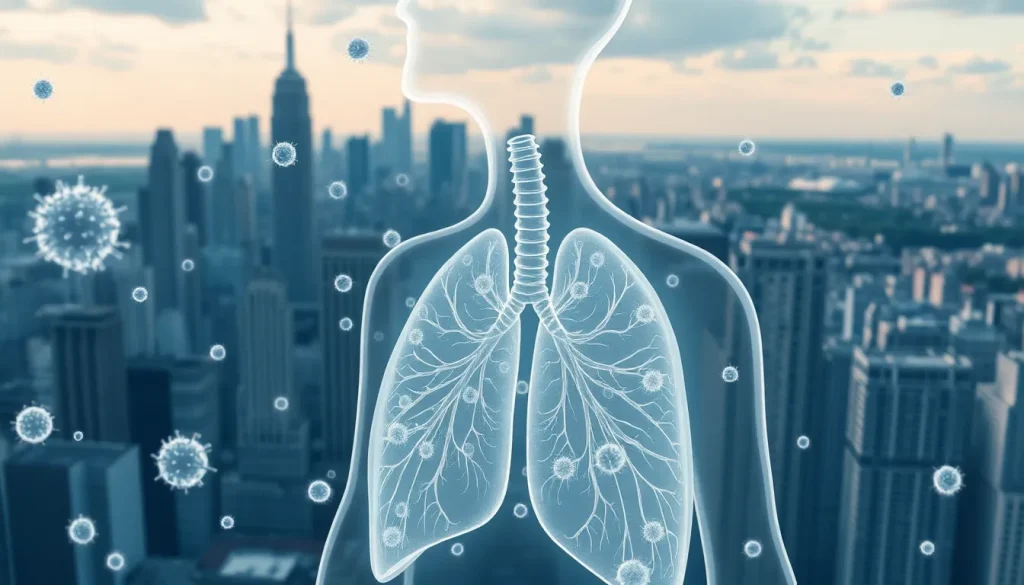
- Biological mechanisms: PM2.5 can penetrate deep into the lungs and enter the bloodstream, causing systemic inflammation, oxidative stress, and autonomic nervous system imbalance. This can lead to atherosclerosis, thrombosis, and respiratory tissue damage. Ultrafine particles may even translocate to the brain, potentially contributing to neurodegenerative diseases.
- No safe level: Even at concentrations below current regulatory standards, adverse health effects are observed. The WHO’s 2021 guidelines lowered the recommended annual average from 10 µg/m³ to 5 µg/m³, reflecting evidence of harm at very low levels. Studies in Canada and the United States, where PM2.5 levels are relatively low, still find significant associations with mortality.
What the findings do not prove
While the evidence strongly supports a causal relationship between PM2.5 and adverse health outcomes, individual studies cannot prove that a specific person’s illness was caused solely by air pollution. The findings are based on population-level risks and statistical associations. Moreover, the exact biological mechanisms are still being elucidated, and the relative toxicity of different PM2.5 components (e.g., sulfates, nitrates, black carbon, organic matter) remains an area of active research. The studies do not establish a precise safe level below which no health effects occur; rather, they indicate that risk increases with exposure even at low concentrations. Additionally, most research has focused on outdoor (ambient) PM2.5, and the health effects of indoor-generated PM2.5 from cooking, heating, and other sources are less well characterized.
Limitations
Epidemiological studies on PM2.5 face several limitations. Exposure assessment often relies on ambient monitoring data that may not accurately reflect personal exposure, leading to potential misclassification. People spend most of their time indoors, where PM2.5 levels can differ from outdoor levels. Confounding by other pollutants (e.g., ozone, nitrogen dioxide) and socioeconomic factors can be difficult to fully adjust for, as these often correlate with PM2.5. Most large cohort studies have been conducted in high-income countries, limiting generalizability to low- and middle-income settings where PM2.5 composition, population characteristics, and baseline health status differ. Additionally, the health effects of ultrafine particles (smaller than PM0.1) are less well understood due to measurement challenges. The shape of the exposure-response curve at very low concentrations is still uncertain, and the potential for thresholds remains debated. Finally, most studies estimate associations for the general population, but individual susceptibility varies widely due to genetic and lifestyle factors.
How it compares with previous research
Earlier research in the mid-20th century focused on total suspended particulates (TSP) and PM10. The shift to studying PM2.5 in the 1990s, driven by studies like the Harvard Six Cities Study, revealed that smaller particles are more harmful because they penetrate deeper into the lungs. Subsequent research has consistently strengthened the evidence, leading to progressively lower air quality guideline values. The WHO’s 2005 guidelines set an annual PM2.5 limit of 10 µg/m³; the 2021 update halved that to 5 µg/m³, reflecting new data on health effects at low concentrations. This evolution underscores the growing understanding that no level of PM2.5 is entirely safe. Compared to earlier work, modern studies benefit from larger sample sizes, better exposure assessment (including satellite data), and more sophisticated statistical methods to control for confounders. The consistency of findings across diverse populations and study designs has solidified the causal link between PM2.5 and mortality.
Why it matters
PM2.5 pollution is a leading environmental health risk, responsible for a substantial global disease burden. Understanding its impacts is critical for policymakers to set effective air quality standards, for industries to adopt cleaner technologies, and for individuals to take protective measures. Reducing PM2.5 levels can yield significant public health benefits, including lower rates of heart disease, stroke, lung cancer, and respiratory illnesses. The research also highlights environmental justice issues, as low-income communities and developing countries often bear the highest exposure. Furthermore, the economic costs of PM2.5-related health care and lost productivity are enormous, making air pollution control a sound investment. The findings have spurred international efforts like the UN Sustainable Development Goals and national clean air programs.
Link to the primary paper
For a comprehensive overview, see the World Health Organization’s WHO global air quality guidelines: particulate matter (PM2.5 and PM10), ozone, nitrogen dioxide, sulfur dioxide and carbon monoxide (2021). Available at: https://www.who.int/publications/i/item/9789240034228. Key epidemiological studies include the Harvard Six Cities Study (Dockery et al., 1993, New England Journal of Medicine) and the American Cancer Society study (Pope et al., 2002, JAMA). The Global Burden of Disease Study provides ongoing estimates of PM2.5-attributable mortality.
FAQ
What is PM2.5 and why is it dangerous?
PM2.5 refers to fine particulate matter with a diameter of 2.5 micrometers or less. These particles are dangerous because they are small enough to bypass the body's natural defenses in the nose and throat, penetrating deep into the lungs and even entering the bloodstream. Once there, they can cause inflammation, oxidative stress, and damage to tissues, leading to respiratory and cardiovascular diseases.
What are the main sources of PM2.5?
PM2.5 comes from both natural and human-made sources. Major anthropogenic sources include combustion of fossil fuels in vehicles and power plants, industrial processes, residential heating and cooking, and agricultural activities. Natural sources include wildfires, dust storms, and volcanic eruptions. In urban areas, traffic and industrial emissions are dominant, while in rural areas, biomass burning and agricultural dust can be significant.
How can I protect myself from PM2.5 pollution?
To reduce exposure, monitor local air quality indexes and limit outdoor activities when PM2.5 levels are high. Use high-efficiency particulate air (HEPA) filters indoors, keep windows closed during pollution episodes, and consider wearing N95 masks if you must be outside in heavily polluted areas. Long-term solutions include supporting policies that reduce emissions and transitioning to cleaner energy sources.
References
- World Health Organization. (2021). WHO global air quality guidelines: particulate matter (PM2.5 and PM10), ozone, nitrogen dioxide, sulfur dioxide and carbon monoxide. Geneva: WHO.
- Dockery, D. W., et al. (1993). An association between air pollution and mortality in six U.S. cities. New England Journal of Medicine, 329(24), 1753-1759.
- Pope, C. A., et al. (2002). Lung cancer, cardiopulmonary mortality, and long-term exposure to fine particulate air pollution. JAMA, 287(9), 1132-1141.
- Cohen, A. J., et al. (2017). Estimates and 25-year trends of the global burden of disease attributable to ambient air pollution: an analysis of data from the Global Burden of Diseases Study 2015. The Lancet, 389(10082), 1907-1918.
- U.S. Environmental Protection Agency. (2019). Integrated Science Assessment for Particulate Matter. EPA/600/R-19/188.