In brief
At a glance
Quick Facts
- Global material extraction since 1970
- More than tripled, reaching over 100 billion tonnes annually.
- Plastic recycling rate
- Only about 9% of all plastic ever produced has been recycled.
- Aluminum recycling energy savings
- Recycling aluminum saves up to 95% of the energy needed for primary production.
- Steel recycling rate
- Steel is the most recycled material globally, with an overall recycling rate of over 60%.
- Paper recycling limits
- Paper fibers can be recycled 5-7 times before they become too short and weak.
- Recycled content in plastics
- Recycled plastics account for less than 10% of the global plastics market.
- Contamination impact
- Contamination rates in recycling streams can exceed 25%, leading to rejected loads.
- Economic viability
- Recycling markets are volatile; when oil prices are low, virgin plastic is cheaper than recycled.
Key Takeaways
- Recycling is an essential component of sustainable resource management, but it cannot single-handedly satisfy the world’s rising material demand.
- Material demand continues to grow due to population increase, economic development, and consumerism, outpacing the capacity of recycling systems.
- Recycling faces inherent limitations such as material quality degradation, collection and sorting challenges, and economic viability issues.
- Achieving a sustainable balance requires a broader shift toward circular economy models, including waste reduction, product redesign, and reuse.
What Is Can Recycling Keep Up With Growing Material Demand?
The question “Can recycling keep up with growing material demand?” addresses whether the process of converting waste materials into new products can match the escalating global consumption of resources. It is a central inquiry in environmental science, resource economics, and sustainability studies, reflecting concerns about the depletion of natural resources, energy use, and waste management. The core of the question lies in evaluating the capacity of recycling systems to supply a significant portion of the materials needed by modern economies, given the continuous rise in demand for metals, plastics, paper, glass, and other materials.
This topic is not merely about the technical feasibility of recycling but also encompasses economic, logistical, and behavioral dimensions. Recycling rates vary widely by material and region, and even the most efficient recycling processes cannot recover all materials from the waste stream. Moreover, the demand for materials is not static; it grows with population, urbanization, and consumption patterns. Thus, the question probes the limits of recycling as a strategy and underscores the need for complementary approaches such as reducing material use, designing for longevity, and shifting to a circular economy.
Overview
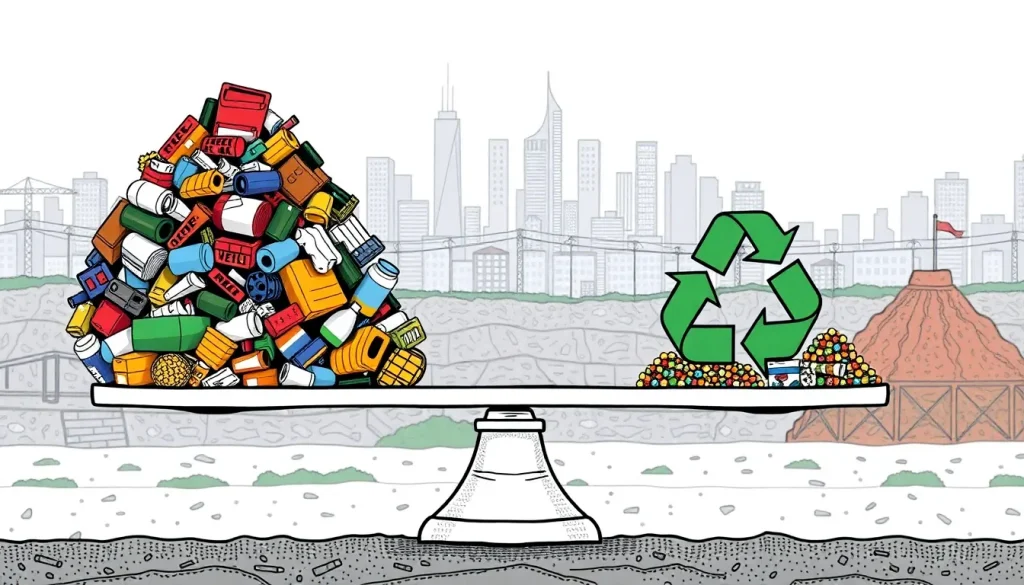
Recycling is the process of collecting, processing, and remanufacturing discarded materials into new products. It is a key strategy for reducing the environmental impact of material consumption, including lowering greenhouse gas emissions, conserving energy, and minimizing landfill use. However, the global material footprint—the total amount of raw materials extracted to meet consumption—has been steadily increasing. According to the United Nations International Resource Panel, global material extraction has more than tripled since 1970 and continues to rise. Recycling, while growing in absolute terms, has not kept pace with this expansion. For many materials, recycling rates remain far below 100%, and secondary (recycled) materials still account for a minority of total supply. For example, only about 9% of all plastic ever produced has been recycled, and even for metals with higher recycling rates, such as aluminum, recycled content meets only a portion of demand. The gap between recycling output and material demand highlights the need to examine the underlying dynamics.
How It Works
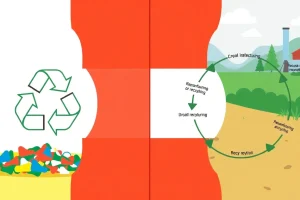
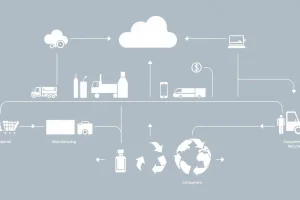
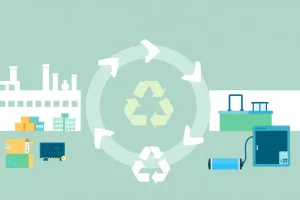
Recycling systems typically involve several stages: collection, sorting, processing, and remanufacturing. Collection methods vary from curbside pickup to deposit-return schemes and drop-off centers. Once collected, materials are sorted—often using a combination of manual labor and automated technologies like magnets, eddy currents, and optical sorters—to separate different types of plastics, metals, paper, and glass. The sorted materials are then cleaned and processed into raw forms, such as bales of crushed aluminum cans, shredded plastic flakes, or pulped paper. These secondary raw materials are sold to manufacturers who use them to produce new goods, sometimes blended with virgin materials to maintain quality.
However, the efficiency of this system is limited by several factors. Contamination from food residue, mixed materials, or non-recyclable items can render batches unusable. Many products are designed without considering end-of-life recyclability, combining multiple materials that are difficult to separate. Additionally, the economic viability of recycling depends on market prices for secondary materials, which can fluctuate and sometimes make recycling more expensive than landfilling or incineration. These operational realities mean that even in well-established recycling programs, a significant fraction of potentially recyclable material is lost or downcycled into lower-quality products.
What the Evidence Shows
Empirical data indicates that recycling alone is insufficient to meet material demand. For instance, the global demand for paper and paperboard has grown, but recycling rates for paper have plateaued in many developed countries at around 60-70%, partly because fibers degrade after multiple cycles and cannot be recycled indefinitely. In the case of plastics, the vast majority of demand is still met by virgin fossil-fuel-based production; recycled plastics account for less than 10% of the market. Metals like steel and aluminum have higher recycling rates—steel is the most recycled material globally—but even here, the sheer volume of new demand, particularly from construction and infrastructure in developing economies, outpaces the supply of scrap. The International Energy Agency notes that to meet climate goals, recycling rates for key metals would need to increase dramatically, yet collection and processing capacities are not expanding fast enough.
Studies also show that recycling’s potential is bounded by the laws of thermodynamics and material science. Each recycling loop can involve material losses and quality degradation, meaning that a 100% closed-loop system is physically impossible for most materials. Furthermore, the energy and environmental benefits of recycling, while significant, are not absolute; they depend on the material and the efficiency of the recycling process compared to virgin production. For example, recycling aluminum saves up to 95% of the energy required for primary production, but for some plastics, the savings are much lower. These findings underscore that recycling is a critical but partial solution.
Importance and Impact
The question of whether recycling can keep up with demand is important because it shapes environmental policy, industrial strategy, and consumer behavior. If recycling is perceived as a panacea, it may lead to complacency about overconsumption and waste generation. Conversely, recognizing its limits can drive innovation in product design, materials science, and business models. The environmental impact of failing to close the material loop is substantial: increased mining, deforestation, and fossil fuel extraction contribute to habitat destruction, pollution, and climate change. Recycling reduces these pressures but cannot eliminate them if demand continues to grow unchecked.
Economically, the recycling industry provides jobs and reduces dependence on imported raw materials, enhancing resource security. However, when recycling systems are overwhelmed or unprofitable, the burden often shifts to municipalities and taxpayers, or waste is exported to countries with less stringent environmental regulations. The social dimension includes public confusion about what is recyclable and the ethical implications of waste colonialism. Thus, the balance between recycling capacity and material demand has far-reaching consequences for sustainability.
Benefits, Limitations and Trade-offs
Recycling offers clear benefits: it conserves natural resources, reduces energy consumption and greenhouse gas emissions, and decreases the volume of waste sent to landfills or incinerators. It also supports a circular economy by keeping materials in use longer. However, these benefits are accompanied by limitations. Recycling processes themselves consume energy and water and can produce pollutants. The collection and transportation of recyclables generate emissions. Moreover, not all materials are equally recyclable; some, like certain plastics, have low recycling rates and high processing costs.
Trade-offs exist between recycling and other waste management options. For example, incineration with energy recovery can be more practical for contaminated or low-value waste, but it destroys materials and produces emissions. Landfilling is often cheaper but wastes resources and can cause long-term environmental harm. The decision to invest in recycling infrastructure must be weighed against investments in reduction and reuse programs, which can yield higher environmental benefits by avoiding waste altogether. Ultimately, recycling is a necessary but insufficient strategy; it must be part of a hierarchy that prioritizes waste prevention and reuse.
Solutions
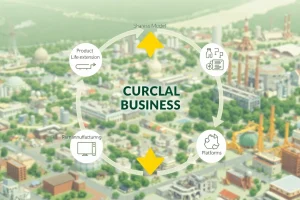
Addressing the gap between recycling and material demand requires a multi-pronged approach. First, improving recycling systems through better collection, advanced sorting technologies, and standardized labeling can increase recovery rates. Extended producer responsibility (EPR) policies, where manufacturers are accountable for the end-of-life management of their products, can incentivize design for recyclability. Second, reducing material demand is essential. This can be achieved through dematerialization (using less material per unit of service), product life extension, and shifting consumption patterns toward services rather than goods. Third, developing new materials and business models that facilitate reuse, repair, and remanufacturing can create closed-loop systems where materials circulate without degradation.
On a systemic level, transitioning to a circular economy involves rethinking production and consumption. Governments can set targets for recycled content, ban single-use items, and invest in recycling infrastructure. Businesses can adopt circular design principles and offer product-as-a-service models. Consumers can reduce waste, choose products with recycled content, and participate in recycling programs correctly. International cooperation is also needed to harmonize standards and prevent the export of waste to countries lacking proper facilities. While no single solution will close the gap, a combination of these strategies can significantly narrow it.
FAQ
Can recycling alone meet global material demand?
No, recycling alone cannot meet global material demand because of physical limits like material degradation, collection inefficiencies, and the continuous growth in consumption. A broader circular economy approach is needed.
What materials have the highest recycling rates?
Steel and aluminum have some of the highest recycling rates, with steel over 60% and aluminum cans around 50-70% in many regions. However, even these rates are insufficient to meet all demand.
Why is plastic recycling so low?
Plastic recycling is low due to the diversity of plastic types, contamination, low economic incentives, and the fact that many plastics are designed for single use and are difficult to collect and process.
References
- United Nations International Resource Panel, Global Resources Outlook reports.
- International Energy Agency, The Role of Critical Minerals in Clean Energy Transitions.
- Ellen MacArthur Foundation, The New Plastics Economy: Rethinking the future of plastics.