In brief
At a glance
Quick Facts
- Definition
- The chemical cocktail effect is the combined impact of multiple chemicals that can differ from the effects of each substance alone.
- Key interaction types
- Additive, synergistic, and antagonistic effects.
- Regulatory gap
- Most safety assessments test chemicals individually, not as mixtures.
- Real-world exposure
- Humans are exposed to complex mixtures daily through food, water, air, and consumer products.
- Endocrine disruption
- Many chemicals in mixtures can disrupt hormone systems even at low doses.
- Additivity principle
- Chemicals with similar modes of action can produce a combined effect equal to the sum of individual effects.
- Precautionary approach
- Some advocate for stricter regulation of chemical mixtures to protect public health.
- Cumulative risk assessment
- An approach that evaluates the combined risk from multiple chemicals.
Key Takeaways
- The chemical cocktail effect refers to the combined impact of multiple chemicals, which can be additive, synergistic, or antagonistic, often differing from the effects of individual substances.
- Current chemical safety assessments typically evaluate substances in isolation, overlooking the real-world reality of simultaneous exposure to complex mixtures.
- Even low doses of individual chemicals, when combined, can produce significant biological effects, challenging traditional toxicology thresholds.
- Understanding the cocktail effect is critical for improving public health protection, environmental regulation, and the development of safer products.
What Is the Chemical Cocktail Effect?
The chemical cocktail effect is the phenomenon whereby exposure to a mixture of multiple chemicals results in a biological or ecological impact that is different from the effect of each chemical alone. In everyday life, humans and wildlife are not exposed to single substances in isolation; rather, they encounter complex combinations through food, water, air, consumer products, and occupational settings. The cocktail effect recognizes that these combined exposures can interact, leading to additive, synergistic (greater than additive), or antagonistic (less than additive) outcomes. This concept challenges the traditional toxicological approach of testing chemicals one at a time and assuming that their effects are independent.
The term is often used in the context of endocrine-disrupting chemicals (EDCs), pesticides, and food additives, where even low-level exposures to multiple compounds may collectively contribute to adverse health outcomes such as developmental disorders, reproductive issues, or cancer. The cocktail effect underscores the gap between regulatory safety assessments—which typically focus on individual substances—and the reality of simultaneous exposure to numerous chemicals in daily life. As a result, it has become a central topic in environmental health, risk assessment, and public policy discussions.
Overview
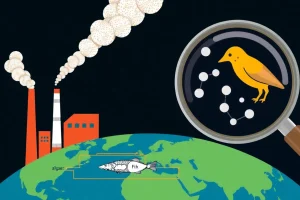
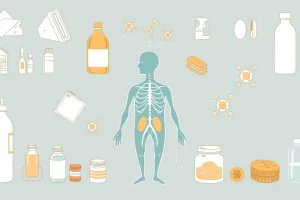
The chemical cocktail effect is rooted in the science of mixture toxicology, which studies how combined exposures to multiple chemicals can produce effects not predicted by single-substance data. In the real world, people are exposed to thousands of synthetic and naturally occurring chemicals simultaneously. These include pesticides residues in food, industrial chemicals in household products, pharmaceuticals in water, and air pollutants. The cocktail effect posits that even if each individual chemical is present at a level considered safe, the combination may still pose a risk due to interactions or cumulative impacts on the same biological pathways.
This concept gained prominence as scientific evidence accumulated showing that chemicals with similar modes of action can act together to produce a significant effect, even when each is below its no-observed-adverse-effect level (NOAEL). For example, multiple endocrine-disrupting chemicals that each weakly mimic estrogen can collectively trigger a strong hormonal response. The cocktail effect is not limited to toxicology; it also applies to ecological systems, where mixtures of pollutants can harm wildlife populations more severely than single contaminants.
How It Works
The mechanisms behind the chemical cocktail effect depend on how the individual substances interact within an organism. Three primary types of interactions are recognized:
- Additivity: When chemicals have similar modes of action, their combined effect equals the sum of their individual effects. This is often assumed for chemicals that act on the same biological target, such as organophosphate pesticides that inhibit acetylcholinesterase.
- Synergism: The combined effect is greater than the sum of individual effects. This can occur when one chemical enhances the absorption, bioavailability, or toxicity of another, or when they act on complementary pathways that amplify the overall impact.
- Antagonism: The combined effect is less than expected, because one chemical may interfere with the action or metabolism of another, reducing overall toxicity.
In practice, additivity and synergism are the most concerning for risk assessment. Even when each chemical is present at a low, seemingly harmless level, the cumulative dose on a common biological target can exceed a threshold of effect. This is particularly relevant for endocrine disruptors, where the “something from nothing” phenomenon suggests that mixtures can produce effects at doses where individual components show no observable effect.
What the Evidence Shows
Laboratory studies have provided robust evidence for the cocktail effect. In vitro experiments demonstrate that mixtures of estrogenic chemicals can act additively to activate estrogen receptors, even when each chemical is below its individual effect threshold. Animal studies have confirmed that developmental exposure to mixtures of anti-androgenic chemicals can cause reproductive malformations at cumulative doses where the individual substances alone would not. Epidemiological research has linked combined exposure to multiple pesticides or air pollutants with increased risks of neurodevelopmental disorders, asthma, and certain cancers, though establishing direct causation in human populations remains challenging due to the complexity of real-world exposures.
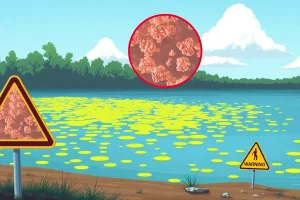
Environmental monitoring data also support the cocktail effect. For instance, aquatic ecosystems often contain complex mixtures of pharmaceuticals, personal care products, and industrial chemicals. Studies on fish and amphibians have shown that these mixtures can disrupt endocrine function and impair reproduction, even when each chemical is present at concentrations considered safe individually. The weight of evidence has led authoritative bodies, including the World Health Organization and the European Environment Agency, to acknowledge the importance of considering mixture effects in chemical risk assessment.
Importance and Impact
The chemical cocktail effect has profound implications for public health and environmental protection. If regulatory standards are based solely on single-chemical toxicity data, they may fail to protect against real-world exposures. This gap could lead to underestimation of risks from common sources such as food, drinking water, and indoor air. Vulnerable populations, including pregnant women, infants, and communities near industrial sites, may face heightened risks from cumulative exposures.
From a regulatory perspective, the cocktail effect challenges the current paradigm of chemical-by-chemical risk assessment. It has prompted calls for cumulative risk assessment frameworks that account for combined exposures to multiple chemicals with similar mechanisms of action. The economic impact is also significant: health costs from diseases potentially linked to chemical mixtures, such as certain cancers, metabolic disorders, and neurodevelopmental deficits, may be substantial. Addressing the cocktail effect could lead to stricter regulations, reformulation of products, and innovation in safer chemical design.
Common Misconceptions
One common misconception is that the cocktail effect only occurs when chemicals are present at high doses. In reality, mixture effects can occur at low, environmentally relevant levels, especially when chemicals act on the same biological pathway. Another misunderstanding is that all chemical mixtures are synergistic and therefore more dangerous. While synergism is possible, additive effects are more common and still pose significant risks because they can push the combined exposure over a threshold of harm. Some also believe that if individual chemicals are regulated and deemed safe, the mixture is automatically safe—a notion that ignores the fundamental principle of additivity.
Additionally, the cocktail effect is sometimes dismissed as a hypothetical concern without real-world evidence. However, numerous studies on human cell lines, animals, and epidemiological data provide consistent support. The precautionary principle suggests that waiting for definitive proof of harm in humans before acting may result in preventable health damage.
Data Limitations and Uncertainties
Despite growing evidence, significant data gaps and uncertainties remain. The sheer number of possible chemical combinations makes comprehensive testing infeasible. Most mixture studies focus on a small number of chemicals with known similar actions, but real-world exposures involve hundreds of substances with diverse mechanisms. Predicting interactions in such complex mixtures is extremely difficult. Furthermore, individual susceptibility varies due to genetics, age, and health status, adding another layer of complexity.
There is also a lack of standardized methods for assessing mixture toxicity, and regulatory frameworks are still evolving. Many chemicals in commerce have not been thoroughly tested for toxicity, let alone their mixture effects. This uncertainty can be exploited to delay regulatory action, but it also highlights the need for more research and the application of precautionary approaches to protect public health.
FAQ
What is the chemical cocktail effect?
The chemical cocktail effect is the phenomenon where exposure to a mixture of multiple chemicals results in a biological impact that differs from the effects of each chemical alone, often due to additive or synergistic interactions.
How does the chemical cocktail effect work?
It works through interactions such as additivity (combined effect equals the sum), synergism (greater than sum), or antagonism (less than sum). Even low doses of individual chemicals can collectively trigger significant effects if they act on the same biological pathway.
Why does the chemical cocktail effect matter?
It matters because current safety regulations usually test chemicals one at a time, potentially underestimating real-world risks. This can lead to inadequate protection of human health and the environment from everyday chemical mixtures.
References
- European Environment Agency, 'Late lessons from early warnings: the precautionary principle 1896–2000'
- U.S. Environmental Protection Agency, 'Cumulative Risk Assessment'
- World Health Organization, 'Assessment of combined exposures to multiple chemicals'
- National Research Council, 'Science and Decisions: Advancing Risk Assessment'
- Kortenkamp, A. et al., 'State of the Art Assessment of Endocrine Disrupters' (2011)