In brief
At a glance
Quick Facts
- Verdict
- Proven
- Problem addressed
- Traffic congestion from road expansion
- Evidence strength
- Strong
- Potential scale
- Global
- Relative cost
- High
- Time to impact
- Years
Quick verdict
Induced demand is a well-documented phenomenon in transportation economics: expanding road capacity often leads to increased traffic volumes, eroding or even eliminating the expected congestion relief. While the effect is not universal and its magnitude varies by context, the evidence strongly suggests that building wider roads alone is an ineffective long-term solution to traffic congestion. Planners and policymakers should consider integrated strategies that combine capacity management with demand-side interventions.
Problem addressed
Traffic congestion is a persistent problem in urban areas worldwide, causing economic losses, environmental damage, and reduced quality of life. The traditional response—adding more lanes or building new highways—often fails to deliver lasting congestion relief. Instead, it can lead to a counterintuitive outcome: the new road capacity attracts more vehicles, a phenomenon known as induced demand. This analysis examines why wider roads can increase traffic, the strength of the evidence, and what alternatives exist.
How the solution works
Induced demand operates through several mechanisms. First, latent demand: when a road is congested, some travelers avoid it by using alternative routes, traveling at different times, or choosing not to travel. When capacity is added, these suppressed trips are “released,” quickly filling the new space. Second, behavioral responses: over time, people may change their travel habits—shifting from public transit, carpooling, or off-peak travel to driving alone during peak hours. Third, land-use changes: improved accessibility can encourage development in outlying areas, leading to longer commutes and more vehicle trips. These effects can combine to increase total vehicle-miles traveled (VMT) by roughly the same proportion as the increase in road capacity, a relationship known as the “fundamental law of road congestion.”
Evidence strength
The evidence for induced demand is robust and comes from multiple lines of research. Early theoretical work by Downs (1962) proposed the “Law of Peak-Hour Expressway Congestion.” Empirical studies using US metropolitan data (Duranton and Turner, 2011) found that VMT increases in near-lockstep with lane-mile additions, with an elasticity close to 1.0. International studies, including those from Europe and Asia, show similar patterns, though elasticities vary. Meta-analyses and reviews (e.g., Litman, 2021) consistently find that induced travel is significant, particularly in congested urban areas. However, the effect is weaker in uncongested rural areas or where demand is already saturated. The evidence is considered strong by most transportation researchers, though debates continue about the precise magnitude and the effectiveness of road pricing as a countermeasure.
Potential scale
Induced demand is a global phenomenon, relevant wherever road capacity is expanded in the presence of latent travel demand. Its impact is most pronounced in growing metropolitan regions with high levels of car dependency. In such contexts, the additional traffic generated can fully offset the capacity increase within a few years, leading to no net improvement in travel times. The scale of the effect is limited in areas with stable or declining populations, or where road pricing and other demand management measures are in place. The potential for induced demand to undermine the benefits of road expansion means that its consideration is crucial for transportation planning at all levels, from local projects to national highway programs.
Cost considerations
Road widening and new highway construction are among the most expensive public infrastructure investments. When induced demand fills the new capacity, the expected benefits—reduced travel times, lower vehicle operating costs, and improved reliability—may not materialize, leading to a poor return on investment. For example, a highway expansion costing hundreds of millions of dollars may yield only temporary congestion relief, while also increasing maintenance costs and environmental externalities. In contrast, demand-side strategies like congestion pricing can generate revenue while managing traffic. The cost-effectiveness of road expansion is therefore highly questionable in congested urban areas, though it may be more justifiable in uncongested corridors or where it serves specific economic development goals.
Implementation time
Road capacity expansion projects typically take years to plan, design, and construct—often a decade or more for major highways. The induced demand effect, however, can appear relatively quickly. Studies show that traffic volumes can increase within the first year after a project opens, with the full effect materializing over 3–5 years. This means that any congestion relief is often short-lived. In contrast, demand management measures like congestion pricing or improved transit service can be implemented more rapidly and adjusted as needed, though they may face political hurdles.
Environmental benefits
Induced demand itself is not a solution but a problem to be mitigated. When road expansion induces additional vehicle travel, it leads to higher greenhouse gas emissions, increased air pollution, and greater energy consumption. Conversely, avoiding or mitigating induced demand can yield environmental benefits. For instance, if road capacity is not expanded and instead investments are directed toward public transit, walking, and cycling infrastructure, the resulting mode shift can reduce emissions. Some cities have seen reductions in traffic and pollution after removing highways (e.g., Seoul’s Cheonggyecheon restoration) or implementing congestion pricing (e.g., London, Stockholm). Quantifying these benefits depends on local conditions, but the direction of impact is clear: less driving leads to lower emissions.
Social and economic co-benefits
Addressing induced demand by shifting away from car-centric planning can produce numerous co-benefits. Improved public transit and active transportation infrastructure enhance mobility for non-drivers, reduce household transportation costs, and improve public health through increased physical activity. Reduced traffic volumes can lead to fewer accidents, less noise, and more livable urban spaces. Economic benefits include increased property values in walkable neighborhoods and reduced infrastructure maintenance costs. However, these benefits are contingent on the availability of viable alternatives to driving and may not be evenly distributed across all communities.
Risks and unintended consequences
Ignoring induced demand and continuing to expand roadways can lock in car dependency, exacerbate urban sprawl, and increase greenhouse gas emissions. However, simply halting road construction without providing alternatives can also have negative consequences, such as worsening congestion in the short term and limiting mobility for those who rely on cars. There is also a risk that policies aimed at reducing driving (e.g., road pricing) may disproportionately affect lower-income households if not designed with equity measures. Additionally, the concept of induced demand is sometimes used as a blanket argument against any road investment, which can be counterproductive in areas where capacity improvements are genuinely needed for safety or access.
Where it works best
The concept of induced demand is most applicable in congested urban areas with high latent travel demand and limited alternative transportation options. In such contexts, adding road capacity is likely to induce significant additional traffic. The phenomenon is also relevant in rapidly growing metropolitan regions where land-use changes can quickly respond to new infrastructure. Planners in these areas should be particularly cautious about relying on road expansion as a congestion relief strategy and should instead prioritize integrated solutions that manage demand and provide alternatives.
Where it may not work
Induced demand is less of a concern in areas with low or stable population growth, where latent demand is minimal. Rural highways, for example, may not experience significant induced traffic because the surrounding population is sparse and alternative routes are limited. Similarly, in regions with effective congestion pricing or where road capacity is expanded primarily for safety or freight movement rather than commuter traffic, the induced demand effect may be muted. However, even in these cases, some level of induced travel is possible, and planners should evaluate the specific context.
Comparison with alternatives
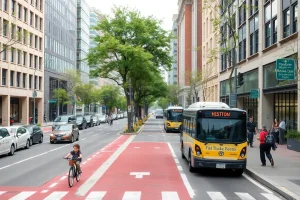
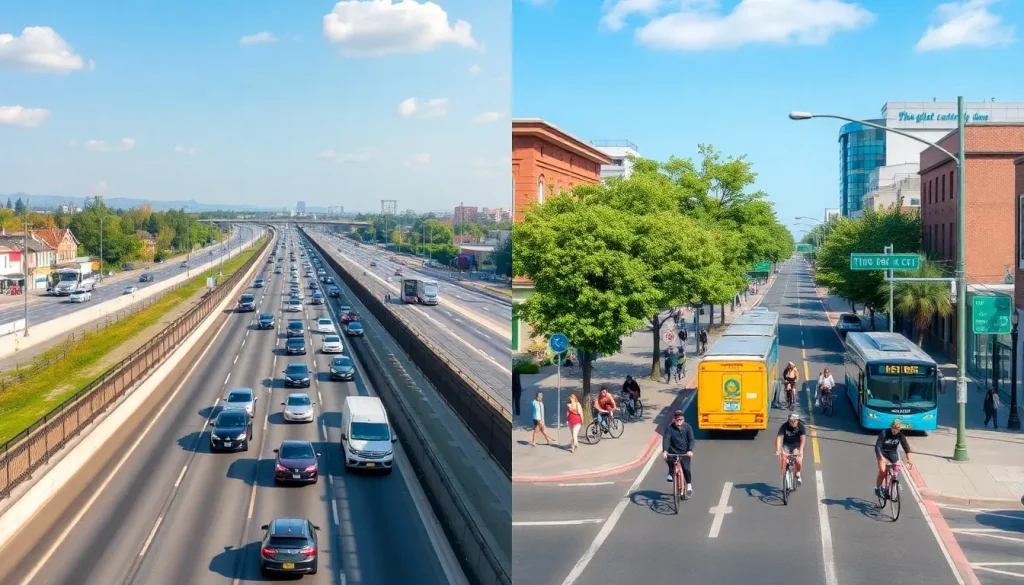
Alternatives to road widening include congestion pricing, improved public transit, and road diets. Congestion pricing (e.g., London, Singapore, Stockholm) directly manages demand by charging drivers during peak hours, leading to sustained reductions in traffic. Investments in high-quality public transit can provide viable alternatives to driving, though they may not reduce congestion if road space is not reallocated. Road diets—reducing the number of lanes and reallocating space to pedestrians, cyclists, or transit—can improve safety and livability without increasing congestion, as traffic may “evaporate” (Cairns et al., 2002). Each alternative has its own costs, political challenges, and suitability depending on local conditions. A combination of strategies is often most effective.
Case studies
Several real-world examples illustrate induced demand. The Katy Freeway in Houston, Texas, was widened in 2008 to 23 lanes, making it one of the widest highways in the world. Despite the massive expansion, travel times during peak hours increased within a few years, and congestion returned to pre-expansion levels. In London, the M25 orbital motorway was widened in the 1990s and 2000s, but traffic growth quickly absorbed the new capacity. Conversely, the removal of the Cheonggyecheon elevated highway in Seoul, South Korea, in 2003–2005, replaced a congested road with a restored stream and park. Traffic did not worsen as feared; instead, some traffic evaporated, and the area became a vibrant public space. These cases demonstrate both the reality of induced demand and the potential for alternative approaches.
Final assessment
The evidence for induced demand is strong and should be a central consideration in transportation planning. While road expansion may still be justified in specific circumstances—such as improving safety, supporting freight, or serving new development—it is not a reliable solution to urban traffic congestion. Policymakers should adopt a “fix-it-first” approach, maintaining existing infrastructure, and prioritize demand management and multimodal investments. For growing cities, the most effective strategy is to integrate land-use planning with transportation to reduce the need for driving. Induced demand is not an argument against all road building, but it is a powerful reminder that simply building our way out of congestion is a costly and often futile endeavor.
FAQ
What is induced demand?
Induced demand refers to the increase in traffic that occurs when road capacity is expanded. It happens because new capacity attracts drivers who previously avoided the road due to congestion, used alternative routes, or traveled at different times. Over the long term, it can also encourage more driving and development in outlying areas, leading to even more traffic.
Does widening roads always increase traffic?
Not always, but it is a common outcome in congested urban areas with high latent demand. In rural or uncongested areas, the effect may be minimal. The magnitude depends on factors like population growth, availability of alternatives, and land-use patterns. However, research shows that in many cases, the added capacity is filled within a few years, returning congestion to previous levels.
What are better alternatives to road widening?
Alternatives include congestion pricing, which charges drivers during peak hours; investing in public transit, cycling, and walking infrastructure; and implementing road diets that reallocate road space to other modes. These strategies can manage demand, reduce car dependency, and provide more sustainable congestion relief without inducing additional traffic.
References
- Downs, A. (1962). The Law of Peak-Hour Expressway Congestion.
- Duranton, G., & Turner, M. A. (2011). The Fundamental Law of Road Congestion: Evidence from US Cities.
- Cervero, R. (2003). Road Expansion, Urban Growth, and Induced Travel: A Path Analysis.
- Litman, T. (2021). Generated Traffic and Induced Travel: Implications for Transport Planning.
- Cairns, S., Atkins, S., & Goodwin, P. (2002). Disappearing traffic? The story so far.