In brief
At a glance
Quick Facts
- Global freshwater use by agriculture
- About 70% of all freshwater withdrawals
- Share of ice-free land used for agriculture
- Approximately 40%
- Greenhouse gas emissions from food systems
- Up to 30% of total anthropogenic emissions
- Food lost or wasted globally
- Roughly one-third of all food produced
- Planetary boundaries directly affected by food production
- At least four: climate change, biodiversity loss, land-system change, and nitrogen/phosphorus cycles
- Livestock's share of agricultural land
- About 77% of global agricultural land, while providing only 18% of calories
- Species extinction rate compared to background
- Tens to hundreds of times higher, largely driven by habitat loss for agriculture
- Reactive nitrogen in the environment
- Human activities have doubled the amount, mostly from fertilizer use
Key Takeaways
- Food production is the largest driver of environmental change, pushing multiple planetary boundaries beyond safe operating limits.
- Agriculture alone accounts for about 70% of global freshwater withdrawals and is a leading cause of greenhouse gas emissions, land-use change, and biodiversity loss.
- The global food system threatens climate stability, ecosystem integrity, and the natural cycles of nitrogen and phosphorus.
- Transforming food production and consumption patterns is critical to returning to a safe operating space for humanity.
What Is the Relationship Between Food Production and Planetary Boundaries?
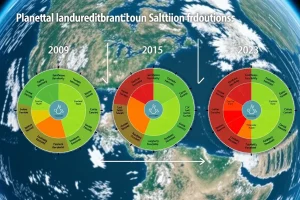
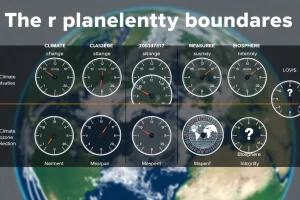
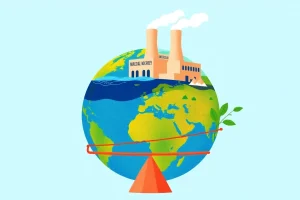
The relationship between food production and planetary boundaries refers to the ways in which the global food system drives environmental change that threatens the stability of Earth’s life-support systems. The planetary boundaries framework, introduced by scientists in 2009, identifies nine key Earth system processes that regulate the stability and resilience of the planet. These include climate change, biodiversity loss, land-system change, freshwater use, and disruption of biogeochemical cycles (nitrogen and phosphorus). Food production is a primary force pushing several of these boundaries beyond their safe operating limits, meaning that the way we grow, process, distribute, and consume food is a major determinant of whether humanity can continue to thrive on Earth.
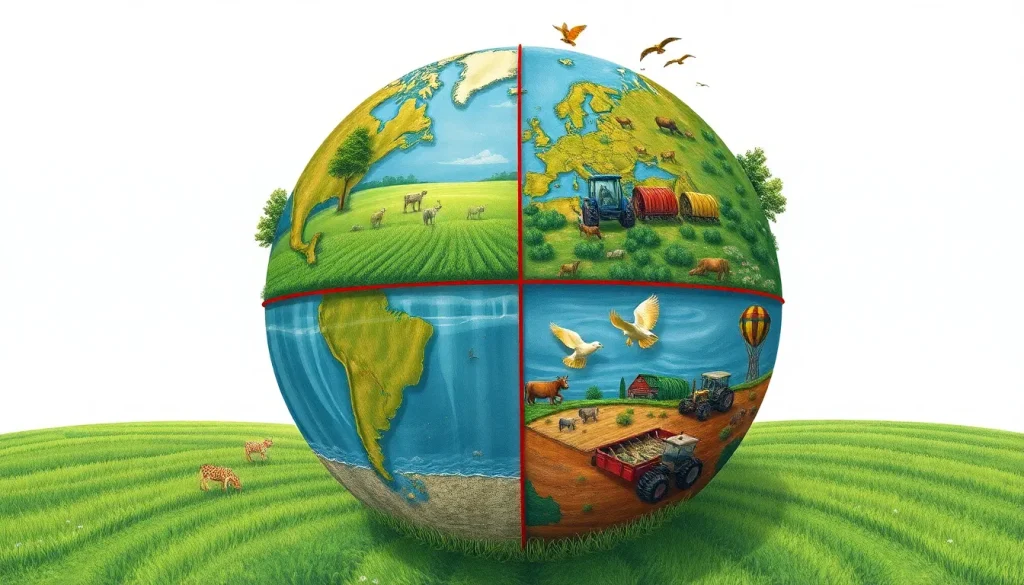
Agriculture and food systems are deeply intertwined with the planetary boundaries. For example, the conversion of forests and grasslands to cropland and pasture is the main driver of land-system change and biodiversity loss. The use of synthetic fertilizers and manure disrupts global nitrogen and phosphorus cycles, leading to pollution of waterways and coastal dead zones. Food production also accounts for a significant share of greenhouse gas emissions, contributing to climate change. Understanding this relationship is critical because it highlights that feeding a growing global population cannot be achieved without fundamentally rethinking how food is produced and consumed.
Overview
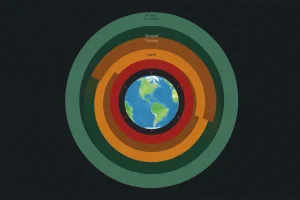
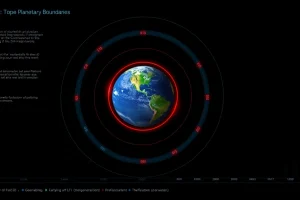
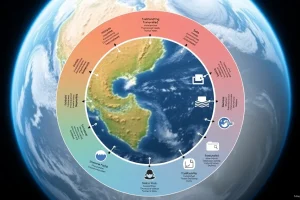
The planetary boundaries framework defines a safe operating space for humanity based on nine Earth system processes. Food production is a dominant pressure on at least four of these boundaries: climate change, biosphere integrity (biodiversity loss), land-system change, and biogeochemical flows (nitrogen and phosphorus). Agriculture occupies about 40% of the world’s ice-free land and is responsible for around 70% of global freshwater withdrawals. The expansion of cropland and pasture is the leading cause of deforestation and habitat destruction, which in turn drives species extinction. Meanwhile, the use of synthetic fertilizers has doubled the amount of reactive nitrogen in the environment, exceeding the planetary boundary by a wide margin. These impacts are not isolated; they interact and amplify each other, creating a complex web of environmental stress that threatens the stability of the entire Earth system.
Food production also indirectly affects other planetary boundaries. For instance, ocean acidification is driven by rising atmospheric carbon dioxide, to which agriculture contributes through fossil fuel use and land-use change. Chemical pollution from pesticides and herbicides, while not yet quantified as a global boundary, is closely linked to agricultural practices. The global food system is thus a central node in the network of human pressures on the planet, and addressing its impacts is essential for maintaining a safe operating space for humanity.
How It Works
Food production affects planetary boundaries through several interconnected mechanisms. First, the conversion of natural ecosystems to agricultural land releases stored carbon, reduces biodiversity, and alters water cycles. Second, the use of synthetic fertilizers and manure introduces excess nitrogen and phosphorus into the environment, leading to eutrophication of water bodies and disruption of terrestrial ecosystems. Third, agricultural practices such as livestock rearing and rice cultivation emit significant amounts of greenhouse gases, including methane and nitrous oxide. Fourth, irrigation for crops depletes freshwater resources, particularly in water-scarce regions. Finally, the global food system relies heavily on fossil fuels for machinery, transport, and the production of agrochemicals, further contributing to climate change.
These mechanisms are not independent; they often reinforce one another. For example, deforestation for agriculture not only releases carbon dioxide but also reduces the planet’s capacity to absorb future emissions. Similarly, excessive fertilizer use can lead to soil degradation, which in turn requires more land to be converted for food production. The cumulative effect of these processes is that food production has become the largest single driver of environmental change, surpassing even the energy sector in its impact on biodiversity and nutrient cycles.
Main Causes or Drivers
Several factors drive the impact of food production on planetary boundaries. Population growth increases overall demand for food, while rising incomes in many regions shift diets toward more resource-intensive foods such as meat and dairy. Livestock production is particularly impactful, as it requires large amounts of land, water, and feed, and generates significant greenhouse gas emissions. Agricultural intensification, including the heavy use of synthetic fertilizers and pesticides, has boosted yields but at the cost of soil health, water quality, and biodiversity. Food waste is another major driver: roughly one-third of all food produced is lost or wasted, squandering the resources used to produce it and contributing to unnecessary environmental pressure.
Global trade and dietary homogenization also play a role. The demand for a narrow range of staple crops (such as wheat, rice, maize, and soy) has led to monoculture farming systems that are highly dependent on external inputs and vulnerable to pests and climate shocks. These systems often replace diverse, locally adapted agricultural landscapes, reducing resilience and increasing the risk of crossing regional and global boundaries. Addressing these drivers requires changes not only in production methods but also in consumption patterns, supply chains, and policy frameworks.
Environmental and Human Impacts
The environmental impacts of food production are profound and far-reaching. Agriculture is the largest contributor to biodiversity loss, primarily through habitat destruction and fragmentation. The current rate of species extinction is estimated to be tens to hundreds of times higher than the natural background rate, with food production as a leading cause. Climate change, driven in part by agricultural emissions, exacerbates these pressures by altering habitats and increasing the frequency of extreme weather events. Freshwater systems are also under severe stress; many of the world’s major rivers and aquifers are being depleted faster than they can recharge, threatening water security for both ecosystems and human populations.
These environmental changes have direct and indirect consequences for human well-being. Food production itself is vulnerable to the very environmental degradation it causes: soil erosion, water scarcity, and climate change can reduce crop yields and increase food insecurity. The disruption of nitrogen and phosphorus cycles leads to water pollution that harms fisheries and contaminates drinking water. Biodiversity loss undermines ecosystem services such as pollination, pest control, and nutrient cycling, which are essential for agriculture. In the long term, the erosion of planetary boundaries threatens the stability of the global food supply and the health of human societies.
Solutions
Addressing the impact of food production on planetary boundaries requires a combination of technological, behavioral, and policy changes. Key solutions include shifting toward more plant-based diets, which reduce the environmental footprint of food by lowering demand for resource-intensive animal products. Reducing food loss and waste across the supply chain can also significantly decrease the pressure on land, water, and climate systems. On the production side, sustainable agricultural practices such as agroecology, conservation agriculture, and precision farming can improve resource efficiency, enhance soil health, and reduce pollution.
Other important measures include protecting and restoring natural ecosystems, improving water management, and closing nutrient loops through better manure management and recycling of organic waste. Policy instruments such as carbon pricing, subsidies for sustainable practices, and regulations on land use and pollution can help align food production with planetary boundaries. International cooperation is essential, as the global food system is interconnected and environmental impacts often cross national borders. Ultimately, a transformation of the entire food system—from production to consumption—is needed to bring human activities back within a safe operating space.
Benefits, Limitations and Trade-offs
Shifting food production toward sustainability offers multiple benefits. It can help restore biodiversity, mitigate climate change, improve water quality, and enhance food security. Healthier diets with less red and processed meat can reduce the burden of non-communicable diseases. More efficient use of resources can also increase the resilience of food systems to shocks such as droughts or pandemics. However, there are limitations and trade-offs. For example, some sustainable practices may initially reduce yields or require higher labor inputs. Transitioning to plant-based diets may face cultural and economic barriers. Reducing food waste requires changes in infrastructure and consumer behavior that can be difficult to implement.
There are also potential conflicts between different environmental goals. For instance, expanding bioenergy crops to reduce fossil fuel use could compete with food production for land and water, potentially worsening biodiversity loss. Similarly, intensifying agriculture to spare land for conservation can increase chemical inputs and water use. Careful planning and integrated approaches are needed to navigate these trade-offs and ensure that solutions do not inadvertently shift pressure from one planetary boundary to another.
Common Misconceptions
One common misconception is that food production only affects climate change through carbon dioxide emissions. In reality, agriculture is a major source of methane and nitrous oxide, which are far more potent greenhouse gases. Another misconception is that organic farming automatically solves all environmental problems; while it can reduce chemical inputs, it often requires more land to produce the same amount of food, which can increase pressure on land-system change and biodiversity. A third misconception is that technology alone can fix the problem without changes in diet or consumption. While innovations such as precision agriculture and alternative proteins can help, they are unlikely to be sufficient without broader systemic changes. Finally, some believe that food production’s impact on planetary boundaries is a distant, future concern, but the effects are already being felt through climate change, water scarcity, and biodiversity loss.
FAQ
What are planetary boundaries?
Planetary boundaries are nine key Earth system processes that scientists have identified as critical for maintaining a stable and resilient planet. They include climate change, biodiversity loss, land-system change, freshwater use, and disruption of nitrogen and phosphorus cycles, among others. Crossing these boundaries increases the risk of abrupt or irreversible environmental changes.
How does food production affect planetary boundaries?
Food production affects planetary boundaries primarily through land conversion, greenhouse gas emissions, freshwater consumption, and the release of excess nitrogen and phosphorus. Agriculture is the main driver of deforestation, biodiversity loss, and water pollution, and it contributes significantly to climate change.
Why does the impact of food production on planetary boundaries matter?
It matters because the stability of Earth's life-support systems is essential for human well-being and food security. Exceeding planetary boundaries can lead to climate instability, water scarcity, soil degradation, and loss of ecosystem services, which in turn threaten the ability to produce enough food for a growing population.
References
- Rockström, J., et al. (2009). A safe operating space for humanity. Nature, 461, 472–475.
- Steffen, W., et al. (2015). Planetary boundaries: Guiding human development on a changing planet. Science, 347(6223), 1259855.
- IPCC (Intergovernmental Panel on Climate Change). Special Report on Climate Change and Land (2019).