In brief
At a glance
Quick Facts
- Definition
- A voluntary monetary value assigned to greenhouse gas emissions by an organization to guide internal decisions.
- Common methods
- Shadow pricing, internal carbon fees, and implicit pricing.
- Typical price range
- Prices vary widely, from a few dollars to over $100 per metric ton of CO₂, depending on sector and ambition.
- First adopters
- Large multinational corporations in energy, technology, and finance sectors began adopting internal carbon pricing in the early 2010s.
- Key driver
- Anticipation of future government carbon regulations and desire to manage climate-related financial risks.
- Revenue use
- Funds from internal carbon fees are often reinvested in energy efficiency, renewable energy, or carbon offset projects.
- Global reach
- Over 2,000 companies worldwide disclose using or planning to use an internal carbon price, according to CDP data.
- Not a tax
- Money from internal carbon pricing stays within the organization; it is not paid to governments.
Key Takeaways
- An internal carbon price is a voluntary monetary value that organizations assign to their greenhouse gas emissions to inform decision-making and strategy.
- It functions as a shadow cost or internal fee, embedding the future price of carbon into capital planning, risk management, and operational budgets.
- Companies adopt internal carbon pricing to prepare for mandatory carbon regulations, drive low-carbon innovation, and demonstrate climate leadership.
- While it can improve resilience and efficiency, setting an effective internal carbon price requires careful design to avoid unintended consequences like competitive disadvantage or inaccurate valuation.
What Is an Internal Carbon Price?
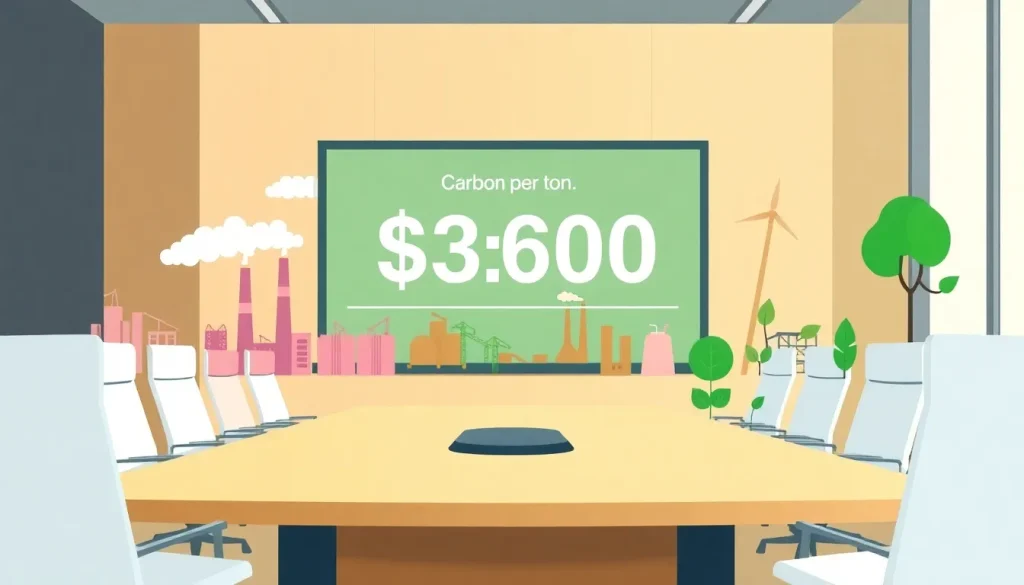
An internal carbon price is a self-imposed cost that a business, government agency, or other organization places on its own carbon dioxide (CO₂) and other greenhouse gas emissions. Unlike external carbon pricing—such as a carbon tax or emissions trading system imposed by a government—an internal carbon price is voluntarily adopted and used within the entity’s own planning and operations. It assigns a monetary value to each ton of emissions, which is then factored into financial analyses, project evaluations, and strategic decisions. The goal is to make the future cost of carbon visible today, encouraging investments that reduce emissions and avoid potential regulatory or market risks.
Internal carbon pricing is a tool for managing climate-related financial exposure. As governments worldwide implement policies to meet Paris Agreement targets, the cost of emitting carbon is expected to rise. By voluntarily adopting an internal price, organizations can anticipate these changes, identify cost-effective emission reduction opportunities, and align their business models with a low-carbon economy. The practice is most common among large multinational corporations, particularly in carbon-intensive sectors such as energy, manufacturing, and transportation, but it is increasingly adopted by financial institutions, technology firms, and even some public-sector entities.
How It Works
Organizations implement internal carbon pricing through several mechanisms, each tailored to their specific goals and operational context. The most common approaches are shadow pricing, internal carbon fees, and implicit pricing.
Shadow pricing involves applying a hypothetical cost of carbon to investment decisions, such as evaluating new projects, infrastructure, or product lines. For example, when assessing the viability of a new factory, a company might add a shadow price of $40 per ton of CO₂ to the projected operating costs. This makes high-emission projects appear less attractive and low-carbon alternatives more competitive, steering capital toward sustainable options without actually transferring money.
Internal carbon fees are actual charges levied on business units based on their emissions. The collected funds are often pooled into a central corporate fund and reinvested in energy efficiency, renewable energy, or carbon offset projects. This creates a tangible financial incentive for departments to reduce their carbon footprint, as the fee directly impacts their budgets. For instance, Microsoft’s internal carbon fee charges business units for their emissions, and the revenue supports the company’s carbon neutrality initiatives.
Implicit pricing is less formal and refers to the value a company places on carbon when setting emission reduction targets or adopting clean technologies without explicitly stating a price. This might involve calculating the cost per ton of CO₂ avoided through a specific project and using that benchmark to guide future decisions. Regardless of the method, the internal carbon price is typically integrated into capital expenditure reviews, risk management frameworks, and strategic planning processes.
Why It Matters
Internal carbon pricing matters because it transforms climate risk from an abstract externality into a concrete financial metric. By putting a price on carbon, organizations can better anticipate and mitigate the financial impacts of future climate policies, such as carbon taxes or cap-and-trade systems. This proactive approach reduces the risk of stranded assets—investments that lose value due to regulatory changes or market shifts—and helps maintain competitiveness in a decarbonizing global economy.
Beyond risk management, internal carbon pricing drives innovation and efficiency. It encourages the development and adoption of low-carbon technologies, processes, and products, often leading to cost savings through energy efficiency and waste reduction. It also signals to investors, customers, and regulators that the organization is serious about climate action, enhancing reputation and access to green financing. In many cases, internal carbon pricing serves as a stepping stone toward science-based emission reduction targets and net-zero commitments.
Examples
Numerous high-profile companies have adopted internal carbon pricing, each tailoring the approach to their industry and goals. Microsoft has used an internal carbon fee since 2012, charging business units for their emissions and using the revenue to fund sustainability projects. The company has gradually increased its fee to reflect evolving market conditions and its own carbon neutrality ambitions.
In the energy sector, Shell applies a shadow carbon price of around $40 per ton of CO₂ to all new project evaluations, ensuring that investments remain viable under future climate policies. Similarly, BP uses an internal carbon price to test the resilience of its portfolio against different carbon pricing scenarios. Financial institutions like JPMorgan Chase and Bank of America incorporate internal carbon pricing into their lending and investment decisions to assess climate-related risks in their portfolios. Even non-corporate entities, such as the United Nations, have adopted internal carbon pricing to manage their operational emissions.
Benefits, Limitations and Trade-offs
The primary benefit of an internal carbon price is that it embeds climate considerations into financial decision-making, making emission reduction a core business priority rather than a peripheral concern. It can uncover cost-effective emission reduction opportunities, drive innovation, and improve long-term strategic planning. Additionally, it prepares organizations for future regulatory requirements, reducing the risk of sudden cost increases or compliance challenges.
However, internal carbon pricing also has limitations. Setting the price too low may fail to drive meaningful change, while setting it too high could disadvantage the organization against competitors not using such pricing. There is also a risk of double counting if the internal price is not carefully integrated with existing external carbon costs. Furthermore, the effectiveness of an internal carbon price depends on strong governance and consistent application across all business units; without buy-in from leadership and clear accountability, it may become a symbolic gesture rather than a transformative tool.
Common Misconceptions
Misconception 1: Internal carbon pricing is the same as paying a carbon tax. Unlike a government-imposed carbon tax, an internal carbon price is voluntary and the money does not leave the organization. It is a management tool, not a regulatory obligation.
Misconception 2: Only large corporations can implement internal carbon pricing. While large companies have been early adopters, small and medium-sized enterprises can also use simplified shadow pricing or implicit pricing to guide decisions. The key is to match the approach to the organization’s scale and capacity.
Misconception 3: Internal carbon pricing automatically reduces emissions. The price itself does not reduce emissions; it influences decisions that lead to emission reductions. Without follow-through on low-carbon investments and operational changes, the price alone is ineffective.
What Businesses and Governments Can Do
Businesses can start by assessing their exposure to carbon-related risks and opportunities. They should determine the appropriate level and type of internal carbon price—whether shadow price, internal fee, or implicit—based on their industry, geographic footprint, and strategic goals. Engaging leadership and integrating the price into existing financial processes, such as capital expenditure reviews and budgeting, is critical for success. Companies can also collaborate through initiatives like the Carbon Pricing Leadership Coalition to share best practices and harmonize approaches.
Governments can encourage internal carbon pricing by providing clear policy signals, such as setting long-term carbon reduction targets or implementing carbon pricing mechanisms that give businesses a reference point. They can also offer incentives, such as tax breaks or streamlined permitting, for companies that adopt internal carbon pricing. Public-sector organizations can lead by example, applying internal carbon prices to their own procurement and project evaluation processes.
FAQ
What is an internal carbon price?
An internal carbon price is a voluntary monetary value that an organization places on its greenhouse gas emissions to inform investment decisions, manage risk, and prepare for future climate regulations.
How does an internal carbon price work?
It works by applying a cost per ton of CO₂ to business activities, either as a shadow price in financial analyses, an internal fee charged to departments, or an implicit benchmark. This cost influences project selection, budgeting, and strategic planning.
Why does an internal carbon price matter?
It matters because it helps organizations anticipate and mitigate climate-related financial risks, drives low-carbon innovation, and aligns business strategies with global climate goals, ultimately supporting the transition to a net-zero economy.
References
- CDP (Carbon Disclosure Project) – Annual reports on corporate carbon pricing adoption and trends.
- World Bank – State and Trends of Carbon Pricing report series.
- Carbon Pricing Leadership Coalition (CPLC) – Executive guides and case studies on internal carbon pricing.