In brief
At a glance
Quick Facts
- Core components
- Produced capital, human capital, and natural capital.
- Primary purpose
- To measure whether a country’s development is sustainable over the long term.
- Key difference from GDP
- GDP measures annual output; inclusive wealth measures the stock of assets that generate well-being.
- First major report
- The Inclusive Wealth Report 2012, published by UNEP and UNU-IHDP.
- Largest capital component
- Human capital typically accounts for the largest share of inclusive wealth in most countries.
- Sustainability criterion
- Non-declining inclusive wealth per capita indicates sustainable development.
- Number of countries assessed
- Over 140 countries in the most recent Inclusive Wealth Report.
- Valuation challenge
- Natural capital and human capital are difficult to value in monetary terms, leading to methodological debates.
Key Takeaways
- Inclusive wealth is the sum of produced, human, and natural capital, measuring a nation’s total asset base rather than just annual income.
- It provides a more comprehensive indicator of sustainability than GDP by accounting for the depletion or enhancement of all forms of capital.
- The concept was formalized through the United Nations Inclusive Wealth Reports, which track changes in capital stocks over time.
- Human capital—education, health, skills—often constitutes the largest share of inclusive wealth in most countries.
- Many nations show GDP growth while their inclusive wealth per capita declines, signaling unsustainable development.
What Is Inclusive Wealth?
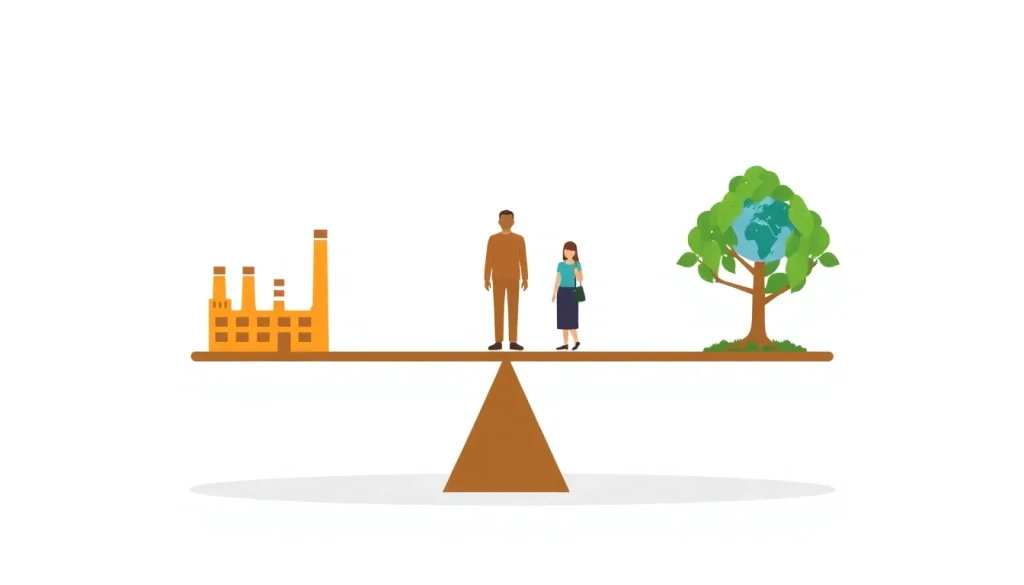
Inclusive wealth is a macroeconomic framework that measures a country’s total stock of assets—produced capital, human capital, and natural capital—to evaluate whether current economic activity is sustainable over the long term. Unlike gross domestic product (GDP), which captures the flow of goods and services produced in a single year, inclusive wealth looks at the underlying capital base that generates well-being for present and future generations. The central idea is that a society is on a sustainable path only if its inclusive wealth per capita does not decline over time.
The concept was developed by economists seeking to move beyond GDP as the primary yardstick of progress. It draws on the capital approach to sustainability, which holds that well-being depends on the availability of a broad portfolio of assets. Inclusive wealth accounting assigns monetary values to produced capital (machinery, buildings, infrastructure), human capital (education, health, skills), and natural capital (forests, fisheries, minerals, clean air, and ecosystem services). By tracking changes in these stocks, policymakers can assess whether a country is consuming its assets or investing in future prosperity.
Overview
Inclusive wealth is a stock-based measure that complements flow-based indicators like GDP. While GDP records the value of goods and services produced in a given period, inclusive wealth captures the total value of the assets that make production possible. The framework was popularized by the Inclusive Wealth Report (IWR), first published in 2012 by the United Nations Environment Programme (UNEP) and partner institutions. The IWR calculates inclusive wealth for over 140 countries, revealing that many nations with rising GDP have stagnant or declining inclusive wealth per capita—a sign that economic growth is being achieved by liquidating natural or human capital rather than building it.
The inclusive wealth approach is rooted in the economic theory of sustainability, which defines sustainable development as non-declining per capita wealth. By broadening the definition of wealth beyond physical and financial assets, inclusive wealth accounting provides a more holistic picture of a nation’s productive base. It also highlights trade-offs: for example, converting forests into farmland may boost GDP in the short term but deplete natural capital, potentially reducing inclusive wealth if the loss outweighs gains in produced capital.
History
The intellectual foundations of inclusive wealth trace back to the work of economists like John Hicks, who in the 1940s argued that income should be defined as the maximum amount a person can consume without reducing their wealth. This idea was later extended to national accounting by scholars such as Partha Dasgupta, Karl-Göran Mäler, and Kenneth Arrow, who emphasized that true sustainability requires maintaining a broad portfolio of capital assets. The concept gained institutional traction with the World Bank’s “wealth accounting” efforts in the 1990s and the publication of “Where is the Wealth of Nations?” in 2006, which estimated total wealth for over 120 countries.
The formal Inclusive Wealth Index was launched in 2012 by UNEP and the UN University International Human Dimensions Programme (UNU-IHDP), with subsequent reports in 2014, 2018, and 2023. These reports refined methodologies for valuing natural and human capital, expanded country coverage, and introduced projections of future wealth under different scenarios. The index has been used to inform the Sustainable Development Goals (SDGs) and to encourage governments to adopt broader measures of progress beyond GDP.
How It Works
Inclusive wealth is calculated by summing the monetary values of three core capital stocks: produced, human, and natural. Each is measured using specific methodologies:
- Produced capital: Includes physical assets such as machinery, equipment, infrastructure, and urban land. It is typically estimated using the perpetual inventory method based on investment data and depreciation rates.
- Human capital: Valued based on the lifetime earnings potential of the population, adjusted for education, experience, and health. It often uses a Jorgenson-Fraumeni approach, which calculates the present value of expected future labor income.
- Natural capital: Covers renewable resources (forests, fisheries, agricultural land) and non-renewable resources (fossil fuels, minerals), as well as ecosystem services. Valuation relies on market prices where available, or on shadow prices derived from models of resource rents and environmental damage.
Once these stocks are estimated, inclusive wealth per capita is computed. A positive change over time indicates that the country is building its productive base; a negative change suggests unsustainability. The framework can also incorporate adjustments for carbon damages, oil capital gains, and total factor productivity to refine the sustainability signal.
Why It Matters
Inclusive wealth matters because it directly addresses the question of whether current prosperity is being achieved at the expense of future generations. GDP growth can be misleading: a country may appear to be thriving while depleting its natural resources, underinvesting in education, or allowing infrastructure to decay. By making these trade-offs visible, inclusive wealth provides a more honest scorecard of national progress. It also helps governments identify which forms of capital need investment and which are being overexploited.
Moreover, inclusive wealth aligns with the global commitment to sustainable development. The United Nations’ 2030 Agenda and the SDGs call for balancing economic, social, and environmental objectives. Inclusive wealth offers a quantitative tool to monitor whether countries are moving toward or away from that balance. It can guide policy in areas such as resource management, education funding, and green infrastructure, ensuring that development strategies build long-term resilience rather than short-term gains.
Benefits
One key benefit of inclusive wealth accounting is its ability to reveal hidden costs and benefits. For instance, investments in education may not immediately boost GDP but significantly increase human capital, improving future productivity and well-being. Similarly, preserving wetlands provides flood protection and water purification services that are not captured in conventional economic accounts but are reflected in natural capital valuations. This broader perspective encourages policies that might otherwise be undervalued.
Another advantage is its usefulness for international comparisons and trend analysis. The Inclusive Wealth Index allows countries to benchmark their performance against peers and track progress over decades. It can also inform fiscal policy by highlighting whether resource revenues are being reinvested into other forms of capital—a principle known as the Hartwick Rule. By showing the composition of wealth, the framework helps governments design strategies for sustainable diversification, especially in resource-dependent economies.
Limitations and Trade-offs
Despite its strengths, inclusive wealth accounting faces significant challenges. Valuing natural and human capital is inherently difficult and often relies on assumptions and incomplete data. For example, placing a monetary value on biodiversity, ecosystem resilience, or social cohesion remains contentious and methodologically complex. Shadow prices can vary widely depending on the models used, leading to uncertainty in the final wealth estimates.
Additionally, the framework does not capture all dimensions of well-being, such as political freedom, inequality, or cultural heritage. Critics argue that reducing everything to monetary terms may oversimplify complex social and ecological systems. There is also a risk that inclusive wealth could be misused if policymakers focus only on the aggregate index while ignoring the distribution of wealth within a country or the irreversible loss of critical natural assets. Thus, inclusive wealth is best used as a complement to other indicators rather than a standalone measure.
Examples
The Inclusive Wealth Reports provide numerous country-level examples. For instance, many resource-rich nations show high GDP growth but declining inclusive wealth per capita because natural capital depletion outpaces investment in human or produced capital. In contrast, some countries with moderate GDP growth have increased their inclusive wealth by investing heavily in education and renewable energy infrastructure. These patterns highlight the divergence between income and sustainability.
Another example is the treatment of carbon emissions. The inclusive wealth framework can deduct the social cost of carbon from national wealth, penalizing countries that rely heavily on fossil fuels. This adjustment often shifts the sustainability assessment: a country with high GDP but large carbon footprints may see its inclusive wealth growth turn negative once climate damages are accounted for. Such insights are valuable for climate policy and green transition planning.
FAQ
What is inclusive wealth?
Inclusive wealth is a measure of a country’s total capital assets—produced, human, and natural—used to assess whether economic development is sustainable over the long term.
How does inclusive wealth differ from GDP?
GDP measures the annual flow of goods and services, while inclusive wealth measures the stock of assets that generate well-being. A country can have rising GDP but declining inclusive wealth if it depletes its natural or human capital.
Why does inclusive wealth matter?
It provides a more comprehensive indicator of national progress by revealing whether current prosperity is being achieved at the expense of future generations, helping guide policies toward sustainable development.
References
- UNEP (2023). Inclusive Wealth Report 2023: Measuring Sustainability and Well-being. United Nations Environment Programme.
- Arrow, K., Dasgupta, P., Goulder, L., et al. (2012). Sustainability and the measurement of wealth. Environment and Development Economics, 17(3), 317-353.
- World Bank (2006). Where is the Wealth of Nations? Measuring Capital for the 21st Century. Washington, DC: World Bank.