In brief
At a glance
Quick Facts
- Essential nutrient
- Phosphorus is essential for all life and cannot be substituted in agriculture.
- Finite reserves
- Global phosphate rock reserves are finite and concentrated in a few countries, such as Morocco.
- Wastewater content
- Wastewater can contain up to 20% of the phosphorus consumed by humans.
- Common product
- Struvite is a common recovered phosphorus product used as a slow-release fertilizer.
- Sludge reduction
- Phosphorus recovery can reduce sludge production by up to 30% in some treatment plants.
- First full-scale plant
- The first full-scale phosphorus recovery plant began operating in the early 2000s.
Key Takeaways
- Phosphorus is an essential nutrient for all life, but its natural reserves are finite and geographically concentrated.
- Wastewater contains significant amounts of phosphorus that can be recovered using various technologies, turning a pollutant into a resource.
- Recovering phosphorus from wastewater reduces the risk of eutrophication in water bodies and lessens dependence on mined phosphate rock.
- While recovery is technically feasible, economic viability depends on factors such as scale, technology choice, and local market conditions.
What Is Phosphorus Recovery From Wastewater?
Phosphorus recovery from wastewater refers to the process of extracting phosphorus from liquid waste streams—such as municipal sewage, industrial effluents, or agricultural runoff—and converting it into a usable form, typically as a fertilizer or industrial raw material. Phosphorus is a vital element for all living organisms, playing a key role in DNA, cell membranes, and energy transfer. However, it is often present in wastewater at concentrations that can cause environmental harm if discharged untreated, yet it is also a non-renewable resource mined from finite phosphate rock deposits. Recovery technologies aim to capture this phosphorus before it enters water bodies, transforming a pollutant into a valuable product.
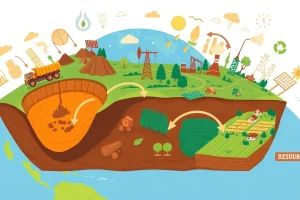
The concept of phosphorus recovery is rooted in the principles of circular economy and sustainable resource management. Unlike removal, which focuses solely on eliminating phosphorus to meet discharge regulations, recovery seeks to reclaim it in a form that can be reused, thereby closing the nutrient loop. This approach addresses two interconnected challenges: the depletion of high-quality phosphate rock reserves and the eutrophication of aquatic ecosystems caused by excess nutrients. As global demand for food and fertilizer continues to grow, phosphorus recovery from wastewater is increasingly recognized as a critical strategy for ensuring long-term phosphorus security and environmental protection.
How It Works
Phosphorus recovery from wastewater involves a series of physical, chemical, and biological processes designed to concentrate and extract phosphorus from liquid or solid waste streams. The choice of technology depends on the characteristics of the wastewater, the desired form of the recovered product, and economic considerations. The most common methods include:
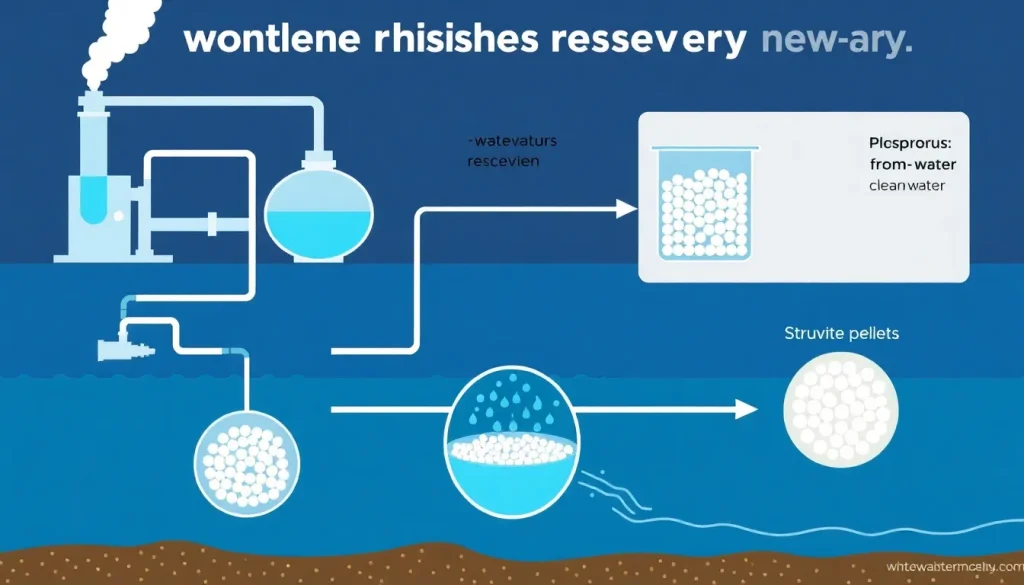
- Chemical precipitation: This is the most widely used approach. By adding chemicals such as magnesium, calcium, or aluminum salts to phosphorus-rich streams, insoluble phosphate compounds like struvite (magnesium ammonium phosphate) or calcium phosphate are formed. These precipitates can be separated from the liquid by settling or filtration and then dried into a solid fertilizer product. Struvite, in particular, is valued as a slow-release fertilizer.
- Biological uptake and enhanced biological phosphorus removal (EBPR): Certain microorganisms can accumulate phosphorus beyond their normal metabolic needs when subjected to alternating anaerobic and aerobic conditions. The phosphorus-rich biomass can then be harvested, and phosphorus can be released and recovered through anaerobic digestion or chemical extraction.
- Adsorption and ion exchange: These methods use materials that selectively bind phosphate ions from wastewater. Once saturated, the adsorbent or resin is regenerated, releasing a concentrated phosphate solution that can be further processed into fertilizer.
- Thermal processes: Incineration of sewage sludge followed by phosphorus extraction from the ash is another route. The ash can be treated with acid or thermochemically to produce a phosphorus-rich product suitable for fertilizer use. This method also reduces the volume of solid waste.
- Membrane filtration: Advanced membrane technologies, such as forward osmosis or nanofiltration, can concentrate phosphorus from dilute wastewater streams, making subsequent recovery more efficient.
Each method has its own optimal application. For instance, chemical precipitation is often applied to side streams in wastewater treatment plants where phosphorus concentrations are high, while biological removal is integrated into the main treatment process. The recovered phosphorus can be used directly as a fertilizer (e.g., struvite) or as a raw material for the phosphate industry.
Importance and Impact
The recovery of phosphorus from wastewater carries significant environmental and resource-security implications. Phosphorus is a finite resource, with economically viable reserves of phosphate rock concentrated in a few countries, notably Morocco and Western Sahara. This geographical concentration creates supply risks for nations dependent on imports for agricultural fertilizers. By recovering phosphorus from wastewater, countries can reduce their vulnerability to price volatility and geopolitical disruptions, while also creating a local, renewable source of an essential nutrient.
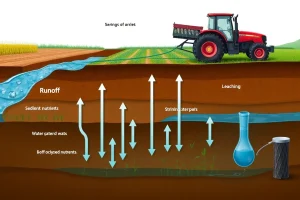
Environmentally, phosphorus recovery helps mitigate eutrophication—the over-enrichment of water bodies with nutrients, leading to algal blooms, oxygen depletion, and ecosystem damage. Wastewater treatment plants are a major point source of phosphorus discharge. Removing phosphorus before effluent release is already a regulatory requirement in many regions, but recovery goes a step further by turning the removed phosphorus into a usable product rather than a sludge disposal problem. This reduces the overall environmental footprint of wastewater treatment and supports healthier aquatic ecosystems.
Benefits
The benefits of phosphorus recovery extend across environmental, economic, and social dimensions:
- Resource conservation: It reduces reliance on mined phosphate rock, a non-renewable resource, and extends the lifespan of existing reserves.
- Pollution reduction: By capturing phosphorus that would otherwise contribute to eutrophication, recovery helps protect water quality and aquatic life.
- Waste management: It can reduce the volume and handling costs of sewage sludge, as phosphorus-rich precipitates are easier to dewater and transport.
- Economic value: Recovered phosphorus products, such as struvite, can be sold as fertilizers, creating a revenue stream for wastewater treatment plants.
- Circular economy: It exemplifies the shift from linear “take-make-dispose” models to closed-loop systems where waste becomes a resource.
- Regulatory compliance: In regions with strict phosphorus discharge limits, recovery can be a cost-effective way to meet standards while generating a valuable byproduct.
Limitations and Trade-offs
Despite its promise, phosphorus recovery faces several challenges that limit widespread adoption:
- Economic viability: The cost of recovery technologies can be high relative to the market price of conventional phosphate fertilizers. Without subsidies or regulatory drivers, many projects struggle to be financially self-sustaining.
- Energy and chemical inputs: Some recovery processes require significant energy or chemical additives, which can offset environmental benefits if derived from fossil fuels.
- Product quality and market acceptance: Recovered phosphorus products may contain contaminants (e.g., heavy metals, pathogens) that require additional treatment to meet fertilizer standards. Farmers and fertilizer companies may be hesitant to adopt unfamiliar products.
- Infrastructure requirements: Retrofitting existing wastewater treatment plants with recovery systems can be capital-intensive and technically complex.
- Scale limitations: Recovery is most efficient at large, centralized facilities; smaller or decentralized systems may not achieve economies of scale.
- Regulatory barriers: In some jurisdictions, regulations classify recovered phosphorus as waste rather than a product, complicating its sale and distribution.
Common Misconceptions
Several misunderstandings surround phosphorus recovery from wastewater:
- “Phosphorus recovery is too expensive to be practical.” While costs can be high, they are often comparable to or lower than the combined costs of phosphorus removal and sludge disposal when environmental externalities are considered. Technological advances and economies of scale are steadily improving cost-effectiveness.
- “Recovered phosphorus is inferior to mined phosphate.” When properly processed, recovered phosphorus products like struvite have been shown to be effective fertilizers, sometimes with advantages such as slow-release properties that reduce runoff.
- “We don’t need to recover phosphorus because reserves are abundant.” Although total phosphate rock resources are large, high-quality, easily accessible reserves are declining, and geopolitical factors can disrupt supply. Recovery provides a sustainable, local alternative.
- “Phosphorus recovery is only about fertilizer.” While fertilizer production is the primary use, recovered phosphorus can also be used in industrial applications, such as flame retardants or food additives, depending on purity.
- “All wastewater treatment plants can easily add phosphorus recovery.” Implementation requires careful assessment of plant design, wastewater composition, and local market conditions; it is not a one-size-fits-all solution.
FAQ
What is phosphorus recovery from wastewater?
It is the process of extracting phosphorus from sewage or other wastewaters and converting it into a reusable form, typically fertilizer.
How does phosphorus recovery work?
It works through methods like chemical precipitation, biological uptake, or thermal treatment to concentrate and extract phosphorus from liquid or solid waste streams.
Why does phosphorus recovery matter?
It matters because it conserves a finite resource, reduces water pollution, and supports sustainable agriculture and a circular economy.
References
- U.S. Environmental Protection Agency. "Nutrient Pollution: The Problem."
- International Fertilizer Association. "Phosphate Rock Statistics."
- Egle, L., Rechberger, H., & Zessner, M. (2015). "Phosphorus recovery from municipal wastewater: An integrated comparative technological, environmental and economic assessment." Science of The Total Environment.