In brief
At a glance
Quick Facts
- Global GDP dependency
- More than half of the world's GDP is moderately or highly dependent on nature and its services.
- Key risk categories
- Physical, transition, and systemic risks are the three main types of nature-related business risks.
- Primary drivers of nature loss
- Land-use change, climate change, pollution, overexploitation, and invasive species are the five direct drivers identified by IPBES.
- Disclosure framework
- The Taskforce on Nature-related Financial Disclosures (TNFD) provides a leading framework for reporting nature-related risks.
- Sectors most exposed
- Agriculture, food and beverages, construction, real estate, and tourism are among the sectors with high nature dependency.
- Double materiality
- Companies must consider both their impact on nature and nature's impact on their financial performance.
- Pollinator decline risk
- The decline of pollinators threatens global crop production worth hundreds of billions of dollars annually.
- Water scarcity
- By 2050, water demand is projected to exceed supply by 40%, posing risks to water-intensive industries.
Key Takeaways
- Nature-related business risks are the potential negative impacts on companies and financial systems from the degradation of nature and the loss of ecosystem services.
- These risks are typically categorized as physical risks (direct damage from environmental change), transition risks (policy, legal, technology, and market shifts), and systemic risks (cascading failures across economies).
- More than half of the world’s GDP is moderately or highly dependent on nature, making nature loss a material financial concern for businesses and investors.
- Proactive assessment, disclosure, and integration of nature-related risks into strategy—often guided by frameworks like the Taskforce on Nature-related Financial Disclosures (TNFD)—can help organizations build resilience and identify new opportunities.
What Is Nature-Related Business Risks?
Nature-related business risks refer to the potential for economic losses, operational disruptions, or strategic setbacks that organizations face due to their dependencies on the natural world and the impacts they have on it. These risks arise from the degradation of ecosystems, the loss of biodiversity, and the unsustainable use of natural resources such as water, soil, and forests. In essence, when nature is harmed, the services it provides—like pollination, water purification, climate regulation, and fertile soils—are diminished, which in turn can disrupt supply chains, increase costs, and erode asset values.
This concept is rooted in the understanding that businesses are not separate from the environment but deeply embedded within it. Every economic activity relies on natural capital, the stock of renewable and non-renewable resources that yield a flow of benefits to people. When that capital is depleted or degraded, the risks cascade through the economy. Nature-related risks are often interconnected with climate risks but are broader in scope, encompassing biodiversity loss, land-use change, resource scarcity, and pollution. They can affect any sector, from agriculture and food production to real estate, energy, and finance.
Overview
Nature-related business risks are increasingly recognized as a critical component of enterprise risk management. They are typically divided into three main categories: physical risks, transition risks, and systemic risks. Physical risks arise when natural systems are damaged, leading to direct consequences such as reduced crop yields due to pollinator decline, flooding from wetland loss, or water shortages from aquifer depletion. Transition risks stem from the shift toward a nature-positive economy, including new regulations, changing consumer preferences, litigation, and technological disruption. Systemic risks refer to the potential for large-scale, non-linear changes in natural systems that could destabilize entire economies, such as the collapse of fisheries or widespread soil degradation.
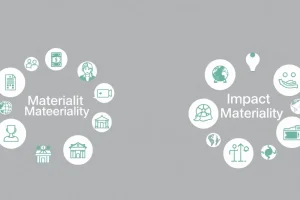
These risks are often assessed through the lens of double materiality, meaning that a company must consider both how nature affects its financial performance (outside-in) and how its operations impact nature (inside-out). For example, a mining company not only faces physical risks from water scarcity but also transition risks from stricter environmental regulations due to its own pollution. The interdependence of nature-related risks with climate risks and social issues further complicates the landscape, making a holistic approach essential.
How It Works
Nature-related risks materialize through a chain of dependencies and impacts. Every business depends on ecosystem services—such as water supply, soil fertility, and climate stability—to operate. When these services are disrupted, the business faces direct physical risks. For instance, a beverage company relies on a steady supply of clean water; if the local watershed is degraded by deforestation or pollution, the company may incur higher treatment costs or face production stoppages. Similarly, a real estate developer building in coastal areas may see property values decline due to increased flooding from wetland loss.
Transition risks emerge as societies respond to environmental degradation. Governments may impose stricter regulations on land use, waste disposal, or emissions, increasing compliance costs. Consumer preferences can shift toward sustainable products, leaving companies that rely on unsustainable practices at a competitive disadvantage. Technological innovations may render certain resource-intensive business models obsolete. Systemic risks, though less frequent, can be catastrophic: the collapse of a key ecosystem service can trigger supply chain disruptions across multiple industries, leading to cascading financial losses. Financial institutions are exposed through their lending, investment, and insurance activities, making nature-related risks a systemic concern for the entire economy.
Importance and Impact
The significance of nature-related business risks lies in the scale of economic dependency on nature. According to the World Economic Forum, more than half of the world’s GDP is moderately or highly dependent on nature and its services. Sectors such as agriculture, forestry, fisheries, food and beverages, construction, and tourism are particularly exposed. The loss of biodiversity and ecosystem services can lead to supply chain disruptions, increased operational costs, reduced asset values, and higher insurance premiums. For investors, these risks translate into potential portfolio losses and stranded assets.
Beyond direct financial impacts, nature-related risks can affect a company’s reputation, license to operate, and access to capital. Lenders and investors are increasingly scrutinizing environmental performance, and companies with poor nature-related practices may face higher borrowing costs or exclusion from investment portfolios. The interconnectedness of global supply chains means that a nature-related disruption in one region can have ripple effects worldwide, affecting commodity prices and economic stability. As a result, understanding and managing nature-related risks is not just an environmental concern but a fundamental aspect of corporate governance and financial stability.
Main Causes or Drivers
The primary drivers of nature-related business risks are the direct and indirect causes of biodiversity loss and ecosystem degradation. The Intergovernmental Science-Policy Platform on Biodiversity and Ecosystem Services (IPBES) identifies five main direct drivers: land-use change, climate change, pollution, overexploitation of natural resources, and invasive alien species. Each of these drivers can create material risks for businesses.
- Land-use change: Conversion of forests, wetlands, and grasslands for agriculture, urban development, or mining destroys habitats and reduces ecosystem services. Companies dependent on these services, or those involved in the conversion, face physical and regulatory risks.
- Climate change: Rising temperatures, altered precipitation patterns, and extreme weather events exacerbate nature loss and directly threaten assets and operations. Climate change is both a driver of nature risk and a risk multiplier.
- Pollution: Chemical runoff, plastic waste, and air pollution degrade ecosystems and harm species. Businesses that produce or rely on clean water, air, or soil are vulnerable, and polluters face increasing regulatory and reputational pressure.
- Overexploitation: Unsustainable harvesting of resources such as fish, timber, and water leads to scarcity, higher costs, and supply chain instability.
- Invasive alien species: The spread of non-native species can disrupt local ecosystems, affecting agriculture, fisheries, and infrastructure, and leading to economic losses.
Examples
Nature-related business risks manifest across various sectors. In agriculture, the decline of pollinators like bees and butterflies threatens crop yields and quality, directly impacting food producers and agribusinesses. For example, almond orchards rely heavily on managed honeybee colonies; a collapse in bee populations would increase costs and reduce harvests. In the beverage industry, water scarcity and pollution pose significant operational risks. Breweries and bottling plants require large volumes of clean water, and droughts or contamination can force production shutdowns or require expensive water treatment investments.
In the financial sector, banks and insurers face nature-related risks through their lending and underwriting activities. A bank with a large portfolio of agricultural loans in regions experiencing soil degradation may see higher default rates. Insurers covering coastal properties face growing liabilities from storm surges exacerbated by the loss of protective mangroves and coral reefs. The fashion industry, dependent on cotton and other natural fibers, is exposed to water stress and land-use change. Even the pharmaceutical industry, which relies on genetic resources for drug discovery, faces risks from biodiversity loss. These examples illustrate how nature-related risks permeate diverse industries and can affect entire value chains.
Solutions
Addressing nature-related business risks requires a combination of assessment, disclosure, and strategic action. The Taskforce on Nature-related Financial Disclosures (TNFD) provides a framework for organizations to identify, assess, and report on their nature-related dependencies, impacts, risks, and opportunities. By following the TNFD recommendations, companies can integrate nature into their risk management and governance processes, much like the Task Force on Climate-related Financial Disclosures (TCFD) did for climate.
Beyond disclosure, businesses can adopt nature-based solutions that protect, restore, or sustainably manage ecosystems while providing economic benefits. Examples include reforestation to secure water supplies, regenerative agriculture to improve soil health, and green infrastructure to reduce flood risks. Supply chain engagement is critical: companies can work with suppliers to promote sustainable practices, traceability, and certification. Scenario analysis and stress testing can help firms understand potential future risks and develop adaptive strategies. Finally, collaboration across sectors and with governments is essential to address systemic risks that no single entity can manage alone.
FAQ
What are nature-related business risks?
They are the potential threats to a company's financial performance, operations, or viability arising from its dependencies on nature and the impacts it has on the natural environment. These risks include physical damage from ecosystem degradation, transition risks from policy and market changes, and systemic risks from large-scale environmental collapse.
How do nature-related risks differ from climate risks?
Climate risks are a subset of nature-related risks, focusing specifically on climate change impacts. Nature-related risks are broader, encompassing biodiversity loss, land-use change, water scarcity, pollution, and other environmental issues. While climate change is a key driver of nature loss, nature-related risks also include non-climate factors.
Why should businesses care about nature-related risks?
Businesses depend on nature for resources and services. Degradation of nature can disrupt supply chains, increase costs, reduce asset values, and lead to regulatory and reputational damage. Managing these risks is essential for long-term resilience, access to capital, and maintaining a social license to operate.
References
- World Economic Forum, Nature Risk Rising: Why the Crisis Engulfing Nature Matters for Business and the Economy
- Intergovernmental Science-Policy Platform on Biodiversity and Ecosystem Services (IPBES), Global Assessment Report on Biodiversity and Ecosystem Services
- Taskforce on Nature-related Financial Disclosures (TNFD), Recommendations of the TNFD