In brief
At a glance
Quick Facts
- Definition
- Ecosystem services are the benefits people obtain from ecosystems, including provisioning, regulating, cultural, and supporting services.
- Key categories
- Provisioning (food, water), regulating (climate, floods), cultural (recreation), and supporting (nutrient cycling).
- Global economic value
- The estimated annual value of global ecosystem services is in the tens of trillions of dollars, though precise figures vary.
- Pollination dependence
- Approximately 75% of global food crops depend at least partially on animal pollination.
- Water risk
- Over two-thirds of the world’s largest companies report exposure to water risks that could affect their operations or supply chains.
- Natural capital accounting
- A framework for measuring and valuing natural resources and ecosystem services to inform business and policy decisions.
- Regulatory trend
- A growing number of jurisdictions require or encourage corporate disclosure of environmental impacts and dependencies.
Key Takeaways
- Businesses depend on ecosystem services—such as water purification, pollination, and climate regulation—for their operations, supply chains, and long-term viability.
- The degradation of these services poses material risks to business continuity, costs, and reputation.
- Recognizing and valuing ecosystem services can help businesses manage risks, reduce costs, and identify new opportunities.
- Integrating ecosystem service considerations into decision-making is essential for sustainable business strategy.
What Is How Businesses Depend on Ecosystem Services?
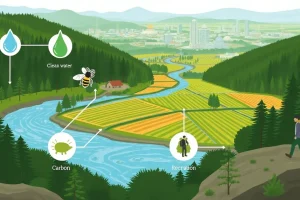
How businesses depend on ecosystem services refers to the reliance of commercial enterprises on the benefits that humans derive from natural ecosystems. Ecosystem services are the direct and indirect contributions of ecosystems to human well-being, categorized broadly as provisioning services (e.g., food, water, timber, fiber), regulating services (e.g., climate regulation, flood control, water purification), cultural services (e.g., recreation, aesthetic value), and supporting services (e.g., nutrient cycling, soil formation). Every business, regardless of sector, depends on one or more of these services to function, either directly through its operations or indirectly through its supply chain.
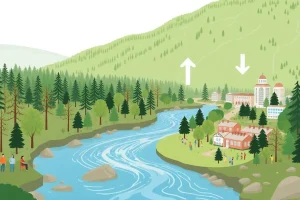
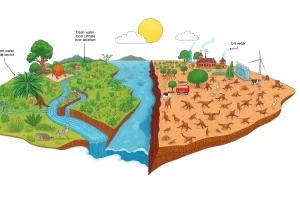
This dependence is often hidden in traditional economic accounting, which treats many ecosystem services as free and limitless. However, when ecosystems are degraded—through deforestation, pollution, overexploitation, or climate change—the services they provide diminish, creating risks for businesses. For example, a beverage company relies on a steady supply of clean water; if the watershed that provides that water is degraded, the company may face higher treatment costs, supply shortages, or regulatory constraints. Understanding this dependence is the first step toward managing it, and it has become a critical component of corporate sustainability and risk management.
How It Works
Business dependence on ecosystem services operates through a web of direct and indirect connections. Direct dependence occurs when a company’s core operations require a specific service, such as a farm needing pollination for crop production or a hydroelectric dam relying on consistent water flow. Indirect dependence arises through supply chains: a food manufacturer may not own farmland, but it depends on the pollination, soil fertility, and water that support its agricultural suppliers. Even service-based businesses, like insurance, are indirectly affected—for instance, the loss of coastal wetlands (which provide storm surge protection) can increase property damage claims.

The relationship is often bidirectional: businesses not only depend on ecosystem services but also impact them through their activities. This creates a feedback loop where business operations can degrade the very services they rely on. For example, excessive water extraction for manufacturing can deplete aquifers, reducing water availability for the same business and others. Similarly, deforestation for agricultural expansion can disrupt local rainfall patterns, ultimately harming crop yields. Recognizing these interdependencies allows businesses to identify vulnerabilities and opportunities for more sustainable practices.
Importance and Impact
The dependence of businesses on ecosystem services is of growing importance because the degradation of these services is accelerating globally. The Millennium Ecosystem Assessment and subsequent scientific reports have documented that a majority of ecosystem services are being used unsustainably. For businesses, this translates into material risks: supply chain disruptions, increased operational costs, regulatory pressures, and reputational damage. For instance, water scarcity can force factories to halt production, while loss of pollinators can reduce agricultural output and raise commodity prices.
Conversely, businesses that proactively manage their dependence on ecosystem services can gain competitive advantages. By investing in the protection and restoration of natural capital, companies can secure their resource base, reduce long-term costs, and enhance brand value. The impact extends beyond individual firms: when businesses collectively account for ecosystem services, they contribute to the preservation of the natural systems that underpin entire economies. This recognition is driving the integration of ecosystem service valuation into corporate strategy, financial reporting, and public policy.
Examples
Many industries illustrate the tangible dependence on ecosystem services:
- Agriculture and Food: Crop production depends on pollination by insects, birds, and bats. The global value of pollination services is estimated in the hundreds of billions of dollars annually. Soil fertility, maintained by microorganisms and nutrient cycling, is essential for yields. Water for irrigation is a provisioning service, while pest control by natural predators reduces the need for chemical inputs.
- Beverage Industry: Breweries, bottling plants, and soft drink manufacturers require large quantities of clean freshwater. Companies often rely on natural filtration by forests and wetlands to maintain water quality. When watersheds are degraded, treatment costs rise, and supply risks increase.
- Pharmaceuticals: Many drugs are derived from natural compounds found in plants, animals, and microorganisms. Bioprospecting depends on biodiversity, which is a supporting service. Loss of species reduces the potential for discovering new medicines.
- Insurance: The insurance sector is indirectly dependent on regulating services such as flood control by wetlands, storm protection by mangroves and coral reefs, and climate regulation. The destruction of these natural buffers increases the frequency and severity of claims, raising costs for insurers and policyholders.
- Tourism: Nature-based tourism relies on cultural ecosystem services, including scenic landscapes, wildlife viewing, and outdoor recreation. Degradation of these assets—through pollution, habitat loss, or climate change—can devastate local economies dependent on tourism revenue.
What Businesses and Governments Can Do
Businesses can take several steps to manage their dependence on ecosystem services. The first is to assess and measure their impacts and dependencies through tools like natural capital accounting, corporate ecosystem valuation, and life cycle analysis. This helps identify which services are most critical and where risks lie. Companies can then integrate these findings into risk management, supply chain management, and strategic planning. For example, a company might invest in watershed restoration to secure water supplies or diversify sourcing to reduce pressure on a single ecosystem.
Governments play a crucial role by creating enabling conditions. They can establish regulations that protect critical ecosystems, implement payments for ecosystem services (PES) schemes that reward conservation, and require environmental disclosures in corporate reporting. Public investment in green infrastructure—such as reforestation, wetland restoration, and sustainable urban drainage—can reduce risks for businesses and communities alike. International frameworks like the Convention on Biological Diversity and the UN Sustainable Development Goals provide guidance for aligning business practices with ecosystem preservation.
Benefits, Limitations and Trade-offs
Recognizing and managing business dependence on ecosystem services offers several benefits. It can lead to cost savings through improved resource efficiency, reduced risk of supply disruptions, enhanced brand reputation, and access to new markets for sustainable products. It also helps businesses anticipate and adapt to regulatory changes, such as stricter environmental standards or carbon pricing. Furthermore, it can foster innovation in product design, materials, and business models that reduce environmental footprints.
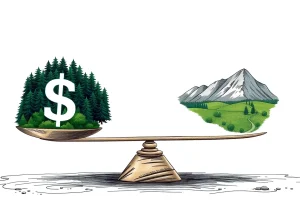
However, there are limitations and trade-offs. Valuing ecosystem services is complex and often involves significant data gaps and uncertainty. Many services are not traded in markets, making their economic value difficult to quantify. Short-term costs of transitioning to more sustainable practices can be high, and benefits may accrue over long time horizons that do not align with typical business planning cycles. There can also be trade-offs between different ecosystem services: for example, converting a forest to farmland may increase food provisioning but reduce carbon sequestration and water regulation. Balancing these trade-offs requires careful analysis and stakeholder engagement.
FAQ
What are ecosystem services?
Ecosystem services are the benefits that humans receive from nature, including clean water, pollination, climate regulation, and recreational opportunities. They are typically grouped into provisioning, regulating, cultural, and supporting services.
How do businesses depend on ecosystem services?
Businesses depend on ecosystem services directly (e.g., a farm needs pollination) and indirectly through their supply chains (e.g., a food company relies on crops that need healthy soil and water). Even service industries are affected, as ecosystem degradation can disrupt economies and increase costs.
Why does business dependence on ecosystem services matter?
It matters because the degradation of these services creates material risks for companies, including supply disruptions, higher costs, and regulatory pressures. Managing this dependence can help businesses reduce risk, cut costs, and find new opportunities for sustainable growth.
References
- Millennium Ecosystem Assessment (2005). Ecosystems and Human Well-being: Synthesis. Island Press.
- The Economics of Ecosystems and Biodiversity (TEEB). TEEB for Business. Available at: http://www.teebweb.org
- World Economic Forum (2020). Nature Risk Rising: Why the Crisis Engulfing Nature Matters for Business and the Economy.
- Natural Capital Coalition. Natural Capital Protocol. Available at: https://naturalcapitalcoalition.org
- Intergovernmental Science-Policy Platform on Biodiversity and Ecosystem Services (IPBES). Global Assessment Report on Biodiversity and Ecosystem Services.