In brief
At a glance
Quick Facts
- Largest natural carbon sink
- The world's oceans absorb about 25% of human-caused CO2 emissions annually.
- Dominant anthropogenic source
- Fossil fuel combustion is the largest human-caused carbon source.
- Soil carbon storage
- Soils contain more carbon than the atmosphere and all plant life combined.
- Deforestation impact
- Deforestation accounts for roughly 10% of global greenhouse gas emissions.
- Peatland significance
- Peatlands cover only 3% of land but store twice as much carbon as all forests.
- Sink capacity limit
- Natural carbon sinks have a finite capacity; their effectiveness can decrease as emissions rise.
- Net-zero concept
- Achieving net-zero emissions requires balancing anthropogenic sources with enhanced sinks.
- Permafrost feedback
- Thawing permafrost releases methane and CO2, turning a former sink into a source.
Key Takeaways
- Carbon sources release more carbon into the atmosphere than they absorb, while carbon sinks absorb more carbon than they release.
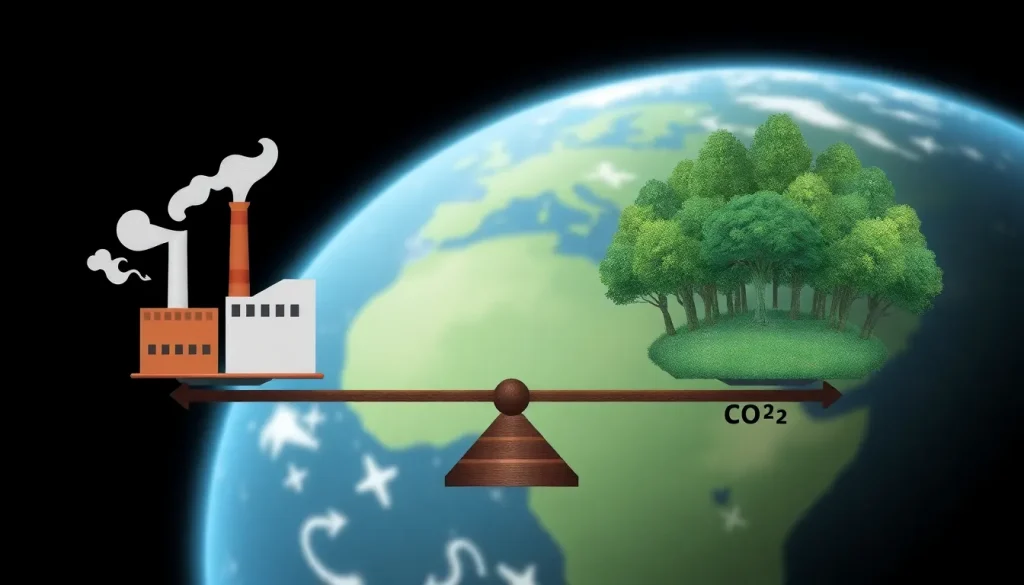
- The balance between sources and sinks determines atmospheric CO2 concentrations, a primary driver of global climate change.
- Human activities such as burning fossil fuels and deforestation have dramatically increased carbon sources and weakened natural sinks.
- Protecting and enhancing carbon sinks, alongside reducing emissions, is essential for stabilizing the climate system.
What Is Carbon Sources vs Carbon Sinks?
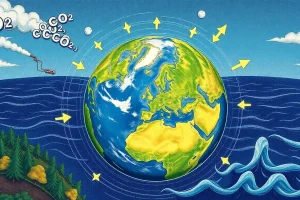
A carbon source is any process, activity, or system that releases more carbon—typically in the form of carbon dioxide (CO2) or methane (CH4)—into the atmosphere than it absorbs. In contrast, a carbon sink is any system that absorbs more carbon from the atmosphere than it releases. These two concepts are fundamental to understanding the global carbon cycle, the natural movement of carbon among the atmosphere, oceans, soil, rocks, and living organisms. The interplay between sources and sinks determines the net amount of greenhouse gases in the atmosphere, which in turn influences Earth’s climate.
In a stable climate system, natural sources and sinks are roughly in balance. For example, plants absorb CO2 through photosynthesis (acting as a sink) but release it through respiration and decay (acting as a source). Oceans absorb CO2 at the surface but can also release it back. However, human activities have introduced massive additional sources—primarily the burning of fossil fuels and land-use changes—while simultaneously degrading natural sinks like forests and wetlands. This imbalance has led to a rapid rise in atmospheric CO2, from pre-industrial levels of about 280 parts per million to over 420 parts per million today, driving global warming and climate change.
How It Works
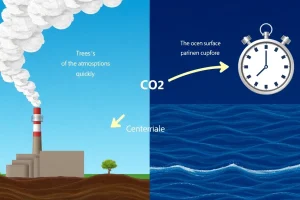
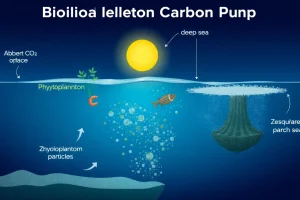
The carbon cycle describes how carbon atoms move between different reservoirs on Earth. Carbon sources and sinks are the two sides of this cycle. Natural carbon sources include volcanic eruptions, respiration by animals and plants, decomposition of organic matter, and ocean outgassing. Natural sinks include photosynthesis by plants and phytoplankton, absorption by oceans, and the formation of carbonate rocks. These processes have historically kept atmospheric CO2 levels within a range that supports a stable climate.
Human activities have added new sources and altered the balance. The combustion of fossil fuels (coal, oil, natural gas) releases carbon that had been stored underground for millions of years. Deforestation and land-use change not only release stored carbon but also reduce the planet’s capacity to absorb CO2. Industrial processes like cement production also emit CO2. The result is a net increase in atmospheric carbon, with about half of human emissions being absorbed by natural sinks (oceans and land) and the other half accumulating in the atmosphere, enhancing the greenhouse effect.
Main Causes or Drivers
The primary driver of the current imbalance between carbon sources and sinks is human activity. The largest source is the burning of fossil fuels for energy, transportation, and industry, which accounts for the majority of anthropogenic CO2 emissions. Deforestation and land-use change, particularly in tropical regions, are the second-largest source, as forests are cleared for agriculture, logging, or urban development. Cement production, a chemical process that releases CO2, is another significant industrial source.
On the sink side, human actions have also reduced the Earth’s natural capacity to absorb carbon. Deforestation directly eliminates a major carbon sink. Soil degradation from intensive agriculture releases stored carbon and diminishes the soil’s ability to sequester new carbon. Ocean acidification, caused by the absorption of excess CO2, may impair the ability of marine organisms to form shells and skeletons, potentially reducing the ocean’s long-term sink capacity. These combined effects amplify the net increase in atmospheric carbon.
Environmental and Human Impacts
The disruption of the carbon source-sink balance has profound environmental consequences. Elevated atmospheric CO2 intensifies the greenhouse effect, leading to global warming, rising sea levels, more frequent and severe extreme weather events, and shifts in ecosystems and wildlife patterns. Ocean acidification, a direct result of increased CO2 absorption, threatens coral reefs, shellfish, and the entire marine food web. Melting permafrost in polar regions is a concerning feedback loop: as it thaws, it releases vast stores of methane and CO2, turning a former sink into a source.
Human societies face cascading impacts. Agriculture is affected by changing precipitation patterns and temperatures, threatening food security. Coastal communities are at risk from sea-level rise and storm surges. Health problems increase due to heatwaves, vector-borne diseases, and air pollution. Economic costs mount from disaster recovery, infrastructure damage, and loss of productivity. The imbalance between sources and sinks is not just an environmental issue; it is a fundamental challenge to sustainable development and human well-being.
Importance and Impact
Understanding and managing carbon sources and sinks is critical because the atmospheric concentration of CO2 directly influences global temperatures. The Paris Agreement’s goal of limiting warming to well below 2°C requires achieving a balance between anthropogenic emissions and removals—often called net-zero emissions. This means that any remaining emissions must be offset by enhancing sinks. The capacity of natural sinks is finite, however, and they may become less effective as climate change progresses, making emission reductions even more urgent.
The impact of failing to restore the balance could be catastrophic. Tipping points, such as the dieback of the Amazon rainforest or the collapse of ice sheets, could trigger irreversible changes. Conversely, protecting and restoring ecosystems like forests, peatlands, and mangroves not only sequesters carbon but also provides co-benefits such as biodiversity conservation, water purification, and livelihood support. The source-sink framework is thus central to climate policy, carbon markets, and national greenhouse gas inventories.
Solutions
Addressing the imbalance requires a two-pronged approach: drastically reducing carbon sources and enhancing carbon sinks. On the source side, the most effective measure is transitioning from fossil fuels to renewable energy sources such as solar, wind, and hydropower. Improving energy efficiency in buildings, transportation, and industry also cuts emissions. Reducing deforestation and promoting sustainable land management are essential to stop the loss of natural sinks.
Enhancing sinks involves both natural and technological solutions. Afforestation (planting new forests) and reforestation (restoring degraded forests) increase carbon uptake. Soil carbon sequestration through practices like no-till farming, cover cropping, and agroforestry can store carbon in agricultural lands. Protecting and restoring wetlands, peatlands, and coastal ecosystems (blue carbon) is highly effective. Technological approaches include carbon capture and storage (CCS) at industrial sources and direct air capture (DAC) that removes CO2 from the atmosphere. Policy instruments like carbon pricing, emissions trading, and regulations drive systemic change. Individual actions—reducing energy use, shifting diets, and supporting sustainable products—also contribute.
Common Misconceptions
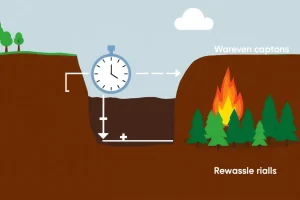
Misconception: All forests are carbon sinks. While young, growing forests are strong sinks, mature forests can be carbon neutral or even sources if they are disturbed by fire, pests, or logging. The net carbon balance of a forest depends on its age, health, and management.
Misconception: Planting trees alone can solve climate change. Afforestation is valuable but cannot compensate for continued fossil fuel emissions. The land area required to offset current emissions would be immense, and trees take decades to mature. Emission reductions remain paramount.
Misconception: Carbon sinks can absorb all our emissions. Natural sinks currently absorb only about half of human emissions. Their capacity is limited and may decline with warming. Relying on sinks without cutting emissions is unsustainable.
Misconception: Natural sources are the main problem. Natural sources like volcanoes and respiration are part of a balanced cycle. Human activities have added a net excess of carbon that natural sinks cannot fully absorb, causing the current imbalance.
FAQ
What is a carbon source?
A carbon source is any process or system that releases more carbon dioxide or methane into the atmosphere than it absorbs, such as burning fossil fuels or deforestation.
What is a carbon sink?
A carbon sink is a natural or artificial reservoir that absorbs more carbon from the atmosphere than it releases, such as forests, oceans, and soil.
Why does the balance between carbon sources and sinks matter?
The balance determines atmospheric CO2 levels, which influence global temperatures and climate patterns. An excess of sources over sinks leads to climate change.
References
- Intergovernmental Panel on Climate Change (IPCC) Assessment Reports
- NASA Global Climate Change: Carbon Cycle
- NOAA Earth System Research Laboratory: Carbon Cycle
- United Nations Framework Convention on Climate Change (UNFCCC)