In brief
At a glance
Quick Facts
- Definition of Carbon Neutral
- Balancing emitted CO₂ with an equivalent amount of CO₂ removed or offset, often on an annual basis.
- Definition of Net Zero
- Reducing all greenhouse gas emissions to as close to zero as possible and neutralizing residual emissions with permanent removals.
- Scope of Gases
- Carbon neutral typically covers only CO₂; net zero covers all greenhouse gases (CO₂, methane, nitrous oxide, etc.).
- Global Target
- The Paris Agreement aims for global net zero CO₂ emissions by around 2050 and net zero of all greenhouse gases by around 2070.
- Role of Offsets
- Carbon neutral often relies heavily on offsets; net zero prioritizes deep emission cuts and uses offsets only for residual emissions.
- Verification Standards
- Net zero targets are often validated by the Science Based Targets initiative (SBTi); carbon neutral claims may follow PAS 2060 or other standards.
- Key Challenge
- Achieving net zero requires transformation of energy, industry, transport, and agriculture systems, which is technically and economically demanding.
Key Takeaways
- Carbon neutral typically refers to balancing carbon dioxide (CO₂) emissions with offsets, while net zero covers all greenhouse gases and prioritizes deep emission cuts before offsetting.
- Net zero is aligned with the Paris Agreement goal of limiting warming to 1.5°C and requires a fundamental transformation of energy, industry, and land-use systems.
- Carbon neutrality can be achieved more easily through offsetting, but it may delay necessary structural changes if used as a substitute for direct reductions.
- Both concepts are critical for climate action, but net zero is the more comprehensive and rigorous target for long-term global sustainability.
What Is Net Zero vs Carbon Neutral?
Net zero and carbon neutral are two terms used to describe the balance between greenhouse gas emissions produced and emissions removed from the atmosphere. While they are often used interchangeably, they have distinct meanings in climate science and policy. Carbon neutral generally means that any carbon dioxide (CO₂) released into the atmosphere from a specific activity, organization, or product is balanced by an equivalent amount of CO₂ removed or offset. This can be achieved through a combination of reducing emissions and purchasing carbon offsets, such as reforestation projects or renewable energy credits. The focus is primarily on CO₂, and the timeframe for achieving balance can be annual or over a defined period.
Net zero, on the other hand, is a more comprehensive and stringent target. It requires reducing all greenhouse gas emissions—including CO₂, methane, nitrous oxide, and fluorinated gases—to as close to zero as possible, with any remaining emissions balanced by removing an equivalent amount of greenhouse gases from the atmosphere. Crucially, net zero emphasizes deep, absolute emission reductions across the entire value chain before relying on removals. The concept is rooted in the scientific consensus that limiting global warming to 1.5°C above pre-industrial levels requires global net zero CO₂ emissions by around 2050 and net zero of all greenhouse gases by around 2070. Thus, net zero is a global-scale imperative, while carbon neutral is often applied at the entity level (company, product, event) with varying degrees of rigor.
How It Works
Achieving carbon neutrality typically involves a three-step process: measuring the carbon footprint, reducing emissions where feasible, and offsetting the remainder. Measurement is usually done according to standards like the Greenhouse Gas Protocol or ISO 14064. Reductions can include energy efficiency, switching to renewable electricity, and changing business practices. Offsets are then purchased to compensate for unavoidable emissions; these offsets often fund projects that avoid or remove CO₂, such as forest conservation or renewable energy installations. However, the quality and permanence of offsets vary widely, and there is ongoing debate about their effectiveness.

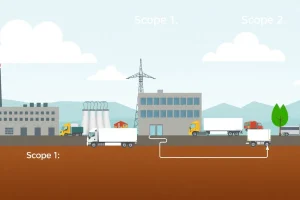
Net zero follows a more rigorous pathway. It requires setting science-based targets aligned with the Paris Agreement, covering all relevant greenhouse gases and emission scopes (Scope 1, 2, and 3). The priority is deep decarbonization: reducing emissions by at least 90% before 2050. Only residual emissions that cannot be eliminated are neutralized through permanent carbon removal methods, such as direct air capture with geological storage or nature-based solutions that ensure long-term sequestration. Net zero also demands transparent reporting and independent verification. For companies, the Science Based Targets initiative (SBTi) provides a widely recognized framework for setting net-zero targets.
Importance and Impact
Distinguishing between net zero and carbon neutral is crucial because the terms signal different levels of ambition and climate impact. Carbon neutrality can be a useful first step for organizations to take responsibility for their carbon footprint, but if it relies heavily on offsets without significant emission reductions, it may not contribute meaningfully to the global goal of limiting warming. In contrast, net zero targets drive systemic change across entire value chains, pushing companies and countries to innovate, phase out fossil fuels, and invest in low-carbon technologies.
The impact of widespread net zero commitments is potentially transformative. If all nations and major corporations achieve net zero by 2050, global warming could be stabilized at around 1.5°C, avoiding the most catastrophic climate impacts. Carbon neutrality, while beneficial, often lacks the same level of ambition and scope, and its fragmented application can lead to a patchwork of efforts that fall short of the collective action needed. The shift from carbon neutral to net zero as the dominant framework reflects a growing recognition that incremental changes are insufficient.
Common Misconceptions
Benefits, Limitations and Trade-offs
Benefits of carbon neutral: It is a more accessible starting point for many organizations, raising awareness and encouraging initial emission reductions. It can drive investment in offset projects that support renewable energy or forest conservation. For consumers, carbon-neutral labels can guide purchasing decisions.
Limitations of carbon neutral: The term is not consistently defined or regulated, leading to greenwashing. Offsets may not represent real, additional, or permanent emission reductions. It often ignores non-CO₂ greenhouse gases and Scope 3 (value chain) emissions, which can be the largest part of a company’s footprint.
Benefits of net zero: It provides a clear, science-based target aligned with global climate goals. It drives comprehensive decarbonization across all operations and supply chains, fostering innovation and long-term resilience. It enhances credibility and reduces regulatory risk.
Limitations of net zero: Achieving net zero is technically and financially challenging, especially for sectors like aviation, agriculture, and heavy industry. It requires robust measurement, reporting, and verification systems that are still evolving. There is a risk that entities may set net-zero targets without credible interim plans, delaying action.
Trade-offs: Pursuing net zero may involve high upfront costs and difficult choices, such as phasing out profitable but high-carbon business lines. Carbon removal technologies are not yet scalable and may have environmental side effects. Balancing ambition with feasibility is a key challenge.
What Individuals Can Do
Individuals can contribute to both carbon neutrality and net zero by reducing their personal carbon footprint and supporting systemic change. Key actions include:
- Reduce energy use: Improve home insulation, use energy-efficient appliances, and switch to LED lighting.
- Choose low-carbon transport: Walk, cycle, use public transport, or switch to electric vehicles where possible. Reduce air travel.
- Adopt a climate-friendly diet: Eat less meat and dairy, reduce food waste, and choose locally sourced, seasonal produce.
- Offset responsibly: If offsetting, use certified schemes that ensure additionality and permanence, but prioritize direct reductions.
- Advocate for change: Support policies and businesses that commit to science-based net-zero targets, and engage in community initiatives.
What Businesses and Governments Can Do
For businesses, the path to net zero involves setting science-based targets, measuring and disclosing full value chain emissions, and implementing decarbonization strategies. This includes switching to renewable energy, improving energy efficiency, electrifying fleets, and working with suppliers to reduce Scope 3 emissions. Companies should also invest in innovation for hard-to-abate sectors and use high-quality carbon removals only for residual emissions. Transparent reporting through frameworks like the Task Force on Climate-related Financial Disclosures (TCFD) is essential.
Governments play a critical role by enacting policies that create an enabling environment for net zero. This includes setting legally binding net-zero targets, implementing carbon pricing, phasing out fossil fuel subsidies, investing in clean energy infrastructure, and supporting research and development. International cooperation is vital to ensure that all countries, including developing nations, can achieve net zero while meeting sustainable development goals. Governments must also establish robust standards and regulations to prevent greenwashing and ensure that net zero claims are credible.
FAQ
What is the difference between net zero and carbon neutral?
Carbon neutral usually means balancing CO₂ emissions with offsets, while net zero requires reducing all greenhouse gas emissions as much as possible and using permanent removals for the rest. Net zero is a more comprehensive and rigorous target.
How does a company achieve net zero?
A company must set science-based targets covering all emission scopes, deeply reduce emissions across its value chain, and neutralize any residual emissions with certified carbon removal credits. It requires transparent reporting and independent verification.
Why does net zero matter more than carbon neutral?
Net zero aligns with the global goal of limiting warming to 1.5°C and drives systemic change. Carbon neutral can be achieved with minimal reductions and low-quality offsets, which may not contribute meaningfully to climate stabilization.
References
- IPCC, 2018: Global Warming of 1.5°C. An IPCC Special Report.
- United Nations Framework Convention on Climate Change (UNFCCC) – Paris Agreement.
- Science Based Targets initiative (SBTi) – Net-Zero Standard.