In brief
At a glance
Quick Facts
- Definition
- Emissions remaining after all feasible reduction measures are applied.
- Typical share in net-zero pathways
- 5–10% of baseline emissions, varying by sector and scenario.
- Key sectors
- Agriculture, heavy industry, aviation, shipping, waste management.
- Neutralization requirement
- Must be balanced by permanent carbon removal, not just offsetting.
- Dynamic nature
- Residual emissions shrink over time as technology and practices improve.
- IPCC recognition
- Integrated into 1.5°C and 2°C pathways as unavoidable emissions.
- Corporate net-zero standards
- SBTi requires a 90%+ reduction before neutralizing residuals.
- Common gases
- Methane (CH₄), nitrous oxide (N₂O), and process CO₂.
Key Takeaways
- Residual emissions are the greenhouse gas emissions that persist after all technically and economically viable reduction measures have been exhausted.
- They are a critical concept in net-zero frameworks, because achieving net-zero requires balancing any remaining emissions with an equivalent amount of carbon removal.
- Key sources include agriculture (methane and nitrous oxide), heavy industry (process emissions), aviation, and waste management.
- Managing residual emissions demands both aggressive emissions cuts and scaling up durable carbon removal solutions, while acknowledging the limits of offsetting.
What Are Residual Emissions?
Residual emissions are the greenhouse gas (GHG) emissions that remain after all technically feasible and economically viable mitigation measures have been implemented. They represent the irreducible minimum of emissions from human activities, given current or foreseeable technologies and practices. In the context of climate policy, residual emissions are a critical concept because achieving net-zero emissions does not mean eliminating all emissions entirely; rather, it means reducing emissions as much as possible and then balancing any remaining emissions with an equivalent amount of carbon removal from the atmosphere.
The term is most commonly used in corporate and national net-zero strategies, where it distinguishes between emissions that can be abated through direct action (such as switching to renewable energy or improving energy efficiency) and those that cannot yet be eliminated. Residual emissions are not a fixed category; they shrink over time as innovation and infrastructure improve, but some level is expected to persist even in a deeply decarbonized world. Understanding what qualifies as residual is essential for setting credible targets and avoiding the misuse of offsets as a substitute for genuine emissions cuts.
Overview
Residual emissions are a cornerstone of net-zero planning. The Science Based Targets initiative (SBTi) and the Intergovernmental Panel on Climate Change (IPCC) both recognize that for most sectors, reaching absolute zero emissions is not currently possible. Instead, the goal is to reduce emissions by 90–95% from baseline levels, with the remaining 5–10% classified as residual. These residual emissions must then be neutralized through carbon dioxide removal (CDR) methods such as afforestation, direct air capture, or enhanced weathering. The concept applies at multiple scales: a single company, a whole industry, a country, or the global economy.

Residual emissions are distinct from unabated emissions, which are emissions that could be reduced but are not, due to lack of action or investment. The classification of an emission as residual is therefore a dynamic and sometimes contested judgment. It depends on the availability of low-carbon technologies, the cost of abatement, and societal choices. For example, emissions from passenger cars can be largely eliminated by switching to electric vehicles, so they are not residual. In contrast, process emissions from cement production, which release CO₂ as a chemical byproduct, are much harder to abate and are often considered residual in the medium term.
How It Works
The identification and management of residual emissions follow a structured hierarchy. First, an entity must maximize direct emissions reductions through efficiency, fuel switching, and process changes. Only after these options are exhausted are the remaining emissions labeled as residual. This hierarchy is often summarized as “reduce first, then remove.” The residual emissions are then quantified and neutralized by purchasing or generating carbon removal credits that permanently sequester an equivalent amount of CO₂ from the atmosphere.
In practice, the process involves several steps:
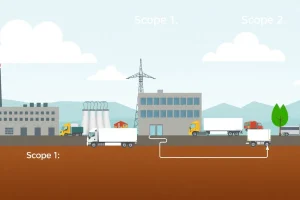
- Baseline measurement: A comprehensive inventory of all GHG emissions across scopes 1, 2, and 3 is established.
- Abatement analysis: Each emission source is evaluated for reduction potential using available technologies and practices, considering cost, feasibility, and timing.
- Residual classification: Emissions that cannot be abated are designated as residual. This classification is often reviewed periodically as new solutions emerge.
- Neutralization: An equivalent amount of high-quality carbon removal is secured to balance the residual emissions, resulting in a net-zero balance.
The credibility of this approach hinges on the integrity of both the reduction claims and the carbon removal. If reductions are underachieved or removals are impermanent, the net-zero claim becomes invalid.
Main Causes or Drivers
Residual emissions arise from sectors and processes where complete decarbonization faces fundamental technical, economic, or biological barriers. The primary drivers include:
- Agriculture: Livestock produce methane through enteric fermentation, and fertilizer application releases nitrous oxide. These non-CO₂ gases are difficult to eliminate entirely without drastic changes to food systems.
- Heavy industry: Cement, steel, and chemical production involve process emissions that release CO₂ from raw materials, not just from energy use. For example, the calcination of limestone in cement manufacturing inherently produces CO₂.
- Aviation and shipping: Long-distance transport relies on energy-dense fuels; battery-electric or hydrogen alternatives face weight, volume, and infrastructure constraints that may leave a residual share of emissions for decades.
- Waste management: Landfills and wastewater treatment generate methane, and while capture systems can reduce emissions, some leakage is often unavoidable.
- Land-use change: Deforestation and soil carbon losses can continue even under sustainable management, contributing residual emissions.
These sources are not immutable; research and development aim to shrink them. However, they represent the hardest-to-abate segments of the economy, and their persistence underpins the need for carbon removal in net-zero pathways.
Why It Matters
Residual emissions matter because they define the scale of carbon removal required to achieve climate goals. If residual emissions are underestimated or misclassified, the demand for carbon removal may be too low, leading to a failure to meet net-zero targets. Conversely, if too many emissions are labeled as residual without genuine abatement efforts, it can delay necessary transitions and overburden carbon removal systems that are still in early stages of deployment.
The concept also has profound implications for climate justice and policy design. Wealthy nations and corporations that have contributed most to historical emissions are expected to reduce their emissions most aggressively and minimize their residual share. The treatment of residual emissions influences carbon market dynamics, the credibility of net-zero pledges, and the allocation of responsibility for carbon removal. A clear, science-based definition helps prevent greenwashing and ensures that net-zero claims reflect real climate action rather than accounting tricks.
Solutions
Addressing residual emissions requires a dual strategy: continued innovation to shrink the residual fraction, and scaling up durable carbon removal to neutralize what remains. Key solutions include:
- Technological innovation: Developing low-carbon alternatives for hard-to-abate sectors, such as green hydrogen for steelmaking, alternative proteins to reduce livestock emissions, and synthetic fuels for aviation.
- Carbon dioxide removal (CDR): Scaling up both nature-based solutions (reforestation, soil carbon sequestration) and engineered solutions (direct air capture, bioenergy with carbon capture and storage, enhanced mineralization) to provide permanent storage.
- Policy frameworks: Governments can set clear standards for what qualifies as residual, mandate progressive reduction targets, and support CDR through incentives and procurement programs.
- Market mechanisms: High-integrity carbon markets can channel finance to verified removal projects, but they must be accompanied by robust accounting to avoid double-counting and ensure additionality.
- Behavioral and systemic change: Reducing demand for carbon-intensive products, shifting diets, and promoting circular economy principles can lower the baseline of residual emissions.
The path to managing residual emissions is not static; it evolves with technological progress and societal choices. The ultimate goal is to minimize the reliance on CDR by making as many emissions abatable as possible.
Common Misconceptions
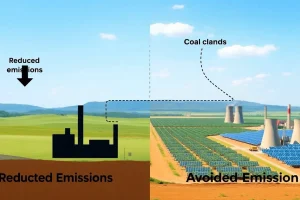
One common misconception is that residual emissions are synonymous with “unavoidable” emissions and therefore require no further effort. In reality, what is considered residual today may become abatable tomorrow through innovation. Treating residual emissions as fixed can discourage investment in new solutions. Another misconception is that carbon offsets (which often represent avoided emissions rather than removals) are sufficient to neutralize residual emissions. Net-zero standards increasingly require that neutralization be done with permanent carbon removal, not avoidance credits, to ensure a durable balance.
Additionally, some assume that all emissions from certain sectors are automatically residual. For example, while cement process emissions are hard to abate, a portion can be reduced through material efficiency, alternative binders, and carbon capture. The classification must be granular and evidence-based. Finally, there is a misconception that residual emissions are a minor issue; however, even a small percentage of a large global total represents billions of tonnes of CO₂ equivalent, underscoring the urgency of both deep reductions and scalable removal.
FAQ
What are residual emissions?
Residual emissions are the greenhouse gas emissions that remain after all technically and economically feasible reduction measures have been taken. They are the irreducible minimum from sectors like agriculture and heavy industry.
How do residual emissions relate to net-zero?
Net-zero requires balancing any remaining emissions with an equivalent amount of carbon removal. Residual emissions are the portion that must be neutralized after deep reductions.
Why can't we just eliminate all emissions?
Some emissions come from processes where no zero-emission alternative currently exists, such as methane from rice cultivation or CO₂ from cement production. Eliminating them entirely would require technologies or systemic changes not yet available at scale.
References
- IPCC, 2022: Climate Change 2022: Mitigation of Climate Change. Contribution of Working Group III to the Sixth Assessment Report.
- Science Based Targets initiative (SBTi), Net-Zero Standard, Version 1.1.
- International Energy Agency (IEA), Net Zero by 2050: A Roadmap for the Global Energy Sector.