In brief
At a glance
Quick Facts
- Definition of Reduced Emissions
- A measurable decrease in greenhouse gas output from a specific source compared to a historical baseline.
- Definition of Avoided Emissions
- Emissions that would have occurred in a counterfactual scenario without a specific project or product.
- Accounting Location
- Reduced emissions are within a company's value chain; avoided emissions are outside it.
- Measurement Basis
- Reduced emissions are based on actual data; avoided emissions rely on hypothetical baselines.
- Reporting Standards
- Reduced emissions follow the GHG Protocol; avoided emissions lack a universal standard.
- Use in Carbon Markets
- Avoided emissions can be sold as carbon credits if they meet additionality criteria.
- Risk of Confusion
- Conflating the two can lead to double counting and greenwashing.
Key Takeaways
- Reduced emissions refer to a measurable decrease in greenhouse gas output from a specific source compared to a previous baseline.
- Avoided emissions are hypothetical: they represent the emissions that would have been released in a counterfactual scenario where a specific project or action did not exist.
- Reduced emissions are calculated within a company’s direct value chain, while avoided emissions occur outside of it, often through the use of a product or service.
- Confusing the two can lead to double counting and undermine the credibility of corporate climate targets and carbon credit markets.
What Is Avoided Emissions vs Reduced Emissions?
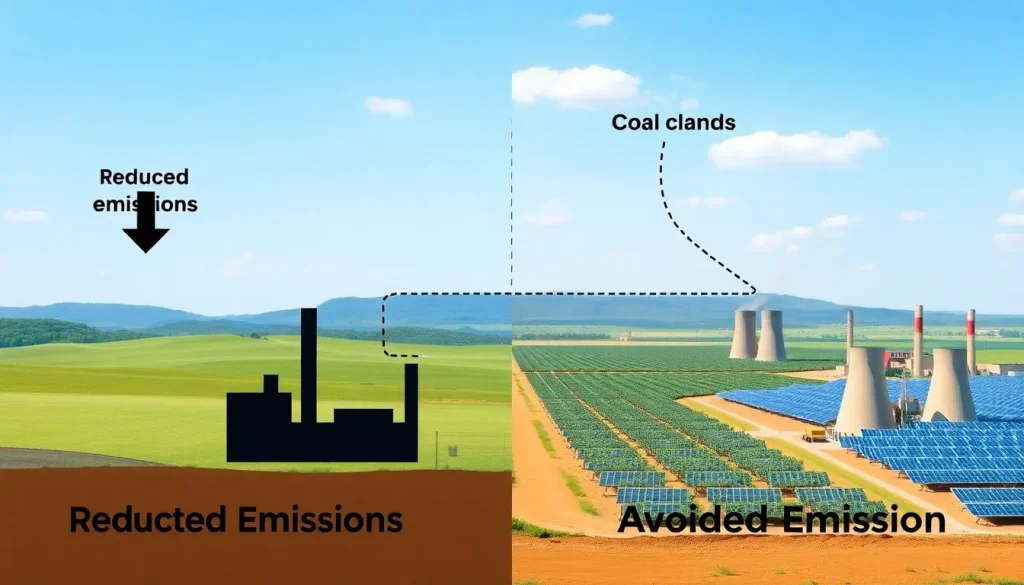
Avoided emissions and reduced emissions are two distinct concepts in greenhouse gas (GHG) accounting that describe different ways of mitigating climate change. Reduced emissions refer to the direct, quantifiable decrease in GHG output from a specific source, such as a factory, power plant, or vehicle, compared to a historical baseline. This is an absolute reduction in the emissions that an entity is directly responsible for. Avoided emissions, on the other hand, are the emissions that would have been released in a hypothetical, counterfactual scenario where a specific project, product, or intervention did not exist. They represent the difference between the emissions that actually occurred and the emissions that would have occurred without the intervention.
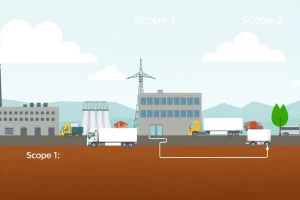
The distinction is fundamental to carbon accounting, corporate climate target-setting, and the integrity of carbon markets. Reduced emissions are typically reported as part of a company’s Scope 1, 2, or 3 inventory and are used to track progress toward absolute emission reduction targets. Avoided emissions, however, are reported separately because they occur outside the company’s value chain and are based on a counterfactual baseline that cannot be directly measured. Understanding this difference helps prevent misleading claims and ensures that climate action is both credible and effective.
Overview
In the global effort to limit climate change, organizations and governments track their greenhouse gas emissions to measure progress. Two key metrics have emerged: reduced emissions and avoided emissions. While both are important for understanding climate impact, they serve different purposes and are calculated using different methodologies. Reduced emissions are a direct measure of an entity’s own decarbonization, while avoided emissions represent the climate benefit a product or service provides to others. The distinction is critical for setting science-based targets, evaluating carbon credits, and making investment decisions that align with a net-zero future.
The concept of avoided emissions is particularly relevant for companies that produce low-carbon technologies, such as solar panels, electric vehicles, or plant-based proteins. These companies may not significantly reduce their own operational emissions, but their products enable others to avoid emissions. For example, a solar panel manufacturer’s Scope 1 and 2 emissions might remain stable, but the panels it sells displace fossil fuel-based electricity, thereby avoiding emissions that would have otherwise occurred. Properly accounting for these avoided emissions helps quantify the broader climate benefit of such products, but it must be done transparently to avoid greenwashing.
How It Works
Reduced emissions are calculated by comparing current emissions from a source to a historical baseline. For instance, if a factory emitted 100,000 tonnes of CO₂ in 2020 and 90,000 tonnes in 2025 after implementing efficiency measures, it has reduced its emissions by 10,000 tonnes. This reduction is real, measurable, and attributable to the entity’s own operations. It is typically reported in corporate sustainability reports following standards like the GHG Protocol.
Avoided emissions, on the other hand, require establishing a counterfactual baseline: what would have happened in the absence of the project or product. This involves defining a reference scenario, such as the grid-average emission factor for electricity that would have been used if a solar farm had not been built. The avoided emissions are then calculated as the difference between the emissions in the reference scenario and the emissions in the project scenario. Because the reference scenario is hypothetical, avoided emissions are inherently uncertain and rely on assumptions about future behavior, technology, and policy. Methodologies for calculating avoided emissions are provided by frameworks like the WRI’s GHG Protocol for Project Accounting and the Science Based Targets initiative’s guidance for avoided emissions.
Why It Matters
Understanding the difference between avoided and reduced emissions is essential for credible climate action. Companies that conflate the two risk misleading stakeholders about their true environmental performance. For example, a fossil fuel company might claim it is reducing global emissions by selling natural gas that displaces coal, but this is an avoided emission claim, not a reduction in its own carbon footprint. Without clear separation, such claims can obscure the need for absolute emission cuts within the company’s own value chain.
For investors and policymakers, the distinction helps in evaluating the real-world impact of technologies and projects. Avoided emissions can highlight the transformative potential of low-carbon solutions, but they should not be used to offset or distract from insufficient direct emission reductions. Properly distinguishing between the two supports the integrity of carbon markets, ensures that climate targets are met with real, verifiable reductions, and directs capital toward activities that genuinely accelerate the transition to a net-zero economy.
Common Misconceptions
One common misconception is that avoided emissions can be used to offset a company’s own carbon footprint. In reality, avoided emissions occur outside the company’s value chain and cannot be netted against its Scope 1, 2, or 3 emissions. Doing so would result in double counting and undermine the accuracy of corporate GHG inventories. Another misunderstanding is that avoided emissions are always additional—meaning they would not have occurred without the project. However, additionality must be demonstrated through rigorous assessment, and not all avoided emissions claims meet this standard.
Another point of confusion is the belief that reduced emissions and avoided emissions are interchangeable terms. They are not. Reduced emissions are absolute and internal to an entity’s operations, while avoided emissions are relative and external. For example, a company that installs solar panels on its own factory reduces its Scope 2 emissions. If that same company sells solar panels to others, the resulting displacement of grid electricity is an avoided emission for the buyer, not a reduction for the manufacturer. Clear labeling and separate reporting are necessary to maintain transparency.
Data Limitations and Uncertainties
Calculating avoided emissions involves significant uncertainties because it relies on a counterfactual baseline that cannot be directly observed. The choice of baseline scenario, assumptions about future energy mixes, technological change, and policy developments all influence the result. Different methodologies can yield widely varying estimates for the same project, making comparisons difficult. For example, the avoided emissions from a renewable energy project depend on the assumed carbon intensity of the displaced grid electricity, which may change over time as the grid decarbonizes.
There is also a risk of overstating avoided emissions if the project does not meet strict additionality criteria—i.e., if the project would have happened anyway without the incentive of carbon credits or specific climate policies. Furthermore, avoided emissions are not typically verified to the same standard as direct emission reductions, and there is no universally accepted accounting framework. This lack of standardization can lead to inconsistent reporting and challenges in aggregating avoided emissions across different projects or sectors.
Examples
Reduced Emissions: A cement plant installs carbon capture technology, directly capturing and storing 100,000 tonnes of CO₂ per year that would otherwise be released into the atmosphere. The plant reports this as a reduction in its Scope 1 emissions.
Avoided Emissions: A company manufactures high-efficiency heat pumps. When customers replace their gas furnaces with these heat pumps, the resulting decrease in natural gas combustion avoids emissions. The heat pump manufacturer may report these avoided emissions as the climate benefit of its products, but the actual emission reduction occurs at the customer’s site and is not part of the manufacturer’s Scope 1, 2, or 3 inventory.
Combined Example: A wind farm developer builds a new wind farm. The developer’s own construction emissions are part of its Scope 1. Once operational, the wind farm generates electricity that displaces fossil fuel-based power. The difference between the emissions from the displaced fossil fuel generation and the near-zero emissions of the wind farm represents avoided emissions. These avoided emissions can be sold as carbon credits, but they are not counted as a reduction in the developer’s own carbon footprint.
Benefits, Limitations and Trade-offs
The primary benefit of distinguishing between reduced and avoided emissions is enhanced transparency and accountability in climate reporting. It allows stakeholders to assess whether a company is genuinely decarbonizing its own operations or relying on external, often hypothetical, emission savings. For companies producing low-carbon solutions, reporting avoided emissions can demonstrate the positive climate impact of their products and attract investment aligned with the Paris Agreement goals.
However, avoided emissions claims carry limitations. They are not a substitute for reducing a company’s own value chain emissions, and overreliance on them can lead to accusations of greenwashing. There is also a trade-off: while avoided emissions can highlight the systemic benefits of a product, they may divert attention from the need to address the company’s direct and indirect emissions. Robust accounting requires clear separation, conservative assumptions, and third-party verification to ensure credibility.
FAQ
What is the difference between avoided emissions and reduced emissions?
Reduced emissions are direct, measurable decreases in greenhouse gas output from a specific source. Avoided emissions are the hypothetical emissions that would have been released if a project or product had not been implemented.
Can avoided emissions be used to offset a company's carbon footprint?
No. Avoided emissions occur outside a company's value chain and cannot be used to offset its own Scope 1, 2, or 3 emissions. Doing so would lead to double counting and misrepresentation of climate performance.
Why is it important to distinguish between avoided and reduced emissions?
The distinction ensures transparent and credible climate reporting, prevents greenwashing, and helps investors and policymakers assess whether a company is genuinely decarbonizing its own operations or relying on external, often uncertain, emission savings.
References
- World Resources Institute & World Business Council for Sustainable Development. (2004). The Greenhouse Gas Protocol: A Corporate Accounting and Reporting Standard.
- Science Based Targets initiative. (2023). SBTi Corporate Net-Zero Standard.
- Gold Standard. (2021). Avoided Emissions Guidance.