In brief
At a glance
Quick Facts
- Definition
- A marine heatwave is a period of at least five consecutive days when sea surface temperatures are in the top 10% of historical values for that region and time of year.
- Frequency Increase
- Since the early 20th century, the global frequency of marine heatwaves has increased by about 50%.
- Key Driver
- Rising background ocean temperatures due to human-induced climate change make extreme warm events more likely.
- Notable Event
- The 2014–2016 Northeast Pacific marine heatwave, known as 'The Blob,' caused massive die-offs of marine life and harmful algal blooms.
- Ecological Impact
- Marine heatwaves can cause coral bleaching, loss of kelp forests, and shifts in species distribution.
- Economic Impact
- They disrupt fisheries and aquaculture, leading to billions of dollars in losses globally.
- Future Projections
- Under high-emission scenarios, marine heatwave days could increase by a factor of 50 by 2100.
Key Takeaways
- Marine heatwaves are prolonged periods of extreme ocean warmth that are increasing in frequency, intensity, and duration due to climate change.
- They disrupt marine ecosystems, causing coral bleaching, harmful algal blooms, and mass mortality of marine species.
- Rising background ocean temperatures mean that natural variability now pushes temperatures into dangerous extremes more often.
- These events have severe economic consequences for fisheries, aquaculture, and coastal communities worldwide.
What Are Marine Heatwaves?
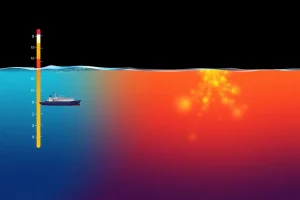
A marine heatwave is a period of at least five consecutive days when sea surface temperatures are in the top 10% of historical values for that region and time of year. Unlike a single hot day, these events persist for weeks to months and can cover thousands of square kilometers. They are defined relative to a long-term climatological baseline, meaning that a marine heatwave in one location may involve different absolute temperatures than in another, but both represent extreme conditions for that ecosystem.
Marine heatwaves can occur in any season and are not limited to the surface; they often extend tens to hundreds of meters deep. They are analogous to heatwaves on land but occur in the ocean, where water’s high heat capacity means temperature changes are slower but can accumulate enormous amounts of energy. The phenomenon has gained attention because it is becoming more frequent, more intense, and longer-lasting, with profound consequences for marine life and human societies.
Overview
Marine heatwaves are a global phenomenon that has been documented in every ocean basin. Scientific analyses show that since the early 20th century, the frequency of marine heatwaves has increased by about 50%, and their intensity and duration have also risen. This trend is not uniform; some regions have experienced much larger increases than others. The underlying driver is the long-term warming of the ocean, which has absorbed more than 90% of the excess heat from greenhouse gas emissions. As the baseline temperature climbs, natural fluctuations that once produced only mild warm spells now push temperatures into the extreme range, triggering marine heatwaves more often.
The impacts of these events are wide-ranging. They can cause mass coral bleaching, destroy kelp forests, shift fish populations, and fuel harmful algal blooms that poison marine life and contaminate seafood. Economically, they disrupt fisheries and aquaculture, damage coastal tourism, and increase the risk of extreme weather. Because the ocean plays a central role in regulating the Earth’s climate, changes in its temperature patterns have cascading effects on weather, carbon storage, and global biodiversity.
How It Works
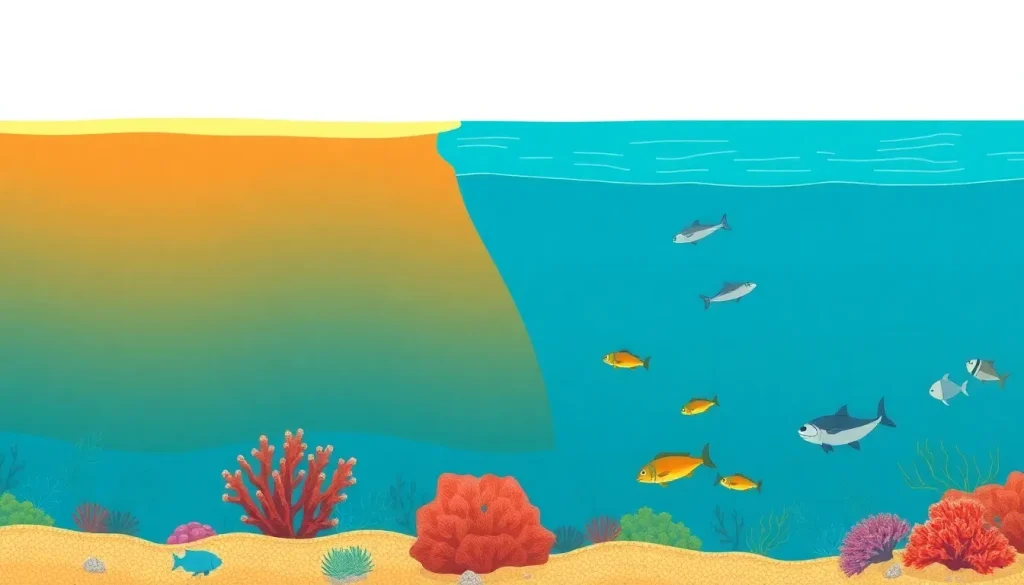
Marine heatwaves develop when a combination of factors reduces heat loss from the ocean or increases heat gain. The most common mechanism is a persistent high-pressure system that sits over a region, suppressing winds and cloud cover. Without wind, there is less mixing of surface waters with cooler, deeper water, and without clouds, more solar radiation reaches the sea surface. This allows the surface layer to warm rapidly. Ocean currents can also play a role by transporting warm water into a region or by preventing the usual upwelling of cold, nutrient-rich water.
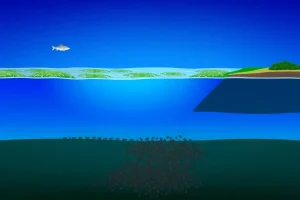
Once a marine heatwave is established, it can be self-reinforcing. Warmer water holds less dissolved gas, including oxygen, which can stress marine organisms. The warm surface layer also becomes more stable, further inhibiting mixing and allowing heat to accumulate. The depth of the heatwave matters: shallow events primarily affect surface-dwelling species, while deeper heatwaves can disrupt benthic communities and alter nutrient cycling. The duration of the event determines the severity of ecological impacts, as many organisms can tolerate short-term heat stress but not prolonged exposure.
Main Causes or Drivers
The immediate causes of a marine heatwave are natural atmospheric and oceanic patterns, such as persistent high-pressure systems, shifts in the jet stream, or El Niño events. However, the long-term increase in marine heatwave frequency and severity is overwhelmingly driven by human-induced climate change. The global ocean has warmed by about 0.8°C since the pre-industrial era, and this warming is not uniform. Some regions have warmed by more than 2°C. This elevated background temperature means that natural variability now more easily crosses the threshold into extreme heat.
Climate change also alters the behavior of atmospheric circulation patterns, potentially making the high-pressure systems that trigger marine heatwaves more persistent or intense. Additionally, the ocean’s increased heat content provides more energy to fuel these events. While natural drivers like El Niño will continue to cause marine heatwaves, their impacts are amplified by the warmer baseline. In many cases, what would have been a moderate warm event in the past now becomes a record-breaking marine heatwave.
Environmental and Human Impacts
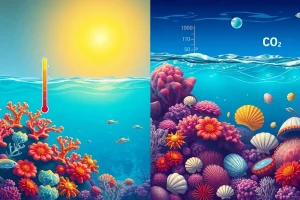
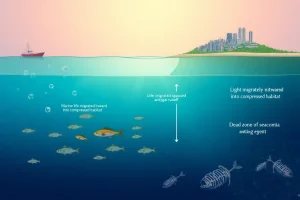
Marine heatwaves have severe ecological consequences. Coral reefs are among the most vulnerable: when water temperatures exceed a threshold, corals expel their symbiotic algae, leading to bleaching. If the heat persists, corals die, and the entire reef ecosystem collapses. Kelp forests, which provide habitat for numerous species, can be decimated by warm water, as seen in the loss of giant kelp off Tasmania and California. Seagrass meadows, important carbon sinks, also suffer die-offs. Mass mortality events affect fish, seabirds, and marine mammals, either directly from heat stress or indirectly through food web disruptions.
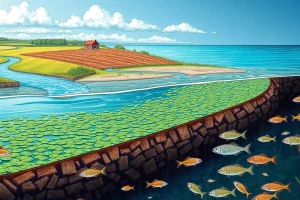
Harmful algal blooms often accompany marine heatwaves, as warm, stratified water favors toxic species. These blooms can contaminate shellfish, causing fisheries closures and human health risks. The economic toll is substantial: fisheries and aquaculture industries lose stock, coastal tourism declines when beaches are closed or reefs are bleached, and extreme weather events fueled by warm ocean waters—such as tropical cyclones—cause additional damage. Communities that depend on the ocean for food and livelihoods are disproportionately affected, particularly in developing nations.
Regional Differences
The impacts of marine heatwaves vary by region due to differences in oceanography, ecology, and human dependence. Tropical regions, especially the Coral Triangle and the Caribbean, face repeated coral bleaching events that threaten biodiversity and tourism. Temperate zones, such as the Northeast Pacific and the Tasman Sea, have experienced dramatic shifts in species composition, with warm-water species moving poleward and cold-water species declining. Upwelling systems, like the California Current, are vulnerable when heatwaves suppress nutrient-rich upwelling, reducing productivity and affecting fisheries.
Polar regions are also experiencing marine heatwaves, with consequences for sea ice and ice-dependent species. The Mediterranean Sea, a semi-enclosed basin, warms rapidly and has seen frequent heatwaves that harm native species and facilitate the spread of invasive species. Each region’s unique combination of physical and biological factors determines the severity of impacts, but the common thread is that ecosystems and human communities are often unprepared for the rapid changes.
What Businesses and Governments Can Do
Addressing the growing threat of marine heatwaves requires both adaptation and mitigation. Governments can invest in improved monitoring and early warning systems that use satellite data, ocean buoys, and climate models to predict marine heatwaves weeks to months in advance. This information can help fisheries managers adjust quotas, close areas temporarily, or relocate aquaculture operations. Establishing and effectively managing marine protected areas can provide refuges where ecosystems are more resilient to heat stress, especially when combined with efforts to reduce local stressors like pollution and overfishing.
Businesses, particularly in fisheries, aquaculture, and tourism, can adopt flexible practices that account for climate variability. Insurance products and financial instruments can help coastal communities recover from losses. At the global level, the most critical action is reducing greenhouse gas emissions to slow ocean warming. International cooperation under frameworks like the Paris Agreement is essential. Without significant emissions reductions, marine heatwaves will continue to intensify, and adaptation alone will become increasingly difficult and costly.
FAQ
What is a marine heatwave?
A marine heatwave is a period of at least five days when sea surface temperatures are in the top 10% of historical values for that region and time of year, representing extreme ocean warmth.
How do marine heatwaves affect humans?
They can cause mass die-offs of fish and shellfish, disrupt fisheries, promote harmful algal blooms that contaminate seafood, and intensify extreme weather events like tropical cyclones, with significant economic and health impacts.
Why are marine heatwaves becoming more frequent?
Rising global ocean temperatures due to climate change mean that even natural variability can push temperatures into the extreme range more often, making marine heatwaves more common and severe.
References
- NOAA Marine Heatwaves Fact Sheet
- IPCC Special Report on the Ocean and Cryosphere in a Changing Climate (2019)
- Hobday, A. J., et al. (2016). A hierarchical approach to defining marine heatwaves. Progress in Oceanography, 141, 227-238.