In brief
At a glance
Quick Facts
- Definition
- Coastal dead zones are areas of water with extremely low oxygen levels (hypoxia) caused by excessive nutrient pollution, primarily nitrogen and phosphorus.
- Primary Nutrients
- Nitrogen and phosphorus from agricultural runoff, sewage, and industrial sources are the main drivers.
- Process
- Nutrients fuel algal blooms; when algae die and decompose, bacteria consume dissolved oxygen, creating hypoxia.
- Largest Dead Zone
- The Gulf of Mexico dead zone can exceed 15,000 square kilometers, driven by Mississippi River nutrient loads.
- Global Occurrence
- Over 400 coastal dead zones have been documented worldwide, affecting major water bodies on every continent except Antarctica.
- Key Impact
- Dead zones kill fish and shellfish, disrupt food webs, and cause economic losses to fisheries and tourism.
- Recovery Potential
- Reducing nutrient inputs can shrink dead zones; the Black Sea dead zone declined after fertilizer use dropped in the 1990s.
Key Takeaways
- Nutrient pollution from human activities fuels excessive algal growth, which when decomposed, depletes oxygen and creates coastal dead zones.
- The process, known as eutrophication, involves a chain reaction: nutrient loading, algal blooms, bacterial decomposition, and hypoxia.
- Dead zones harm marine life, disrupt ecosystems, and cause significant economic losses to fisheries and tourism.
- Reducing nutrient inputs at their sources is the most effective long-term strategy to prevent and shrink dead zones.
What Is How Nutrient Pollution Creates Coastal Dead Zones?
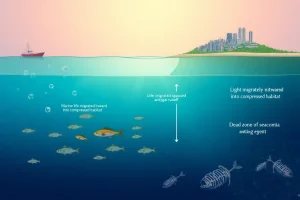
Coastal dead zones are areas in oceans, seas, or large lakes where the concentration of dissolved oxygen is so low that most marine life cannot survive. This condition, known as hypoxia (typically defined as less than 2 milligrams of oxygen per liter of water), is primarily caused by excessive nutrient pollution from human activities. The nutrients—mainly nitrogen and phosphorus—enter coastal waters through rivers, runoff, and atmospheric deposition, acting as fertilizers that trigger explosive growth of algae and phytoplankton. When these organisms die and sink, their decomposition by bacteria consumes the dissolved oxygen in the water, leading to hypoxic or even anoxic (oxygen-free) conditions. The result is a “dead zone” where fish, crabs, and other aquatic animals either flee or suffocate.
This phenomenon is a classic example of eutrophication, the over-enrichment of water bodies with nutrients. While eutrophication can occur naturally over centuries, human activities have dramatically accelerated the process, causing dead zones to form in a matter of years or decades. Coastal dead zones are now a global environmental problem, with over 400 systems identified worldwide, affecting major water bodies such as the Gulf of Mexico, the Baltic Sea, and the Chesapeake Bay. Understanding the mechanisms, causes, and consequences of nutrient-driven hypoxia is essential for developing effective management strategies to protect marine ecosystems and the human communities that depend on them.
How It Works
The formation of a coastal dead zone follows a well-understood sequence of events, beginning with the input of excess nutrients and ending with oxygen-starved waters. The process can be broken down into several key stages:
- Nutrient Loading: Nitrogen and phosphorus from agricultural fertilizers, animal manure, sewage, and industrial discharges enter rivers and streams, eventually reaching coastal waters. These nutrients are the primary limiting factors for plant growth in marine environments, so their addition acts as a powerful fertilizer.
- Algal Bloom: The sudden abundance of nutrients triggers rapid growth of phytoplankton and macroalgae (seaweeds). This explosive increase, known as an algal bloom, can turn the water green or brown and may cover large surface areas. Some blooms consist of harmful algal species that produce toxins, but even non-toxic blooms contribute to hypoxia.
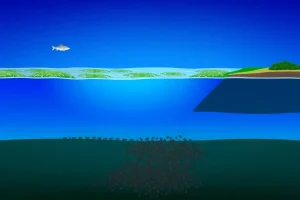
- Death and Sedimentation: Algal blooms are short-lived. When the algae die, they sink to the bottom along with fecal pellets from zooplankton that grazed on them. This organic matter accumulates on the seafloor.
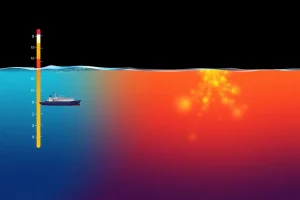
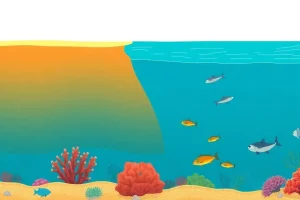
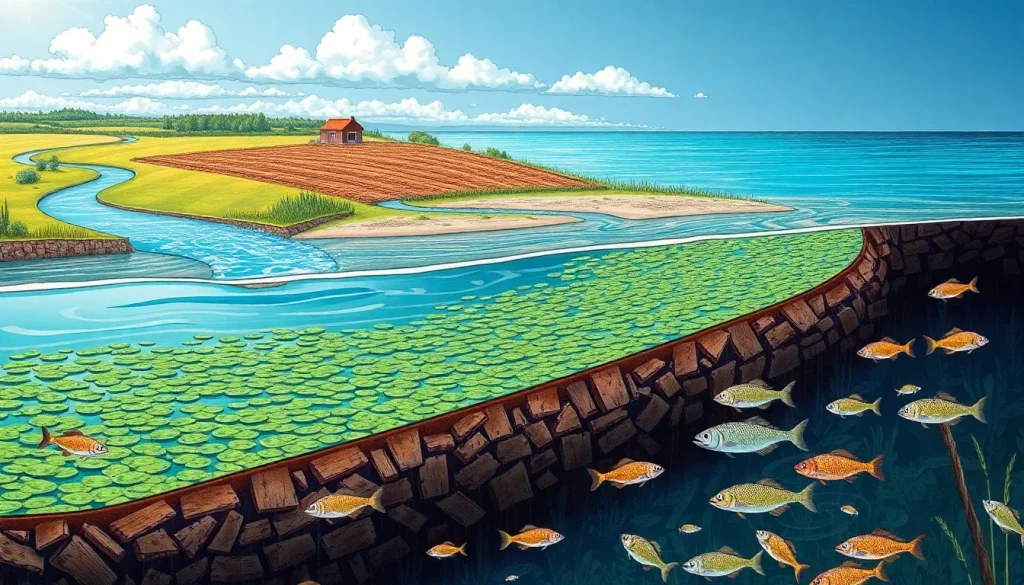
- Decomposition and Oxygen Consumption: Bacteria and other microbes decompose the organic material, a process that consumes dissolved oxygen from the surrounding water. In well-mixed waters, oxygen from the surface would replenish the bottom layer, but in many coastal areas, stratification occurs—warmer, less dense surface water sits atop cooler, denser bottom water, preventing vertical mixing. As a result, oxygen in the bottom layer is depleted faster than it can be replaced.
- Hypoxia and Dead Zone Formation: When oxygen levels fall below 2 mg/L, most mobile organisms (fish, shrimp, crabs) flee the area if they can. Sessile (attached) organisms such as clams, mussels, and worms may die. If oxygen is completely exhausted (anoxia), only anaerobic bacteria can survive, and the area becomes a biological desert.
Stratification is a critical factor. In many coastal regions, especially during summer, solar heating warms the surface water, creating a distinct layer that prevents oxygen from the atmosphere from reaching the bottom. This physical barrier, combined with high organic matter decomposition, leads to seasonal dead zones that persist until autumn storms or cooling breaks down the stratification and re-oxygenates the water. In some enclosed basins like the Black Sea, permanent stratification can maintain a dead zone year-round.
Main Causes or Drivers
The primary drivers of coastal dead zones are human activities that increase the flux of nitrogen and phosphorus into coastal waters. These nutrients originate from a variety of sources, often linked to modern agriculture, urbanization, and energy production:
- Agricultural Runoff: The largest contributor globally. Synthetic fertilizers and animal manure applied to croplands contain high levels of nitrogen and phosphorus. When not fully taken up by crops, these nutrients wash into streams and rivers during rainfall or irrigation, eventually reaching the coast. Livestock operations also produce nutrient-rich waste that can leach into waterways.
- Urban and Suburban Runoff: Stormwater from cities and residential areas carries lawn fertilizers, pet waste, detergents, and other nutrient sources into drainage systems and directly into water bodies. Impervious surfaces like roads and parking lots increase runoff volume and speed.
- Wastewater Treatment Plants: Many municipal and industrial treatment facilities discharge effluent containing nitrogen and phosphorus, even after treatment. Older or overloaded plants may release higher concentrations. In some regions, untreated sewage is still discharged directly into rivers and coastal waters.
- Industrial Discharges: Food processing, pulp and paper mills, and other industries can release nutrient-rich wastewater.
- Atmospheric Deposition: Nitrogen oxides from fossil fuel combustion in vehicles and power plants can be deposited onto land and water surfaces through rain or dry fallout, contributing to nutrient loading in coastal areas far from the emission source.
- Aquaculture: Fish farms can release uneaten feed and fish waste, adding nutrients directly to coastal waters.
The relative importance of these sources varies by region. In the Mississippi River Basin, which feeds the Gulf of Mexico dead zone, agricultural runoff is the dominant source, contributing over 70% of the nitrogen and phosphorus. In the Chesapeake Bay, a mix of agriculture, urban runoff, and atmospheric deposition plays a role. Understanding the specific sources is crucial for targeting mitigation efforts.
Environmental and Human Impacts
Coastal dead zones have profound ecological and socioeconomic consequences. The immediate effect is the loss of habitat for marine organisms. Fish, shrimp, and crabs may migrate away from hypoxic areas, but this displacement can increase competition and predation in oxygenated refuges. Sessile species like oysters and clams cannot escape and often die, leading to long-term declines in populations. The disruption of food webs can ripple through the ecosystem, affecting predators such as seabirds and marine mammals.
Economically, dead zones threaten commercial and recreational fisheries. The Gulf of Mexico dead zone, for example, impacts the valuable shrimp and finfish industries. Reduced catches, smaller individual sizes, and shifts in species composition can lead to financial losses for fishers and related businesses. Tourism and recreation also suffer when beaches are closed due to algal blooms or when fish kills wash ashore. Additionally, some algal blooms produce toxins that can contaminate shellfish, posing health risks to humans and leading to costly fishery closures. The degradation of coastal ecosystems also diminishes their natural services, such as nutrient cycling, storm protection, and carbon sequestration.
Examples
Dead zones have been documented in over 400 coastal systems worldwide, with some of the most well-known examples including:
- Gulf of Mexico Dead Zone: The largest in the United States and one of the largest globally, this hypoxic zone forms each summer off the coasts of Louisiana and Texas. It is fueled by nutrient runoff from the Mississippi River Basin, which drains 41% of the contiguous United States. Its size varies annually but can exceed 15,000 square kilometers. The zone severely impacts the region’s shrimp and finfish fisheries.
- Chesapeake Bay: The largest estuary in the U.S. experiences seasonal dead zones driven by nutrients from agriculture, urban runoff, and wastewater. Despite decades of restoration efforts, hypoxia remains a persistent problem, affecting blue crabs, oysters, and striped bass.
- Baltic Sea: Home to the world’s largest human-induced dead zone, the Baltic Sea suffers from widespread hypoxia due to nutrient inputs from surrounding countries, combined with limited water exchange with the North Sea. The dead zone covers roughly one-third of the sea’s area and has caused major ecological shifts.
- Black Sea: In the 1970s and 1980s, the Black Sea’s northwestern shelf experienced severe hypoxia due to nutrient loads from the Danube River. After the collapse of the Soviet Union and a decline in fertilizer use, nutrient inputs dropped, and the dead zone shrank significantly, demonstrating that recovery is possible.
- Lake Erie: Although a freshwater lake, Lake Erie experiences seasonal dead zones driven by phosphorus runoff from agricultural land. The central basin’s hypoxia affects fish populations and drinking water quality, highlighting that dead zones are not limited to marine environments.
Connections to Other Systems
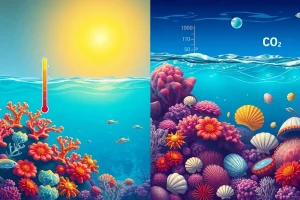
Coastal dead zones are closely linked to several other environmental processes and issues. Eutrophication, the overarching process of nutrient over-enrichment, is the direct cause of dead zones and also leads to harmful algal blooms (HABs). Some HABs produce potent toxins that can kill marine life and cause human illness through contaminated seafood or respiratory irritation. Climate change exacerbates dead zones by increasing water temperatures, which reduces oxygen solubility and strengthens stratification. Warmer waters also speed up metabolic rates, accelerating oxygen consumption. Changes in precipitation patterns can increase nutrient runoff from land, while sea-level rise may alter coastal circulation. Additionally, dead zones can interact with ocean acidification; the decomposition of organic matter releases carbon dioxide, lowering pH in already stressed waters. These connections underscore the need for integrated management approaches that address multiple stressors simultaneously.
Solutions
Addressing coastal dead zones requires reducing nutrient inputs at their sources. A combination of technological, agricultural, and policy measures can be effective:
- Improved Agricultural Practices: Precision farming techniques that apply fertilizer only when and where needed can significantly reduce runoff. Cover crops, buffer strips, and conservation tillage help retain nutrients in the soil. Managing manure from livestock operations to prevent leakage into waterways is also critical.
- Wastewater Treatment Upgrades: Advanced treatment technologies can remove nitrogen and phosphorus from sewage before discharge. Upgrading aging infrastructure and implementing nutrient recovery systems can further reduce loads.
- Wetland Restoration: Wetlands act as natural filters, trapping sediments and absorbing nutrients. Restoring coastal and riverine wetlands can intercept nutrients before they reach open water.
- Stormwater Management: Green infrastructure such as rain gardens, permeable pavements, and vegetated swales can reduce urban runoff and filter pollutants.
- Policy and Regulation: Setting nutrient limits for water bodies (Total Maximum Daily Loads), establishing nutrient trading programs, and enforcing clean water laws can drive reductions. International cooperation is essential for transboundary water bodies like the Baltic Sea.
- Public Education: Encouraging individuals to reduce fertilizer use on lawns, properly dispose of pet waste, and maintain septic systems can contribute to local improvements.
Recovery is possible, as shown by the Black Sea and some smaller systems, but it often takes years to decades for ecosystems to fully rebound after nutrient reductions. Sustained commitment and adaptive management are key.
FAQ
What is a coastal dead zone?
A coastal dead zone is an area of water with very low dissolved oxygen (hypoxia) that cannot support most marine life. It is caused by excessive nutrient pollution that triggers algal blooms, whose decomposition consumes oxygen.
How does nutrient pollution create dead zones?
Nutrients like nitrogen and phosphorus from farms, sewage, and runoff enter coastal waters, causing algae to grow rapidly. When the algae die and sink, bacteria decompose them, using up oxygen in the bottom water. If oxygen is not replenished, a dead zone forms.
Why do dead zones matter?
Dead zones kill or displace fish, crabs, and other marine organisms, disrupting food webs and damaging commercial and recreational fisheries. They also degrade water quality, harm tourism, and can lead to toxic algal blooms that threaten human health.
References
- National Oceanic and Atmospheric Administration (NOAA). "What is a dead zone?" https://oceanservice.noaa.gov/facts/deadzone.html
- Diaz, R. J., & Rosenberg, R. (2008). Spreading dead zones and consequences for marine ecosystems. Science, 321(5891), 926-929.
- United States Environmental Protection Agency (EPA). "Nutrient Pollution: The Problem." https://www.epa.gov/nutrientpollution/problem