In brief
At a glance
Quick Facts
- pH drop since Industrial Revolution
- Surface ocean pH has decreased from about 8.2 to 8.1, a 30% increase in acidity.
- Atmospheric CO2 absorbed
- The ocean has absorbed roughly one-third of all human-caused CO2 emissions.
- Current acidification rate
- The rate is faster than any known in the past 300 million years.
- Natural recovery timescale
- Without intervention, full chemical recovery would take tens of thousands of years.
- Carbonate ion decline
- Carbonate ion concentrations have decreased by about 16% since pre-industrial times.
- Affected organisms
- Corals, mollusks, echinoderms, and some plankton are particularly vulnerable.
- Economic impact
- Global annual economic losses from ocean acidification could reach hundreds of billions of dollars by 2100 if unmitigated.
Key Takeaways
- The ocean will eventually recover from acidification if atmospheric CO2 returns to pre-industrial levels, but natural recovery takes tens of thousands of years.
- Ocean acidification is caused by the absorption of excess carbon dioxide from the atmosphere, which lowers pH and reduces carbonate ion availability.
- Current acidification rates are faster than any known in the past 300 million years, outpacing the ocean’s natural buffering capacity.
- Recovery depends on reducing atmospheric CO2 through emissions cuts and carbon removal; without these, acidification will continue to worsen.
- Even if CO2 emissions stop, the ocean will remain acidified for millennia, with lasting impacts on marine ecosystems and human communities.
What Is Can the Ocean Recover From Acidification?
The question “Can the ocean recover from acidification?” addresses whether the chemical changes in seawater caused by excess carbon dioxide (CO2) can be reversed, and if so, over what timescale. Ocean acidification refers to the ongoing decrease in ocean pH and carbonate ion concentration due to the uptake of anthropogenic CO2 from the atmosphere. Recovery means returning the ocean’s carbonate chemistry to a state that supports pre-industrial marine life and ecosystem functions. The answer is complex: natural processes can restore the ocean’s pH and carbonate levels, but only over tens of thousands of years. In the near term, recovery is only possible through drastic reductions in CO2 emissions and active removal of CO2 from the atmosphere. The concept of recovery also involves ecological recovery—whether marine organisms and ecosystems can adapt or return to their former states once chemical conditions improve.
Overview
Since the Industrial Revolution, the ocean has absorbed about one-third of the carbon dioxide released by human activities, leading to a measurable drop in surface ocean pH from approximately 8.2 to 8.1—a 30% increase in acidity. This change disrupts the delicate balance of carbonate chemistry that many marine organisms rely on to build shells and skeletons. The rate of acidification today is faster than any known in the past 300 million years, leaving little time for evolutionary adaptation. Recovery is theoretically possible if atmospheric CO2 concentrations return to pre-industrial levels, but the natural processes that regulate ocean chemistry—such as weathering of rocks and sedimentation—operate on timescales of thousands to hundreds of thousands of years. Thus, while the ocean can recover, the speed and extent of recovery depend heavily on human actions to curb emissions and potentially accelerate natural processes.
How It Works
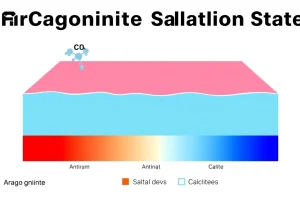
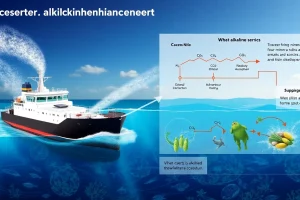
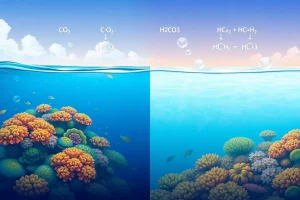
Ocean acidification is driven by the dissolution of CO2 in seawater, which forms carbonic acid. This acid dissociates into bicarbonate and hydrogen ions, lowering pH. The increase in hydrogen ions also reduces the concentration of carbonate ions, a key building block for calcifying organisms like corals, mollusks, and some plankton. Recovery involves reversing these chemical changes. If atmospheric CO2 levels decline, the ocean will gradually release excess CO2 back to the atmosphere, and pH will rise. However, this outgassing is slow because the ocean’s surface layer must equilibrate with the atmosphere, and mixing with deeper waters takes centuries. Additionally, the natural buffering process—whereby carbonate sediments on the seafloor dissolve to neutralize acidity—operates on timescales of thousands to tens of thousands of years. Enhanced weathering, a proposed geoengineering technique, could speed up this process by adding alkaline minerals to the ocean, but its feasibility and ecological side effects are uncertain.

Main Causes or Drivers
The primary driver of ocean acidification is the increase in atmospheric CO2 from human activities, mainly fossil fuel combustion, cement production, and land-use change. Since the Industrial Revolution, atmospheric CO2 has risen from about 280 parts per million (ppm) to over 420 ppm. The ocean absorbs roughly a quarter of these emissions annually, leading to a steady decline in pH. Other contributing factors include nutrient runoff from agriculture, which can cause localized acidification in coastal waters through eutrophication, and natural events like volcanic eruptions or methane releases, though these are minor compared to anthropogenic CO2. The rate of acidification is directly tied to the rate of CO2 emissions; thus, the main driver of recovery is the reduction of atmospheric CO2 levels, either through emission cuts or carbon dioxide removal technologies.
Environmental and Human Impacts
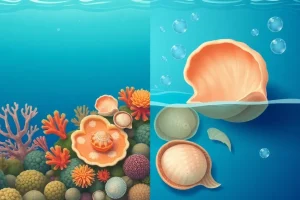
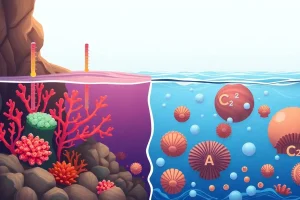
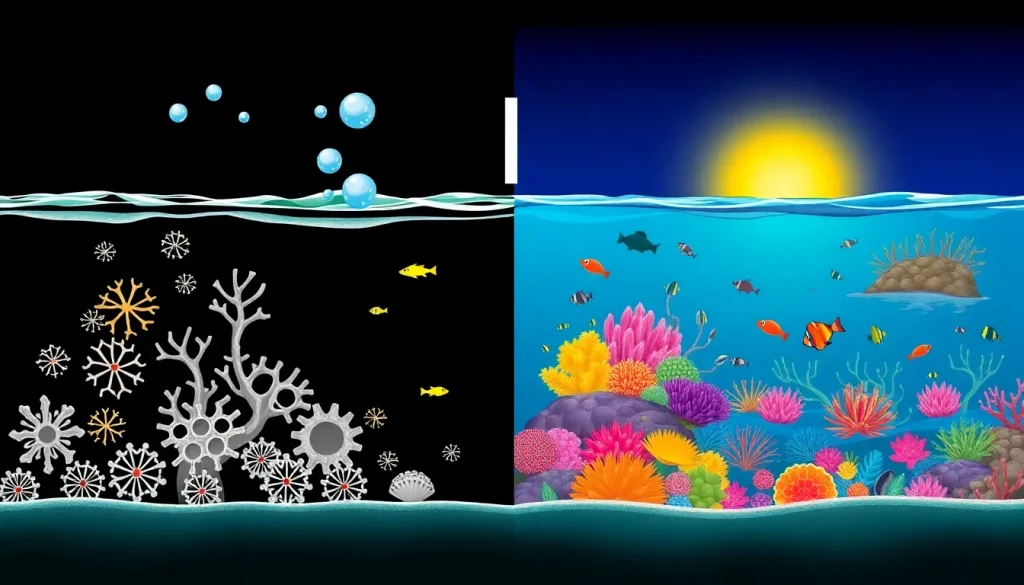
Ocean acidification has profound effects on marine life, particularly organisms that build shells or skeletons from calcium carbonate, such as corals, oysters, clams, sea urchins, and some plankton species. Reduced calcification rates lead to weaker shells, slower growth, and higher mortality, disrupting food webs and threatening biodiversity. Coral reefs, which support immense marine biodiversity and provide coastal protection, are especially vulnerable. Pteropods, tiny marine snails at the base of many food chains, show shell dissolution in acidified waters. These ecological changes have direct human impacts: fisheries and aquaculture face declining stocks, affecting food security and livelihoods for millions of people. Coastal communities lose natural storm protection from degraded reefs. The economic costs of ocean acidification are estimated to be substantial, though precise figures vary. Recovery of these ecosystems depends on the pace and extent of chemical recovery, as well as the ability of species to adapt or migrate.
What the Evidence Shows
Geological records from past periods of high CO2, such as the Paleocene-Eocene Thermal Maximum (PETM) about 56 million years ago, show that ocean acidification events can last for tens of thousands of years before natural processes restore carbonate chemistry. During the PETM, massive CO2 release caused severe acidification and widespread extinction of deep-sea organisms, but the ocean eventually recovered as CO2 was removed by weathering and sedimentation. Modern observations confirm that surface ocean pH is declining globally at a rate of about 0.002 units per year, with significant regional variability. Laboratory and field experiments demonstrate that many calcifying organisms suffer reduced growth and survival under projected future CO2 levels. However, some species show limited adaptive capacity, and certain ecosystems may shift rather than collapse entirely. The paleo-record suggests that recovery is possible, but only after CO2 levels drop, and the current rate of change far exceeds natural background rates, making the outcome for many species uncertain.
Solutions
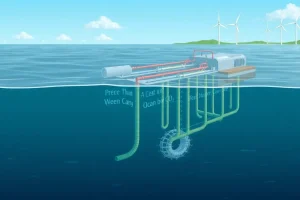
Addressing ocean acidification requires tackling the root cause: excess atmospheric CO2. The most direct solution is rapid and deep reductions in greenhouse gas emissions from energy, industry, agriculture, and land use. Transitioning to renewable energy, improving energy efficiency, and protecting forests are essential. Beyond emission cuts, carbon dioxide removal (CDR) techniques can help lower atmospheric CO2 and accelerate ocean recovery. These include afforestation, bioenergy with carbon capture and storage (BECCS), direct air capture, and ocean-based methods like ocean alkalinity enhancement or iron fertilization. However, many CDR approaches are unproven at scale, carry environmental risks, and require careful governance. Adaptation measures, such as selective breeding of resilient shellfish strains or reducing local stressors like pollution, can buy time for marine ecosystems. Ultimately, a combination of mitigation, removal, and adaptation offers the best chance for meaningful recovery within human timescales.
FAQ
What is ocean acidification?
Ocean acidification is the process by which the ocean becomes more acidic due to the absorption of excess carbon dioxide from the atmosphere, leading to a drop in pH and a reduction in carbonate ions.
How long does it take for the ocean to recover from acidification?
Natural recovery takes tens of thousands of years because it depends on slow geological processes like rock weathering and deep-ocean mixing. With aggressive carbon removal, partial recovery could occur within centuries, but full restoration to pre-industrial conditions would still require millennia.
Why does ocean acidification matter?
It threatens marine ecosystems, especially organisms that build shells and skeletons, disrupts food webs, and impacts human communities that rely on fisheries, aquaculture, and coastal protection. The economic and ecological consequences are global and long-lasting.
References
- IPCC Special Report on the Ocean and Cryosphere in a Changing Climate (2019)
- NOAA Pacific Marine Environmental Laboratory: Ocean Acidification
- Doney, S. C., et al. (2009). Ocean Acidification: The Other CO2 Problem. Annual Review of Marine Science.