In brief
At a glance
Quick Facts
- Global oxygen decline since 1960
- The ocean has lost about 2% of its dissolved oxygen inventory, with some regions losing much more.
- Number of coastal dead zones
- Reported hypoxic sites have increased from fewer than 50 in the 1960s to over 500 by the 2010s.
- Primary cause in open ocean
- Warming-induced stratification and reduced solubility account for most open-ocean deoxygenation.
- Primary cause in coastal waters
- Nutrient pollution from agriculture and sewage is the main driver of coastal hypoxia.
- Oxygen minimum zones
- Naturally low-oxygen regions at 200–1,000 m depth are expanding due to climate change.
- Impact on fisheries
- Habitat compression can increase fish catchability, masking population declines and risking overfishing.
- Greenhouse gas feedback
- Deoxygenation promotes nitrous oxide production, a gas with ~300 times the warming potential of CO₂.
- Threshold for hypoxia
- Water is generally considered hypoxic when dissolved oxygen falls below 2 mg/L.
Key Takeaways
- Ocean deoxygenation is the measurable decline in dissolved oxygen concentrations in the global ocean, a trend that has accelerated since the mid-20th century.
- Two primary human-driven causes are climate change (warming waters hold less oxygen and increase stratification) and nutrient runoff (eutrophication fuels oxygen-consuming microbial blooms).
- Deoxygenation shrinks habitable zones for marine life, forcing species to migrate, altering food webs, and expanding low-oxygen ‘dead zones’ where most animals cannot survive.
- Addressing deoxygenation requires reducing greenhouse gas emissions and curbing nutrient pollution from agriculture and wastewater, alongside local ecosystem management.
What Is Deoxygenation: Why the Ocean Is Losing Oxygen?
Deoxygenation refers to the ongoing decline in the concentration of dissolved oxygen in the ocean. Just as terrestrial animals breathe oxygen from the air, most marine organisms extract oxygen directly from the water. When oxygen levels fall below the thresholds needed to sustain healthy biological function, the condition is called hypoxia; near-zero levels are termed anoxia. Ocean deoxygenation is the large-scale, long-term reduction of oxygen content in both coastal and open-ocean waters, a trend that has been documented globally since the mid-20th century.
This phenomenon is not uniform: some regions experience more severe oxygen loss than others, and certain areas naturally have low oxygen. However, the overall global inventory of dissolved oxygen in the ocean has declined measurably, and the number of coastal dead zones—areas where hypoxia is so severe that most marine life cannot survive—has increased dramatically. Deoxygenation is now recognized as one of the major stressors on marine ecosystems, alongside ocean warming and acidification, and is often called the ‘third pillar’ of climate change impacts on the ocean.
How It Works
Oxygen enters the ocean primarily through two pathways: direct dissolution from the atmosphere at the sea surface, and photosynthesis by marine phytoplankton in sunlit surface waters. From there, oxygen is mixed downward by currents and turbulence, supplying the deeper ocean. The balance between oxygen supply and consumption determines the oxygen concentration at any depth. Deoxygenation occurs when this balance is disrupted—either because less oxygen is being supplied, or because more is being consumed.
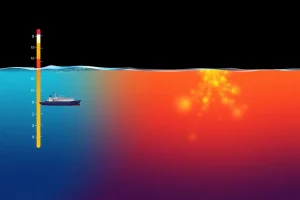
Supply-side deoxygenation is driven by warming and increased stratification. As surface waters warm, they become less dense and form a more stable layer that resists mixing with cooler, deeper water. This ‘cap’ reduces the downward transport of oxygen from the atmosphere and from photosynthetic production. At the same time, warmer water simply holds less dissolved gas—a physical property that directly lowers oxygen saturation. On the consumption side, nutrient pollution from agriculture and sewage stimulates excessive growth of algae. When these blooms die and sink, their decomposition by bacteria consumes large amounts of oxygen, often creating hypoxic or anoxic zones in bottom waters. Both mechanisms are intensifying under human pressure, leading to a net loss of oxygen from the ocean.
Main Causes or Drivers
The two dominant drivers of ocean deoxygenation are climate change and nutrient pollution, though they operate on different scales and through distinct mechanisms.
- Climate change and warming: The ocean absorbs more than 90% of the excess heat trapped by greenhouse gases. As water temperature rises, its capacity to hold dissolved gases decreases—similar to how a warm soda goes flat faster than a cold one. Warming also increases stratification, where a warm, less dense surface layer sits atop cooler, denser water, inhibiting vertical mixing that would otherwise replenish deep-water oxygen. This process is particularly pronounced in the open ocean and is the primary cause of deoxygenation in vast regions of the Pacific and Atlantic.
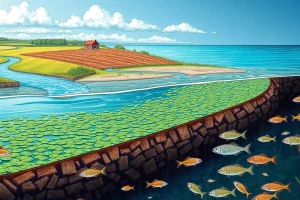
- Nutrient pollution and eutrophication: In coastal waters, excess nitrogen and phosphorus from agricultural fertilizers, livestock waste, and untreated sewage trigger massive algal blooms. When these blooms die and sink, microbial decomposition consumes oxygen, often faster than it can be replenished, leading to hypoxia or anoxia. This is the main driver of coastal dead zones, which have proliferated since the 1960s.
- Other contributing factors: Changes in ocean circulation patterns, such as weakening of the Atlantic Meridional Overturning Circulation (AMOC), can reduce oxygen supply to deep waters. Additionally, some natural processes, like upwelling of naturally low-oxygen water, can exacerbate deoxygenation locally.
Environmental and Human Impacts
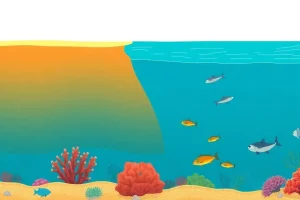
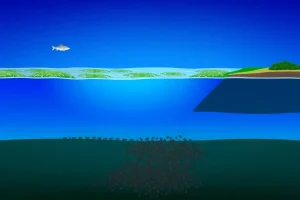
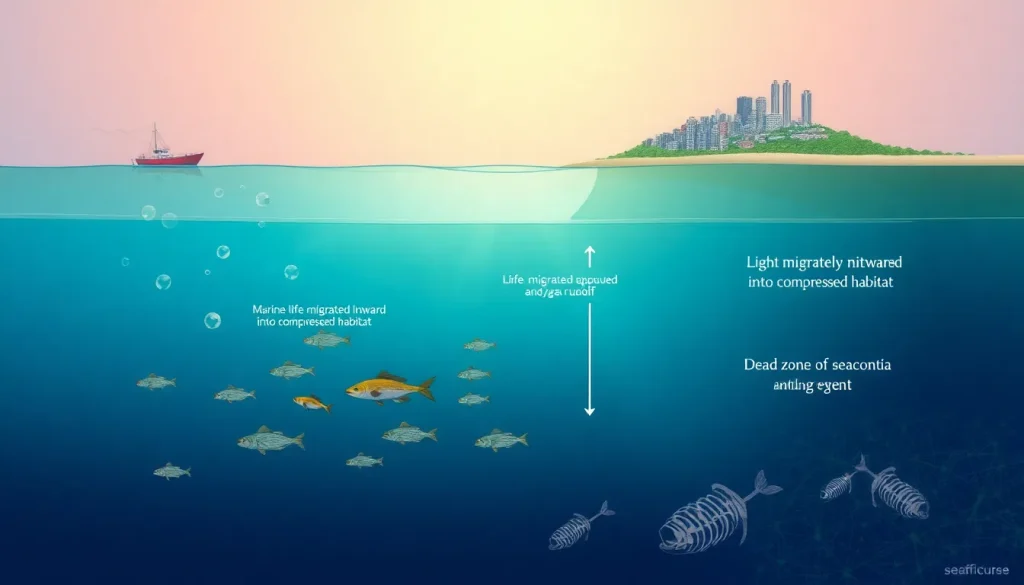
Deoxygenation has profound consequences for marine life. Fish, crustaceans, and other mobile species may avoid hypoxic areas, leading to habitat compression—where they are squeezed into narrower, oxygen-rich surface layers, making them more vulnerable to predators and fishing pressure. Sessile organisms like mussels, clams, and corals cannot escape and may die off. In severe cases, mass mortality events occur, and the seafloor becomes a biological desert. Deoxygenation also disrupts the nitrogen cycle, promoting the production of nitrous oxide, a potent greenhouse gas, and can increase the release of toxic hydrogen sulfide from sediments.
For humans, the impacts are economic and social. Coastal fisheries and aquaculture suffer as fish stocks decline or migrate away from traditional fishing grounds. This threatens food security and livelihoods, particularly in developing nations that rely heavily on seafood protein. The expansion of low-oxygen zones can also compress habitats, making fish more susceptible to overfishing because they are concentrated in smaller areas. Furthermore, deoxygenation interacts with ocean acidification and warming to create ‘triple threats’ that amplify stress on marine organisms, potentially leading to ecosystem collapses with long-term consequences for biodiversity and human well-being.
Regional Differences
Ocean deoxygenation is not uniform; its severity and causes vary by region. The open ocean has experienced a global decline in oxygen content, with the most pronounced losses in the North Pacific, the Southern Ocean, and the tropical oxygen minimum zones (OMZs). OMZs are naturally occurring mid-water layers where oxygen is already low, typically at depths of 200–1,000 meters. These zones are expanding vertically and horizontally due to warming and increased nutrient loads, with the eastern tropical Pacific and the Arabian Sea being hotspots.
Coastal areas suffer from eutrophication-driven hypoxia, often near major river mouths. The Gulf of Mexico’s dead zone, fed by the Mississippi River, is one of the largest in the world, covering thousands of square kilometers each summer. The Baltic Sea has a permanent hypoxic zone exacerbated by agricultural runoff. In contrast, some upwelling regions, like the Humboldt Current off Peru, naturally experience low-oxygen water, but climate change is intensifying these conditions. Even semi-enclosed seas like the Black Sea have deep anoxic layers that are expanding. Understanding these regional differences is crucial for targeted management.
Connections to Other Systems
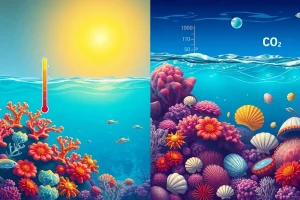
Ocean deoxygenation is tightly linked to other global environmental changes. Warming and acidification—the other two major climate-driven ocean stressors—often co-occur with deoxygenation, creating a ‘triple whammy’ for marine life. For example, warmer water not only holds less oxygen but also increases metabolic rates in marine animals, raising their oxygen demand precisely when supply is dwindling. Acidification, caused by increased CO₂ absorption, can impair the ability of some organisms to cope with low oxygen.
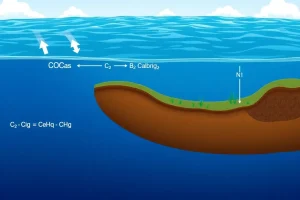
On land, the nitrogen cycle is a key connector. Excess fertilizer use and fossil fuel combustion release reactive nitrogen into the atmosphere and waterways, which eventually reaches the ocean and fuels eutrophication. This creates a feedback loop: deoxygenation can enhance the production of nitrous oxide, a greenhouse gas that contributes to further warming. Additionally, changes in ocean circulation due to climate change can alter the distribution of oxygen and nutrients, affecting marine productivity and carbon sequestration. Thus, deoxygenation is both a consequence and a driver of broader Earth system changes.
Solutions
Addressing ocean deoxygenation requires a dual approach: mitigating the root causes and adapting to the changes already underway. The most fundamental solution is to reduce greenhouse gas emissions to slow global warming and limit further ocean heat uptake. This is a long-term, global effort that depends on transitioning to renewable energy, improving energy efficiency, and protecting natural carbon sinks like forests and wetlands.
For nutrient-driven deoxygenation, targeted actions can yield faster results. Improving agricultural practices—such as precision fertilizer application, cover cropping, and buffer strips—can reduce nitrogen and phosphorus runoff. Upgrading wastewater treatment plants to remove nutrients before discharge is essential. Restoring coastal wetlands and seagrass beds can help filter nutrients and provide oxygen through photosynthesis. At the policy level, setting enforceable limits on nutrient loads and establishing marine protected areas can safeguard critical habitats. While some deoxygenation is already locked in due to past emissions, these measures can slow the trend and help ecosystems adapt.
FAQ
What is ocean deoxygenation?
Ocean deoxygenation is the long-term decline in dissolved oxygen concentrations in the ocean, caused mainly by climate change and nutrient pollution.
How does warming cause oxygen loss?
Warmer water holds less dissolved gas, and increased stratification reduces mixing that brings oxygen from the surface to deeper layers.
Why does ocean deoxygenation matter?
It threatens marine life, disrupts food webs, reduces fisheries productivity, and can amplify climate change through greenhouse gas feedbacks.
References
- Intergovernmental Panel on Climate Change (IPCC) Special Report on the Ocean and Cryosphere in a Changing Climate (2019)
- Breitburg, D. et al. (2018). Declining oxygen in the global ocean and coastal waters. Science, 359(6371), eaam7240.
- Global Ocean Oxygen Network (GO2NE) – UNESCO-IOC working group reports and fact sheets on ocean deoxygenation.