In brief
At a glance
Quick Facts
- Albedo of fresh snow
- 0.8–0.9 (reflects 80–90% of sunlight)
- Albedo of open ocean
- About 0.06 (reflects 6%)
- Arctic amplification factor
- Warming roughly 2–3 times the global average
- Sea ice extent decline since 1979
- Approximately 40% reduction in summer minimum
- Primary driver
- Greenhouse gas-induced warming triggering melt
- Feedback type
- Positive (self-reinforcing)
- Seasonal peak
- Spring and summer when solar radiation is strongest
- Other contributing pollutants
- Black carbon (soot) darkens snow and ice, lowering albedo
Key Takeaways
- Snow and ice have a high albedo, reflecting most sunlight back into space, which helps keep the Earth cool.
- When snow and ice melt due to warming, darker land or ocean surfaces are exposed, absorbing more solar energy and causing further warming—a positive feedback loop.
- The ice-albedo feedback is a major driver of amplified warming in the Arctic, where temperatures are rising at roughly twice the global average.
- Reductions in snow and ice cover also affect global weather patterns, sea level, and ecosystems, with consequences for human societies.
- While the basic mechanism is well understood, uncertainties remain in quantifying the feedback’s strength and its interactions with other climate processes.
What Is Snow Cover and the Ice-Albedo Feedback?
Snow cover refers to the layer of snow that accumulates on the ground, particularly in mid- and high-latitude regions during winter. It is a critical component of the Earth’s cryosphere, which also includes sea ice, ice sheets, glaciers, and permafrost. The term “albedo” describes the fraction of solar radiation reflected by a surface; snow and ice have a high albedo, typically reflecting 50–90% of incoming sunlight, whereas darker surfaces like open water, soil, and vegetation reflect much less (around 10–20%). This difference in reflectivity is the foundation of the ice-albedo feedback, a positive feedback mechanism in the climate system.
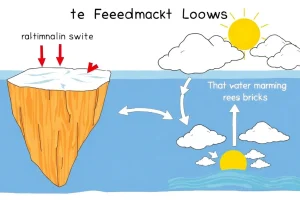
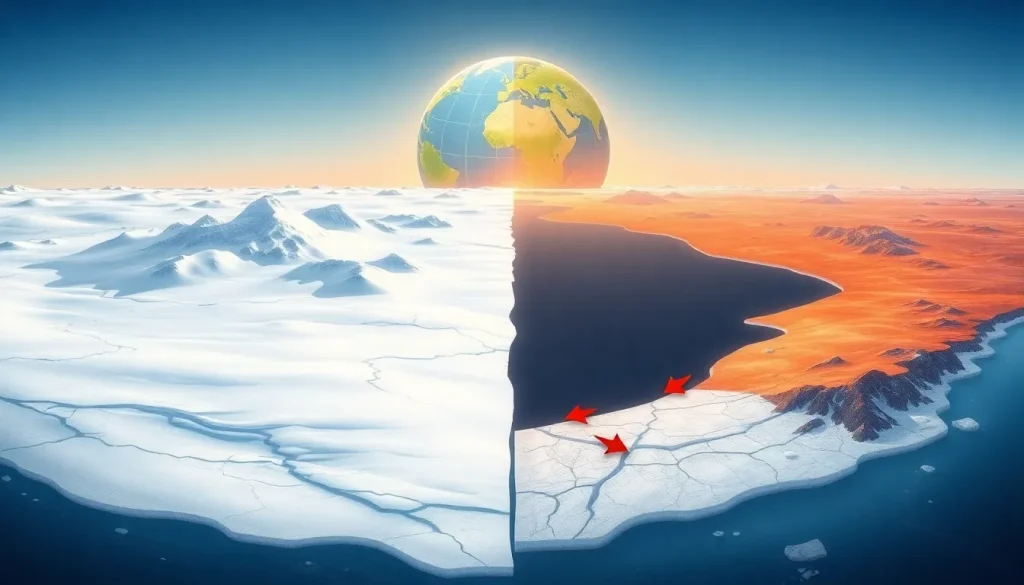
The ice-albedo feedback is a self-reinforcing cycle. When snow and ice cover are extensive, they reflect a large portion of solar energy back into space, helping to maintain cooler temperatures. However, if warming causes snow and ice to melt, the underlying darker surfaces are exposed. These surfaces absorb more sunlight, which warms the local environment and leads to further melting. This process can amplify an initial warming trend, making it a key factor in the Earth’s climate sensitivity—the degree to which global temperatures respond to increased greenhouse gas concentrations. The feedback is particularly strong in the Arctic, where sea ice loss and reduced snow cover on land have contributed to warming at a rate more than twice the global average, a phenomenon known as Arctic amplification.
How It Works
The ice-albedo feedback operates through a straightforward physical mechanism. Fresh snow can reflect up to 90% of incoming solar radiation, while clean ice reflects about 50–70%. In contrast, open ocean water reflects only about 6% of sunlight, and bare soil or vegetation reflects roughly 10–20%. When rising temperatures—driven by increased greenhouse gas concentrations—cause snow and ice to melt, the surface albedo decreases. The newly exposed darker surfaces absorb more solar energy, which warms the surface and the overlying air. This warming further accelerates melting, creating a self-reinforcing loop.
The feedback is most pronounced during spring and summer when solar radiation is strongest. In the Arctic, the melting of sea ice exposes dark ocean water, which absorbs over 90% of the sun’s energy, dramatically warming the upper ocean. This additional heat delays the refreezing of ice in autumn and thins the ice, making it more vulnerable to melting the following year. On land, earlier snowmelt exposes darker ground earlier in the season, extending the period of high solar absorption. The feedback also operates on ice sheets and glaciers, where surface melting can darken the ice by concentrating impurities, further lowering albedo and accelerating melt.
Importance and Impact
The ice-albedo feedback is one of the most significant positive feedbacks in the climate system because it amplifies the effects of greenhouse gas emissions. It is a primary reason why the Arctic is warming much faster than the rest of the planet. This amplified warming has global consequences, including the disruption of atmospheric circulation patterns that influence weather in mid-latitudes. For example, a warmer Arctic may weaken the jet stream, leading to more persistent weather extremes such as heatwaves, droughts, and cold spells in North America, Europe, and Asia.
The feedback also accelerates the loss of multi-year sea ice, which has declined by more than 40% since satellite records began in the late 1970s. The loss of reflective ice cover contributes directly to global warming by increasing the amount of solar energy absorbed by the Earth. Additionally, melting of the Greenland and Antarctic ice sheets, partly driven by albedo changes, is a major contributor to sea-level rise, threatening coastal communities worldwide. The feedback’s impact is not limited to the poles; reduced snow cover in mountainous regions affects water availability for millions of people who depend on snowmelt for drinking water, agriculture, and hydropower.
Environmental and Human Impacts
Changes in snow cover and the ice-albedo feedback have profound environmental effects. In the Arctic, the loss of sea ice disrupts marine ecosystems, threatening species such as polar bears, seals, and walruses that depend on ice for hunting and breeding. The timing of snowmelt affects terrestrial ecosystems, altering plant growth cycles and the habitats of animals like caribou and Arctic foxes. Earlier snowmelt can lead to mismatches in food availability, impacting migratory birds and insects.
For human communities, reduced snow cover affects winter tourism and recreation, which are important economic sectors in many regions. In areas reliant on snowmelt for water supply, earlier and faster melting can lead to water shortages in summer and increased flood risk in spring. Indigenous communities in the Arctic face cultural and subsistence challenges as ice conditions become less predictable. Furthermore, thawing permafrost—exacerbated by the loss of insulating snow cover—releases methane and carbon dioxide, adding to greenhouse gas concentrations and creating another feedback loop.
Connections to Other Systems
The ice-albedo feedback is closely linked to other components of the climate system. It interacts with the water vapor feedback: as warming increases atmospheric water vapor, which is itself a greenhouse gas, it further amplifies warming. The feedback also connects to cloud processes; changes in sea ice extent can alter cloud formation and properties, which in turn affect the surface energy balance. Additionally, the melting of ice sheets introduces freshwater into the ocean, potentially disrupting ocean circulation patterns such as the Atlantic Meridional Overturning Circulation (AMOC), which plays a key role in regulating global climate.
On land, changes in snow cover influence soil moisture, vegetation growth, and the carbon cycle. A longer snow-free season can enhance plant growth and carbon uptake in some regions, but it can also increase the risk of wildfires. The feedback is also tied to the permafrost carbon feedback, where thawing permafrost releases greenhouse gases, further warming the climate and accelerating snow and ice loss. These interconnected feedbacks make the climate system highly sensitive to initial perturbations.
Data Limitations and Uncertainties
While the basic physics of the ice-albedo feedback is well established, quantifying its exact contribution to global warming remains challenging. Satellite observations provide reliable measurements of snow and ice extent, but albedo values can vary due to factors such as snow grain size, impurities (like black carbon from soot), and surface roughness. These variables introduce uncertainty into climate models. Additionally, the feedback’s strength can change over time; as sea ice approaches complete summer loss in the Arctic, the albedo effect may diminish because there is less ice left to melt, but the transition to an ice-free summer state represents a profound shift with unknown consequences.
Another uncertainty lies in the regional and seasonal details. For example, the impact of reduced snow cover on atmospheric circulation is an active area of research, with some studies suggesting a link to extreme weather events while others find the evidence inconclusive. The complex interactions with clouds, aerosols, and ocean currents further complicate projections. Long-term data on snow cover in remote areas are sparse, and historical records are limited, making it difficult to fully validate model simulations. Despite these uncertainties, the overall direction of the feedback—amplifying warming—is robust across all climate models.
What Individuals Can Do
While the ice-albedo feedback is a large-scale physical process, individual actions can help slow the underlying warming that drives it. Reducing personal carbon footprints by using energy-efficient appliances, driving less, and adopting a plant-rich diet can lower greenhouse gas emissions. Supporting renewable energy sources and advocating for climate-friendly policies also contribute to systemic change. Individuals can also reduce emissions of black carbon, a short-lived pollutant that darkens snow and ice when deposited, by avoiding the burning of biomass and using cleaner cookstoves. Educating others about the importance of the cryosphere and the feedback loop can build public support for climate action.
What Businesses and Governments Can Do
Businesses can play a critical role by investing in clean energy, improving energy efficiency, and setting science-based emission reduction targets. Companies in sectors such as transportation, manufacturing, and agriculture can innovate to reduce their carbon footprint and develop technologies that limit black carbon emissions. Governments can implement policies that promote renewable energy, protect carbon sinks like forests, and fund research into climate feedbacks. International agreements, such as the Paris Agreement, provide a framework for collective action to limit global temperature rise, which is essential to preserving snow and ice cover. At the local level, governments can invest in climate adaptation measures, such as water management systems that account for changing snowmelt patterns, and support communities affected by cryosphere loss.
FAQ
What is the ice-albedo feedback?
The ice-albedo feedback is a climate process where melting snow and ice expose darker surfaces that absorb more sunlight, causing further warming and more melting. It is a positive feedback loop that amplifies global warming, especially in the Arctic.
How does snow cover affect Earth's temperature?
Snow cover reflects a large portion of incoming solar radiation back into space, which helps cool the planet. When snow cover decreases, more solar energy is absorbed by the ground, contributing to higher temperatures.
Why does the ice-albedo feedback matter?
It matters because it accelerates climate change, leading to faster warming in polar regions, sea-level rise from melting ice sheets, and disruptions to weather patterns and ecosystems worldwide. It is one of the most powerful feedbacks in the climate system.
References
- IPCC, 2021: Climate Change 2021: The Physical Science Basis. Contribution of Working Group I to the Sixth Assessment Report. Cambridge University Press.
- National Snow and Ice Data Center (NSIDC). 'All About Sea Ice.' nsidc.org.
- NASA Earth Observatory. 'Arctic Amplification.' earthobservatory.nasa.gov.