In brief
At a glance
Quick Facts
- Blue Water Definition
- Fresh surface and groundwater consumed (e.g., evaporated, incorporated into products) and not returned to the same catchment.
- Green Water Definition
- Precipitation on land that is stored in the soil and used by plants; it does not become runoff or recharge groundwater.
- Grey Water Definition
- The volume of freshwater required to assimilate pollutants to meet water quality standards; a measure of water pollution.
- Origin
- The terms were introduced by Arjen Hoekstra in the early 2000s as part of the water footprint concept.
- Agriculture's Share
- Globally, agriculture accounts for about 92% of humanity's water footprint, with green water being the largest component.
- Water Footprint of Beef
- Producing 1 kg of beef requires about 15,400 liters of water, predominantly green water from feed crops.
Key Takeaways
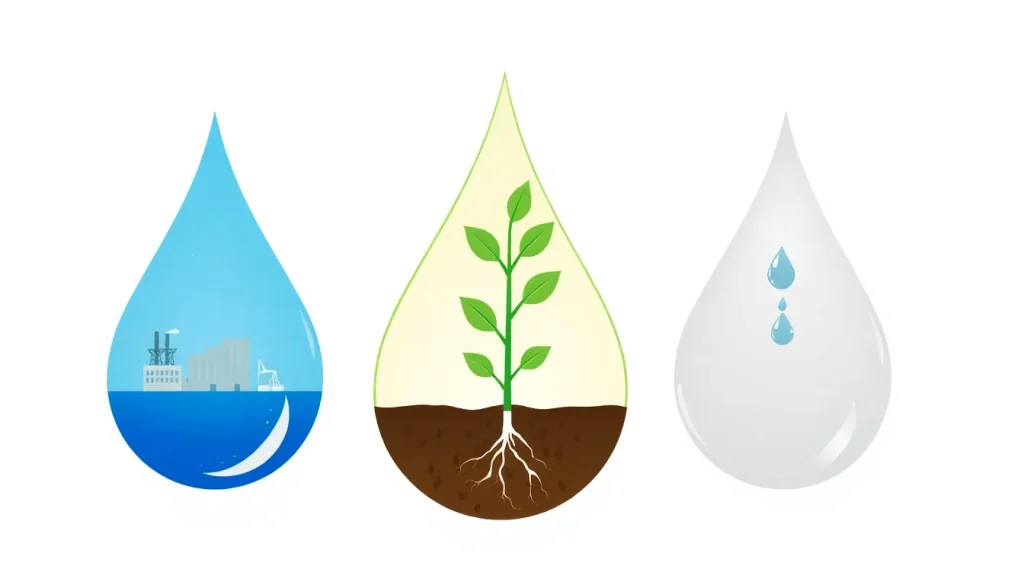
- Blue water is fresh surface and groundwater consumed by human activities, such as irrigation, industry, and domestic use.
- Green water is rainwater stored in soil moisture and used by plants; it is particularly relevant for agriculture and forestry.
- Grey water represents the volume of freshwater needed to dilute pollutants to meet water quality standards, indicating the pollution intensity of a process.
- Distinguishing these water types helps assess the full water footprint of products, nations, and businesses, guiding more sustainable water management.
What Is Blue Water vs Green Water vs Grey Water?
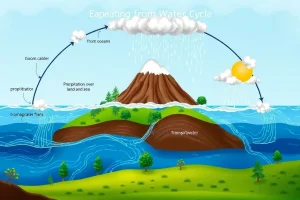
Blue water, green water, and grey water are categories used in water footprint accounting to describe different types of water consumption and pollution. Blue water refers to fresh surface and groundwater that is consumed—meaning it is withdrawn and not returned to the same catchment—during human activities such as irrigation, industrial processes, and domestic water supply. Green water is the precipitation on land that does not run off or recharge groundwater but is stored in the soil as moisture and used by plants, either in natural ecosystems or in agriculture. Grey water is a measure of water pollution, defined as the volume of freshwater required to assimilate the load of pollutants based on natural background concentrations and existing ambient water quality standards.
These concepts were formalized by Arjen Hoekstra in the early 2000s as part of the water footprint methodology, which quantifies the total volume of freshwater used directly and indirectly to produce goods and services. The distinction is crucial because traditional water use statistics often overlook green water and pollution dilution requirements, leading to an incomplete picture of human water demand. By separating water into these three types, the water footprint provides a more comprehensive tool for understanding the pressures on water resources and for informing sustainable water management practices.
Overview
The water footprint concept builds on the idea of virtual water—the hidden water embedded in traded goods. A water footprint measures the total volume of freshwater used to produce the goods and services consumed by an individual, community, or business. It consists of three components: the blue water footprint, the green water footprint, and the grey water footprint. Together, they provide a multidimensional indicator of water use, distinguishing between consumptive use of surface and groundwater, consumptive use of rainwater, and water pollution. This framework is applied at multiple scales, from a single product to a whole nation, and is used to assess the sustainability of water use in the context of local water scarcity and quality.
How It Works
Calculating a water footprint involves quantifying each component separately. The blue water footprint is the volume of surface or groundwater consumed, which includes water evaporated, incorporated into a product, or not returned to the same catchment. The green water footprint is the volume of rainwater consumed, typically measured as the evapotranspiration of rainwater from agricultural fields or forests. The grey water footprint is calculated as the pollutant load (mass of a pollutant) divided by the difference between the maximum acceptable concentration and the natural background concentration for that pollutant in the receiving water body. This yields the volume of freshwater needed to dilute the pollution to safe levels. These calculations are standardized in the Water Footprint Assessment Manual and the ISO 14046 standard.
Importance and Impact
Distinguishing between blue, green, and grey water is essential for understanding the full environmental impact of water use. Blue water consumption can deplete rivers, lakes, and aquifers, affecting ecosystems and downstream users. Green water use, while often considered less harmful, can still have opportunity costs, as that rainwater could have supported natural vegetation or other land uses. Grey water highlights the pollution burden of activities, revealing the hidden water cost of inadequate wastewater treatment. By making these impacts visible, the water footprint helps businesses and governments identify hotspots, improve water efficiency, and reduce pollution. It also informs consumers about the water intensity of products, potentially influencing purchasing decisions toward more sustainable options.
Examples
The water footprint of common products illustrates the relative importance of each water type. For example, producing 1 kg of beef requires about 15,400 liters of water, of which over 90% is green water used to grow feed crops. A cup of coffee (125 ml) has a water footprint of about 140 liters, with green water dominating in rain-fed coffee plantations. Cotton, a crop often irrigated, has a significant blue water footprint in water-scarce regions; its grey water footprint can be large due to pesticide and fertilizer runoff. Rice, typically grown in flooded paddies, has a high blue water footprint because of evaporation and seepage. These examples show how the water footprint varies by product and production method, and why a breakdown by water type is necessary for targeted water stewardship.
Common Misconceptions
One common misconception is that grey water is the same as wastewater or recycled household water (often called “greywater” in plumbing contexts). In water footprinting, grey water is a theoretical dilution volume, not actual polluted water. Another misunderstanding is that green water is always “free” and has no environmental impact. While it does not directly compete with other uses like blue water, green water consumption can still affect local water balances and ecosystem services. Additionally, some assume that a high water footprint is always unsustainable; however, sustainability depends on local water availability and pollution levels. A large green water footprint in a water-abundant region may be less concerning than a small blue water footprint in a water-scarce basin.
Data Limitations and Uncertainties
Water footprint assessments face several data challenges. Green water estimates rely on evapotranspiration models and soil moisture data, which can have significant uncertainty, especially in data-sparse regions. Grey water calculations depend on pollutant load data and water quality standards, which vary by country and are often incomplete. The spatial and temporal resolution of input data can be coarse, masking local water stress. Furthermore, the water footprint is a volumetric indicator and does not directly measure environmental impact; it must be interpreted within the context of local water scarcity and ecosystem vulnerability. Ongoing research aims to improve data accuracy and integrate water footprinting with life cycle assessment and planetary boundary frameworks.
FAQ
What is the difference between blue, green, and grey water?
Blue water is fresh surface and groundwater consumed; green water is rainwater stored in soil and used by plants; grey water is the volume of freshwater needed to dilute pollutants to safe levels. They represent different types of water use and pollution in a water footprint.
How is the water footprint calculated?
The water footprint is calculated by summing the blue, green, and grey water footprints of a product, process, or entity. Blue and green water are based on consumptive use volumes, while grey water is calculated from pollutant loads and water quality standards.
Why does the water footprint matter?
The water footprint reveals the total freshwater impact of consumption, including hidden water in supply chains and pollution. It helps identify unsustainable water use, guides policy, and supports efforts to reduce water scarcity and pollution.
References
- Hoekstra, A.Y., Chapagain, A.K., Aldaya, M.M., and Mekonnen, M.M. (2011) The Water Footprint Assessment Manual: Setting the Global Standard, Earthscan, London, UK.
- Water Footprint Network. (n.d.). What is a water footprint? Retrieved from https://waterfootprint.org/en/water-footprint/what-is-water-footprint/
- ISO 14046:2014 Environmental management — Water footprint — Principles, requirements and guidelines.